Category Archives: Resources

Stanford Offers Webinars on Non-profit Management

Stanford Social Innovation Review Fall_2015Everyone knows that Harvard University has the Harvard Business Review, but did you know that on the opposite coast, Stanford University has an equivalent for non-profit organizations called the Stanford Social Innovation Review?  Both have been useful to me because along with the magazine, they offer webinars led by authors of their articles or who are leaders in the field.  Here are a couple coming up from the Stanford Social Innovation Review that you might find useful for your museum or historic site:

Overcoming the Overhead Myth

Presented by Jacob Harold, Ann Goggins Gregory, & Jan Masaoka
September 2, 11 a.m. – 12 noon PDT / 2 – 3 p.m. EDT

A dangerous myth prevails among funders that overhead can be used as a proxy for efficiency. In fact, research shows that under-investing in administrative overhead is often linked with poor performance by nonprofits. Ann Goggins Gregory and Don Howard dubbed this process “the nonprofit starvation cycle” in the eponymous Stanford Social Innovation Review article. In this webinar you will learn:

  • Why the nonprofit starvation cycle exists in the sector
  • How organizations that invested in administration subsequently improved their programmatic work
  • Strategies for explaining to funders the importance of overhead costs for future success
  • Tips for evaluating whether grantees are skimping on crucial investment areas in their budgeting

Price: $49, which includes access to the live webinar; unlimited access to the webinar as many times as you’d like for twelve months; and downloadable slides. Learn more about this webinar and register here.

Valuing Frontline Work

Presented by Lehn Benjamin, Katya Fels Smyth, Maria Peña, & Jesús Gerena
September 23, 11 a.m. – 12 noon PDT / 2 – 3 p.m. EDT

An increasing focus in the social sector on performance-driven frameworks can make it difficult for direct-service organizations to measure their impact. Some nonprofits are using creative strategies to measure and communicate their work’s value to funders. This webinar will:

  • Explain how some of the most popular performance models used in the nonprofit sector fail to measure the true impact of what nonprofit professionals do
  • Examine the reasons why it can be so difficult—yet so important—to recognize the value that on-the-ground work delivers to beneficiaries and their communities
  • Explore examples of nonprofits that have succeeded in capturing and conveying the full value of frontline work

Price: $49, which includes access to the live webinar; unlimited access to the webinar as many times as you’d like for twelve months; and downloadable slides. Learn more about this webinar and register here.

Using Archaeological Research to Interpret Your Site?

Archaeological excavations at James Madison's Montpelier in Virginia.

Archaeological excavations at James Madison’s Montpelier in Virginia.

If your historic site or history museum is using or would like to use archaeology in your research (even if you’re not conducting archaeology), the Society for American Archaeology (SAA) is seeking your suggestions and advice to improve and enhance the “For the Public” section of their website via a survey (open until July 22).

SAA launched For the Public in 2006 as a clearinghouse to share resources, best practices, and general information about the discipline of archaeology with both the professional community and the interested public.  The site has now grown to a complex tangle of over 400 linked pages. Many of the pages need substantive revision in content, function, and aesthetic perspectives. As they continue the process of revision, they would appreciate Continue reading

So Many Possibilities for Historic Sites at AASLH Annual Meeting

AASLH Louisville 2015The American Association for State and Local History (AASLH) just delivered the preliminary program for its annual meeting, which will be held in Louisville, Kentucky from September 16-19, 2015.  Obviously, the conference is centered around history but there are several sessions, workshops, and field trips that focus on historic sites and house museums, including:

  • Heritage Tourism in the 21st Century with James Stevens of ConsultEcon Inc., who recently studied the heritage tourism sector in Philadelphia
  • Restoration and Reconstruction: Fulfilling the Possibilities of a 21st Century Museum, a discussion about the reinterpretation of the Woodrow Wilson Family Home in South Carolina (also reviewed in the recent issue of the Public Historian and the Journal of American History; not to be confused with the Woodrow Wilson Boyhood Home in Georgia)
  • Old House, New Diverse Stories, a brainstorming session led by Ken Turino of Historic New England
  • An Untapped Resource: How to Locate and Use Legal Cases at Historic Sites, a session to learn how to mine legal case files to find compelling narratives for exhibits and programs
  • Interpreting Religion at Historic Sites, a discussion on leveraging “historical truth when interpreting religion” led by the historian of the Navigators.
  • An afternoon tour of the exuberant Second Empire Culbertson Mansion and Farmington, the Federal-style home of Lucy and John Speed.
  • There may be bourbon at the breakfast for historic house museums when Dennis Walsh from Buffalo Trace Distillery discusses the preservation of this historic sites (and it’s pretty cool website, too)
  • An evening at Locust Grove, a National Historic Landmark, with costumed interpreters, live music, and a three-course buffet.
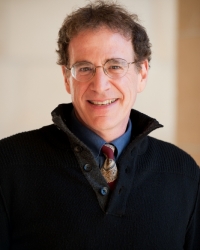
Sam Winburg

Sam Wineburg

With 65 sessions, there is much, much more happening and you’ll be torn about what to do.  There’s certainly enough to appeal to directors, curators, historians, educators, and preservationists.  I’m particularly eager to hear Sam Wineburg, professor of education and history at Stanford University and author of Historical Thinking and Other Unnatural Acts: Charting the Future of Teaching the Past (see “A History of Flawed Teaching“), and the follow-up discussion led by Tim Grove, chief of museum learning at the Smithsonian National Air and Space Museum.  Wineburg is currently developing new forms of assessment to measure historical understanding and undertaking a longitudinal study on the development of historical consciousness among adolescents in three communities.  But I don’t want to neglect the three other outstanding plenary speakers: Wendell Berry, James Klotter, Renee Shaw, and Carol Kammen.

I rarely ever skip the AASLH annual meeting and I plan to be there this year.  Registration is $250 if you jump in before July 24 and there’s the alternative online conference featuring six sessions.


Two Ways to Easily Secure Student Lunches and Backpacks

If your historic site is visited by school groups, no doubt you’ve had to temporarily store dozens of lunches or backpacks while they’re exploring your buildings and grounds.  Perhaps they’re left on the bus or stashed in big boxes in an empty room, but if you’re looking for something more portable or secure, I encountered a couple ideas from museums I recently visited.

Basket trucks at the Asian Museum in San Francisco.

Basket trucks at the Asian Museum in San Francisco.

The Asian Art Museum in San Francisco uses “basket trucks” that you typically find in hotels for collecting laundry.  The carts easily roll around and hold lots of stuff, but some versions can collapse for storage and be cleaned by tossing the big cloth bag in the laundry.  The Museum attaches a big plastic sleeve on the frame to slip in a temporary label to identify the school so the cart can be easily retrieved for lunch time.

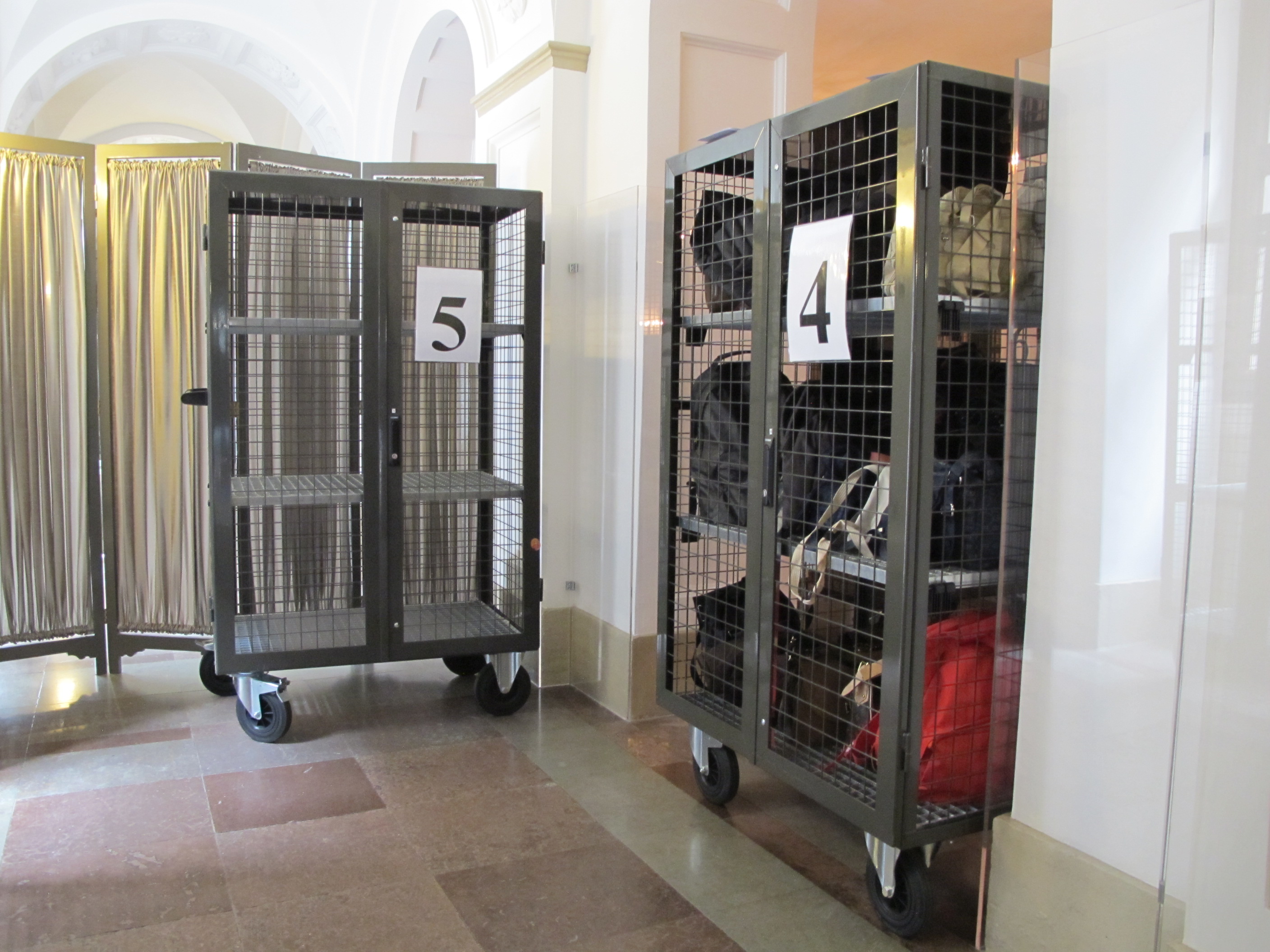
Security carts at the Dam, the royal palace in Amsterdam.

Security carts at the Dam, the royal palace in Amsterdam.

The Dam, the royal palace in Amsterdam, uses tall carts with steel shelves that are enclosed with steel mesh.  Not only can they be locked for security (nowadays, kids are carrying expensive electronics) but still allow for visibility inside.  They’re designed for moving valuable parts in warehouses and called “security carts”–many versions are available.

If you’ve found other clever way to handle student belongings during field trips, please share them in the comments below.

A Process for Rethinking the Historic House Museum

Mission-Sustainability Matrix Next week I’ll be at the Margaret Mitchell House in Atlanta, Georgia leading a workshop with Ken Turino of Historic New England on the rethinking the historic house museum.  We’re not the only ones who are working on this topic, indeed, Michelle Zupan at Hickory Hill  assembled a five-page bibliography of books, articles, and dissertations for the workshop, so long that I’m hesitant to distribute it because it could be discouraging (“what? I have to know all this to rethink my historic house?”).

And if we want to go beyond historic house museums, the list would be even longer. Businesses have been “rethinking” for decades in order to grow in size or increase their profits.  They have the resources to study this topic rigorously and there is a lot we can borrow for our field (and much that doesn’t apply and can Continue reading

Knowledge of US History Unchanged Overall for 8th Graders, but Differences Are in the Details

Average score changes between 2010 and 2014 in NEEP at grade 8 by subject.

Average score changes between 2010 and 2014 in NEEP at grade 8 by subject. To view the full report, go to NationsReportCard.gov.

The National Center for Education Statistics, which administers National Assessment of Educational Progress (NAEP, also known as the Nation’s Report Card), recently announced that overall academic performance of eighth-graders in U.S. history, geography and civics has remained unchanged since 2010, though Hispanic students have made gains in U.S. history and geography.

NAEP reports performance using average scores and percentages of students performing at or above three achievement levels: Basic, Proficient and Advanced. The Basic level denotes partial mastery of the knowledge and skills needed for grade-appropriate work; Proficient denotes solid academic performance; and Advanced represents superior work. The assessment is based on nationally representative samples of more than 29,000 eighth-graders in total across the country.

The 2014 results for U. S. history show that 18 percent of eighth-grade students performed at or above Proficient, which is basically unchanged from 17 percent in 2010 and 2006. There are significant differences by ethnicity: Continue reading

Historic House Museums Gather for AASLH Workshop in Charleston

This slideshow requires JavaScript.

For the past fifteen years, George McDaniel and I have taught a two-day workshop on the management of historic house museums for the American Association for State and Local History.  We cover a wide range of topics from fundraising to interpretation to disaster response to collections management–we really need a week, especially if there’s a lot of discussion.  That was certainly our experience last week in Charleston, South Carolina (and thanks to our hosts, the Historic Charleston Foundation!), where our discussions were so rich that I wasn’t able to complete most of my presentations.  That’s okay because the workshop is for the participants and as long as they find a topic that’s worth exploring, I’ll stay with them.  Indeed, George and I often find that we’re not instructors but facilitators, raising ideas and questions to provoke thoughtful discussions to help participants improve the management of their historic sites.

At the core of workshop is each participant’s “burning question.” They share their biggest concern or issue at the start of the class and at the end, they describe how they might address it when they return to their site.  It’s not only a way to make the workshop more relevant to the participants, but it also gives us a glimpse into the issues facing historic house museums around the country.  This year the questions included: Continue reading

Want to Sharpen Your Historic Site Management Skills?

If you manage an historic site or house museum, there are several ways to sharpen your skills in the next few months.

Historic House Museum workshop at the Haas-Lilienthal House in San Francisco, 2014.

Historic House Museum workshop at the Haas-Lilienthal House in San Francisco, 2014.

For nearly fifteen years, the American Association for State and Local History has offered a two-day workshop on historic house museum issues and operations and next month it will be in Charleston, South Carolina on February 26-27, 2015.  Held in partnership with the Historic Charleston Foundation (one of the oldest historic preservation organizations in the US) and co-taught by me and Dr. George McDaniel of Drayton Hall, we’ll examine a wide range of topics from the unique perspective of house museums and historic sites, including leadership, interpretation, disaster preparedness, membership, and audience, through interactive presentations, group discussions, and site-specific exercises.  You’ll leave with a better sense of how your organization can better fulfill its mission and be more financially sustainable.  Registration is $345, $270 for AASLH members, plus there’s a $40 discount if you register by January 22.  Be sure to add a day to explore the historic sites in Charleston–it’s one of the best places to see a wide variety of visitor experiences in one place.

New this year is “Re-inventing the Historic House Museum,” a one-day workshop offering current thinking, practical information, and solutions to the challenges facing historic sites. The historic house museum in America is not dead nor are most of them dying. The field, however, needs to reflect and renew as the world around our historic sites continues to change.  This workshop was inspired by a sold-out symposium presented by the Historic House Museum Consortium of Washington, DC at Gunston Hall in March 2014, and now has been taken nationally to various regions by the American Association for State and Local History.  Ken Turino of Historic New England and I will be giving the core presentations and the others will vary to take advantage of the workshop location.  We’ll be at Strawbery Banke in New Hampshire on April 21, 2015 and the Margaret Mitchell House in Georgia on June 12, 2015.  Registration is $170; $95 for members of AASLH and NEMA (for April 21).

AAM’s Education Committee revives its Web Page

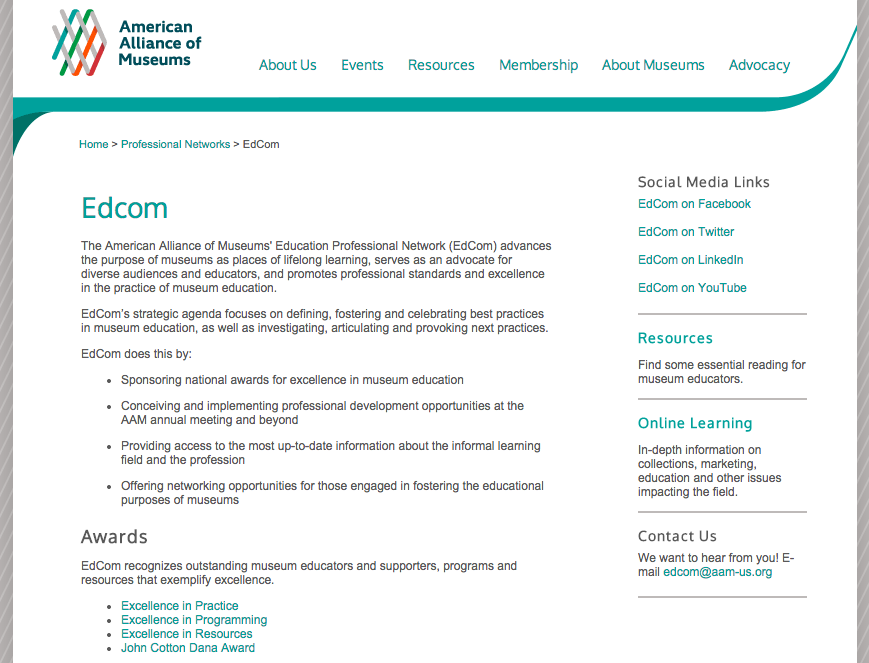
AAM EdCom web pageEdCom, the Education Professional Network of the American Alliance of Museums, recently revived its web page after a few months on hiatus.  You’ll not only find basic information about EdCom, the group that’s focused on education and interpretation in all types of museums (including historic sites), but resources, such as “Excellence in Practice: Museum Education Principles and Standards,” and a suggested bibliography.  If you want to keep on news, you’ll want to join them on Facebook, Twitter, or LinkedIn.

With the recent restructuring of membership at AAM, you can join any one of the 22 professional networks (there’s even one for Historic House Museums) for free if you’re an individual professional member.

Online Learning Opportunities for Historic Site Interpreters

The opportunities for sharpening your skills as an historic site interpreter continue to grow online, sometimes even for free.  Here are a sampling of a few non-degree granting organizations where you’ll find workshops and classes on the Internet to keep your thinking fresh and improve your technique.  All times are Eastern unless noted.

American Alliance of Museums

  • Embracing 360 Engagement, Widening the Circle.  September 2, 2014 at 2:00 pm Eastern.
  • Building Trust through High Performance, Becoming Essential.  December 3 at 2:00 pm.

American Association for State and Local History

  • Historic House Calls: Using Futures Thinking to Navigate Ongoing Change.  August 20, 2014 at 2:00 pm. Free for AASLH members.
  • Writing the Grant: What’s the Process Like?  August 27 at 3:00 pm.  $115; $40 members.

Coursera

Continue reading