

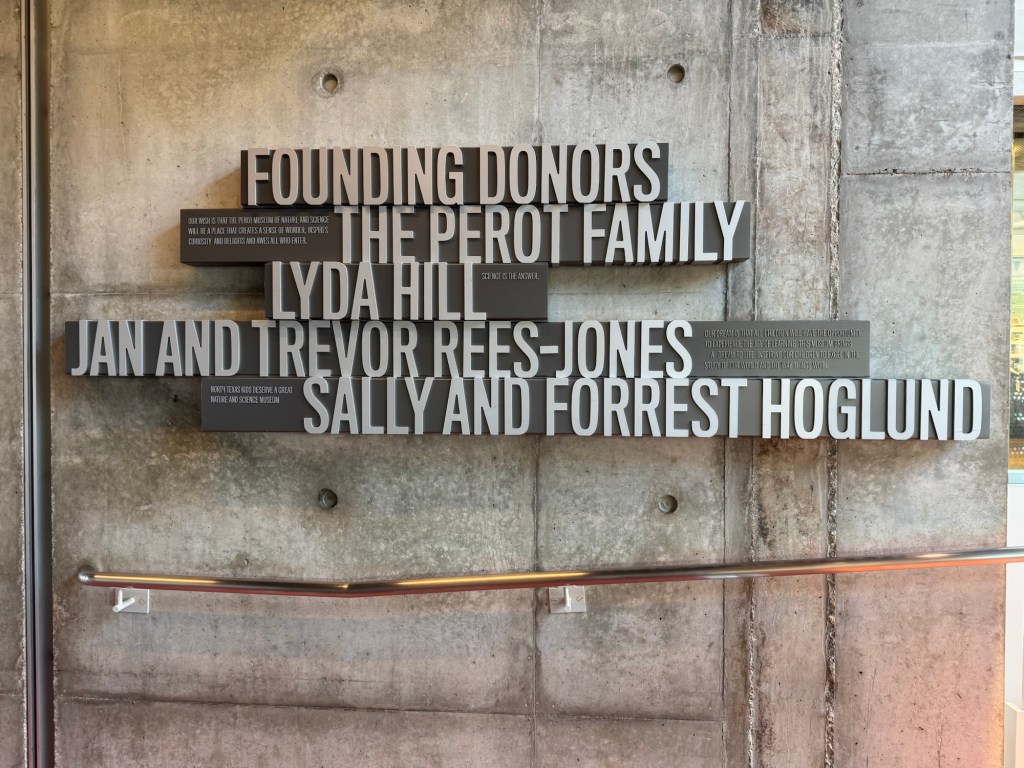
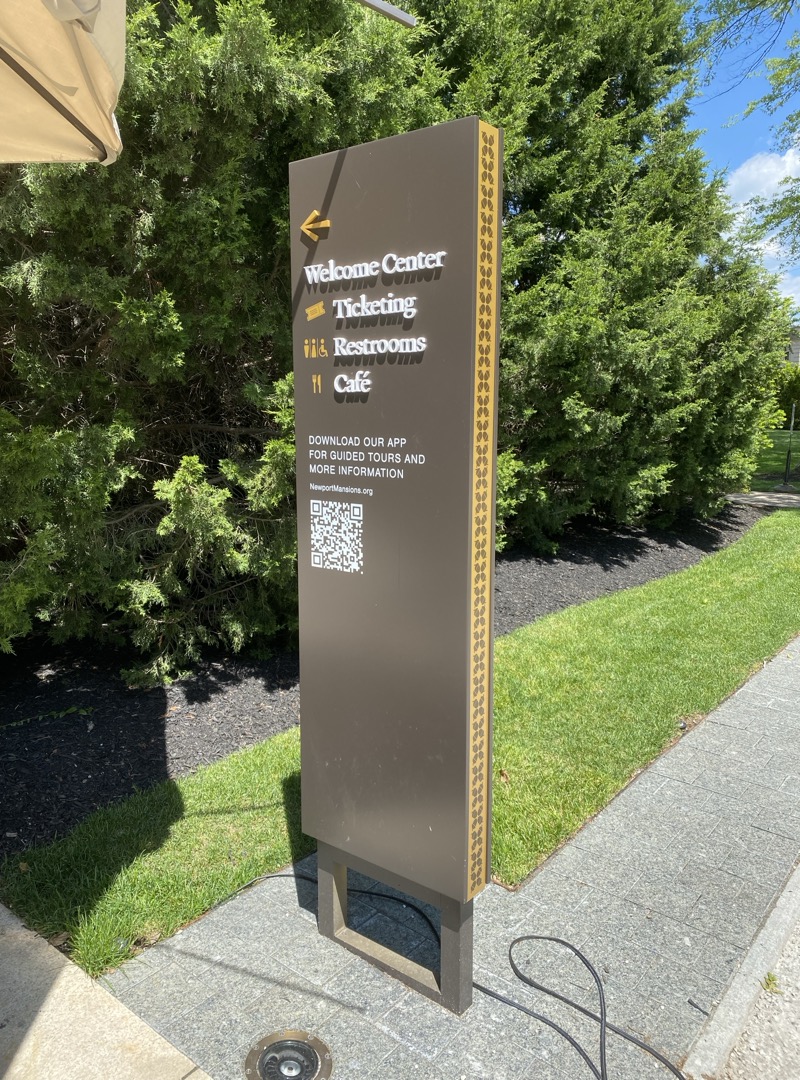
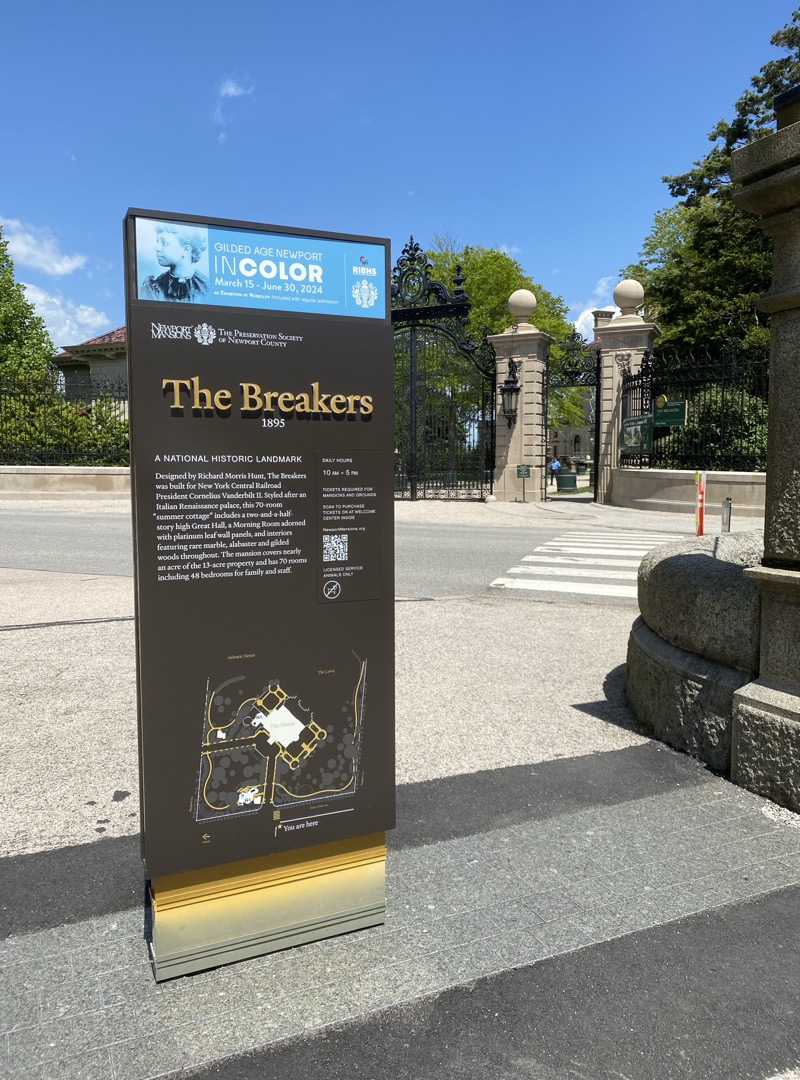
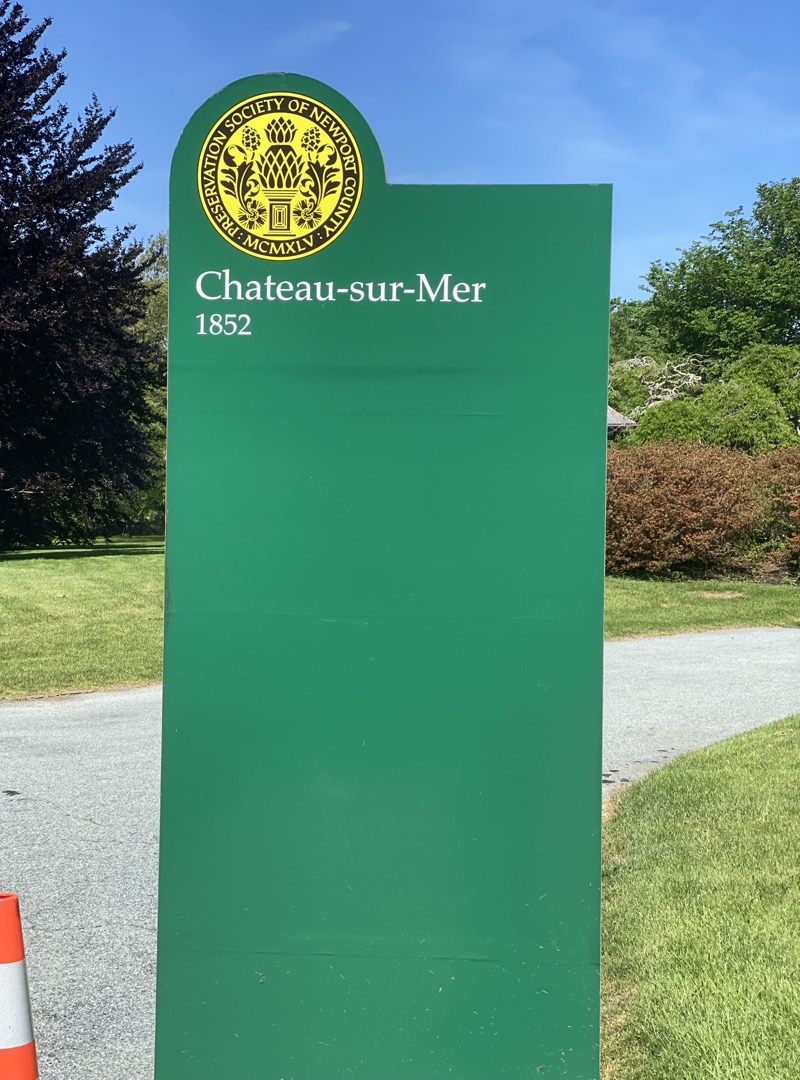
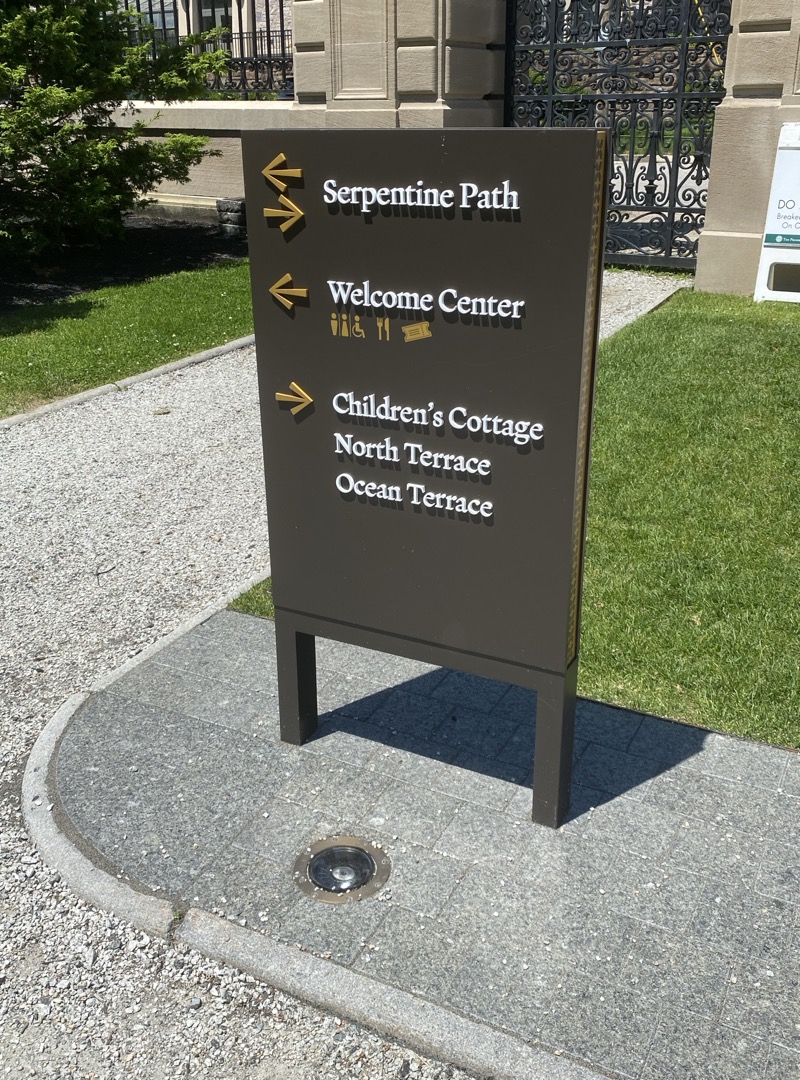
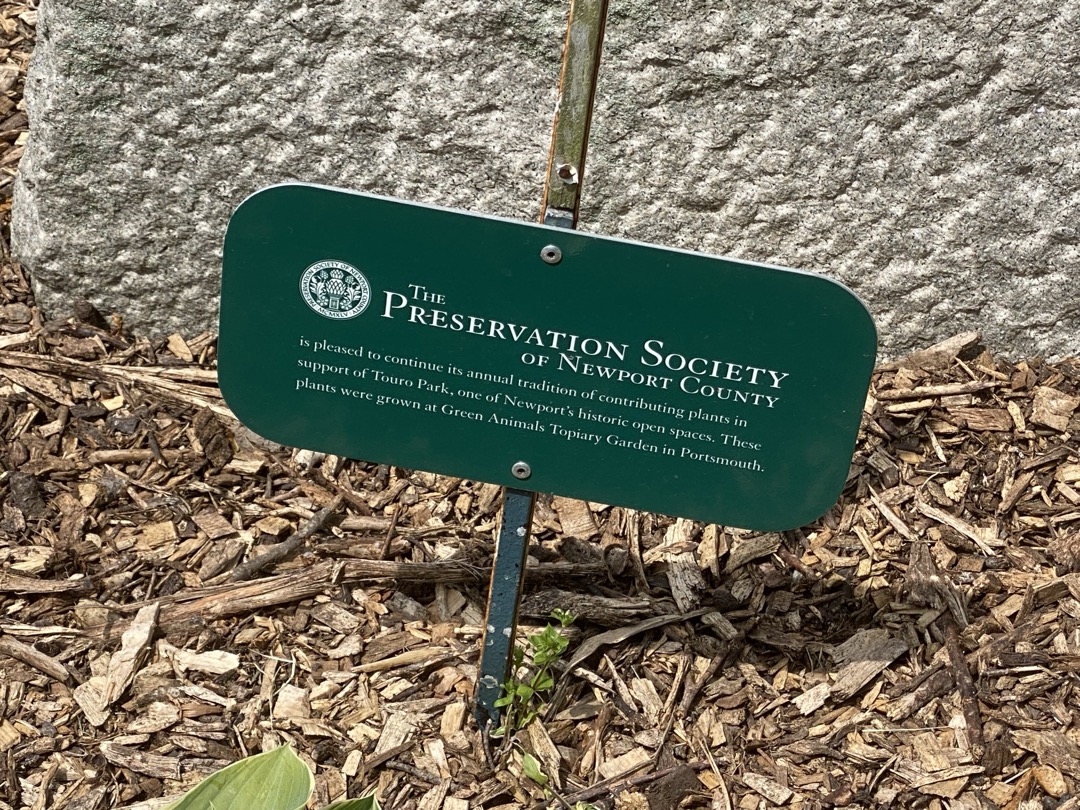
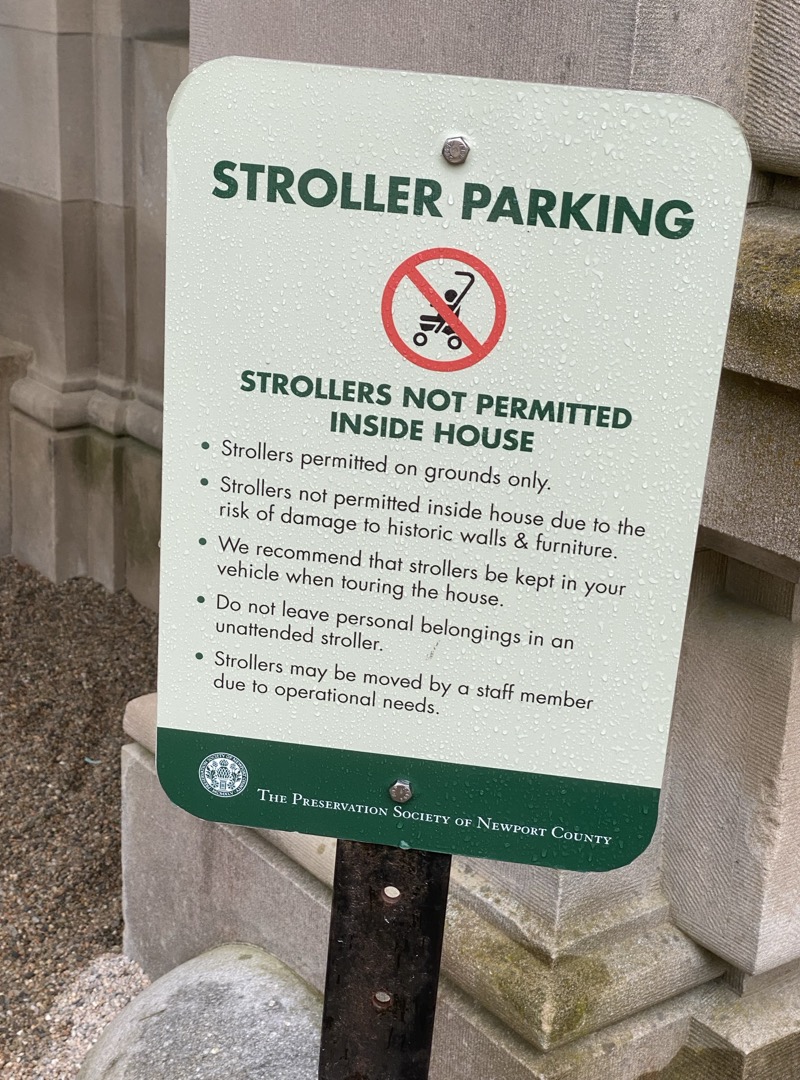
On a recent trip to Europe, I encountered one of the most durable yet inexpensive approaches to outdoor signage I’ve seen: printed sheet vinyl applied to thin aluminum laminate panels, typically 1/8 to 1/4 inch thick. These signs can be cut into custom shapes, mounted to walls or posts, and grouped together to present text in digestible sections. When panels need revision or repair, the vinyl surface is simply peeled away and replaced.
The advantages are striking. Because the medium is printed vinyl, designers can easily incorporate full-color photographs, maps, diagrams, and QR codes alongside text. Unlike banners, these signs don’t wrinkle or sag, giving them a crisp, professional appearance. Compared with porcelain enamel or glass-based panels—beautiful but costly and still prone to damage—the peel-and-replace model offers museums and nonprofits a flexible, affordable option.
There are cautions. Outdoor durability must be tested over time to ensure resistance to fading or peeling, and they may need to be framed if the sharp corners pose a safety hazard in high-traffic areas. If you’re in the Southwest, these metal signs could become hot enough to shorten the life-span of vinyl. Still, the opportunity is clear: this approach lowers barriers to producing high-quality interpretative signs. Next steps for museums include piloting small-scale installations to measure longevity, visitor response, and cost savings before broader adoption.
Continue reading



 Engaging Places