Category Archives: Training

Online Learning Opportunities for Historic Site Interpreters

The opportunities for sharpening your skills as an historic site interpreter continue to grow online, sometimes even for free.  Here are a sampling of a few non-degree granting organizations where you’ll find workshops and classes on the Internet to keep your thinking fresh and improve your technique.  All times are Eastern unless noted.

American Alliance of Museums

  • Embracing 360 Engagement, Widening the Circle.  September 2, 2014 at 2:00 pm Eastern.
  • Building Trust through High Performance, Becoming Essential.  December 3 at 2:00 pm.

American Association for State and Local History

  • Historic House Calls: Using Futures Thinking to Navigate Ongoing Change.  August 20, 2014 at 2:00 pm. Free for AASLH members.
  • Writing the Grant: What’s the Process Like?  August 27 at 3:00 pm.  $115; $40 members.

Coursera

Continue reading

AASLH Annual Meeting in September Offers Lots for Historic Sites

Alexander Ramsey House in St. Paul, an historic site of the Minnesota Historical Society.

Alexander Ramsey House in St. Paul, an historic site of the Minnesota Historical Society.

Historic sites and house museums will find lots of educational sessions and workshops just for them at the upcoming annual meeting of the American Association for State and Local History on September 17-20 in St. Paul, Minnesota (the right half of the Twin Cities).  There are more than 70 sessions and workshops offered this year, so I’m only highlighting a few to show the diversity of topics on or about historic sites:

  • Putting the Native American Voice into Historic Sites
  • Saving the Charnley Norwood House
  • Interpreting Religion at Historic House Museums
  • Two Very Different Historic Houses Ask:  We Got the Money–Now What?
  • Telling a Whole History:  Methods of Interpreting Domestic Servants
  • Welcoming All Visitors:  Accessible Programs at History Museums and Sites
  • Diversity and Inclusion:  What Does that Really Mean for Museums and Historic Sites?
  • Diversity in Education:  Teaching About Slavery, Innovative Strategies, and Best Practices
  • Making the Invisible Visible:  Using Mobile Technology to Reach New Audiences, Improve Accessibility, and Breathe New Life into a Virginia Historic Site
  • Redefining Success:  Tips and Techniques for Training Interpreters to Talk About Slavery
  • They Can’t All be Museums
  • Pocket Change:  Moving a House Museum into the 21st Century on a Budget

Of course, there are many more sessions that address related topics, such as boards, fundraising, Continue reading

Snapshots from the AAM Annual Meeting in Seattle

This slideshow requires JavaScript.

The American Alliance of Museums finished up their annual meeting in Seattle this week with about 5,000 people in attendance, including many from China, England, and Canada.  The weather was jaw-dropping beautiful so trading it for the sessions indoors was a dilemma at times, but nothing would have pulled me away from the opening plenary which featured Erik Larson, author of Isaac’s Storm and Devil in the White City, who discussed his process for writing these histories.   He doesn’t think of himself as an historian, however, but as an “animator of history” who seeks to “create a rich historical experience.”  Hmm.  Sounds like what historic sites do.  I was also provoked by several very intriguing sessions related to history museums and I’ll be sharing highlights soon.  In the meantime, enjoy these snapshots from the annual meeting.

Grease the Gears of Your Next Meeting

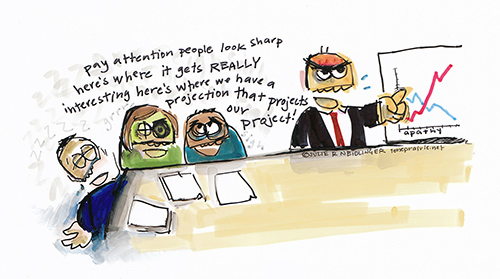
meetingsWe are in meetings regularly but how many of them are productive?  The minutes grind by slowly as the group argues over what it’s supposed to be doing and everyone is anxious to get back to their desks.  A couple weeks later, you repeat the same meeting because no one remembers what was decided or who was responsible.  I’ve been there hundreds of times but it improved about fifteen years ago when I began following the principles in How to Make Meetings Work by Michael Doyle and David Strauss (1993).  It introduced me to the value of agendas, the decision-making process, and the important role of a facilitator.  The facilitator is a neutral third party whose sole purpose is to manage the meeting process and ensure it is productive.  He or she doesn’t make decisions but helps the group discuss issues collegially to arrive at decisions thoughtfully.  The facilitator makes meetings easier, putting grease on the gears that would otherwise grind and bind.  If you’re a regular reader of this blog, you are probably serve as a facilitator from time to time.

Over the years I’ve become increasingly aware of the importance of facilitation, especially as organizations move from a top-down, command-and-control form of management to Continue reading

Webinar: Better Board Governance

Stanford Social Innovation Review, a quarterly journal devoted to informing and inspiring leaders of social change, is hosting a free hour-long webinar on improving board performance on Wednesday, May 21, 2014 at 2 pm Eastern/11 am Pacific. This webinar is for non-profit board members, executive directors, and managers/staff who work with board members—anyone who seeks to create an organization with consistently effective governance in order to radically increase impact for its community and visitors.  Thanks to the support of the Henry R. Kravis Prize in Leadership, this webinar is free but advance registration is required.

In this webinar you will learn the nine attributes of effective nonprofit board governance and be able to make significant improvements in your organization’s board. Join Kim Starkey Jonker and William F. Meehan III as they expand on their recent Stanford Social Innovation Review article, “A Better Board Will Make You Better.” They will discuss the difficulties of achieving consistently effective governance and provide actionable suggestions for overcoming these challenges. Kathy Spahn, recipient of the 2014 Henry R. Kravis Prize in Leadership, will join Jonker and Meehan to discuss Helen Keller International’s governance experiences and provide real-world examples about what works. 


What’s the ROI of Your Historic Site?

Jack Phillips (right) discussing ROI at ASTD 2014.

Jack Phillips (right) discussing ROI at ASTD 2014.

Foundations and donors are increasingly questioning the impact of their funds at museums and historic sites, a trend that’s growing as well in  business according to Jack Phillips and James Kirkpatrick at a session at the ASTD conference yesterday. After the recent recession, they’ve found that CEOs are increasingly asking about the return on investment (ROI) of every program and activity, including employee training and education.  Although training claims to be an essential contributor to business productivity and performance, it hasn’t been adequately measured or evaluated, and thus can’t prove their value.  That surprised me because I thought that was a struggle only for museums and historic sites.  We seem to be continually fighting to prove our worth and other than economic impact, haven’t been able to show why we matter in our communities.  It looks like we’re not alone.

Phillips and Kirkpatrick are the leaders in the field of measuring performance in business and developed frameworks that “define the levels at which programs are evaluated and how data are captured at different times from different sources.”  Although they disagree on whether the framework should have four or five levels, they both agree that Continue reading

Getting the Big Picture of Training

This slideshow requires JavaScript.

This week I’m attending the annual conference of the American Society of Training and Development (ASTD) in Washington, DC, the “world’s largest professional association dedicated to the training and development field.”  There must be thousands of people attending from all over the world and hundreds of educational sessions on training technology, meeting facilitation, staff management, career development, learning measurement, science of learning, and leadership development.  As someone who specializes in interpretation and education at museums and historic sites, it puts my work in a global perspective and I quickly realized that while business spends more than $160 billion (yes, billion) annually on workforce learning to maximize their return on investment, non-profit organizations do very little in this area.  Thankfully, many of our professional associations provide this essential service.

Although I won’t be able to share everything I learn at the conference this week, I’ll try to share some highlights.  Yesterday Ruth Clark, author of Evidence-Based Training Methods, discussed some of the misconceptions around learning styles, a framework that Continue reading

Webinar: Making Heritage Tourism Work for Your Community

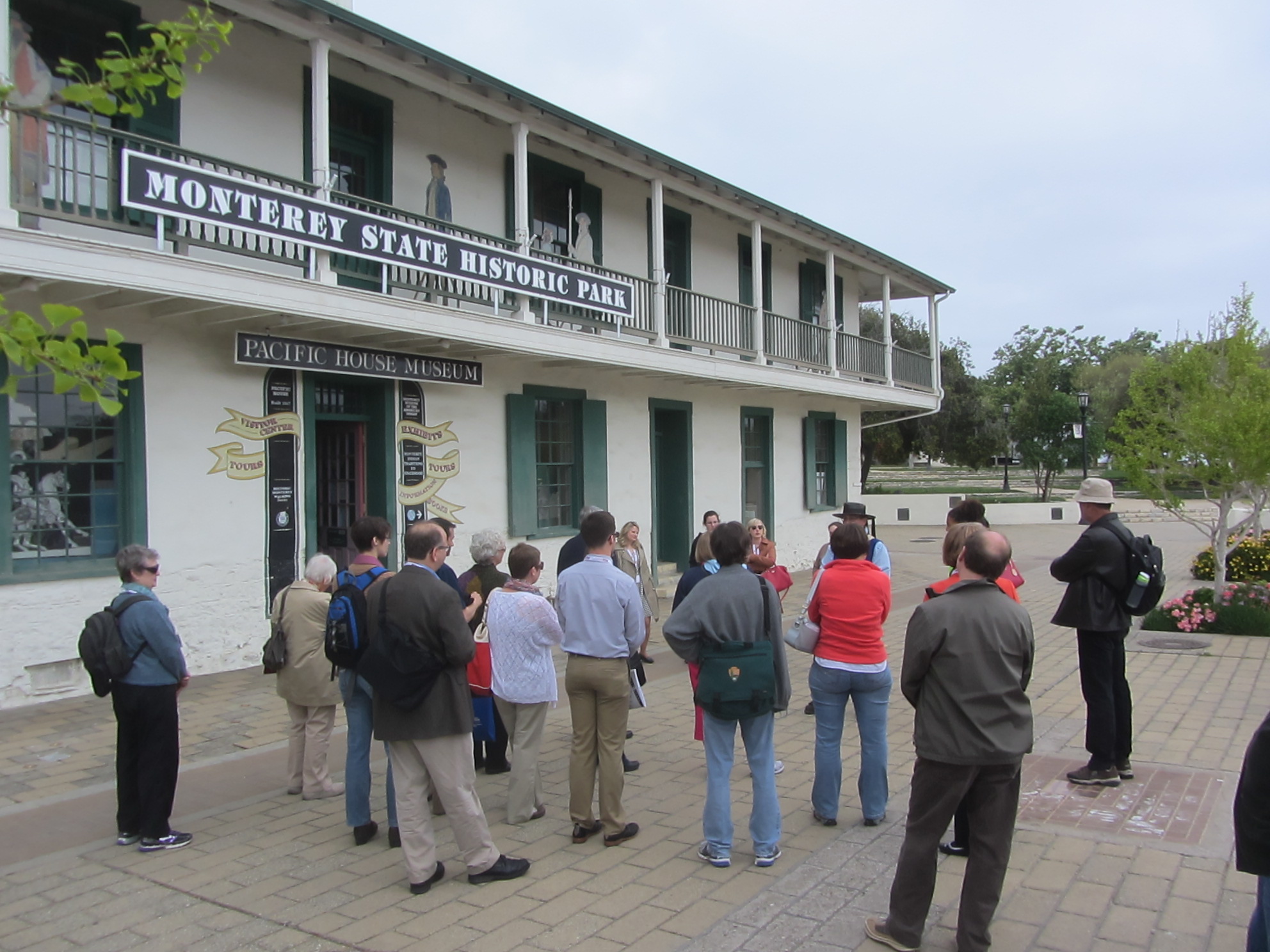
Walking tour of historic Monterey, California.

Walking tour of historic Monterey, California.

Heritage tourism is a growing industry that can improve community engagement, economic revitalization, and preservation advocacy. People want authentic and meaningful experiences—and are willing to pay for them.  On May 13, 2014 from 12 noon to 1:30 pm Pacific Time, I’ll be presenting a webinar for the California Preservation Foundation exploring the benefits of heritage tourism and how it may (or may not) benefit your community or region. We will examine the latest research on the motivations and interests of tourists (they’re not all alike), how to identify or create destinations that will attract tourists, and how to build support and attract funding for a heritage tourism program.  You’ll learn the overall elements of a heritage tourism program and leave with a list of the next steps to take in your community.  Although much of the webinar will be focused on California, the principles and process for developing a heritage tourism program will be same for other places.  Cost is $45 for CPF members ($60 for non-members) and advance registration is required.

It’s part of a three-part webinar series on economic development using historic preservation from the California Preservation Foundation.  For those interested in continuing education credit, it’s available for AIA, AICP, and ASLA.

Program in New England Studies Offering Diversity Scholarships

Program in New England Studies at Hamilton House, 2013.

Program in New England Studies at Hamilton House, 2013.

Historic New England presents its Program in New England Studies, an intensive week-long exploration of New England from Monday, June 16 to Saturday, June 21, 2014. Now entering its second decade, the Program in New England Studies features lectures by noted curators and architectural historians, workshops, behind-the-scenes tours, and special access to historic house museums and collections. Last year I had a chance to talk with some of the participants and they said they were attracted by the chance to see the houses and collections, but found that they really loved the expert lectures.

This year, Historic New England launches a diversity scholarship to support a mid-career museum professional or graduate student.  Applicants must represent a racial or ethnic minority group in the U.S.  The scholarship covers the full registration fee of Continue reading

Recap of Historic House Museum Symposium at Gunston Hall

This slideshow requires JavaScript.

On Saturday, the Historic House Museum Consortium of Washington DC hosted an all-day symposium on “how are historic house museums adapting to the future?” at Gunston Hall in Virginia.  The sold-out symposium featured three speakers, a tour of Gunston Hall, and lots of time to chat with colleagues during breaks and over lunch.   The cost?  A mere $15, truly a bargain.  The symposium not only attracted professionals from Virginia, Maryland, and DC, but as far away as Connecticut!

I opened the symposium by discussing Michael Porter’s “Five Forces” as a way of identifying opportunities and threats to help historic sites prepare and adapt.  If you’re not familiar with the Five Forces, it’s a framework for identifying those issues that have the biggest impact on your operations.  This is a much more useful alternative to SWOT, which may be a good outline for summarizing an analysis, but it’s not a helpful way to analyze a situation.  If you’d like to get an introduction to the Five Forces and how it applies to historic sites, take look at my presentation (warning: it’s an 18 Mb pdf).  Even better was the discussion that followed, which explored a wide range of ideas from the growing role of photography to changing demographics to the interpretation of African American history.

Jana Shafogoj at Morven Park discussed how the current emphasis on STEM has allowed their site to Continue reading