Category Archives: Training

Program in New England Studies Offering Diversity Scholarships

Program in New England Studies at Hamilton House, 2013.

Program in New England Studies at Hamilton House, 2013.

Historic New England presents its Program in New England Studies, an intensive week-long exploration of New England from Monday, June 16 to Saturday, June 21, 2014. Now entering its second decade, the Program in New England Studies features lectures by noted curators and architectural historians, workshops, behind-the-scenes tours, and special access to historic house museums and collections. Last year I had a chance to talk with some of the participants and they said they were attracted by the chance to see the houses and collections, but found that they really loved the expert lectures.

This year, Historic New England launches a diversity scholarship to support a mid-career museum professional or graduate student.  Applicants must represent a racial or ethnic minority group in the U.S.  The scholarship covers the full registration fee of Continue reading

Recap of Historic House Museum Symposium at Gunston Hall

This slideshow requires JavaScript.

On Saturday, the Historic House Museum Consortium of Washington DC hosted an all-day symposium on “how are historic house museums adapting to the future?” at Gunston Hall in Virginia.  The sold-out symposium featured three speakers, a tour of Gunston Hall, and lots of time to chat with colleagues during breaks and over lunch.   The cost?  A mere $15, truly a bargain.  The symposium not only attracted professionals from Virginia, Maryland, and DC, but as far away as Connecticut!

I opened the symposium by discussing Michael Porter’s “Five Forces” as a way of identifying opportunities and threats to help historic sites prepare and adapt.  If you’re not familiar with the Five Forces, it’s a framework for identifying those issues that have the biggest impact on your operations.  This is a much more useful alternative to SWOT, which may be a good outline for summarizing an analysis, but it’s not a helpful way to analyze a situation.  If you’d like to get an introduction to the Five Forces and how it applies to historic sites, take look at my presentation (warning: it’s an 18 Mb pdf).  Even better was the discussion that followed, which explored a wide range of ideas from the growing role of photography to changing demographics to the interpretation of African American history.

Jana Shafogoj at Morven Park discussed how the current emphasis on STEM has allowed their site to Continue reading

Museum Advocacy Day Highlights

This slideshow requires JavaScript.

Last week was Museums Advocacy Day and this week is Historic Preservation Advocacy Day, so Congress is getting lots of visits from people who care about our nation’s history and culture.

Museums Advocacy Day has improved each year.  The schedule is well organized and the training and materials are thoughtfully assembled to give everyone a clear idea of what might happen during a congressional visit and the priorities for requests (with lots of good background information so you can speak about issues confidently).  At the top of the list was a request for “robust funding” for the Office of Museum Services at IMLS, protection of the charitable deduction, and permission for museums to be eligible with schools for federal teacher training funds.  Even if you weren’t able to join us, the American Alliance of Museums provides lots of information and ideas for advocacy at home (although the handy “Issues at a Glance” from the Advocate Handbook doesn’t seem to be available online).

IMLS, NEH, NPS, NFS, and NEA talked about their needs but they didn’t seem to be aware Continue reading

Exploring History and Historic Sites in Monterey in March 2014

Historic downtown Monterey with the Cooper-Molera Adobe in the background.

Historic downtown Monterey with the Cooper-Molera Adobe in the background.

The National Council on Public History will hold its annual conference in Monterey, California from March 19-22, 2014.  It will be the first time I’ve attended a NCPH conference and I’m thrilled–the schedule is packed with a variety of sessions that will appeal to those who are working on the cutting edge of historic sites and house museums, including:

  • Educational sessions on co-created exhibits, tribal partnerships, preserving LGBT sites, interpreting slavery, the history of museums, stewardship of archaeological sites, cultural landscapes, and the sustainability of museums. 
  • THATCamp NCPH” is an afternoon learning laboratory on digital projects that Continue reading

Are Historic House Museums Adapting for the Future?

Gunston Hall, Lorton, Virginia.

Gunston Hall, Lorton, Virginia.

In March, the Historic House Museum Consortium of Washington, DC will be examining how historic house museums are adapting to the future at its annual Historic House Museum Symposium.  Presented alongside the 2014 Virginia Association of Museums conference, the symposium will feature three speakers, a boxed lunch, and a special tour of Gunston Hall on Saturday, March 15, 2014 from 9 am to 3 pm at George Mason’s Gunston Hall in Lorton, Virginia.  Registration is limited and is $15 per person.

Speakers include Continue reading

Early Bird Registration Discount on AASLH Meeting Ends this Week

The American Association for State and Local History just released its program for its annual meeting on September 18-21, 2013 in Birmingham, Alabama this year and it’s full of educational sessions, workshops, and field trips for people who work, volunteer, and love historic sites, including:

  • A tours of historic sites in Birmingham, Montgomery, and Florence
  • A visit to the Sixteenth Street Baptist Church on the week of the 50th anniversary of the bombing that killed four girls.
  • A workshop on interpreting slavery at historic sites and museums
  • A breakfast for professionals working  in historic house museums with the provocateurs who wrote The Anarchist Guide to Historic House Museums.
  • Sessions on interpreting women at historic sites, incorporating the arts, integrating African American voices into historic plantation tours, strategic planning through scenarios, and the creation of heritage trails.

Lots of events happen at the same time so it’s always hard choosing, but this year’s meeting is being held in partnership with the International Coalition of Sites of Conscience, so along with the sessions that focus around historic sites, there are also many sessions on community engagement, organizational leadership, interpretation of controversial topics, and the incorporation of new perspectives.   It’ll be a good meeting and I plan to be there, so I’m taking advantage of the early bird discount that ends this Friday, July 26. Registration is $325 for members, but this week it’s only $235 (staff of institutional partners get this same low price until August 16, so you have a few more weeks).  For more information, visit AASLH.org.

Top Ten Ideas to Build Effective Museum Experiences

This slideshow requires JavaScript.

A couple weeks ago, I was part of a workshop on building effective museum experiences on June 3, 2013 at Historic London Town and Gardens in Edgewater, Maryland.  Thanks to a National Leadership Grant from the Institute of Museum and Library Services, they’ve partnered with the Maryland Historical Trust to present a series of workshops for museums and historic sites in the region.

For this workshop, they assembled an outstanding team of speakers:

In the afternoon, we broke into several groups.   I led a discussion with Tom Mayes on creating tours using techniques from narrative non-fiction, giving participants a chance to try Continue reading

Small Museums Association Conference Impressions

This slideshow requires JavaScript.

Last week I was a plenary speaker at the Small Museums Association conference, where I talked about ways to rethink mission, vision, and strategy to have greater impact with the 200 people in attendance.  Although the conference has been held annually in Ocean City, Maryland for nearly 30 years, it was my first experience and I was incredibly impressed.

Created in 1984 by Lesley van der Lee, executive director of the Montgomery County Historical Society, the conference provides a series of workshops and educational sessions over three days all targeted towards small museums, so the content emphasizes practical approaches for organizations with limited resources.  Secondly, the conference is developed, organized, promoted, and managed entirely by volunteers.  SMA doesn’t have a staff and it doesn’t seem to have membership in the usual sense–it’s primarily the annual conference.  To serve on the board, you have to rise up through the ranks by first  working on one of the conference committees (try that with your board!).  Finally, meals and receptions are included in the registration fee and lodging is just $68 a night (February is the low season for hotels at the beach).

If you’re based in the Mid-Atlantic region, consider attending the conference next February.  Because of the nature of small museums today and the low costs, the conference attracts a wide range of ages and the program committee develops a nice mix of sessions, exhibitors, and speakers (Linda Norris was the other plenary speaker) so you receive good value.  For museum studies students, it’s a welcoming introduction to the issues, people, and organizations that represent the majority of museums in the United States.

On an aside, I heard from Heritage Preservation that Conservation Assessment Program grants won’t be announced until the federal budget is passed.

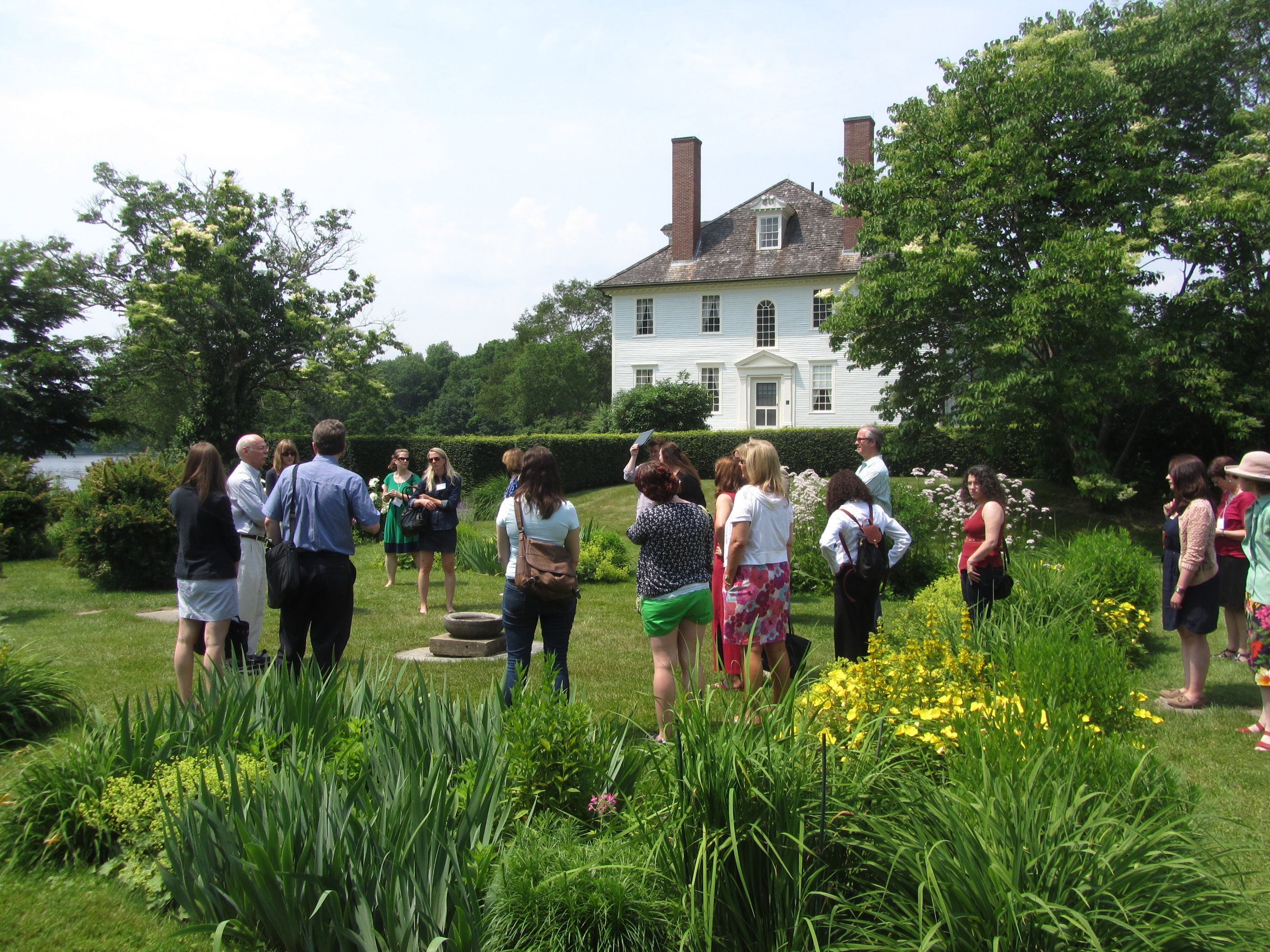
New England’s History and Architecture Explored in June

Program in New England StudiesHistoric New England presents the tenth annual Program in New England Studies (PINES), an intensive learning experience with lectures by curators and architectural historians, workshops, and behind-the-scenes tours of Historic New England’s properties and collections, as well as of other museums and private homes in the region.  This year’s program begins on June 17 with Cary Carson on the 17th century in the Boardman House and ends on June 22 with Richard Nylander and Nancy Carlisle on the Colonial Revival at Beauport.

PINES examines New England history and material culture from the seventeenth century through the Colonial Revival, and delves into building design and technology, and the wide-ranging lifestyles illustrated by the historic sites on the itinerary.  Highlights include private tours of Historic New England properties in Greater Boston; Essex County, Massachusetts; Portsmouth, New Hampshire; South Berwick, Maine; and Woodstock, Connecticut; workshops in furniture, ceramics, and textiles at Historic New England’s facility in Haverhill, Massachusetts; and a private tour of Continue reading

WebWise Conference Coming Up in Early March

WebWise 2012: Project demonstrations

WebWise 2012: Project demonstrations

WebWise, the annual conference hosted by the Institute of Museum and Library Services, will be held in Baltimore on March 6-8, 2013. This year’s conference is co-sponsored by the Roy Rosensweig Center for History and the New Media and is being organized and presented in a very different manner.  In advance, participants (anyone, actually) voted on the proposed workshop topics and then the conference organizers recruit speakers to fill the slots. For the project demonstrations, the participants will be divided into three groups and then rotate through three different sets of presentations. In addition, there will be a series of three-minute lightning talks over lunch, facilitated project/partnership incubator groups, and one-on-one speed consulting sessions. Indeed, there’s only one plenary session scheduled for the entire conference–Audrey Watters of Hack Education–as a keynote on the last day.

I’ve attended as many WebWise Conferences as possible because the content has been outstanding and I often come away with new approaches and strategies, even from the sessions that are far outside my field. This year’s reformatting seems intriguing, but much of the content remains a mystery so Continue reading