
Best Practices for Community Engagement

Community engagement has become an increasingly important aspect in state and local history as a strategy for increasing impact, gaining support, and becoming relevant.  The challenge for most organizations is that engagement can be so daunting and difficult, they don’t know where to begin, how to prioritize among several good ideas, or measure success.
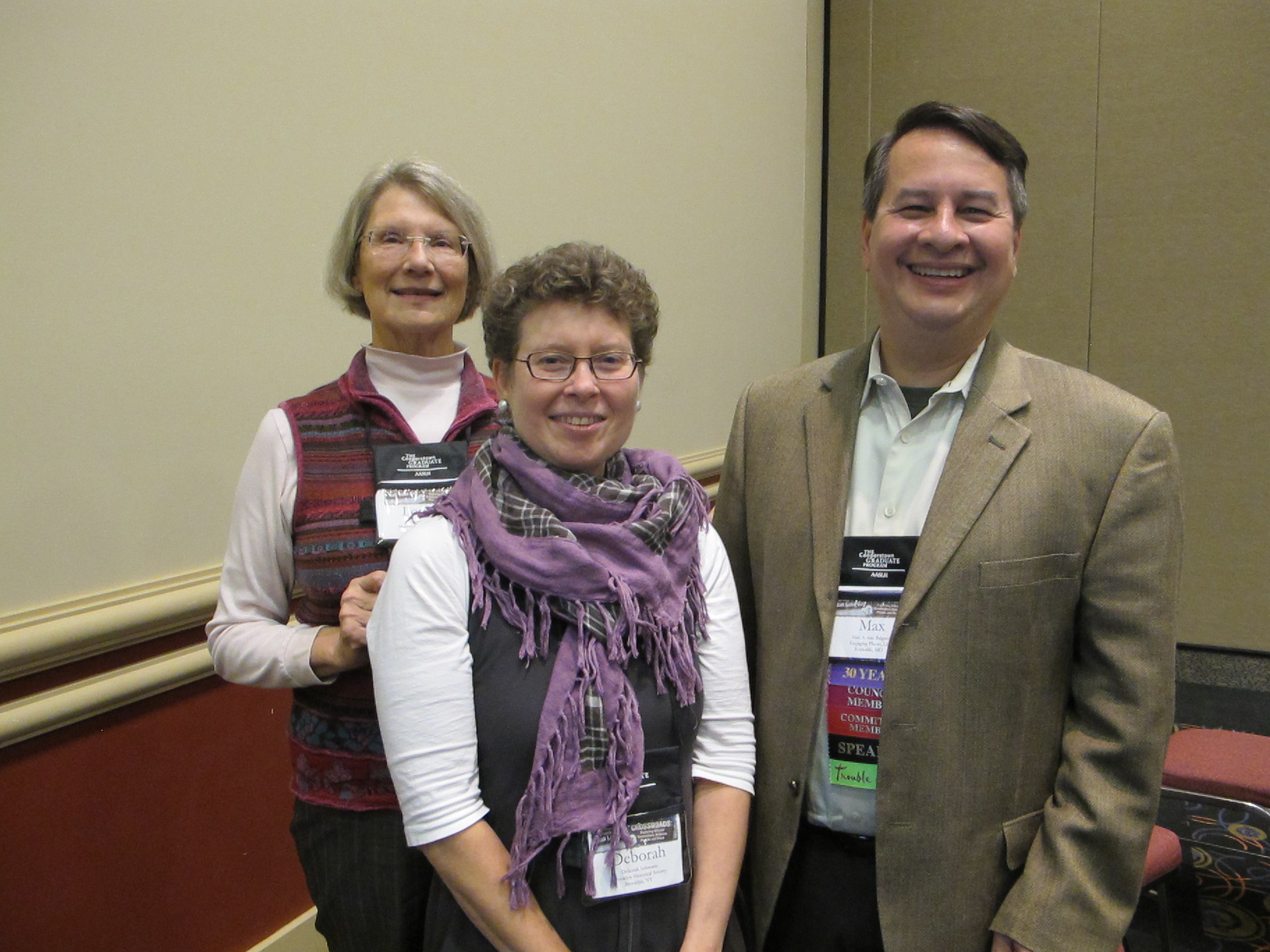
Lorraine McConaghy, Deborah Schwartz, and Max van Balgooy at AASLH 2012.

At the recent AASLH annual meeting, I moderated a session on the experiences of two very different history organizations—the Brooklyn Historical Society and the Museum of History and Industry—whose work in community engagement is not well known in the field yet offer exemplary case studies to examine common strategies, how they should be modified to suit each place’s unique characteristics, and steps to avoid.

Deborah Schwartz, president of the Brooklyn Historical Society, described two programs that reach audiences that are typically underserved by museums: Continue reading
Outdoor Interpretive Panel for Hot Humid Places

This slideshow requires JavaScript.

During a recent visit to Middleton Place, an historic site in Charleston, South Carolina, I spotted an outdoor interpretive sign that’s so nicely crafted that it’s withstood several years of weathering outdoors.  The wooden frame supports a one-inch thick plywood panel (two thinner panels secured together) whose edges are sealed and entire surface painted black (black is Middleton’s standard color for sign posts).  The interpretive sign is printed on a 1/16″ thick sheet of vinyl (or a similar synthetic material) and glued onto the face of the panel.  The top edge of the sign is protected from rain by a copper cap. One corner of the vinyl has turned up over time, but otherwise, the sign seems to be in perfect condition, despite the heat and humidity of summer in the Lowcountry.

Is Your Historic Site Unsure About Next Steps?

In this uncertain environment, many organizations are unsure about the direction to pursue for their historic site or house museum.  Through a self-study process and a personal assessment by an external professional colleague, the Museum Assessment Program (MAP) offers a thoughtful and proven approach to refine your operations, programs, and collections.  I’ve participated in several MAPs and clever organizations have used it to confirm a strategy, refine a project, resolve a vexing issue, support a funding proposal, or move to the next level of operations.  I can’t think of a better program available, except if you’re accredited by AAM, you have a large professional staff, or if you’re able to afford a large team of experts.  Really.  To stay sharp, every historic site and house museum in America needs to go through this program every decade and in between, they should be tackling a section of AASLH’s Standards and Excellence Program.  Really. If you’re not sure, call the director of the historic sites that participated this year:  Montpelier Mansion (Maryland), Old Barracks Museum (New Jersey), Louis Armstrong House (New York), Seward House (New York), Stewart House (Ohio), French Legation Museum (Texas), Poplar Forest (Virginia), and Pabst Mansion (Wisconsin).

To participate, your organization needs to meet some basic requirements (such as be open to the public at least 90 days a year), Continue reading

Montpelier Archaeologists Discover James Madison’s Threshing Machine

This slideshow requires JavaScript.

The rich red clay at Montpelier, the Virginia home of the Father of the Constitution has given up more secrets: the remnants of James Madison’s barn and threshing machine, and evidence that Dolley’s son destroyed both in an attempt to remove the machine from Montpelier before the new owner took possession.

As archaeologists excavated the field slave quarters this summer, they found perplexing evidence they had to research and decipher. First, they found bits of iron that appeared to be pieces of machinery, which indicated that the building was used to house farming equipment. Then, in the soil layers below the iron pieces, they found a trench, which proved to be the outline of a 16-foot x 16-foot building. The trench also contained a set of postholes that held more iron pieces. “The iron and postholes in the trench tell us that the building was modified to allow a piece of machinery to be mounted inside the building,” said Dr. Matthew Reeves, Montpelier director of archaeology and landscape restoration.

More digging revealed bits of bone and ceramics, which indicate that Continue reading

AASLH Meets in Salt Lake City

This slideshow requires JavaScript.

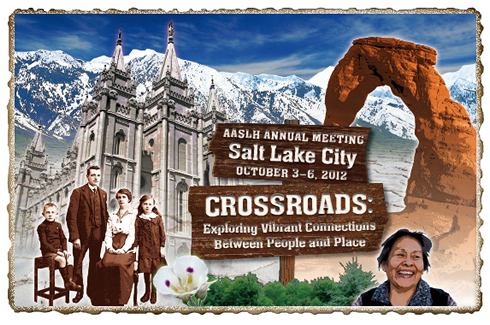
The American Association for State and Local History held its annual meeting in Salt Lake City, Utah last week, attracting about 600 staff, volunteers, and board members of history organizations around the country (and about 30 of them were from the Minnesota Historical Society).  Four days of educational sessions, workshops, speeches, and receptions kept everyone busy and thinking about improving our work as historians, educators, collections managers, curators, and directors of historical societies, museums, and historic sites.  I’ll provide more reports in the future, but for now, enjoy some pics from the meeting.

DC Historic House Museums host Biennial Symposium

This slideshow requires JavaScript.

Working in historic house museums often can often seem like an isolated job but not in the nation’s capital, where there is the Historic House Museum Consortium of Washington, DC, an active association of forty sites that mutually support and promote each other.  Every two years they also host a half-day symposium that attracts about one hundred museum guides, docents, and interpreters.  This year it was held on September 17 at the impressive George Washington Masonic Memorial in Alexandria, Virginia and I joined Dr. George McDaniel of Drayton Hall and Rebecca Martin of the National Archives to talk about various aspects of tours and the visitor experience:

  • George laid out that the visitor experience is much more than the tour and extends to the visitors’ planning, arrival, and departure. He emphasized the importance of little things, such as the directional signage, staff hospitality, and the condition of grounds and restrooms can have on visitors’ attitudes even before the tour starts
  • In “Before You Get Engaged:  Advice for Lovers of History and Historic Sites,” a light-hearted perspective on visitor engagement, I discussed three issues to consider before getting engaged with visitors:  don’t marry a stranger (know your audience), don’t share everything you know about a site on a tour (keep it mysterious), and let them know what you care about (keep your passion alive).
  • Becky closed the session with Continue reading

AASLH Meeting in Salt Lake City Today

I’m currently at the annual meeting of the American Association for State and Local History in Salt Lake City, Utah, not only enjoying the camaraderie of friends and colleagues, but also attending a board meeting, moderating two sessions, and speaking at a  breakfast of historic house museum and visitor research leaders.  If you are attending, I’d love to meet you so please say hello (as a reader of this blog, you have the advantage!) or stop by:

  • Historic House Museums and Visitor Voices Breakfast on Friday, October 5 at 7 am, when Conny Graft and I will be discussing the perception gap between visitors and historic sites.
  • Re-imaging Historic Sites:  Three Roads to the Same Destination on Friday, October 5 at 10:45 am.  I’ll be joined by visitor research consultant Conny Graft, preservation architect Barbara Campagna, and house museum director Gwendolen Raley.
  • Meshing Mission and Community:  Identifying Strategies for Engagement on Saturday, October 6 at 9:00 am.  I’ll be joined by Deborah Schwartz of the Brooklyn Historical Society and Lorraine McConaghy of the Museum of History and Industry.

When I return, I’ll have lots to share so look for those posts in the coming weeks.

Los Angeles to Host International Conference on Care and Interpretation of Collections in Historic Houses

Los Angeles is hosting a four-day international conference on the care and interpretation of collections in historic house museums on November 6-9, 2012 called, The Artifact, its Context, and their Narrative: Multidisciplinary Conservation in Historic House Museums.  A half dozen organizations are sponsoring and hosting the conference, including ICOM-DEMHIST (the international committee for historic house museums), three ICOM conservation working groups, the Getty Conservation Institute, Getty Research Institute, the University of Southern California’s School of Architecture/Heritage Conservation Program, and the Gamble House.  Historic sites encounter some of the most challenging preservation issues in the museum field because it is often impossible to maintain environmental conditions that are ideal for the collections, building, and visitors.  Indeed, some leaders in the field have wondered whether historic sites should be even considered museums because it establishes such an impossible standard.

The four-day conference consists of two days of site visits (such as the Gamble House, Huntington Library, Eames House, and Will Rogers Ranch) and two days of presentations and lectures.  Sarah Staniforth (National Trust UK) and Linda Young (Deakin University) will be providing broad overview presentations on the challenges and opportunities facing collections in historic sites, but most of the presentations are Continue reading

Frank Lloyd Wright’s Archives Transferred from his Homes to NYC

Taliesen, Spring Green, Wisconsin, 1932. Drawing by Frank Lloyd Wright.

The Frank Lloyd Wright Foundation, which owns and operates Taliesen and Taliesen West–the homes and studios last used by Frank Lloyd Wright–has transferred its architectural archives of papers, drawings, and models to the Avery Architectural & Fine Arts Library at Columbia University and the Museum of Modern Art in New York City.  The collection includes more than 23,000 architectural drawings, about 40 large-scale, architectural models, some 44,000 photographs, 600 manuscripts and more than 300,000 pieces of office and personal correspondence. “The Frank Lloyd Wright Foundation takes seriously its responsibility to serve the public good by ensuring the best possible conservation, accessibility, and impact of one of the most important and meaningful archives in the world,” said Sean Malone, CEO of the Frank Lloyd Wright Foundation. “Given the individual strengths, resources and abilities of the Foundation, MoMA and Columbia, it became clear that this collaborative stewardship is far and away the best way to guarantee the deepest impact, the highest level of conservation and the best public access.”

The decision to transfer the collections couldn’t have been easy for the Foundation–it’s a significant part of their identity with tremendous historical and cultural value.  Admitting you can’t care for a collection is difficult–but organizations should regularly ask themselves if they’re the only ones to do this work and if someone else can do it better.  It’s especially tough at historic sites and house museums–they typically have the most complex collections management issues of any museum. Not only are they caring for Continue reading

Schedule Change for ½ Day Workshop at AASLH Annual Meeting

“Connecting Visitors with Inspired Staff: Training Front-line Staff and Volunteers” will be on Wednesday, October 3, 2012, from 1:30-5 p.m. (not Saturday)

As history professionals, we believe that our sites are special places. Helping visitors
find a connection to these places is at the core of what we do—and is essential for our
long-term sustainability. Every year, visitor research and learning theory provide us with
more information about what the public wants from their visits to museums and historic
sites. Yet we often fail to translate this data into meaningful training that enables our
frontline staff to create excellent experiences for our guests. Instead, guided tours and
interpretive programs often take the form of mini lectures on the topics that interest
the front-line interpretive staff or docents. “Connecting Visitors with Inspired Staff:
Training Front-line Staff and Volunteers” will give participants an opportunity to Continue reading