Tag Archives: American Association for State and Local History

Profiling Your Members Will Improve Engagement

This week I’m teaching a workshop on historic house museum management with George McDaniel for the American Association for State and Local History.  It’s great fun working with people from all over the country because we learn so much from each other.

One of the most popular sections is membership (who doesn’t want more supporters?).  George uses his experience from Drayton Hall to demonstrate some techniques in the tour for showing “membership dollars at work,” which gets visitors so excited that many join at the end of the tour.  With members in more than 7,500 households in all 50 states, Drayton Hall must have one of the nation’s largest membership programs for an historic site, so their techniques work.

I provide a complementary perspective, using profiles to understand member motivations and interests.  In an exercise, I have the class combine a mission statement with a member profile to develop a membership program or activity.  I’m always surprised by Continue reading

History News reprises Salt Lake City meeting and more

History News, Winter 2013

History News, Winter 2013

The Winter 2013 issue of History News, the quarterly magazine of the American Association for State and Local History, just hit my desk and focuses on the annual meeting held last fall in Salt Lake City.  Featured are the speeches of out-going president Stephen Elliott, award-winner Robert Archibald, and keynote speaker Laurel Thatcher Ulrich, which include such memorable quotes about history and museums, such as:

  • Ulrich:  “It is a truism that without sources there is no history, but we also need to understand those sources.  Most people who had looked at Martha Ballard’s diary said it was filled with mundane detail of little interest, filled with trivia.  The same has been said of Patty Sessions.  What I want to emphasize is that there is, if not drama in these humdrum records, a powerful story.  It is a history that pushes back against conventional sources.”
  • Elliott:  “To appreciate who others are and where they’re coming from, it’s important to Continue reading

Workshops for History Museums and Historic Sites

The American Association for State and Local History unveiled an assortment of workshops for spring (there’s one in every time zone!):

Project Management for History Professionals
Dates: March 7 – 8
Location: History Colorado, Denver, CO
Instructor: Dr. Steven Hoskins, Trevecca Nazarene University, Nashville, TN
Cost: $475 members / $550 nonmembers
$40 discount if payment is received by January 31 (coming up next week!)

This unique two-day workshop improves how history museums operate and serve their community by teaching the fundamentals of project management to history professionals. Everyday work—exhibitions, programming, fundraising, special events, outreach, and collections care—benefit from the knowledge gained. Registration for the onsite workshop also includes access to an online course with related material.

From Children to Adults: Public Programming at History Organizations
Dates: March 14 – 15
Location: Homestead Museum, City of Industry, CA
Instructors: Tim Grove, National Air and Space Museum, Smithsonian Institution, Washington, DC; Alexandra Continue reading

History News looks at Historical Interpretation

History News, Autumn 2012

History News, Autumn 2012

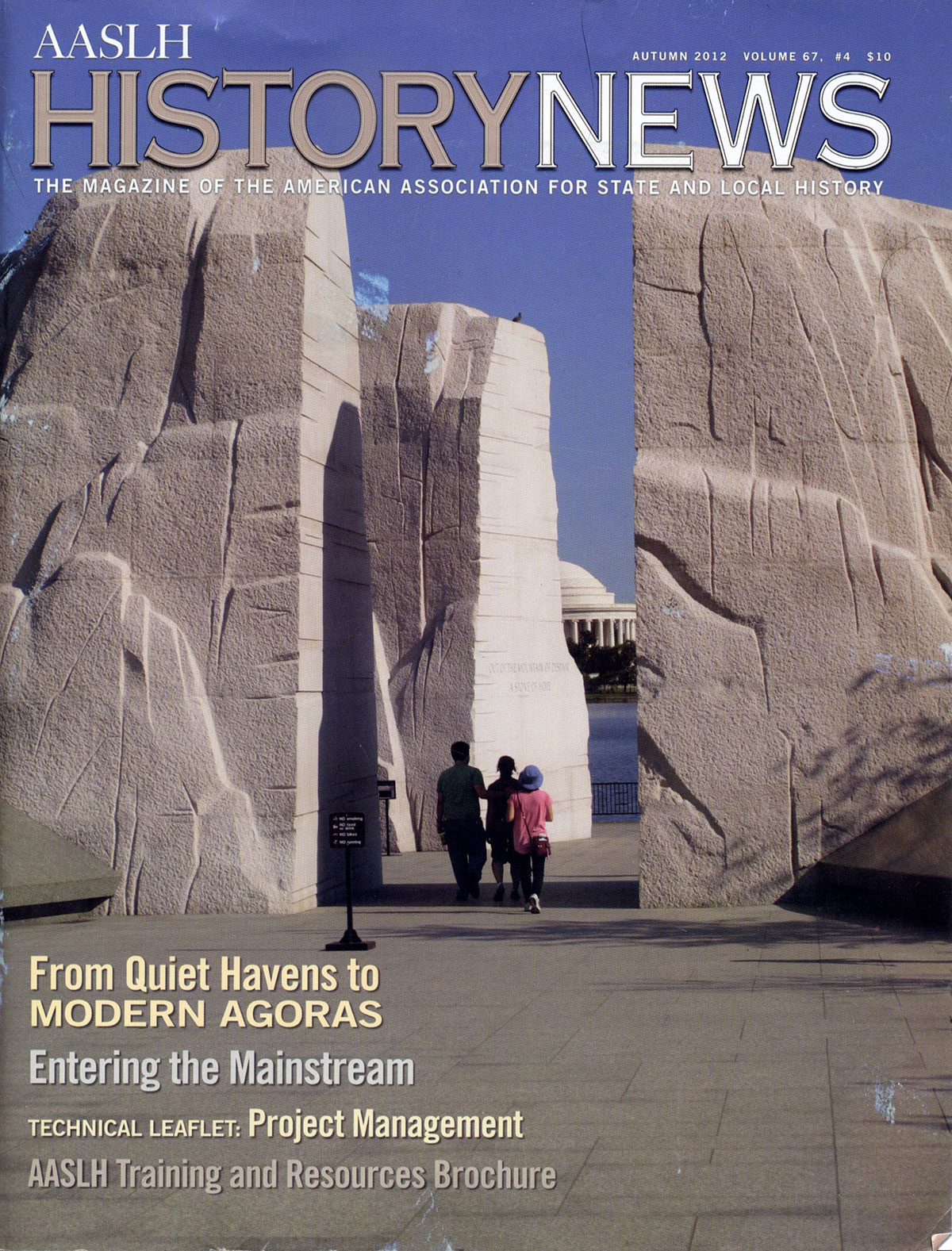
The autumn 2012 issue of History News arrived in my mailbox a couple weeks ago and its four feature articles on interpretation that will be of interest to historic sites:

  • “From Quiet Havens to Modern Agoras:  Libraries and Museums in an Era of Participatory Culture” by Nancy Rogers, Susanna Seidl-Fox, and Deborah Mack is a report, including the key overarching messages, from an international seminar held in Salzburg, Austria in October 2011.
  • “‘No More Wiggle-Tail Water’: Interpreting the History of Morgantown’s Water Supply at the West Virginia Botanic Garden” by Barbara Howe is a case study on integrating history in a place that focuses on horticulture and nature.
  • “When Histories Horrify: Supporting Visitors’ Responses through Responsible Interpretation” by Linda Norris, Danny Cohen, and Stacey Mann is a continuation of a session at the American Alliance of Museum’s annual meeting on the roles and responsibilities of museums in preserving and mediating horrific histories of crimes, violence, terrorism, and oppression, with references to the Kilmainham Gaol, Majdanek, Robben Island, and the Greensboro Woolworth.
  • “Entering the Mainstream:  Interpreting GLBT History” by Ken Turino and Susan Ferentinos addresses four common challenges (institutional policies on discussing sex, lack of documentary evidence, applying modern labels to historical figures, pressure to avoid controversial topics) using examples from Pendarvis, Walt Whitman House, Beauport, Sarah Orne Jewett House, Alice Austen House, and Charles Gibson House.

Also included are Continue reading

AASLH and AAM Align Efforts to Raise Standards and Practices

The American Association for State and Local History (AASLH) and the American Alliance of Museums (AAM) recently announced they will work together to raise awareness of national museum standards and align their assessment programs in order to streamline application and self-study processes.  The agreement outlines ways in which applicants of AAM’s Museum Assessment Program (MAP) will benefit after completing AASLH’s StEPs program, in other words,  AASLH and AAM have linked StEPs with MAP.  If you understand that sentence, you’ve been working in this field a long time.

What’s this mean for historic sites?  Both StEPs and MAP are great programs for improving your organization’s work, but they’re very different from each other.  StEPs allows you to Continue reading

AASLH Meets in Salt Lake City

This slideshow requires JavaScript.

The American Association for State and Local History held its annual meeting in Salt Lake City, Utah last week, attracting about 600 staff, volunteers, and board members of history organizations around the country (and about 30 of them were from the Minnesota Historical Society).  Four days of educational sessions, workshops, speeches, and receptions kept everyone busy and thinking about improving our work as historians, educators, collections managers, curators, and directors of historical societies, museums, and historic sites.  I’ll provide more reports in the future, but for now, enjoy some pics from the meeting.

Schedule Change for ½ Day Workshop at AASLH Annual Meeting

“Connecting Visitors with Inspired Staff: Training Front-line Staff and Volunteers” will be on Wednesday, October 3, 2012, from 1:30-5 p.m. (not Saturday)

As history professionals, we believe that our sites are special places. Helping visitors
find a connection to these places is at the core of what we do—and is essential for our
long-term sustainability. Every year, visitor research and learning theory provide us with
more information about what the public wants from their visits to museums and historic
sites. Yet we often fail to translate this data into meaningful training that enables our
frontline staff to create excellent experiences for our guests. Instead, guided tours and
interpretive programs often take the form of mini lectures on the topics that interest
the front-line interpretive staff or docents. “Connecting Visitors with Inspired Staff:
Training Front-line Staff and Volunteers” will give participants an opportunity to Continue reading

AASLH Workshops for Historic Sites

The American Association for State and Local History offers a wide range of educational workshops and professional training that is particularly helpful for staff and volunteers for work at historic sites and house museums–if you know where to look.  I’ve previously mentioned the sessions during its annual meeting but people often forget that it also has half-day and day-long workshops before and after the annual meeting to explore topics in depth.  What most people don’t know is that you can register for just these workshops; you don’t have to attend the annual meeting–a great advantage for local folks!

This year, AASLH is offering 14 workshops, including:

AASLH Conference Offering Lots for Historic Sites

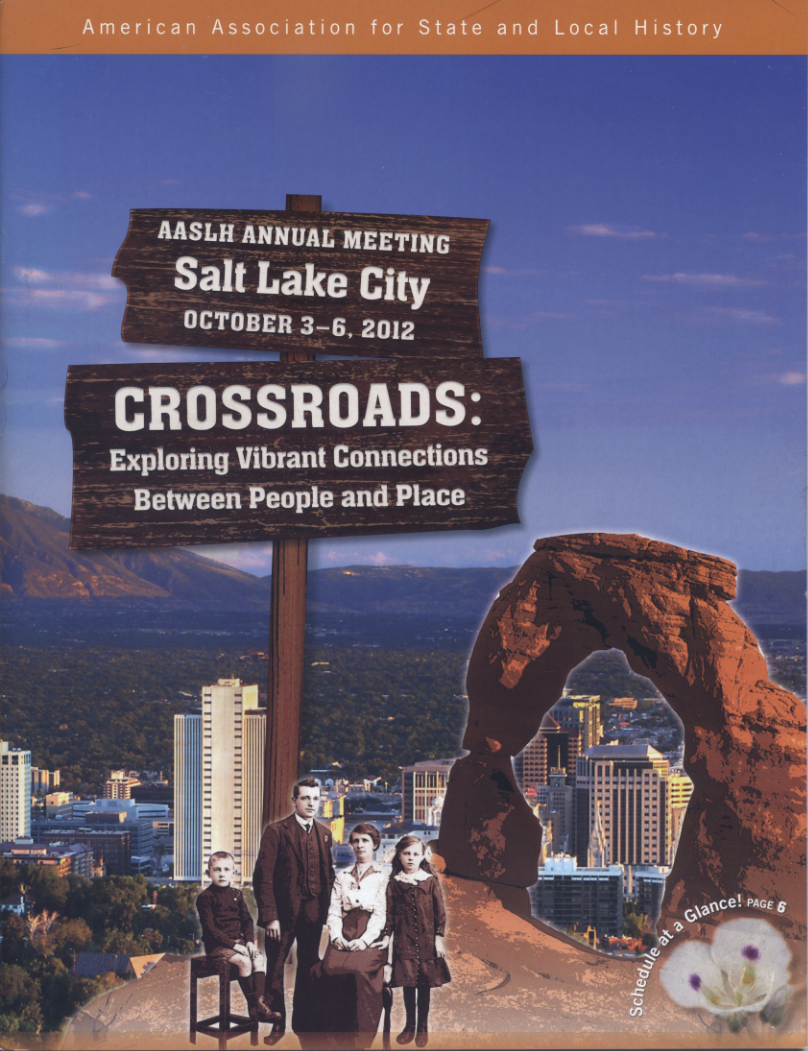
Preliminary program for the 2012 AASLH Annual Meeting in Salt Lake City.

The program for the annual meeting (aka conference) of the American Association for State and Local History just arrived in my mailbox.  Flipping through its pages, there are more than 70 educational sessions, many that focus specifically on historic sites and house museums including:

  • Twilight at Conner Prairie: The Creation, Betrayal, and Rescue of a Museum
  • Too Important to Fail: Historic House Museums Meet Communities’ Needs
  • Business Models and Earned Income for Historic Houses
  • Visitors to Religious Sites: The Whos and Whys
  • Historic Places as Museums: Crossroads of Expectations
  • Re-imagining Historic Sites: Three Roads to the Same Destination
  • Paranormal Policies (if your site hasn’t been contacted by paranormal researchers in pursuit of ghosts, your time will come)

In addition, most of the other sessions are helpful, depending on your needs and interests.  There are sessions on fixing poorly functioning Continue reading

AASLH Council Meets in Maine

This slideshow requires JavaScript.

This past Saturday, the Council (aka board) of the American Association for State and Local History met in Maine for one of their three regular meetings each year.  It’s been a tough few months due to the discovery of embezzlement and fraud within the organization, so this meeting had been preceded by nearly a dozen additional meetings of the Council and several committees by conference call to deal with various aspects related to the situation, potential threats to the organization, and improvements to our current financial management by reviewing and revising various policies, procedures, and practices.  This meeting adopted revised financial policies and procedures; adopted revised codes of ethics for board, staff, and organization; adopted a revised conflict of interest policy for board and staff; and discussed how the by-laws may need to revise the finance and audit committee responsibilities as well reconsider how Council members are elected to ensure we have sufficient people on board with financial skills.  We also began working more strategically, looking longterm to identify priorities so we can preserve those programs that matter most to members and most effectively fulfill the mission.  History News and the annual meeting/conference rose to the top as expected, but Continue reading