Tag Archives: George Washington University

Job Fairs: A New Public Program for Museums?

This fall, the Museum Studies Program at George Washington University is joining forces again with the History and Art History Departments to offer a Museums+ Internship Fair. Now in its second year, the fair connects undergraduate and graduate students with a wide range of museum and history internship opportunities in the DC area. For a couple of hours on a Friday afternoon, students will gather in the atrium of the Corcoran School of the Arts and Design to meet representatives from dozens of institutions—including the National Gallery of Art, Hillwood Estate, the National Museum of Women in the Arts, Supreme Court of the United States, White House Historical Association, and many more. The goal is simple: to help students discover just how much they can do with their degrees and to broaden their horizons by meeting professionals working across the museum and history fields.

As we’ve been preparing for the fair, I began to wonder—what if museums and historic sites flipped the concept and hosted a similar program for their own communities? Instead of being a service for students alone, imagine it as a public program, designed to connect local residents, businesses, and organizations with the museum itself.

Benefits to the Community

For many people working in business, technology, or traditional jobs, the idea of contributing their skills to a nonprofit or museum has never crossed their minds. They may not recognize that their expertise—whether in marketing, finance, customer service, or carpentry—has enormous value to cultural organizations. By connecting residents with organizations and ideas outside their usual circles, museums can help expand horizons and build confidence.

Benefits for the Museum

Continue reading

Exploring Sustainability in Museums: A New Graduate Course at GWU

This spring, I’m excited to launch a new graduate course at George Washington University, Creating Sustainable Museums. Designed for those new to the topic, the course combines theory with practice to explore how museums can address sustainability through financial stability, social equity and access, and environmental responsibility.

At the heart of the course are three core texts that introduce students to sustainability’s principles, history, and practical applications. We begin with Jeremy Caradonna’s Sustainability: A History, a compelling exploration of sustainability’s roots in the 18th-century deforestation crises and the consumer revolution. Caradonna introduces key figures like John Muir and Gifford Pinchot and influential movements such as the Club of Rome. He also explains foundational terms like lifecycle analysis, greenwashing, carbon footprints, and B Corporations. By tracing sustainability’s evolution, the book helps students understand that this is not just a modern buzzword but a framework deeply embedded in our history and practices (although it becomes very dense in the second half of the 20th century).

Continue reading

Malaro Symposium Welcomes DC Museum Professionals

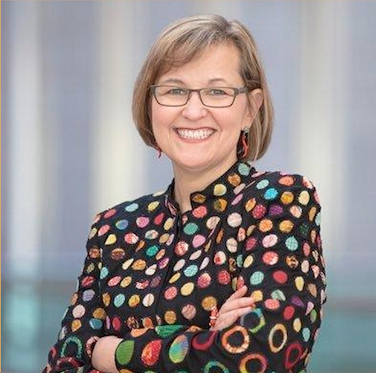
Kaywin Feldman, director, National Gallery of Art

This Friday, April 1 from 4-6 pm, the Museum Studies Program hosts the 24th Malaro Symposium in Hammer Auditorium at the Corcoran School of the Arts and Design, 500 17th Street, NW (enter from the side entrance on New York Avenue). Admission is free. The annual symposium is held in honor of Marie Malaro, the longtime chair of the Museum Studies Program and author of the landmark book, A Legal Primer on Managing Museum Collections. Kaywin Feldman, director of the National Gallery of Art, will discuss museums in uncompromising times, and we’ll have three students share highlights from their award-winning research papers:

  • Avery Barth, “New Archives, New Practices: Exploring the Digitial Transgender Archive”
  • Norman Storer Corrada, “Austerity and Access: The Ongoing Challenges of the Institute of Puerto Rican Culture National Collection”
  • Haley Higinbotham, “The Utilization of Technology to Show the Polychromy of Ancient Art”

Because the pandemic has reduced opportunities for museum professionals to get together to catch up, we’ll be hosting a special reception afterward for those who live and work in the DC region. It’ll be a nice chance to close out the week and celebrate spring. Admission is free and we’d appreciate registration in advance at https://www.eventbrite.com/e/24th-annual-marie-c-malaro-awards-symposium-tickets-294889611767

Resources for Transitioning Museum Programs to Online

Attending George Washington University’s online workshop to prepare for teaching online this fall.

George Washington University (GW), where I teach in the Museum Studies Program, recently decided to move all of its courses online this fall. To prepare, I completed an intensive three-day course to create effective online courses, which introduced the latest research on the factors that make online courses effective and wide (and overwhelming) range of teaching tools that are available.

I’m incredibly fortunate that GW is supporting the faculty with lots of resources and training this summer, which required the Libraries and Academic Innovation staff to move quickly to prepare videos, workshops, and materials faster than I ever would for a student course. Many of the ideas that I gathered could easily be adapted by museums and historic sites as they shift their programming, so I wanted to share them with you. Some don’t require any costly software applications or learning management systems, but just some new planning approaches:

Continue reading

GW Students Identify Strong Mission Statements

Students in the museum management course at George Washington University ranking museum mission statements.

One of the big ideas confirmed in Reimagining Historic House Museums is the significant role of a strong mission statement. They’ve been in active use in museums since the 1980s and yet, there are still plenty that are uninspiring, convoluted, or superficial slogans.

Because mission statements are so essential to the management of museums, I spend two classes of my museum management course at George Washington University discussing them using the AAM Standards along with articles by Willard Boyd, Stephen Weil, Peter Drucker, Philip Kennicott, and Sebastian Desmidt, and a chapter from Museums in Motion. Through several small group activities, the students develop a list of characteristics for strong mission statements and then test them against the mission statements for the eighteen museums they are using as case studies. Although these are graduate students with very little experience in museums, they do a terrific job identifying mission statements that can inform decisions and guide actions. For the museums they are studying this semester, these are ones with the strongest mission statements (in alphabetical order):

Continue reading

Recent Research on Common Target Audiences for Museums

Students in “Museums and Community Engagement” develop engagement plans through a wide variety of tools and techniques, including crowdsourcing research on target audiences.

This semester my course on museums and community engagement at George Washington University prepared an annotated bibliography of research published in the last decade on audiences that are a common focus for museums in the United States:  students in grades 3-5, families with children under 12 years, and adults over 50 years.  Because most museums don’t have access to academic research libraries, the class has agreed to share their bibliography with the field (link to pdf below).  While the thirty-six articles provide a useful picture of the research for these audiences, please recognize it is not complete nor comprehensive—with twelve students in the course in a fast-moving semester, this is just to get them started on a community engagement plan for the Alexander Ramsey House, Joel Lane House Museum, and Van Cortland House.

Highlights of Recent Research on Common Target Audiences for Museums 2019

Productivity Apps for Emerging Museum Professionals

Projects are the buildings blocks for getting things done. When they’re small, they can be easily completed without much attention but when they get big, involving many people and large budgets, the complexity and risk of failure increases, especially when time and money is limited.

This past semester, graduate students in my “Managing People and Projects” course at George Washington University developed skills and used tools to manage these more challenging situations in a wide variety of museum-related projects, such as exhibitions, events, symposia, publications, school programs, and building construction. As a part of the course, students reviewed some of the latest application software (apps) for project management, including Shortcuts, Evernote, TeamGantt, OmniFocus, Trello, Asana, and Slack.

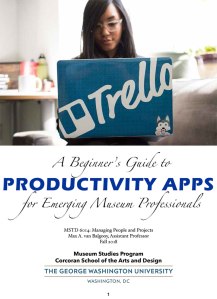
Unlike reviews prepared by CNET or published in a computer magazine, these reviews are written by emerging museum professionals for emerging museum professionals.  I might disagree with some of their conclusions, but often the difference was about cost or applicability at the start of one’s career.  If you’ve been thinking about increasing your productivity using apps, check out “A Beginner’s Guide to Productivity Apps for Emerging Museum Professionals.”

And if you want my recommendations on apps, I work in the Continue reading

Combining Theory and Practice in GW’s Museum Studies Courses

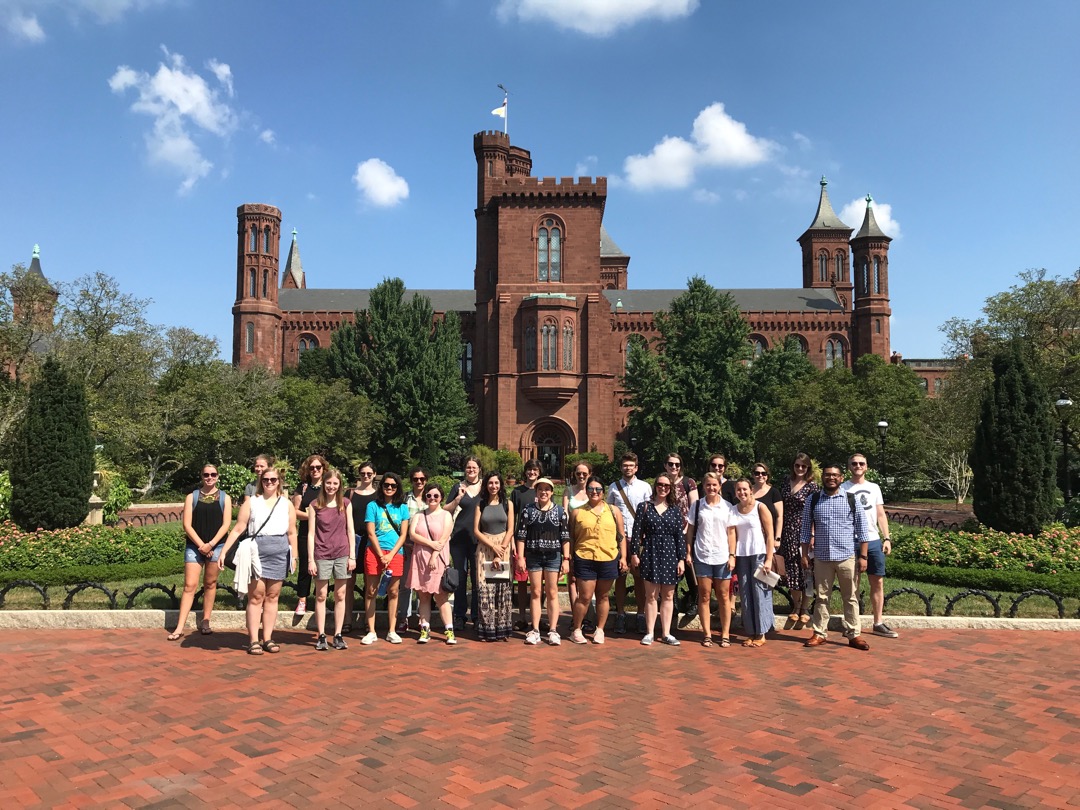
GW’s Museum Management class in the midst of a whirlwind tour of the Smithsonian on a hot and humid day in Washington, DC.

As I enter my second semester as a full-time faculty member in the Museum Studies Program at George Washington University, I’ve adopted a “flipped classroom” format and am fully integrating theory with real-life experiences.  It’s been an incredible amount of work to revise my syllabi this summer, but so far, the students seem to be learning and enjoying their classes more (we’ll see how the evaluations look at the end of the semester!).

In my museum management class, students will complete an abridged version of a MAP Organizational Assessment for a museum, relying on information available from the website, newspaper articles, IRS Form 990, and the AAM Standards. I assigned the museums based on a random selection to represent the diversity of museums in the United States.  We work through the Standards and as we discuss each topic in class, such as governance or collections, we’ll talk about how their particular museum has approached it. This week we’ll be discussing mission so they’ll be evaluating the mission statements for the 25 museums we’re examining in class to determine a set of criteria and identify model mission statements.

New this semester is my course on project management in museums. Our core readings are: Continue reading

Looking to Get Started with an IMLS Application?

This fall I’ll be teaching a project management class in the Museum Studies Program at George Washington University (GW) and the final project will be writing a grant application to the Institute of Museum and Library Services (IMLS). The final project gives graduate students a real-life experience and provides museums with a foundation for an Institute of Museum and Library Services (IMLS) grant application.

If you’ve been thinking about applying for IMLS grant to improve the care of your collections, better engage your community, or improve learning through your museum but have been too busy or unsure where to begin, GW graduate students may be able to help. It’s part of our effort to serve the museum field, especially smaller institutions that are often juggling too many responsibilities without sufficient resources.

IMLS’ Museums for America (MFA) is one of the best federal grant programs available because it supports “projects that strengthen the ability of an individual museum to serve its public.”  That’s pretty flexible but projects do need to focus on one of three areas: Continue reading

Local Museums Connect GW and NSDCA

IMG_4059

Museum studies students learning QGIS in GW’s Museums and Community Engagement course.

Closing out my first semester as a professor in the Museum Studies Program at George Washington University was inspirational.  Graduation was perhaps the culmination of the students’ achievements, but it was also seen in their final products in the three courses I taught.  I always aim to give them a major project that provides a real-world experience, such as completing an Organizational Assessment report from AAM’s Museum Assessment Program (MAP). In the “Museums and Community Engagement” class, the final assignment is a community engagement plan but it was done in partnership with several local museums, creating a mutually-beneficial relationship.

Because The National Society of The Colonial Dames of America (NSCDA) has the largest alliance of museums and historic sites in the nation (except for the National Park Service), I prepared for the course by reaching out to my colleagues at Dumbarton House in Washington, DC, which is the headquarters for the Dames. Karen Daly and Catherine Nuzum welcomed the partnership between this course and their sites, providing advice along the way and helping me identify Continue reading