
Tag Archives: Hillwood Estate

Can I Take a Picture?

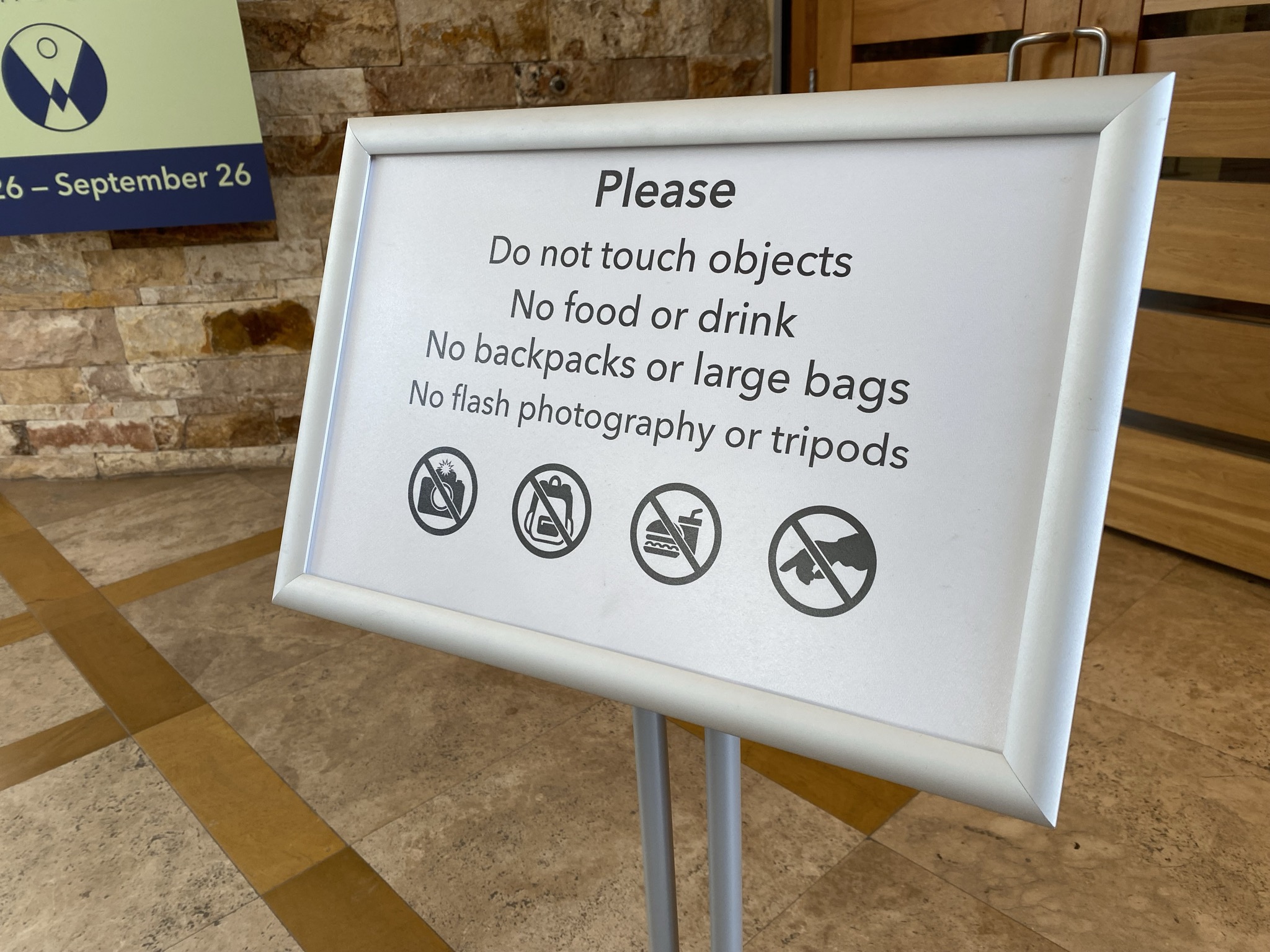
Sign at the entrance to the Albuquerque Museum in New Mexico.

What Museum Photography Policies Reveal About Visitor Experiences

While examining visitor codes of conduct, I started noticing another kind of museum policy that is becoming more visible: photography policies. They appear on websites, ticketing pages, “Know Before You Go” guides, and signs in galleries, historic houses, gardens, and exhibitions. Like codes of conduct, photography policies have always existed in some form, but they now seem more detailed, more prominent, and more complicated.

At first glance, the question seems simple: can visitors take pictures? But museum photography policies reveal that this is no longer a yes-or-no issue. The better question is: what kind of photography, by whom, for what purpose, in what space, and with what effect on collections, staff, visitors, and the experience?

To explore this question, I reviewed photography rules embedded in dozens of visitor codes of conduct and visitor policy pages from museums and historic sites. This was not a scientific or comprehensive study. It was an initial scan of current practice to identify common patterns and management issues. I am not offering legal advice here; museums should consult an attorney on copyright, releases, privacy, and commercial use. My interest is in how these policies shape visitor experience and staff decision-making.

The broad trend is clear: casual, personal photography is increasingly welcomed, but excessive equipment and disruptive, staged, or commercial photography is increasingly controlled.

Continue reading

Job Fairs: A New Public Program for Museums?

This fall, the Museum Studies Program at George Washington University is joining forces again with the History and Art History Departments to offer a Museums+ Internship Fair. Now in its second year, the fair connects undergraduate and graduate students with a wide range of museum and history internship opportunities in the DC area. For a couple of hours on a Friday afternoon, students will gather in the atrium of the Corcoran School of the Arts and Design to meet representatives from dozens of institutions—including the National Gallery of Art, Hillwood Estate, the National Museum of Women in the Arts, Supreme Court of the United States, White House Historical Association, and many more. The goal is simple: to help students discover just how much they can do with their degrees and to broaden their horizons by meeting professionals working across the museum and history fields.

As we’ve been preparing for the fair, I began to wonder—what if museums and historic sites flipped the concept and hosted a similar program for their own communities? Instead of being a service for students alone, imagine it as a public program, designed to connect local residents, businesses, and organizations with the museum itself.

Benefits to the Community

For many people working in business, technology, or traditional jobs, the idea of contributing their skills to a nonprofit or museum has never crossed their minds. They may not recognize that their expertise—whether in marketing, finance, customer service, or carpentry—has enormous value to cultural organizations. By connecting residents with organizations and ideas outside their usual circles, museums can help expand horizons and build confidence.

Benefits for the Museum

Continue reading