
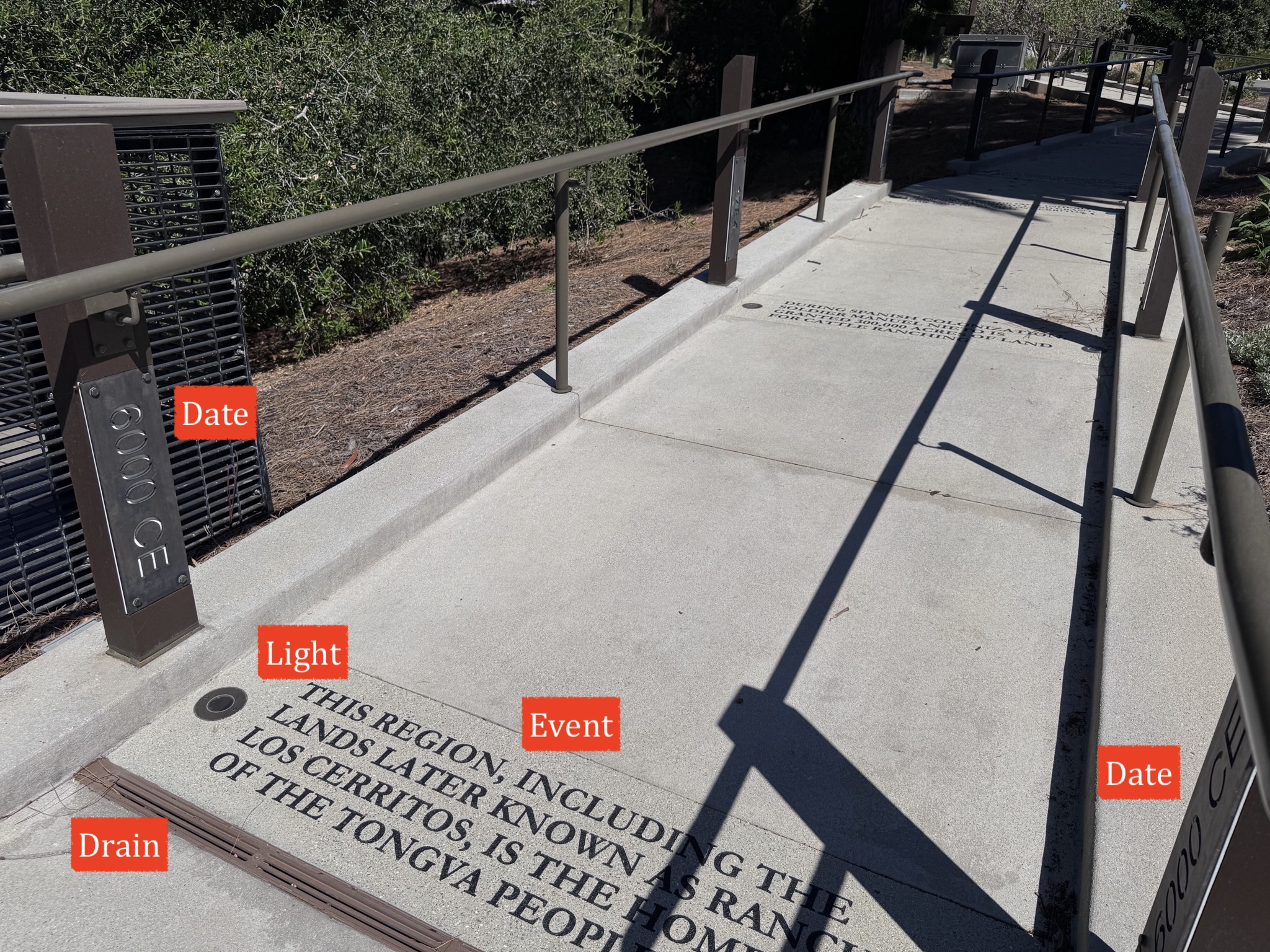
A couple of weeks ago, Engaging Places spent two days at Rancho Los Cerritos in California as part of an interpretation and visitor experience assessment. Before I even reached the house, something caught my attention—and it’s stayed with me since.
Walking in from the parking lot, I encountered a pathway that integrates a timeline from past to present. It was developed as part of a stormwater and groundwater reclamation project designed by Studio One Eleven, but what struck me wasn’t just the infrastructure—it was the interpretive opportunity. The walkway quietly does something many historic sites struggle to achieve: it begins interpretation before the visitor even arrives.
I’ve long been interested in how entrance sequences can frame a visitor’s experience, and this is a particularly effective example. As you move along the path, you’re also moving through time. Each step becomes a kind of measurement—an embodied sense of duration and change. It’s intuitive, familiar, and requires almost no instruction. In a matter of moments, visitors gain a basic orientation to the site’s history and significance.
 Engaging Places