Author Archives: Max van Balgooy

Unknown's avatar

About Max van Balgooy

President of Engaging Places LLC, a design and strategy firm that connects people to historic places.

Job Announcements Should Inspire, Not Confuse

Recently, I came across a job announcement for a senior position at a museum that left me more frustrated than inspired. Despite the important role it advertised, the description was riddled with vague language, overused phrases, and an overwhelming list of responsibilities. If it weren’t for the letterhead, this could have been a job at nearly any museum in the country. Here’s what went wrong—and how we can do better:

1. Clear, Specific Language Beats Buzzwords

Phrases like “championing change management,” “leveraging opportunities,” or “fostering growth” sound impressive, but what do they actually mean? Without clarity, these terms are open to interpretation, leading to confusion or disagreements down the line. A good job description uses concrete language to convey expectations. For example, instead of “fostering growth,” specify what kind of growth: increasing visitor numbers? Expanding programming? Generating revenue?

2. Prioritize, Don’t Overwhelm

This particular job description listed a dozen “essential” duties and responsibilities, each with multiple sub-points. While comprehensive, such an exhaustive list signals a lack of prioritization. No one can excel at everything, and candidates may be deterred by the sheer scope of the expectations. Instead, focus on the top three to five priorities that are most critical to success in the role.

Continue reading

Exciting News: Expanded Services for Museum and Historic Site Management

At Engaging Places, we are committed to helping museums and historic sites engage audiences and preserve our shared heritage. We are excited to announce the expansion of our services to include collections stewardship documents that align with the ethics and professional standards set by the American Alliance of Museums, as well as governance materials—essential tools that equip their board members with the necessary knowledge and resources to govern effectively and advance the organization’s mission.

These new services are led by Mary van Balgooy, Vice President of Engaging Places. Mary brings extensive experience as an executive director of both local and national nonprofit organizations and as a collections manager for history museums and historical societies of all sizes. Her expertise allows us to offer customized solutions tailored to each organization’s unique needs. Whether you are a newly established nonprofit or a long-standing institution, we will provide the necessary documentation and best practices to support your collections management and equip your leadership team with effective governance tools. Learn more about Mary’s impressive background here.

Services Provided:

Continue reading

Is Free Admission Really the Key to Unlocking Museum Doors?

Imagine walking into a museum for the first time. The sunlight filters through glass atriums, the smell of polished wood and history greets you, and the quiet hum of curiosity fills the air. For some, this is an everyday experience. For others, it’s a world they’ve never dared to enter. Free admission promises to change that, throwing open the doors to anyone, regardless of their pocketbook. But does it really work? I scanned the journals to see what researchers had discovered.

What Free Admission Gets Right

Let’s face it—free admission has a magnetic pull. People are more likely to take a chance when the price barrier vanishes. Lin (2008) notes that museums offering free access often see surges in attendance. Suddenly, a day at the museum isn’t competing with groceries or a new pair of shoes—it’s a possibility.

In France, Gall-Ely et al. (2007) found that free admission felt like a gift. Visitors talked about how it gave them permission to explore without guilt or second-guessing. Think of it as a universal invitation: “Come in, look around. This is your space, too.” Similarly, Barbosa and Brito (2012) found that open-day events broke the ice, especially for hesitant first-timers. Those who’d never considered a museum visit were finally stepping inside.

Continue reading

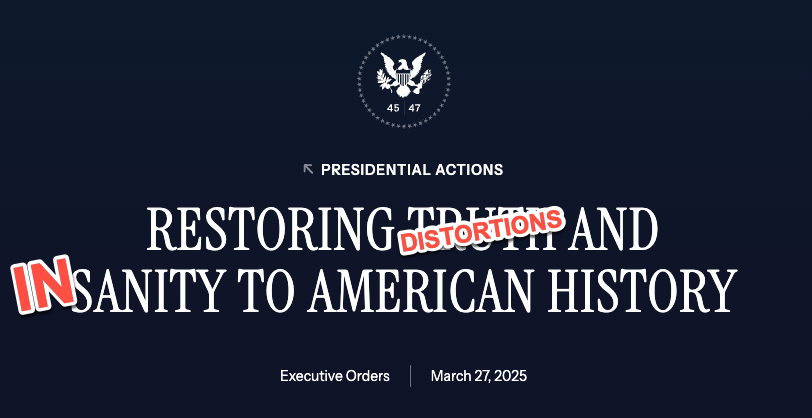
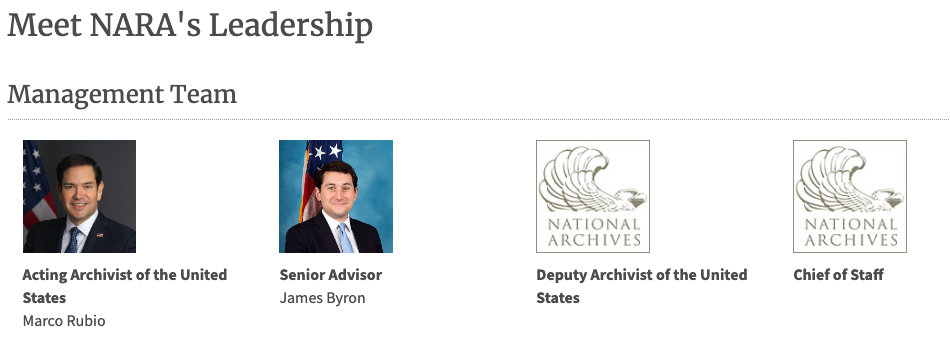
Navigating New Federal Policies: What Executive Orders Mean for History Museums and Historic Sites

Museums are no strangers to navigating shifting policy landscapes, but recent executive orders issued by the White House signal significant changes that will affect funding, interpretation, and educational outreach. Whether you work in a history museum, a historic preservation organization, or a community-based historical society, understanding these policies is crucial for adapting to new challenges and opportunities.

Key Themes Across the Executive Orders

1. A Shift Toward Patriotic and Nationalist Narratives

Executive Orders 14190 (Ending Radical Indoctrination in K–12 Schooling) and 14189 (Celebrating America’s 250th Birthday) prioritize “patriotic education” and reinforce a government-endorsed interpretation of American history. This shift is exemplified by the reestablishment of the 1776 Commission and the creation of Task Force 250, which will oversee programming related to the 250th anniversary of American independence. “Patriotic education” is defined as “the history of America grounded in:

  • (i) an accurate, honest, unifying, inspiring, and ennobling characterization of America’s founding and foundational principles;
  • (ii) a clear examination of how the United States has admirably grown closer to its noble principles throughout its history;
  • (iii) the concept that commitment to America’s aspirations is beneficial and justified; and
  • (iv) the concept that celebration of America’s greatness and history is proper.”

2. The Elimination of Federal DEI and Environmental Justice Programs

Executive Order 14151 (Ending Radical and Wasteful DEI Programs and Preferencing) eliminates all federal support for diversity, equity, and inclusion (DEI) initiatives. This includes the termination of DEI-related grants, plans, contracts, programs, initiatives, training programs, offices, positions, and employment policies within federal agencies, “under whatever name they appear.” Museums that have benefited from federal DEI funding or programs may need to reassess their funding strategies and institutional policies.

3. Renaming and Monument Preservation

Executive Order 14172 (Restoring Names That Honor American Greatness) renames Denali back to Mount McKinley and designates the Gulf of Mexico as the Gulf of America. Additionally, the reinstatement of the National Garden of American Heroes and the protection of existing monuments signal a renewed emphasis on traditional historical figures. Museums may face increased scrutiny when interpreting contested histories, particularly around geographic names and public commemorations.

Continue reading

Making Community Engagement Work: Fresh Ideas for Museums

Community engagement is essential to modern museum work—but let’s face it, it’s not always easy. Building authentic, long-term relationships with your community takes time, effort, and a willingness to rethink how your museum operates. Two recent studies in Curator: The Museum Journal offer practical tips and ideas to help you navigate the challenges and make a bigger impact.

Let the Community Lead

In “Unpacking the Complexities, Challenges, and Nuances of Museum Community Engagement Practitioners’ Narratives on Knowledge Production in Scotland” (Wallen et al., 2024) researchers explore how museums and communities can collaborate to co-create knowledge. The big takeaway? Museums need to value the lived experiences of their community partners as much as their own expertise. Smaller museums seem to do this best because their tight-knit teams often integrate community engagement into everything they do.

But it’s not always smooth sailing. Unequal power dynamics, emotional labor, and balancing community needs with organizational goals can make this work tricky. To address these challenges, the study suggests:

  • Making equity a priority from the start of any project.
  • Seeing relationship-building as an ongoing effort, not a one-time event.
  • Sharing decision-making power to let community voices shape museum projects.

This approach isn’t just about being inclusive—it can transform your museum into a space for authentic, diverse narratives.

Continue reading

AI in Action: Enhancing Museum Programs with Audience-Driven Insights

In museums and historic sites, whether you’re designing school programs, workshops, docent training, or exhibitions, understanding the needs and interests of your audience is key to success. But how do you efficiently analyze diverse feedback and connect it to your goals? Recently, I experimented with a creative process that combined audience input and AI to revise the learning objectives for my graduate course, Creating Sustainable Museums. The results not only improved the course but also offered insights into how AI can be used to enhance museum work.  

This approach was inspired by research conducted by Conny Graft at Colonial Williamsburg decades ago, which revealed that the goals of museum educators for school field trips often didn’t align with those of teachers. When those misalignments went unaddressed, they could lead to disappointment for both parties. Graft’s work emphasized the importance of finding common ground between institutional goals and participant expectations—a principle that remains essential in museum work today.

Start with Your Audience’s Goals

My course revision process began with a pre-course online survey, asking students to share what they hoped to know, feel, and do by the end of the semester. Using GPT, I quickly synthesized and categorized their responses to reveal predominant interests in financial, social, and environmental sustainability, as well as a strong desire to gain practical, job-ready skills. This step is akin to understanding your audience in a museum setting: what do your participants want to know, feel, or do? Are they looking for historical context, practical skills, or a new way to connect with the past?

Continue reading

Exploring Sustainability in Museums: A New Graduate Course at GWU

This spring, I’m excited to launch a new graduate course at George Washington University, Creating Sustainable Museums. Designed for those new to the topic, the course combines theory with practice to explore how museums can address sustainability through financial stability, social equity and access, and environmental responsibility.

At the heart of the course are three core texts that introduce students to sustainability’s principles, history, and practical applications. We begin with Jeremy Caradonna’s Sustainability: A History, a compelling exploration of sustainability’s roots in the 18th-century deforestation crises and the consumer revolution. Caradonna introduces key figures like John Muir and Gifford Pinchot and influential movements such as the Club of Rome. He also explains foundational terms like lifecycle analysis, greenwashing, carbon footprints, and B Corporations. By tracing sustainability’s evolution, the book helps students understand that this is not just a modern buzzword but a framework deeply embedded in our history and practices (although it becomes very dense in the second half of the 20th century).

Continue reading

Innovative Financial Strategies for Museums: Insights from Recent Research

Museums are feeling the pinch as public funding declines and operational costs grow. But don’t worry—there are creative ways to boost your financial health without losing sight of your mission. Two recent studies offer fresh ideas to help museums thrive while connecting more deeply with their audiences.

Make the Most of What You Offer
The first study, “Value Capture for Nonprofits: The Case of Museums’ New Business Models” (Thomas & Tobelem, 2024), urges museums to think more like entrepreneurs. Museums create tremendous value through exhibitions, programs, and digital content—but often struggle to turn that value into income. The solution? Find ways to align financial opportunities with what you already do best.

For instance, you could:

  • Introduce tiered pricing for digital experiences, like charging for premium virtual tours.
  • Partner with local businesses to create themed events that support your mission.
  • Offer exclusive experiences, like behind-the-scenes access, for a fee.

These strategies not only bring in revenue but also allow museums to stay true to their values. The takeaway: look at what you already offer and think creatively about how to monetize it in a way that feels authentic.

Continue reading

Engaging Visitors with Weenies and MacGuffins

Historic sites and house museums have long relied on storytelling and visual appeal to captivate their audiences. Drawing inspiration from Walt Disney’s “weenie” and Alfred Hitchcock’s “MacGuffin” offers creative ways to enhance visitor experiences.

Disney’s “weenie” is a visual lure—a grand staircase, a striking artifact, or a distinctive monument such as Cinderella’s Castle—that draws attention and guides visitors through a space. It can be something small as well. At Drayton Hall, for instance, the guide uses a rice spoon (a large silver serving spoon historically linked to the region) as a pointer throughout the tour. The spoon is a weenie, pulling visitors into a closer examination of the house’s architecture and at the end of the tour, becomes a premium for visitors who become members that day.

Hitchcock’s “MacGuffin,” on the other hand, drives the narrative. It’s the letter that unlocks the secrets of a family’s past or the seemingly mundane object that sparks a larger story. I’ve seen several house museums use a historic newspaper to connect news, people, places, and advertising to provide an intriguing narrative. The best MacGuffins motivate visitors to explore, ask questions, and connect emotionally—a technique I’ve seen done incredibly well by experienced educators at art and natural history museums.

Combining these concepts creates a dynamic experience. Imagine a grand portrait (weenie) in a historic home that invites visitors to admire it, while the tour reveals it’s tied to a thrilling event (MacGuffin) that shaped the community’s history.

By strategically incorporating weenies and MacGuffins, historic sites can guide visitors visually while immersing them in compelling narratives, making their visit both engaging and memorable. How might you use these techniques at your site?

Wrapping Up 2024 and Looking Ahead

As 2024 comes to a close, it’s time to reflect on what turned out to be a busy and productive year. The highlight was completing Interpreting Christmas at History Museums and Historic Sites, co-edited with Ken Turino, which released in September. This project was a labor of love for the two dozen contributors, and it’s been gratifying to see it resonate with so many museum professionals.

Another major milestone was taking a sabbatical from George Washington University in the fall. During this time, I attended two intense and inspiring programs: the Newport Summer School, which focused on Victorian architecture and decorative arts, and the Royal Collection Studies course, which explored the management and interpretation of royal palaces and their collections. These experiences gave me fresh insights into interpretive strategies and leadership in historic sites that I look forward to integrating into my work and teaching. I can easily recommend these two professional development programs (and a sabbatical)!

Continue reading