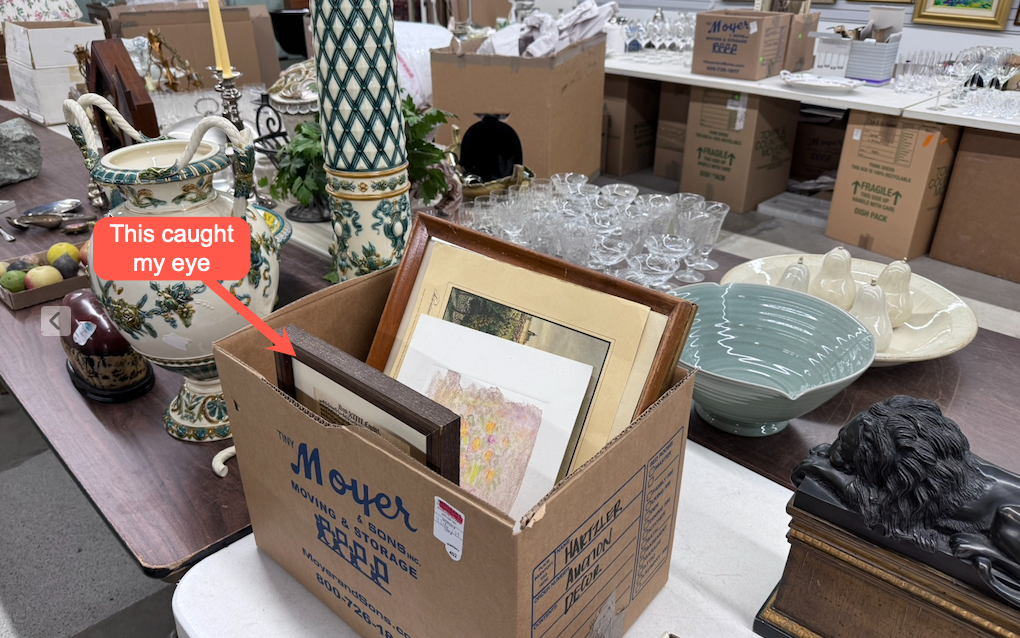
It was a brown cardboard box at a local auction filled with framed prints and miscellaneous ephemera. The sort of lot you bid on partly out of curiosity and partly because, if you’re lucky, you might discover something interesting. I did—it was a framed page from a 500-year-old German book.
As a historian, I enjoy reading. But more than that, I love books as objects. Their design, typography, and material presence give me tremendous joy. I got the bug in college in a federal work-study position in the rare books and special collections department of the library, where I learned how much evidence a single page can hold: paper quality, typeface, layout, illustration style, and wear patterns can all reveal a story before you even understand the words.
This page immediately caught my attention.
The typeface was Gothic, clearly German, probably around 1500. But the illustrations were strange. Instead of familiar late-medieval imagery (saints, cities, plants, kings) one woodcut showed a man lying in bed while another pressed a knife to his neck. Another showed a dining table with people seated around a severed head on a platter. Huh?
It was unmistakably early printed material, but not religious, political, or medical.
One of the most common challenges for nonprofit organizations—whether museums, historic sites, or community groups—is understanding who does what when it comes to decision-making, planning, and day-to-day operations.
Board members sometimes worry they are getting too involved in management or don’t know enough about what’s going on. Staff members, on the other hand, can feel their authority is being questioned when board members step into operational details. Yet when everyone understands their distinct responsibilities, organizations thrive.
We would never expect a new volunteer to suddenly step into a historic house and deliver a flawless tour. They need orientation, resources, and time to develop their skills before they feel confident leading visitors.
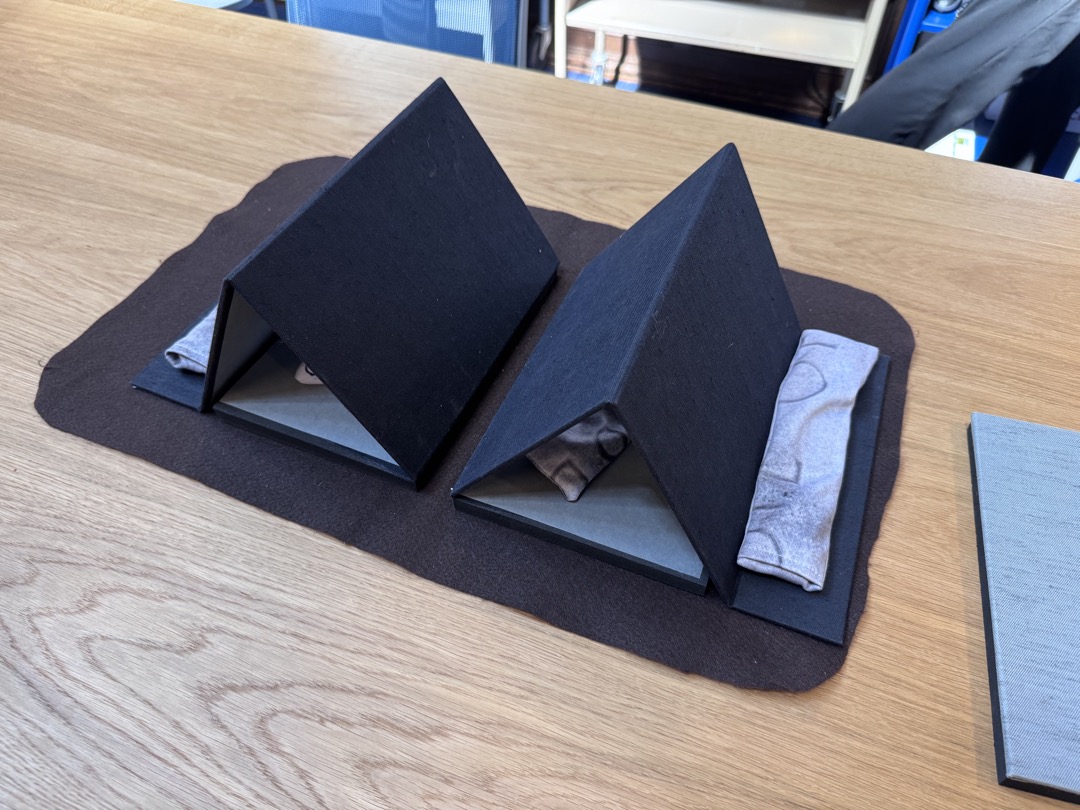
Rare book nerds, this post is for you. During a recent research visit to the Folger Shakespeare Library in Washington, DC, I came across an ingenious book cradle designed in-house by the paper conservators. It’s a simple yet sophisticated solution for supporting large or heavy bound volumes without stressing their spines—especially helpful for researchers working with oversized books in the reading room.
At first glance, it looks like a typical cradle, but it’s fully adjustable. Two triangular supports, covered in blue buckram cloth, can be moved farther apart or adjusted to change the angle, accommodating the size and shape of the book. Weights help stabilize the book on the cradle, while a brown felt mat underneath provides friction to prevent the supports from sliding.
When I was chatting with John Wetenhall, director of the GW Museum, he mentioned a business analysis tool I had never heard of: VRIO. It was a surprisingly lively conversation about whether this corporate framework could apply to museums and historic sites—and it piqued my curiosity. Developed by Birger Wernerfelt in his landmark 1984 article “A Resource-Based View of the Firm,” and later refined by Jay Barney in “Firm Resources and Sustained Competitive Advantage” (1991), VRIO offers a way to evaluate whether an organization’s internal assets truly contribute to long-term success. The acronym stands for Value (does it help the organization exploit opportunities or neutralize threats?), Rarity (is it scarce among competitors?), Imitability (is it difficult to duplicate or substitute?), and Organization (is the organization structured to fully leverage it?).
What began as a theoretical framework for corporations turns out to have practical potential for cultural institutions as well. Tools like logic models and Porter’s Five Forces are helpful, but what about the museum’s internal capabilities? How do we know if our collections, staff, or community ties are truly strategic advantages? Two articles by Paul Knott at the University of Christ Church (New Zealand) offer guidance by critically examining the popular VRIO framework—and how it can work better for cultural institutions.
Insight #1: Strengthening Strategy with an Expanded VRIO Model
In “Integrating Resource-Based Theory in a Practice-Relevant Form” (2009), Knott builds on the traditional VRIO model—Value, Rarity, Imitability, Organization—to create a more actionable and dynamic approach. He emphasizes that internal resources (like a museum’s brand, reputation, or community partnerships) are only strategic if they are used under the right conditions. Critically, he introduces a matrix that shows how the same resource can be a strength, weakness, missed opportunity, or rigidity depending on how it’s managed. This is a significant improvement over the traditional SWOT exercise because it requires you to evaluate each asset or resource with specific questions.
At Engaging Places, we are committed to helping museums and historic sites engage audiences and preserve our shared heritage. We are excited to announce the expansion of our services to include collections stewardship documents that align with the ethics and professional standards set by the American Alliance of Museums, as well as governance materials—essential tools that equip their board members with the necessary knowledge and resources to govern effectively and advance the organization’s mission.
These new services are led by Mary van Balgooy, Vice President of Engaging Places. Mary brings extensive experience as an executive director of both local and national nonprofit organizations and as a collections manager for history museums and historical societies of all sizes. Her expertise allows us to offer customized solutions tailored to each organization’s unique needs. Whether you are a newly established nonprofit or a long-standing institution, we will provide the necessary documentation and best practices to support your collections management and equip your leadership team with effective governance tools. Learn more about Mary’s impressive background here.
During my recent visit to several London museums, I was struck by the growing emphasis on decolonization. As a museum professional, I’ve been following this movement for some time, but seeing these efforts firsthand inspired me to reflect on the challenges and progress being made. Some London museums are actively re-examining their collections and narratives, working to address the complex legacies of colonialism in tangible ways, and both Royal Collections and the National Trust have staff members specifically focused on this issue. But others have a long way to go.
If you’re not familiar with decolonization, it’s the process of rethinking and revising interpretations that have historically favored the perspective of a dominant power, such as an imperial empire over a colonized nation (like Great Britain and India). However, decolonization goes beyond the empire-colony dynamic, addressing any situation where one perspective is elevated due to power imbalances. For instance, terms like “prehistory” suggest a time without history, labeling settlers as “pioneers” overlooks the people who were already living in those areas, and describing conquering armies bringing “civilization” implies they were superior to the existing cultures. Words shape our perceptions and carry significant consequences, influencing relationships across race, gender, and other social divides. Decolonization helps us recognize and correct these biases, leading to more inclusive and accurate narratives.
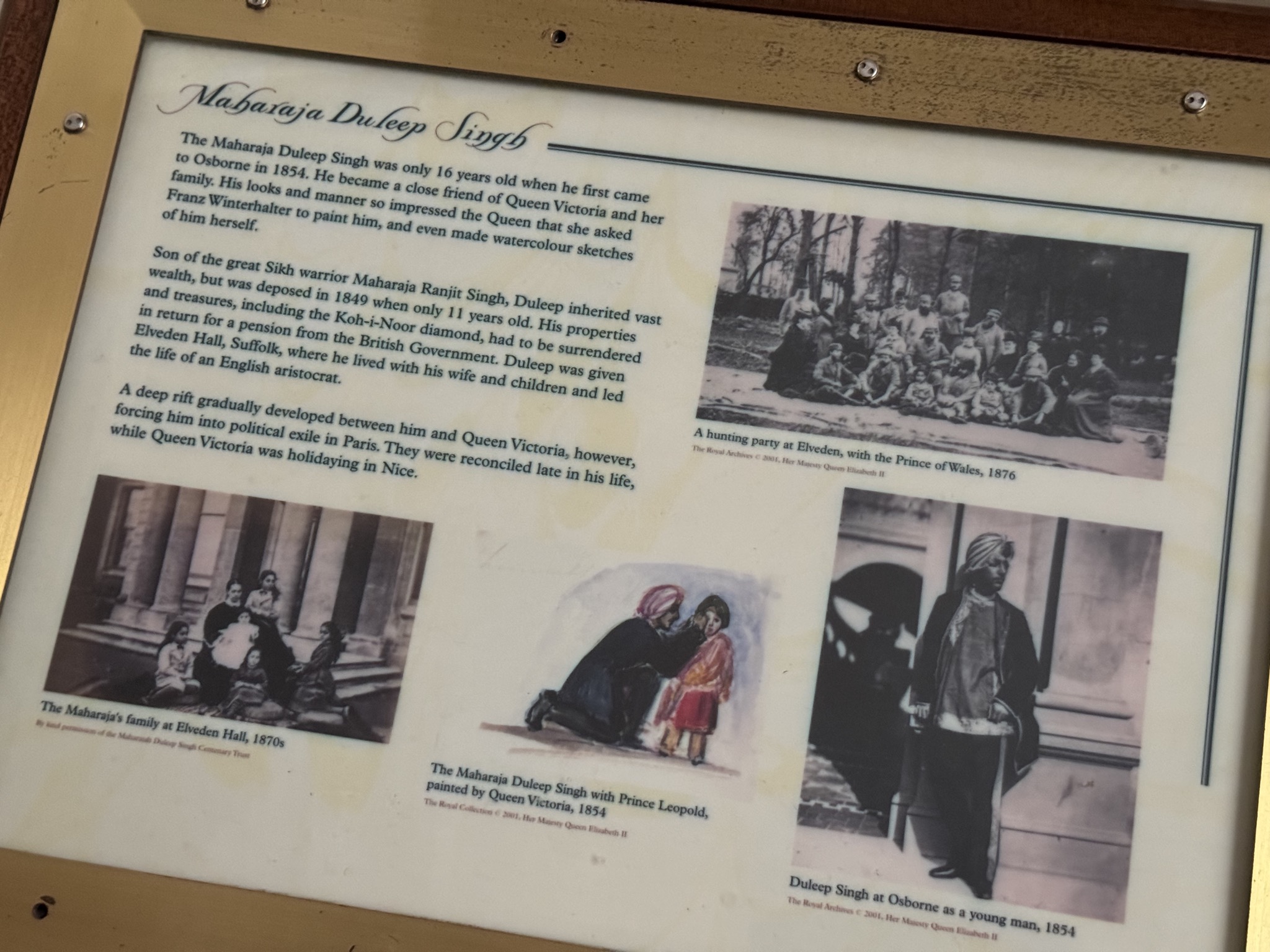
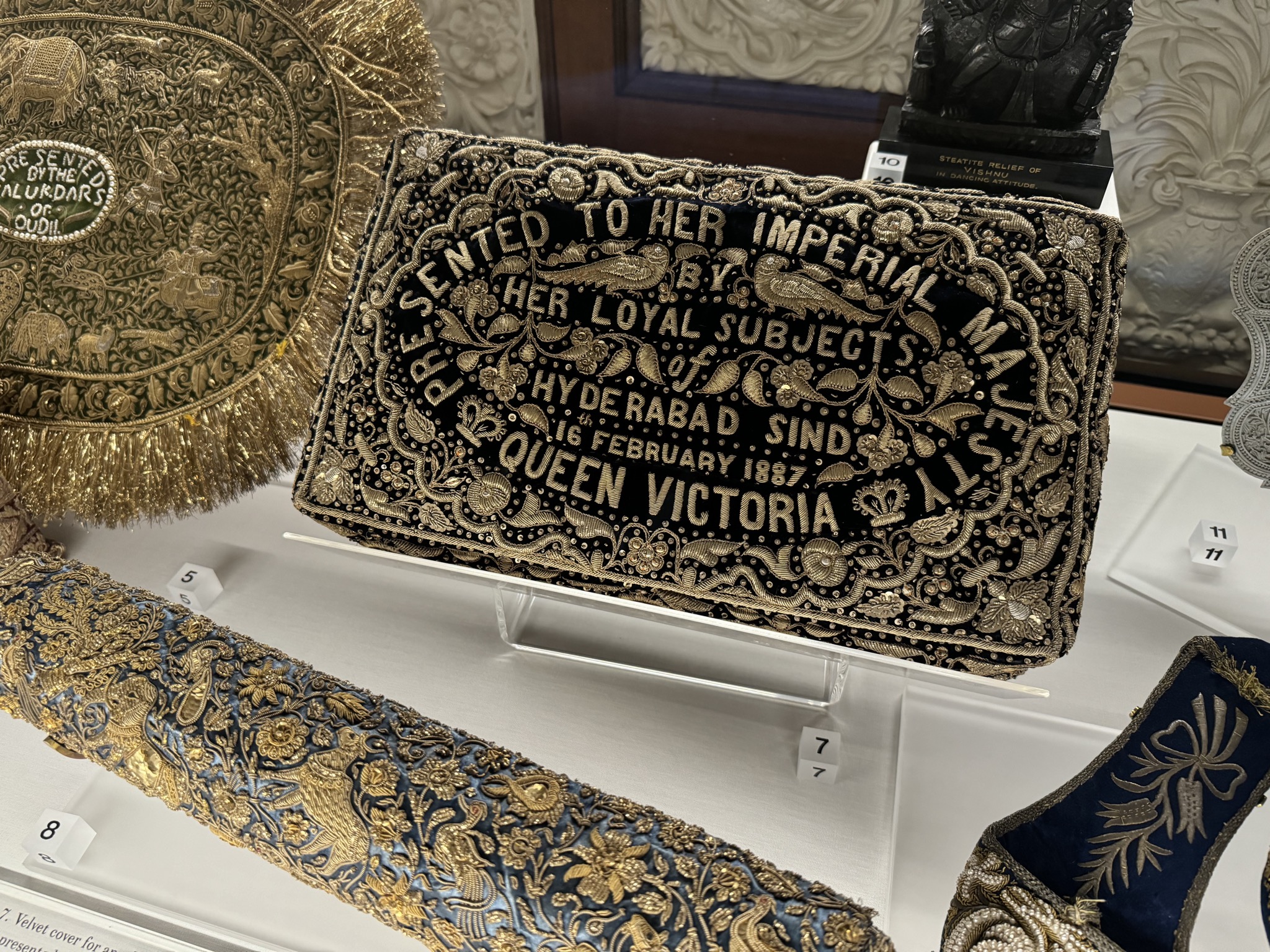
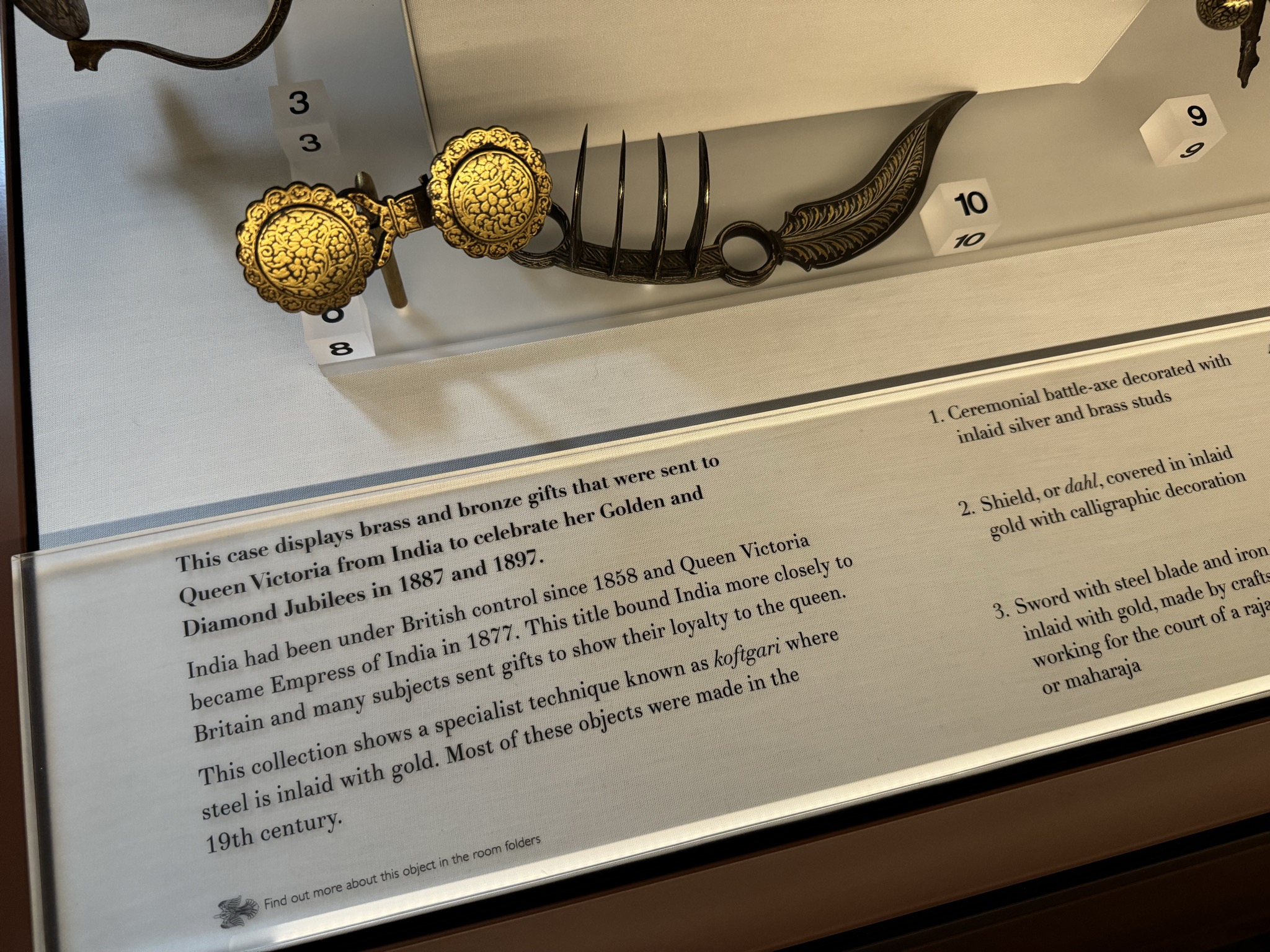
For an example of a museum waiting to undertake a re-examination of its exhibitions, consider Osborne House (operated by English Heritage), the country palace of Queen Victoria and Prince Albert. The displays in and around the Durbar Room discuss Britain’s relationship with India. The exhibitions include a panel about Maharaja Duleep Singh and that “his properties and treasures, including the Koh-i-Noor diamond, had to be surrendered in return for a pension from the British Government” and feature gifts sent from India to Queen Victoria to “show their loyalty to the queen.” The history is far more complex and this exhibition emphasizes only the British perspective and continues a mythology of India’s grateful subservience to the Queen.
1. Re-examining Collections
Many London museums are conducting in-depth reviews of their collections to identify items acquired during the colonial era. This process includes acknowledging the contexts in which objects were collected, often under unequal power dynamics. They are being more transparent about the provenance of key objects but contested ownership isn’t addressed publicly. Some examples:
If you missed out on purchasing a copy at the annual meeting or were unable to attend, you can order it online at Rowman.com or mail this order form. Use code RLFANDF30 at checkout to save 30%. This discount is available through September 2025. The book officially releases on September 20, so it should ship immediately when you order.
If you’ve had a chance to read Interpreting Christmas, we’d greatly appreciate a review on Amazon.com. Since history museums and historic sites are such a specialized field, your feedback can help others make more informed purchasing decisions.
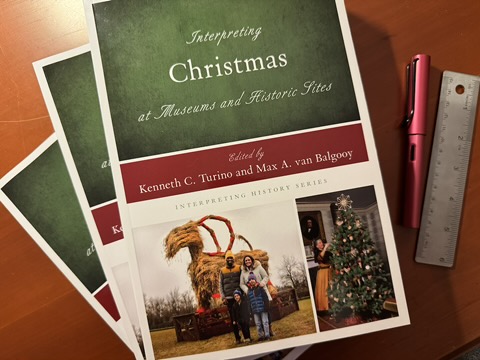
In an earlier post, I shared a sneak peek of our book, Interpreting Christmas at Museums and Historic Sites. Next week, Ken and I will provide a comprehensive overview during the upcoming AASLH webinar, “Jingle All the Way: Maximizing Your Museum’s Holiday Potential.” This webinar draws from the book but is not an hour-long sales pitch. Instead, we’ll share key advice and ideas on leveraging holiday celebrations, researching the local history of Christmas, planning and hosting holiday events, expanding traditional programs, and enhancing cultural sensitivity and inclusivity. With so much to cover, we’ll be hitting the highlights. If you’re seeking inspiration for Christmas during these hot summer days, join us on July 23, 2024 at 3:00 pm Eastern. For more details and to register, visit here. Plus, you’ll receive a 30% discount code for the book upon registration.
With proofs in hand, the book is moving closer to reality with a publishing date in fall, but more likely later than earlier. It has 21 chapters, 40 images, and an extensive bibliography of nearly 175 books and articles packed into 270 pages, which is about 25% longer than my Interpreting African American History and Culture at Museums and Historic Sites that Rowman & Littlefield published ten years ago (btw, Rowman was recently acquired by Bloomsbury Publishing). It’s now available for pre-order at Rowman.com for $50 for paperback and a jaw-dropping $125 for hardcover (I don’t set the prices but a 30% discount code is available for webinar attendees).
Behind the Scenes of Indexing
Ken Turino, Sara Bhatia, and I spent nearly two months creating he index, despite the publisher allocating just two weeks. The delay was partly due to other commitments (I was closing out the semester and attending the Newport Summer School), but also because the scope of the book made it significantly more complex. As anticipated, there’s an abundance of content on gifts, trees, lights, ornaments, decorating, and a variety of Santas. Rather than list two dozen pages that mention “lights,” we added subheadings for candles and electric lights, as well as safety considerations, and included “see also” references to help readers find specific information more quickly. But geez, that was slow going.
My chapter, “I’m Dreaming of a Warm Christmas: Researching California (and Other Local Places)” was initially indexed by GPT-3.5, then corrected manually as seen in this example. GPT-4o is more accurate when trained for indexing, but every entry still needs to be confirmed.
We experimented with GPT to produce the index, and the results were mixed. While GPT can generate an initial index with proper nouns and some concepts correctly formatted with page numbers, about half of the entries are usually either missing or incorrect (see example above). Thus, manual review of the proofs is still necessary, but at least GPT provides a head start. If you are interested in learning more in using GPT for indexing, I’m happy to share what I learned.
The index eventually grew to 22 pages, which is longer than most chapters! Indexing required a meticulous review of every page, during which we discovered errors that had slipped past four proofreaders. Ugh. Should we consider these flaws a characteristic of an artisanal, handcrafted gift to the field?
The Bethesda Historical Society, established in 2020 in Maryland, has made a commendable stride by crafting a collections management policy ahead of their growing collection of 400 artifacts and documents. Thanks to a local foundation grant, the Historical Society enlisted Mary van Balgooy from Engaging Places to develop a policy that aligns with professional standards and is manageable by a small organization using PastPerfect.
We’re thrilled to share this policy as a benchmark for small museums and historical societies. It succinctly addresses mission; roles of board, staff, and volunteers; ethical and legal aspects; collection scope, definitions, acquisitions, loans, documentation, appraisals, intellectual property, and policy reviews—all within a concise 15 pages!
This small selection of historic sites operated by The National Society of The Colonial Dames reveals the enormous diversity of house museums and historic sites in the United States.
In 2007, I helped organize the Forum on Historic Site Stewardship in the 21st Century, which resulted in an influential issue of Forum Journal that laid out the major challenges and opportunities, including the need for financial sustainability, a willingness to change in response to the needs of the community, and a balance between the needs of buildings, landscapes, collections, and the visiting public. It also recognized that museum standards may not be the best practices for historic sites and that the profession “must develop new measures, beyond attendance, that document the quality of visitor engagement at sites and the extent of community outreach beyond the bounds of historic sites.”
So what has happened in the 16 years that followed? We’ll find out this week as the American Association for State and Local History hosts a virtual summit on the Sustainability, Relevance, and the Future of Historic House Museums on July 11-12. Sessions will address measuring the impact of house museums, broadening interpretation, care of buildings and landscapes, and the evolution of mission statements.






 Engaging Places