Category Archives: Community engagement

AASLH and AAM Align Efforts to Raise Standards and Practices

The American Association for State and Local History (AASLH) and the American Alliance of Museums (AAM) recently announced they will work together to raise awareness of national museum standards and align their assessment programs in order to streamline application and self-study processes.  The agreement outlines ways in which applicants of AAM’s Museum Assessment Program (MAP) will benefit after completing AASLH’s StEPs program, in other words,  AASLH and AAM have linked StEPs with MAP.  If you understand that sentence, you’ve been working in this field a long time.

What’s this mean for historic sites?  Both StEPs and MAP are great programs for improving your organization’s work, but they’re very different from each other.  StEPs allows you to Continue reading

Best Practices for Community Engagement

Community engagement has become an increasingly important aspect in state and local history as a strategy for increasing impact, gaining support, and becoming relevant.  The challenge for most organizations is that engagement can be so daunting and difficult, they don’t know where to begin, how to prioritize among several good ideas, or measure success.

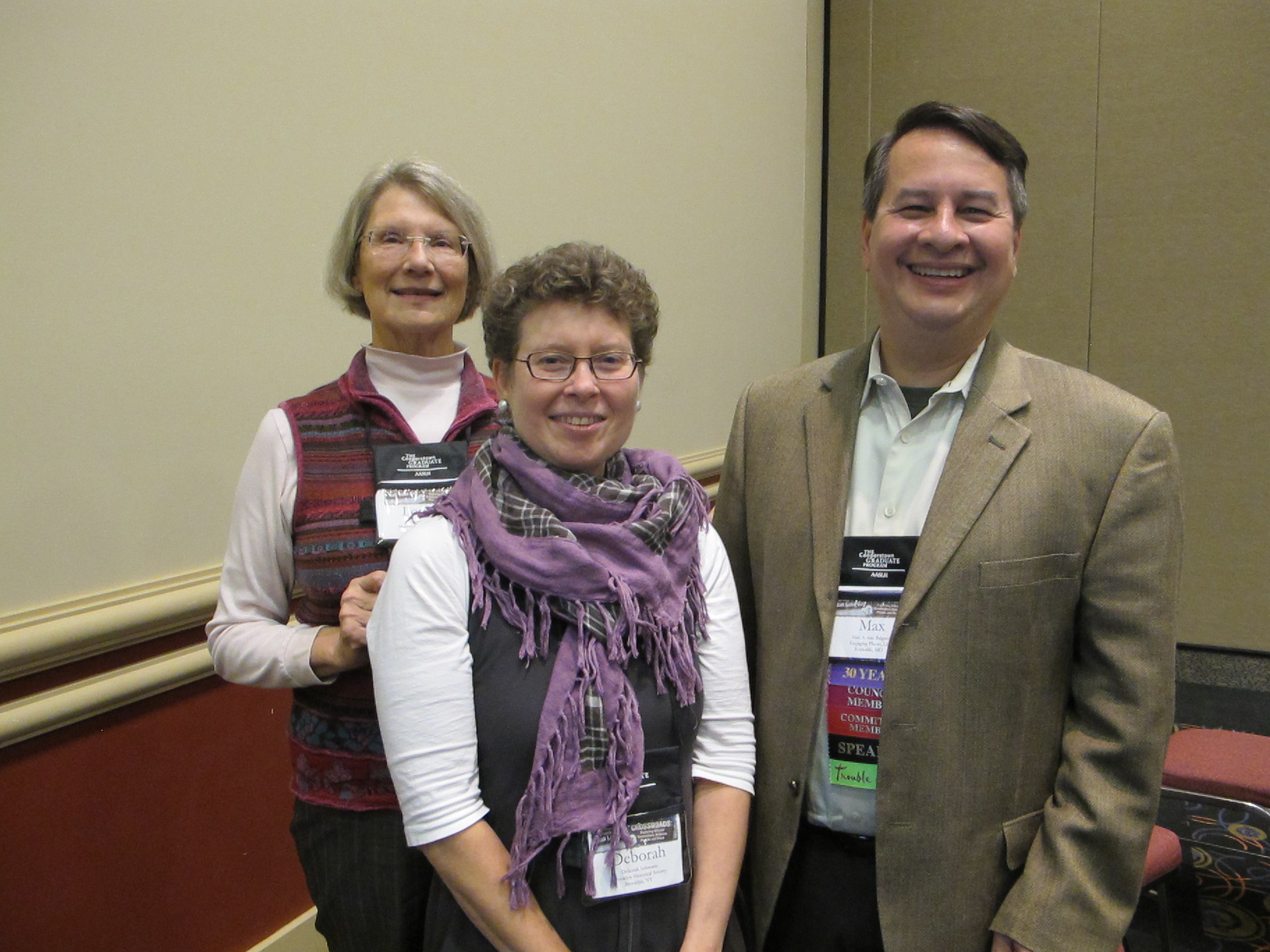
Lorraine McConaghy, Deborah Schwartz, and Max van Balgooy at AASLH 2012.

At the recent AASLH annual meeting, I moderated a session on the experiences of two very different history organizations—the Brooklyn Historical Society and the Museum of History and Industry—whose work in community engagement is not well known in the field yet offer exemplary case studies to examine common strategies, how they should be modified to suit each place’s unique characteristics, and steps to avoid.

Deborah Schwartz, president of the Brooklyn Historical Society, described two programs that reach audiences that are typically underserved by museums: Continue reading

Is Your Historic Site Unsure About Next Steps?

In this uncertain environment, many organizations are unsure about the direction to pursue for their historic site or house museum.  Through a self-study process and a personal assessment by an external professional colleague, the Museum Assessment Program (MAP) offers a thoughtful and proven approach to refine your operations, programs, and collections.  I’ve participated in several MAPs and clever organizations have used it to confirm a strategy, refine a project, resolve a vexing issue, support a funding proposal, or move to the next level of operations.  I can’t think of a better program available, except if you’re accredited by AAM, you have a large professional staff, or if you’re able to afford a large team of experts.  Really.  To stay sharp, every historic site and house museum in America needs to go through this program every decade and in between, they should be tackling a section of AASLH’s Standards and Excellence Program.  Really. If you’re not sure, call the director of the historic sites that participated this year:  Montpelier Mansion (Maryland), Old Barracks Museum (New Jersey), Louis Armstrong House (New York), Seward House (New York), Stewart House (Ohio), French Legation Museum (Texas), Poplar Forest (Virginia), and Pabst Mansion (Wisconsin).

To participate, your organization needs to meet some basic requirements (such as be open to the public at least 90 days a year), Continue reading

DC Historic House Museums host Biennial Symposium

This slideshow requires JavaScript.

Working in historic house museums often can often seem like an isolated job but not in the nation’s capital, where there is the Historic House Museum Consortium of Washington, DC, an active association of forty sites that mutually support and promote each other.  Every two years they also host a half-day symposium that attracts about one hundred museum guides, docents, and interpreters.  This year it was held on September 17 at the impressive George Washington Masonic Memorial in Alexandria, Virginia and I joined Dr. George McDaniel of Drayton Hall and Rebecca Martin of the National Archives to talk about various aspects of tours and the visitor experience:

  • George laid out that the visitor experience is much more than the tour and extends to the visitors’ planning, arrival, and departure. He emphasized the importance of little things, such as the directional signage, staff hospitality, and the condition of grounds and restrooms can have on visitors’ attitudes even before the tour starts
  • In “Before You Get Engaged:  Advice for Lovers of History and Historic Sites,” a light-hearted perspective on visitor engagement, I discussed three issues to consider before getting engaged with visitors:  don’t marry a stranger (know your audience), don’t share everything you know about a site on a tour (keep it mysterious), and let them know what you care about (keep your passion alive).
  • Becky closed the session with Continue reading

AASLH Meeting in Salt Lake City Today

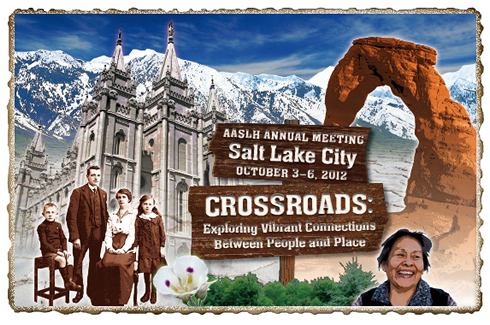
I’m currently at the annual meeting of the American Association for State and Local History in Salt Lake City, Utah, not only enjoying the camaraderie of friends and colleagues, but also attending a board meeting, moderating two sessions, and speaking at a  breakfast of historic house museum and visitor research leaders.  If you are attending, I’d love to meet you so please say hello (as a reader of this blog, you have the advantage!) or stop by:

  • Historic House Museums and Visitor Voices Breakfast on Friday, October 5 at 7 am, when Conny Graft and I will be discussing the perception gap between visitors and historic sites.
  • Re-imaging Historic Sites:  Three Roads to the Same Destination on Friday, October 5 at 10:45 am.  I’ll be joined by visitor research consultant Conny Graft, preservation architect Barbara Campagna, and house museum director Gwendolen Raley.
  • Meshing Mission and Community:  Identifying Strategies for Engagement on Saturday, October 6 at 9:00 am.  I’ll be joined by Deborah Schwartz of the Brooklyn Historical Society and Lorraine McConaghy of the Museum of History and Industry.

When I return, I’ll have lots to share so look for those posts in the coming weeks.

Highlights from the Latest Journal of Travel Research

I doubt many people read the Journal of Travel Research (yes, there are such things!) but I’ve been referring to it in preparation for a presentation at the Historic House Museum Consortium of Washington, DC.  Looking at the September 2012 issue of the Journal of Travel Research, I thought I’d share some of the highlights from articles that might interest historic sites and house museums:

  • In “GPS as a Method for Assessing Spatial and Temporal Use Distributions of Nature-Based Tourists,” Jeffery Hallo et al examine the use of GPS devices to study visitor behavior in national parks (an idea that can be easily be applied to large historic sites).  This research typically has to be done either by asking visitors to recall their experiences in a survey or by asking visitors to record their own behavior in diaries–both cumbersome and highly subjective methods.  GPS provides a better way to study human behavior, but so far the inaccuracy and cost has been major hurdles.  A test of three of the newest GPS devices, however, shows that these hurdles have been overcome by Continue reading

Lincoln’s Cottage Breaks Ground on Gay Weddings for Military

Travis Hollenbeck and Daniel Vukelich at their ground-breaking wedding at President Lincoln’s Cottage

Travis Hollenbeck and Daniel Vukelich not only started a new life together by getting married on April 28, 2012, but they also broke new ground at President Lincoln’s Cottage, a National Trust Historic Site at the Soldiers’ Home in Washington, DC–it was the first wedding held at the site and perhaps the first same-sex wedding at a U. S. military base.  Over 150 friends and family attended.

Hollenbeck and Vukelich chose Lincoln’s Cottage because of its personal Continue reading

AASLH Workshops for Historic Sites

The American Association for State and Local History offers a wide range of educational workshops and professional training that is particularly helpful for staff and volunteers for work at historic sites and house museums–if you know where to look.  I’ve previously mentioned the sessions during its annual meeting but people often forget that it also has half-day and day-long workshops before and after the annual meeting to explore topics in depth.  What most people don’t know is that you can register for just these workshops; you don’t have to attend the annual meeting–a great advantage for local folks!

This year, AASLH is offering 14 workshops, including:

Interpretive Planning for Dozens of Sites

Arroyo Seco Parkway National Scenic Byway Interpretive Plan produced by Engaging Places for the Mountains Recreation and Conservation Authority in May 2012.

If you’re interpreting a group of sites or a heritage area, you might be interested in reviewing an interpretive plan I completed earlier this year for the Arroyo Seco Parkway National Scenic Byway.  When the Parkway was completed in 1940, it connected Los Angeles and Pasadena and began southern California’s Freeway Age.  It’s also a region that has a dense concentration of museums, historic sites, parks, historic Main Streets, architectural landmarks, and unique businesses, including the Gamble House, Huntington Library, Lummis Home, Heritage Square, and Olvera Street.  To bring attention to these cultural riches, the Mountains Recreation and Conservation Authority commissioned me to develop this plan and work with a local stakeholders, build on an inventory of assets developed by the National Trust for Historic Preservation, and integrate audience research conducted by the Community Land Use and Economic Group and Decision Support Partners.

The planning process followed a traditional approach by collecting content to develop topics and themes; conducting visitor research to identify target audiences; and finally Continue reading

Remembering the 1,933rd Anniversary of the Eruption of Mt. Vesuvius

Animation still from “A Day in Pompeii,” You Tube video at http://youtu.be/w82yVDOMIa0

This may seem far-afield from the interests of most historic sites, but 1,933 years ago today, Mount Vesuvius erupted and buried the city of Pompeii (resulting in one of the world’s most popular historic sites about 1,700 years later).  The Denver Museum of Nature and Science is marking the anniversary by tweeting the last day of Pompeii as it happened, starting at 10 a.m. today by @Elder_Pliny (formerly known as Pliny the Elder, who witnessed the events) in preparation for an exhibit on Pompeii opening on September 14.  So far, he has more than 3,000 followers and he just tweeted that he’s preparing his boat to get a closer look (should I warn him?).  Along with the tweets, the Museum has created a mashup with Google maps to follow Pliny around Pompeii, is hosting “Bacchus Raucous” (a fundraising gala dressed in a Roman toga) and is featuring a lecture on Ceren, a Mayan village that was also encased by a volcanic eruption centuries ago.

Thanks to Sandra Smith at the Heinz History Center sharing this clever approach in interpretation.