Category Archives: Fundraising

Historic Sites Garner A Dozen+ Grants from IMLS

The Institute for Museum and Library Services recently announced the awards for the latest round of Museums for America grants, which include projects at more than a dozen historic places.  It’s always a quick way to see what’s happening around the country to get ideas as well as identify what projects are attractive to funders.  Congratulations to the recipients, especially our colleagues who are working with historic sites, including:

Kodiak Historical Society – Kodiak, AK
Award Amount: $52,706; Matching Amount: $52,810
Contact: Ms. Anjuli Grantham, Curator of Collections
(907) 486-5920; anjuli@baranovmuseum.org

The Kodiak Historical Society will complete design development for 2,800 square feet of exhibits at the Baranov Museum, located within the National Historic Landmark building known as the Russian-American Magazin. The project will foster the planning and design of Continue reading

IMLS Moves Deadline in Response to Comments from Museums

In a surprising move, the Institute of Museum and Library Services will be changing the application deadline for Museums for America and National Leadership Grants from January 15, although it won’t happen until 2014 at the earliest and the new deadline hasn’t been announced.  The 2013 deadline remains January 15.  According to Claudia French, Deputy Director for Museums, “We wholeheartedly support this suggestion and will change the deadline for FY2014. The time required for final approval of new grant guidelines through the Office of Management and Budget (OMB) will not allow us to alter the date for FY2013.”

This was a result of more than 100 comments received from the field as a result of a major restructuring of their grant programs.  IMLS did not reveal what other changes are under consideration or what concerns were reflected in the comments, however, they did affirm that, “In 2013, there will be no restrictions on the number of applications a museum may submit to MFA or NLG-Museums. . . .Museums submitting applications in more than one project category will compete with other museums in each category, not with themselves.”

Thanks to everyone who submitted comments on the proposed IMLS grant guidelines.  This has been one of the most controversial topics in the museum field that I encountered this year, so I’m happy to hear that museums and historic sites had some influence and that the IMLS was willing to accept public comments and provided an initial response so quickly.  A complete statement from IMLS is available on their blog.


Comments on IMLS Revised Grant Guidelines Due Today

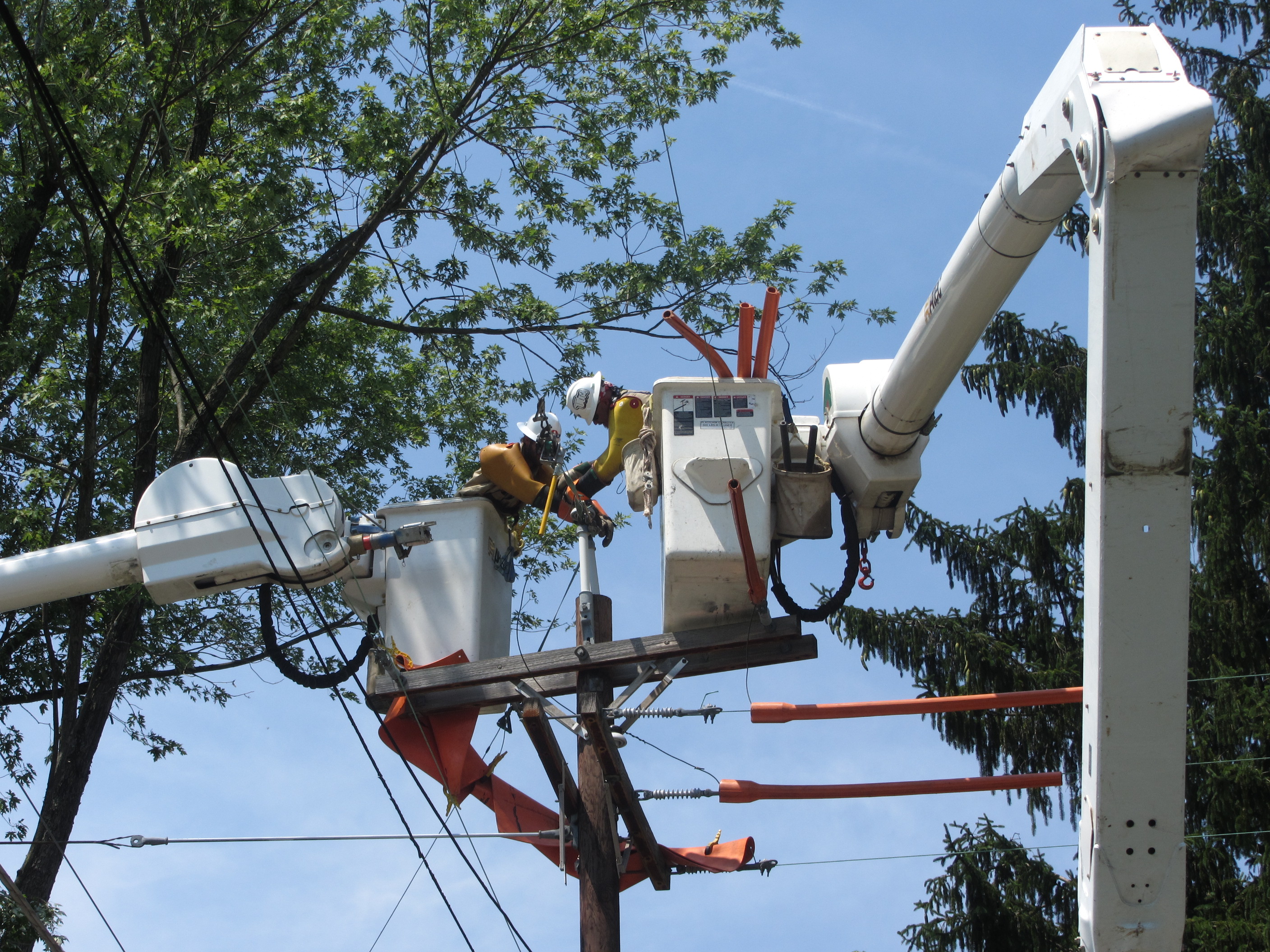
A crew from Alabama repairing downed power lines in Maryland near my office.

Electrical power was out in my part of the world for a couple days earlier this week due to the fierce thunderstorm that struck the Midwest and Mid-Atlantic on Friday.  Some parts are still without power and although I haven’t conducted a survey to see how the nearby historic sites fared, I have heard that one historic house museum in Virginia is facing about $30,000 of clean-up costs due to fallen trees and branches.

But power and Internet have been restored to my office, just in time to submit my comments to IMLS on their revised guidelines to their grant program.  Comments are due today to comments@imls.gov.  Here’s what I submitted:

Please accept these comments for the public record regarding the draft guidelines for the FY 2013 Museums for America and National Leadership Grants for Museums programs of the Institute of Museum and Library Services.

I appreciate the federal Continue reading

IMLS’ Revised Grant Guidelines Need Revision

In May, the Institute of Museum and Library Services (IMLS)–the national agency devoted to museums and libraries–released a new set of proposed guidelines that would significantly revise their grant programs for museums (and that includes historic sites, historical societies, house museums, and preservation organizations).  Initially, these changes were proposed to go into effect without comment from the field, but fortunately enough museums spoke up that director Susan Hildreth changed her mind and announced she would welcome comments–but the comment period ends on Friday, July 6, 2012.

According to IMLS, the guidelines affect the Museums for America and National Leadership Grants for Museums programs, however, the impact is much larger because these programs are proposed to consume two other grant programs: Conservation Project Support and 21st Century Museum Professionals.  Claudia French, deputy director for museums, proposed the changes so that the grant programs would align better with the IMLS strategic plan and make it easier for grantees and IMLS staff.

Here are the major changes that caught my eye:

1.  One deadline to rule them all:  January 15.  Currently, the deadlines for Continue reading

Cooking Gene Project Raising Funds Online

Michael Twitty at the Sandy Spring Museum in Maryland.

A couple weeks ago I attended a lecture on the “world of a slave” at the Sandy Spring Museum in Maryland.  Kym Rice spoke about her recently published two-volume work, The World of a Slave: Encyclopedia of the Material Life of Slaves in the United States, which she co-edited with Martha Katz-Hyman of Colonial Williamsburg.  Many of you know Kym as the director of the museum studies program at George Washington University, but you may not know she is also working towards her Ph.D. in American Studies, focusing on African American history and culture.

Joining her was Michael Twitty, one of the contributors to the encyclopedia.  He gave a fascinating lecture on African American foodways but also discussed an upcoming research trip as part of his Cooking Gene Project:

From May to September, Michael will be going with a team of friends on several expeditions into the Old South searching for his own connections to his ancestors through food and cooking. The Southern Discomfort Tour–May to July–will form the bulk of these explorations and will incorporate diverse Continue reading

NEH Announces Recent Awards

The National Endowment for the Humanities recently announced the awards for the applications submitted in August 2011 (yes, 2011) for the “America’s Historical and Cultural Organizations” grant program.  Out of the 25 major grants awards (I’m not including the small NEH on the Road grants), about a third are related to historic places including:

El Presidio de Santa Barbara State Historic Park Visitor Center Plan

  • Santa Barbara Trust for Historic Preservation, Santa Barbara, CA
  • Award: Outright; $40,000
  • Planning for interpretive exhibitions and programs in a newly constructed visitor center about the history of Santa Barbara.

Impressions of a Lost World

  • Pocumtuck Valley Memorial Association, Deerfield, MA
  • Award: Outright; $40,000
  • Planning for a website, mobile applications, hand-held digital and print tours, public programs, and educational materials about the early nineteenth-century discovery of dinosaur tracks in the Connecticut River Valley and the impact of this discovery on American thought and culture.

Continue reading

Collections Chat on NEH’s Preservation Assistance Grants

"Skeleton Room" at the Smithsonian Institution, ca. 1890.

On Monday, March 12 at 1 pm Eastern, the Connecting to Collections
Online Community
will host another live chat in their series. Join Elizabeth Joffrion, Senior Program Officer in the National Endowment for the Humanities’
Division of Preservation and Access
to learn about Preservation Assistance Grants. She will review what Preservation Assistance Grants fund, share tips on making a strong application, and answer your questions. No preregistration is required;
on Monday at 1 pm EDT just go to http://www.connectingtocollections.org/meeting and log in.

National Endowment for the Humanities’ Preservation Assistance Grants help small and mid-sized institutions—such as historic sites, museums, historical societies, cultural organizations, Continue reading

More Than 300 Museum Supporters on Capitol Hill

This slideshow requires JavaScript.

Congress was visited by more than 300 leaders in the museum field on Tuesday for the fourth annual Museums Advocacy Day.  The day started with welcoming messages and packets of key issues, and then off we went for meetings with our senators and congressmen.  The delegation from Maryland was huge with about two dozen people and met with staff for Senator Cardin and Senator Mikulski, who were very open to our requests to support funding for the Office of Museum Programs of the Institute of Museum and Library Services; including museums among the approved partners for schools in the Elementary and Secondary Education Act; and opposing elimination of the tax deductibility of charitable donations.   Congressman Chris Van Hollen, who represents my district, was incredibly generous with his time and came out to talk with us between votes in the House chamber.

Meeting with my senators and congressman to talk about the value of museums was a great experience, although it’s unclear how much can be accomplished in this bitter election year.  More eye opening were the hundreds of people who were also wandering the halls to advocate for their cause, so we’ve got lots of competition.  If we don’t participate, others will step in and happily take our place.

Museums Advocacy Day is coordinated by the American Association of Museums, and anyone is welcome to participate.

What the Latest Trends in Mobile Tech Mean for Historic Sites

comScore, Inc., a leader in measuring the digital world, recently released its 2012 Mobile Future in Focus report. This annual report examines the use of mobile devices (e.g., smartphones, tablets) in 2011 in the United States, Canada, and overseas (France, Germany, Italy, Spain, United Kingdom, Japan).  According to Mark Donovan, comScore Senior Vice President of Mobile:

2011 proved to be a groundbreaking year for the mobile industry, with smartphones hitting the mainstream, tablets emerging as a formidable fourth screen, and consumers increasingly integrating mobile behaviors into their lifestyles. As the industry continues to innovate and more consumers look to multiple devices and platforms to consume digital media, we expect the mobile and connected device landscape to be shaken up even further in 2012.  As mobile channels present a more personal, social, and ubiquitous experience to consumers, advertisers and publishers have an opportunity to better engage target audiences, given an understanding of how to connect and leverage the unique characteristics of these emerging platforms.

For history organizations and historic sites, some of the findings you’ll find most applicable are:

  • Smartphones Gain Adoption Among ‘Early Majority’, Driving Mobile Media Consumption.  “Nearly 42 percent of all U.S. mobile subscribers now use smartphones, along with 44.0 percent of mobile users across the EU5 (comprised of France, Germany, Italy, Spain, and the UK). Mobile media use – defined as browsing the mobile web, accessing applications, or downloading content – saw increased growth as a result, surpassing the 50-percent threshold in many markets, supported by the proliferation of high-speed networks and increased public WiFi availability.”  Nearly half of cell phone users have internet access, so ensure your website is maintained and up-to-date because increasing numbers of people will be using the smartphones to make decisions as they travel.  What we don’t know is how popular smartphones are among visitors to historic sites and history museums–that may be something to explore at your site (just ask!).
  • Mobile Retail Information Leads to Emergence of Smartphone Shopping Behaviors.  “More than half of the U.S. smartphone population used their phone to perform retail research while inside a store in 2011, illustrating the emergence of savvy smartphone shoppers who bring online shopping behaviors in-store – a trend seen in other markets as well. At the end of 2011, nearly 1 in 5 smartphone users scanned product barcodes and nearly 1 in 8 compared prices on their phone while in a store.”  You may discover that visitors are looking at their phones when they are in your store.  They could be evaluating your products, comparing prices, or making a purchase (“this is a great book, let me order it on Amazon.com so I don’t have to carry it with me now”).  Your little museum store has just become part of the global marketplace so you’ll need to increasingly think about what’s distinctive, unique, or better than your competitors around the world and may have to change your inventory in response.   And I bet that visitors will be doing the same comparison soon as they choose among the many things to do in your community (“hmm, should we go to an historic site, a winery, or downtown?  Let’s see what Yelp recommends.”).
  • Mobile Devices Fuel Social Networking On-The-Go, Driving Real-Time Online Interaction.  “64.2 million U.S. smartphone users and 48.4 million EU5 smartphone users accessed social networking sites or blogs on their mobile devices at least once in December 2011, with more than half of these mobile social networking users accessing social media almost every day. While mobile social networking users showed the highest propensity to read posts from people they knew personally, more than half of those in the U.S. and nearly half in the EU5 also reported reading posts from brands, organizations, and events.”  With so many people using social media such as Facebook, Google+, Flickr, Yelp, and Foursquare, remind them to share their experiences of your site (at the end of the tour, remind visitors to share their visit on Facebook and Yelp).  You’ll slowly build a reputation.  And if you haven’t already, be sure to create and maintain a page in Facebook, Google+, Flickr, Yelp, or Foursquare.
  • Mobile Connectivity and Connected Devices Encourage Cross-Platform Digital Media Consumption among ‘Digital Omnivores’.  “Tablets quickly rose in popularity in 2011, taking less than two years to account for nearly 40 million tablets in use among U.S. mobile users and outpacing smartphones which took 7 years to reach the same. By the end of 2011, nearly 15 percent of U.S. mobile users also had tablets – a trend seen across other markets as well.”  Tablets are quickly becoming a common technology along with smartphones and laptop computers.  That won’t affect historic sites very much as long as you keep your website and apps up to date (see below), but it may open up a new opportunity for producing unique digital guides or visitor experiences through Kindle or iBooks.  Apps, e-books, or websites designed for tablets may soon replace or supplement portable DVDs, podcasts, and audioguides.

Thinking about developing an app?

  • Smartphone Platform Wars Intensify As Android and Apple Take the Lead in Most Markets.  “The Google Android and Apple iOS smartphone platforms emerged as the leaders of the U.S. smartphone market in 2011, with Android just a few points shy of capturing half of the smartphone market and iOS accounting for nearly 30 percent of the market. In the EU5, Android saw similarly significant gains, unseating market leader Symbian in 3 out of the 5 European markets measured.”  If you are developing an app, sorry, you’ll still need to develop it for both Android and Apple iOS.
  • Surge in Mobile App Usage Shapes a Dual Mobile Browsing Experience, Fueling Category Growth.  “In 2011, both the U.S. and EU5 saw the growth in mobile app use exceed the growth in mobile browser use, leading to both markets seeing the same percentage of their mobile audience use both apps and browsers to access mobile media. Health ranked as the fastest-growing mobile media category in the U.S. in 2011, followed by Retail and other commerce-related categories such as Electronic Payments and Auction Sites.”  The use of apps has grown this past year and it looks like it’s caught up to mobile browser use–smartphone owners are using apps and internet browsers at the same rate  (if these distinctions are confusing, check out the explanation at the New Media Campaigns blog).  And if you aren’t thinking about online sales and payments, start now or risk losing revenue (check out PayPal and Google Checkout and see if they still have special rates for non-profits).

For more details, download a free copy of 2012 Mobile Future in Focus report.

Webinar on Strategies for Financially Sustaining Historic Buildings

The California Preservation Foundation, a statewide historic preservation organization, has been offering a series of lunchtime webinars (well, lunchtime on the West Coast) on a variety of topics that would interest staff and volunteers who work with historic sites, including window restoration, fundraising, architectural styles, historic landscapes, and tax credits.

On Tuesday, March 13, 2012 at 12 noon Pacific time, I’ll be sharing a webinar with Jim Newland of California State Parks on building a stable financial foundation for historic sites by rethinking Continue reading