
An excerpt from “Passing,” a one-woman play written and directed by Dara Harper and performed by Holly Smokovitz from February 1-16, 2014 at the Charles H. Wright Museum of African American History.
Category Archives: Historical interpretation
Exploring History and Historic Sites in Monterey in March 2014

Historic downtown Monterey with the Cooper-Molera Adobe in the background.
The National Council on Public History will hold its annual conference in Monterey, California from March 19-22, 2014. It will be the first time I’ve attended a NCPH conference and I’m thrilled–the schedule is packed with a variety of sessions that will appeal to those who are working on the cutting edge of historic sites and house museums, including:
- Educational sessions on co-created exhibits, tribal partnerships, preserving LGBT sites, interpreting slavery, the history of museums, stewardship of archaeological sites, cultural landscapes, and the sustainability of museums.
- “THATCamp NCPH” is an afternoon learning laboratory on digital projects that Continue reading
Nancy Duarte’s “Resonate” Free on iPad
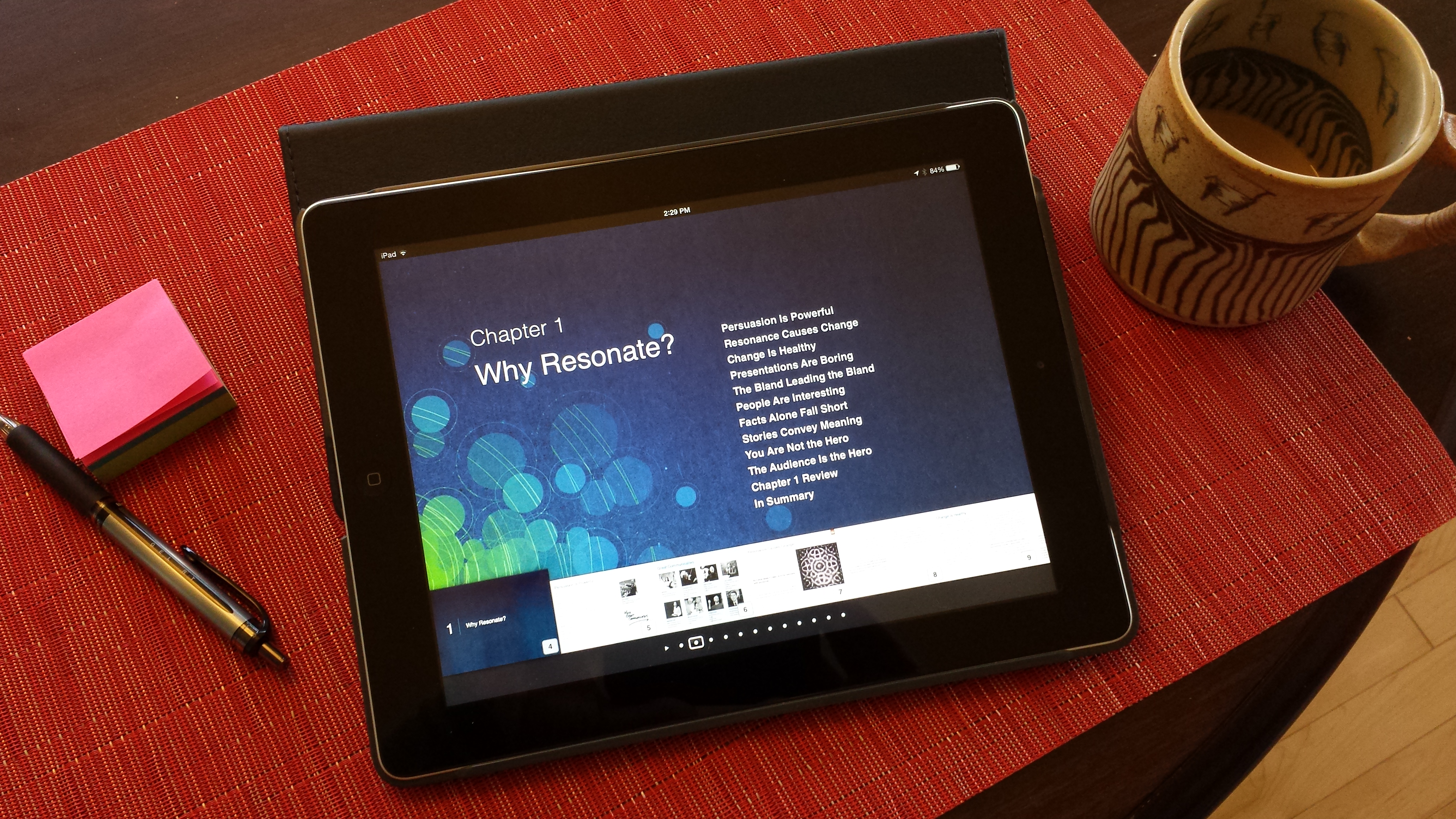
A multi-touch version of Resonate is available free on iPad.
Nancy Duarte is one of the leading producers of presentations, including the Academy Award-winning film, “An Inconvenient Truth” with Al Gore. There may not be agreement on climate change, but everyone was impressed by the quality of that documentary. Duarte has shared her expertise through Slide:ology and Resonate, and these books have not only helped me improve and enhance my Powerpoint presentations but also my interpretation skills. Her approach is firmly grounded in the techniques of effective communication, which can be applied to many situations at museums and historic sites. If you’re not familiar with Nancy Duarte, she explains her ideas in an 18-minute presentation at TEDxEast in 2011.
The good news for iPad owners is a “multi-touch” version of Resonate is available free through iBooks. All of the content from the book is supplemented with videos, quizzes, backstories, and other interactive experiences to better engage you. You’ll not only learn about building better presentations and communicating more effectively, but you’ll also experience an example of one of the most effective eBooks available. If you’re not sure how to do this, open the iBooks application and search the Store for “Resonate by Nancy Duarte”.
Cleaning Out My Cabinet of Curious Stories
Like all good museologists, I have a small cabinet of curiosities where I collect things of wonder, inspiration, and imagination. Mine is virtual and sits in Evernote. It’s time for a year-end clean-up, so here are a few that didn’t develop into full blog posts but even in their unrefined state, seem sufficiently interesting to share:

Google is continually looking for ways to get information to us as quickly and easily as possible. The last couple years it’s been creating quick descriptions of places using five keywords–but I’m not sure how they’re derived. A recent search for “historical society near Maryland” in Google Maps associated the American Historical Association with “symbol” and the Historical Society of Washington DC with “celebrities.” Who doesn’t like attention like that? The most surprising, though, is the description of the DAR National Headquarters with Continue reading
A Campaign to Make History Relevant to Americans
 In the last year I’ve become part of an group to find ways to make history more meaningful and relevant to Americans. The History Relevance Campaign, for lack of a better name, is an informal grassroots effort made up of public historians, preservationists, educators, historic site managers, and museum leaders who are creating a national, broad-based strategy to assert the relevance of history.
Just to clarify, the History Relevance Campaign is not connected to any one history organization. From its start in early 2013, the group has strived to be as inclusive as possible. Secondly, it is not a lobbying group. Its main audience is the general public, not elected officials and public policy makers. Thirdly, its intent is to show that history skills are just as important as Continue reading
Celebrating the New Year by Looking Back

Freedom’s Eve at President Lincoln’s Cottage
President Lincoln’s Cottage in Washington, DC is hosting a New Year’s Eve party with meaning by marking the “stroke of midnight, January 1, 1863” when “thousands of men, women, and children celebrated as the Emancipation Proclamation finally took effect.” Tickets are $150 to $250 per person, with a special discount for persons under 40 years old. Although the staff will be working on a holiday, it’s a clever way to connect history and support a good cause, too. What popular events in your community can be connected to your site’s history or mission?
AAM and NAI Announce Awards, but Few are Historic Sites
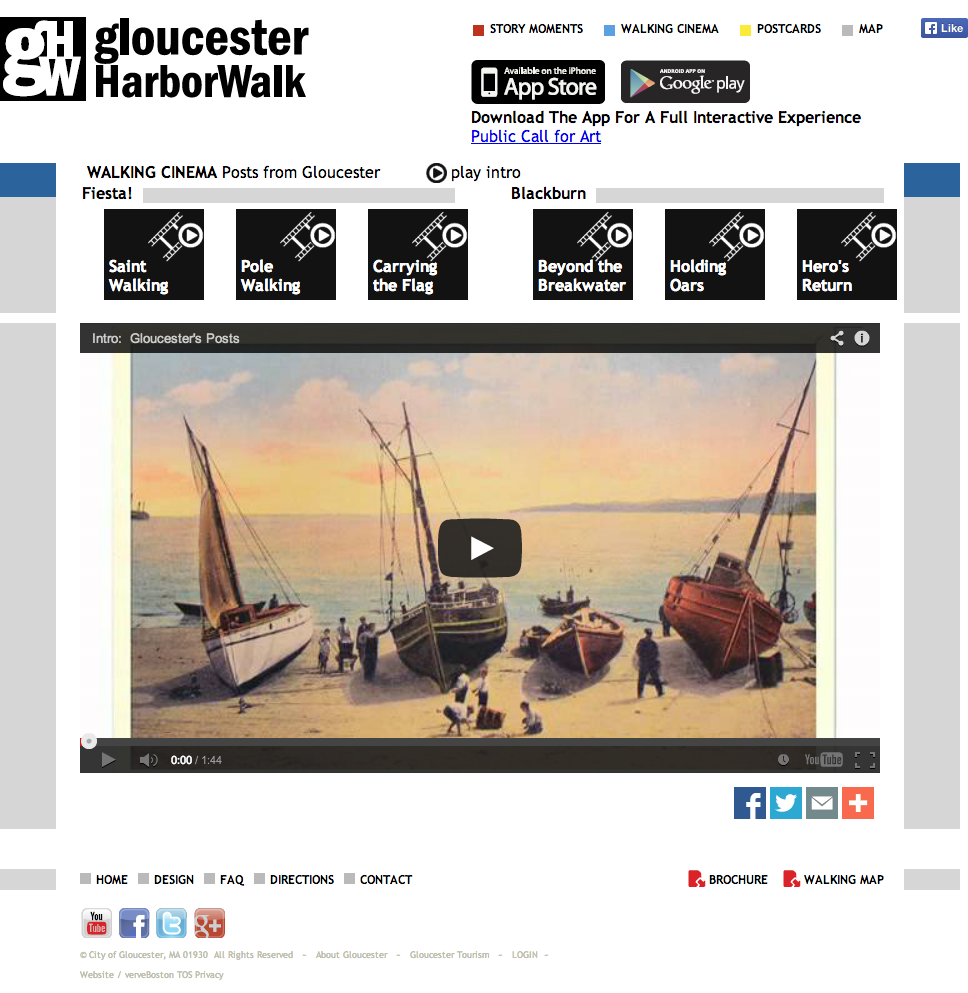
Walking Cinema of Gloucester HarborWalk
The American Alliance of Museums and the National Association for Interpretation announced their annual winners in various categories, from label writing to exhibits to publications to programs. You’ll want to look at the entire list for inspiration, but I especially want to congratulate those people and organizations whose worked focused on historic sites, houses, and places (that’s the point of this blog).
The Media and Technology Professional Network of AAM presented Muse Awards for digital media to: Continue reading
Video: Refuse to Fold: Heritage Tourism in the Mississippi Delta
This 35-minute video is the first cut of a working documentary by Brian Dempsey and Angela Smith about heritage tourism and the Mississippi Delta Blues, featuring Jimmy “Duck” Holmes from Bentonia, Mississippi. Dempsey and Smith were PhD students in public history at Middle Tennessee State University four years ago when they produced this video.
Video: History Matters. Students Matter.
Angela Smith, assistant professor and director of the public history program at North Dakota State University shares this six minute general overview of the value of history and how the Public History Program at NDSU has contributed through several student projects. This video was presented at the College Honors Day on October 11, 2013.
Video: History of Halloween
National Geographic Channel presents its history of Halloween in this 3:12 video. It’s a bit dramatic but well produced. As an alternative, you can buy the “Ghosts of History” video to project ghostly images of people in “colonial clothing” on a scrim. I’m not sure the colonial period was the scariest for America–how about the attack on Pearl Harbor or the Cuban Missile Crisis?

