Category Archives: History

Sneak Peak at Clara Barton’s Office and Warehouse

This slideshow requires JavaScript.

On April 18, I enjoyed a sneak peak of the restoration underway at Clara Barton’s Civil War-era office and warehouse on 7th Street in downtown Washington, DC–where she worked and lived before founding the American Red Cross in 1881.  The historic site opens to the public as a museum in fall 2014.

From the street, you’d never imagine that this was a nationally significant historic site.  It’s a simple three-story brick building surrounded by restaurants, towering condos and offices, popular museums, and a major sports arena.  Indeed, it was overlooked by those who were searching for it because it didn’t fit their image of a warehouse.  Its historical significance was forgotten for most of the century until 1997, when a nightwatchman hired to keep vagrants out of the vacant building noticed a document jutting out from the ceiling.  It turned out to be part of a cache of artifacts belonging to Clara Barton that had been stored in the Continue reading

NEH Shares Film Series on Civil Rights

This slideshow requires JavaScript.

The National Endowment for the Humanities and the Gilder Lehrman Institute of American History recently launched Created Equal, a new program to bring four nationally-acclaimed films on civil rights to historic sites, museums, and libraries.  They can easily fill a summer series of programs when accompanied by an historian and spark a conversation about your community’s experience with civil rights.

The films include:

  • The Abolitionists.  A small group of moral reformers in the 1830s launched one of the most ambitious social movements imaginable: the immediate emancipation of millions of African Americans who were enslaved. 
  • Slavery by Another Name.  Even as slavery ended in the south after the Civil War, new forms of forced labor kept thousands of African Americans in bondage until the onset of World War II. Produced and directed by Sam Pollard. 
  • Loving Story.  The moving account of Richard and Mildred Loving, who were arrested in 1958 for violating Virginia’s ban on interracial marriage. Their struggle culminated in a landmark Supreme Court decision, Loving v. Virginia (1967). 
  • Freedom Riders.  The Freedom Rides of 1961 were a pivotal moment in the long Civil Rights struggle that redefined America. This documentary film offers an inside look at the brave band of activists who challenged segregation in the Deep South. 

Up to 500 communities across the nation will receive these four inspiring NEH-funded films, accompanied by programming resources to guide public conversations. Each participating site will receive an award of up to $1,200 to support public programming exploring the themes of the Created Equal project.  Applications are due May 1, 2013 and open to museums and historical societies; humanities councils; public, academic, and community college libraries; and nonprofit community organizations. 

New England’s History and Architecture Explored in June

Program in New England StudiesHistoric New England presents the tenth annual Program in New England Studies (PINES), an intensive learning experience with lectures by curators and architectural historians, workshops, and behind-the-scenes tours of Historic New England’s properties and collections, as well as of other museums and private homes in the region.  This year’s program begins on June 17 with Cary Carson on the 17th century in the Boardman House and ends on June 22 with Richard Nylander and Nancy Carlisle on the Colonial Revival at Beauport.

PINES examines New England history and material culture from the seventeenth century through the Colonial Revival, and delves into building design and technology, and the wide-ranging lifestyles illustrated by the historic sites on the itinerary.  Highlights include private tours of Historic New England properties in Greater Boston; Essex County, Massachusetts; Portsmouth, New Hampshire; South Berwick, Maine; and Woodstock, Connecticut; workshops in furniture, ceramics, and textiles at Historic New England’s facility in Haverhill, Massachusetts; and a private tour of Continue reading

Collecting Memories from Visitors

This slideshow requires JavaScript.

Maymont, a Gilded Age estate that’s now a public park in Richmond, Virginia, has an extensive exhibit on the domestic servants in the first half of the twentieth century.  To continue to collect stories about and remember the many people who work in domestic service, the exhibit includes a small area that invites family, friends, and neighbors to share their memories with a label that reads:

Sharing Memories

In creating this painting–a symbolic tribute to the individuals who worked as domestic employees at Maymont–I felt special gratitude to my own loved ones.  My grandmother, mother, two aunts, and three uncles were all once employed on the Dooley staff.

Was there a significant person in your life who  Continue reading

Virginia Turns Penal Colony into Art Colony

This slideshow requires JavaScript.

I recently had an opportunity to visit the Occoquan Workhouse Prison, an early 20th century federal prison in northern Virginia, which was transformed by Fairfax County in 2008 into the Workhouse Arts Center, a collection of 100 artist studios and galleries.  Once regarded as a model for reform-minded incarceration with open dormitory-style residences accompanied by honest work on the surrounding country farm, its image was soon tarnished by the imprisonment and force-feeding of the women who were picketing the White House for suffrage–which helped turn public opinion against the Wilson Administration.  I had long known about this infamous event and wanted to get a better sense of the conditions.  At the small museum on site, I learned much about the prison’s history and the struggle for woman’s suffrage, however, I also learned that Continue reading

The Many Flavors of Touring Historic Places

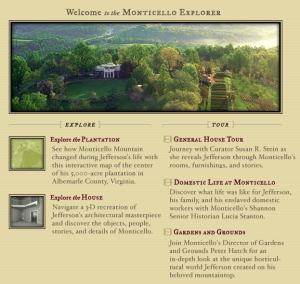
Monticello Explorer provides several virtual tours.

Monticello Explorer provides several virtual tours.

Although guided tours of period rooms is the most common form of interpretation at historic sites, audio tours, video tours, and virtual tours are growing in popularity thanks to technologies that are lowering the cost of production and increasing access to new audiences.  From a short list of examples, the students in my “historic site interpretation” class at George Washington University developed a list of ten best practices for different types of tours of historic sites.  You’ll discover that many of their suggestions emphasize the need for a plan, themes, and a focus–and projects that failed to have these elements were weaker and less effective.

A.  Guided Tours of Period Rooms

Reviewed by Johanna Bakmas, Melissa Dagenais, Emma Dailey
 

Suggested Best Practices

Do
  1. Develop an interpretive plan and themes
  2. Consult primary sources for the property
  3. Decide whether to have reproduction or original pieces Continue reading

Best Practices for Community Engagement

Community engagement has become an increasingly important aspect in state and local history as a strategy for increasing impact, gaining support, and becoming relevant.  The challenge for most organizations is that engagement can be so daunting and difficult, they don’t know where to begin, how to prioritize among several good ideas, or measure success.

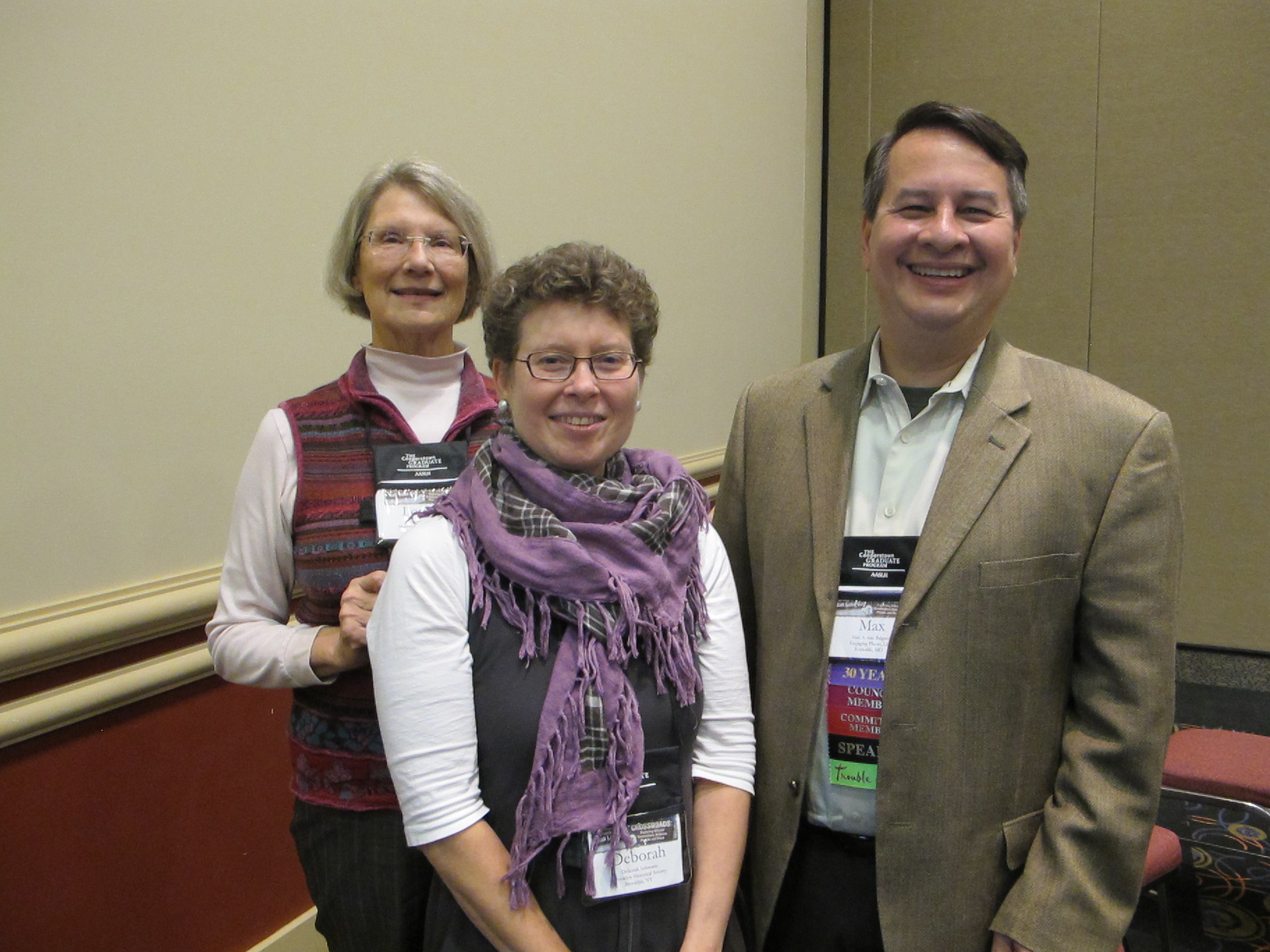
Lorraine McConaghy, Deborah Schwartz, and Max van Balgooy at AASLH 2012.

At the recent AASLH annual meeting, I moderated a session on the experiences of two very different history organizations—the Brooklyn Historical Society and the Museum of History and Industry—whose work in community engagement is not well known in the field yet offer exemplary case studies to examine common strategies, how they should be modified to suit each place’s unique characteristics, and steps to avoid.

Deborah Schwartz, president of the Brooklyn Historical Society, described two programs that reach audiences that are typically underserved by museums: Continue reading

AASLH Workshops for Historic Sites

The American Association for State and Local History offers a wide range of educational workshops and professional training that is particularly helpful for staff and volunteers for work at historic sites and house museums–if you know where to look.  I’ve previously mentioned the sessions during its annual meeting but people often forget that it also has half-day and day-long workshops before and after the annual meeting to explore topics in depth.  What most people don’t know is that you can register for just these workshops; you don’t have to attend the annual meeting–a great advantage for local folks!

This year, AASLH is offering 14 workshops, including:

WebWise 2012: Using Volunteers Online

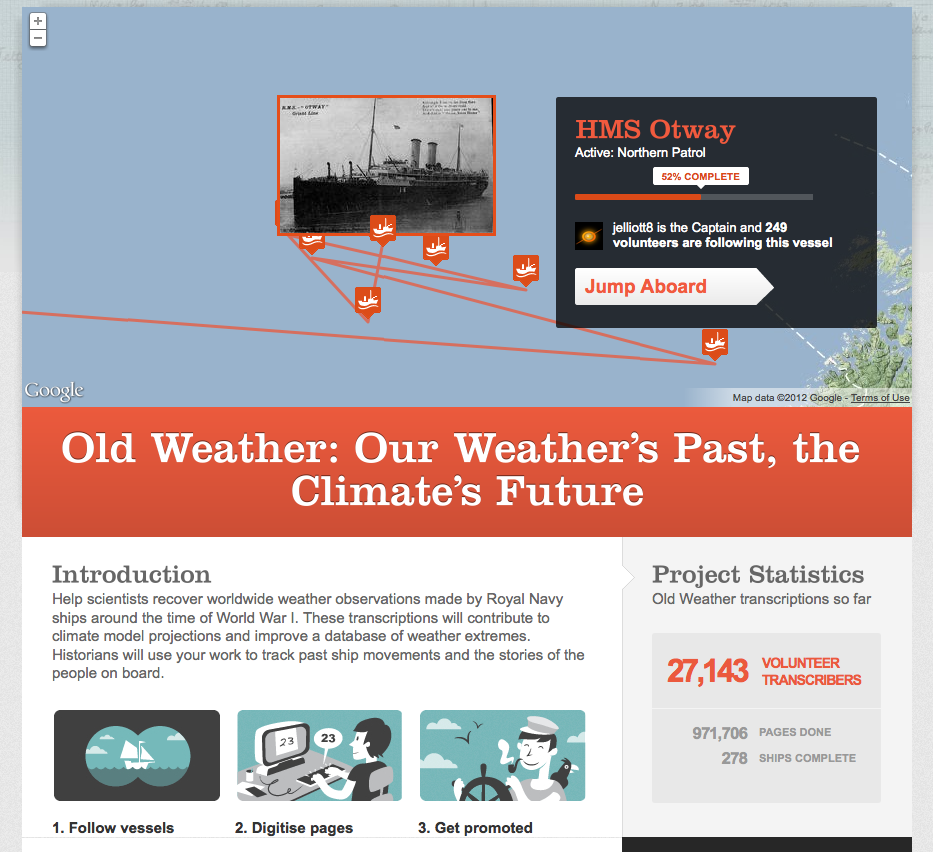
Much of the work at historic sites and history museums wouldn’t be possible without volunteers (and we just passed National Volunteer Week) but very few organizations have recruited volunteers for work online.  Is it possible? What would they do? A session at WebWise 2012 explored these ideas in a panel called, “Sharing Public History Work: Crowdsourcing Data and Sources.”

OldWeather.org, a project of the Citizen Science Alliance

Ben Brumfield of FromThePage Open-Source Transcription Software shared his experiences from small crowdsourcing projects.  He noted that many organizations often object to public participation in scholarly projects because they don’t have the skills or expertise, but he’s found that those people participating are self-selecting and highly focused.  Participation is not equally distributed but mostly done by a small number of people, thus it’s not really crowdsourcing but nerdsourcing.  He provided some examples of “well informed enthusiasts” conducting exemplary work, such as Continue reading