
Category Archives: Mission

Reimagining Historic House Museums: Two Workshops Coming Up!

House museums across the country are confronting difficult questions about relevance, sustainability, and meaning in the 21st century. What worked twenty years ago—traditional tours, decorative arts displays, and carefully preserved interiors—often isn’t enough today to engage visitors or generate financial stability. Communities are changing, audiences have new expectations, and historic sites are under increasing pressure to demonstrate their value.

That’s why Ken Turino (formerly at Historic New England) and I developed Reimagining the Historic House Museum, an intensive one-day workshop that helps professionals and volunteers tackle these challenges head-on. Over the past decade, we’ve led this program at sites across the United States, working with hundreds of staff, board members, and volunteers to think creatively about interpretation, audience engagement, and business models. Each workshop is highly interactive, blending case studies, small-group activities, and practical exercises. Participants leave not only with new ideas, but with concrete tools to implement change at their own sites.

This fall and next spring, we’ll be offering two opportunities to join us in person:

Continue reading

What Happens When a Museum Asks Questions Instead of Giving Answers?

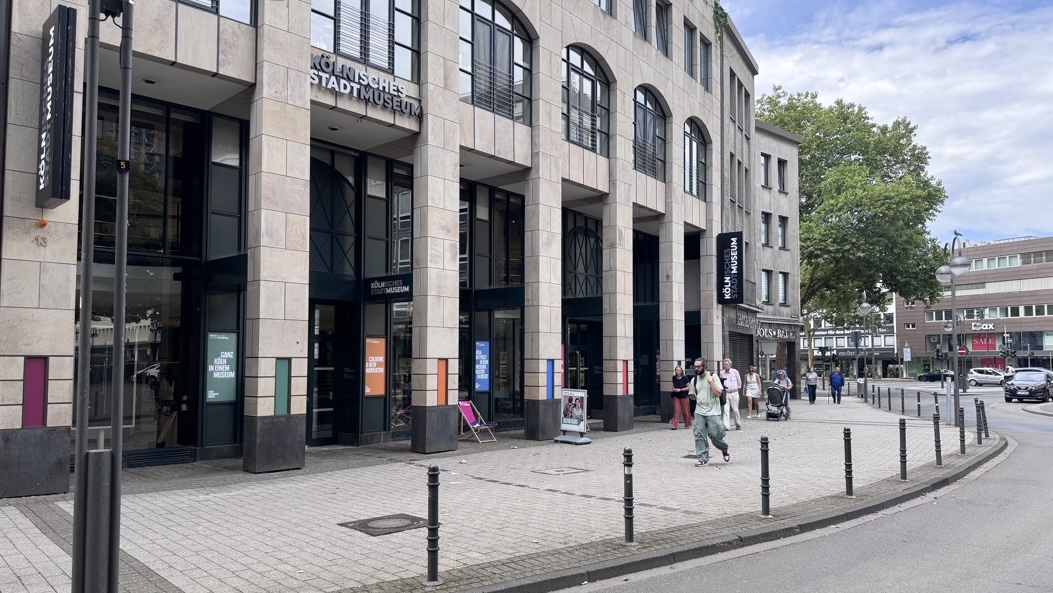
Köln City Museum

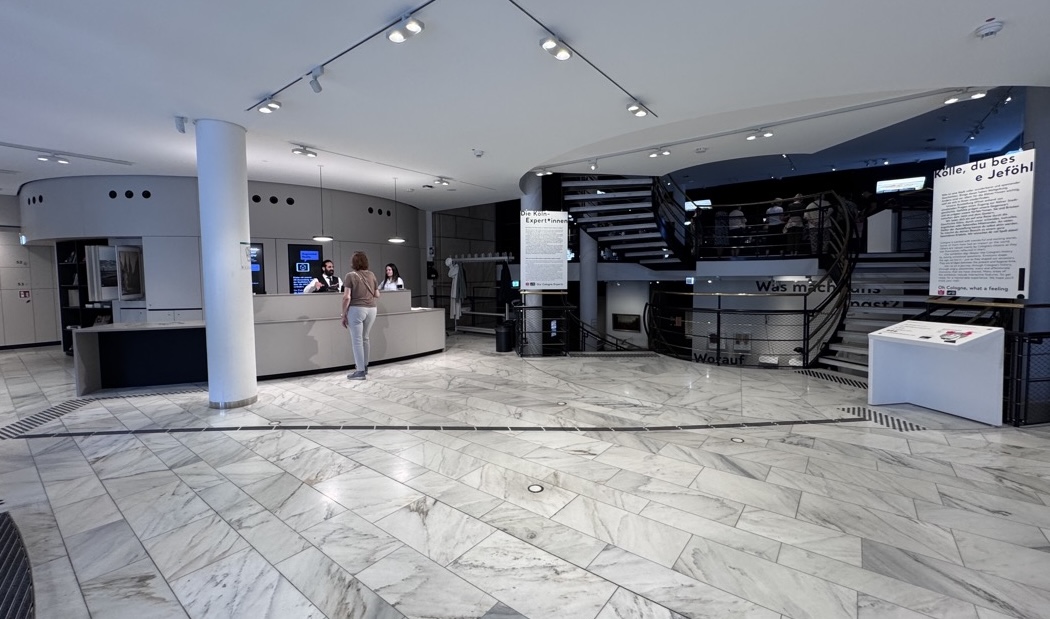
In March 2024, the Cologne City Museum (Kölnisches Stadt Museum) in Germany reopened in an unexpected setting: a former luxury department store in the heart of the city’s shopping district. The museum has been around since 1888, but a 2017 water leak forced it out of its former location. Its latest incarnation takes a bold new approach to presenting the city’s history, promoting itself with “Cologne: A New Narrative.”

Rather than organizing its permanent exhibition chronologically or thematically, the museum focuses on emotions using eight big questions to explore both the past and present of Cologne for residents and tourists. Throughout they incorporated responses and personal objects from their “Cologne Experts,” fifteen diverse residents who represented different perspectives.

From the moment you enter, the museum signals something different. The large black-and-white lobby features a central stairway leading both a half-story up and a half-story down, offering a tantalizing glimpse of what’s to come. The introductory label in the lobby reads:

Continue reading

What Should Stay, Grow, or Go? Let the Impact–Sustainability Matrix Help

Back in 2014, I shared a classic business matrix as a tool to help museums and historic sites think more strategically about their programs and activities. It plotted mission alignment on one axis and financial sustainability on the other, providing a quick visual way to categorize whether something was worth continuing, needed revision, or should be reconsidered altogether, using metaphors of stars, hearts, cash cows, and bunnies.

The response was strong—many found it useful for internal discussions, staff retreats, and board meetings. But since then, my thinking has evolved.

Over the last decade, I’ve come to see that we need a broader lens. It’s not enough to think about money and mission alone. Sustainability today must account for more than just dollars, and impact is shaped not only by mission statements, but also by vision and values.

A Matrix for Today

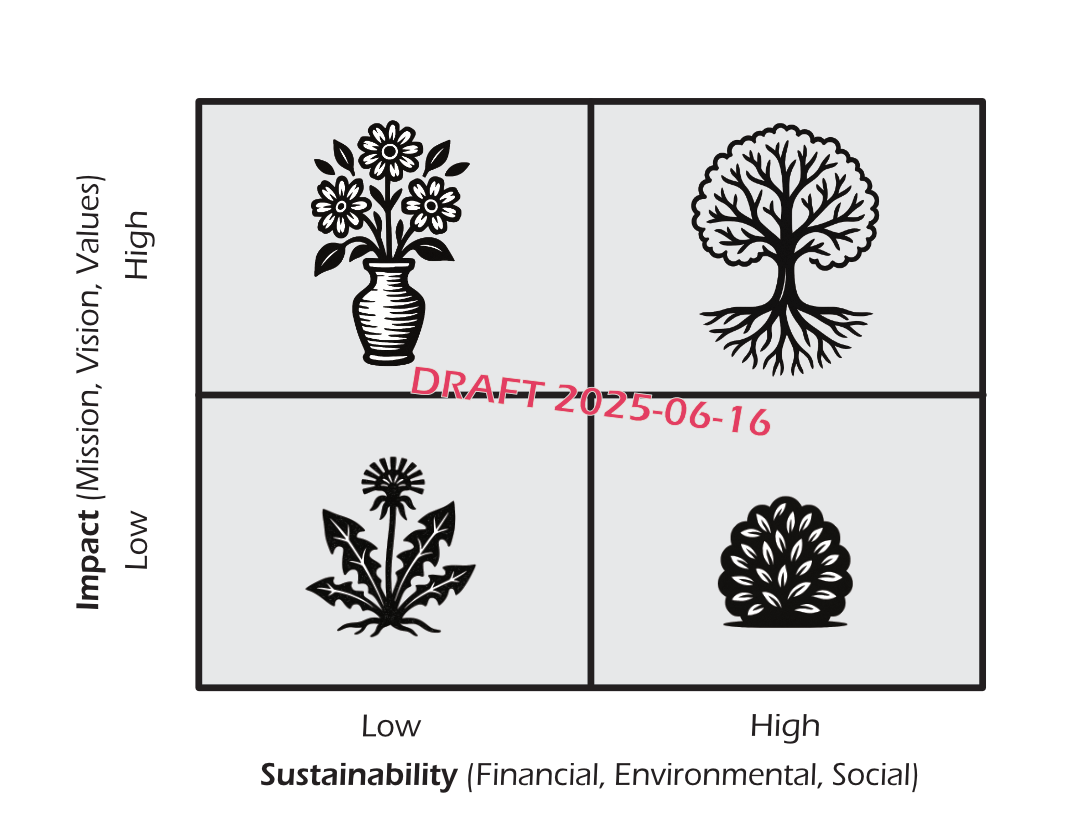
Here’s the updated version:

  • The vertical axis is now Impact, encompassing not just your mission but also your vision and values—your full organizational purpose.
  • The horizontal axis is now Sustainability, which considers financial, social, and environmental dimensions.

This updated Impact-Sustainability Matrix helps museum professionals assess whether a program or initiative is aligned with what matters most and whether it can endure in a resource-constrained world.

A Living Metaphor: From Bloom to Root

To make the matrix easier to understand and more memorable, I’m using a botanical metaphor. Every program or initiative can be thought of as a kind of plant—some deeply rooted and thriving, others beautiful but short-lived, and a few that are sadly distractions.  I’m not sure if the metaphor is as clear and apt as my previous star/heart/cash cow/bunny matrix, so I’d love your thoughts and suggestions in the comments below. 

Below are descriptions of each quadrant using this metaphor:

Continue reading

Fundraising After Crisis: Lessons from the Gamble House

Extent of Eaton Fire, 2025. Courtesy Wikimedia Commons.

When disaster strikes, how should a museum approach fundraising? A recent appeal from the Gamble House Conservancy offers an excellent model.

Following the devastating Eaton Fire in January 2025, the Gamble House framed its appeal not simply around its own needs, but around its role in the community’s recovery. The letter powerfully connects the Gamble House to the larger regional tragedy, emphasizing the museum as a place of respite, inspiration, and service. Rather than focusing solely on damage or lost revenue, the appeal highlights how the museum has already acted: removing collections, supporting staff and volunteers, surveying visitors to guide future programs, and partnering with displaced nonprofits like the Pasadena Audubon Society.

The Conservancy also effectively maintained its core mission. Ongoing conservation efforts, such as addressing water intrusion and repairing the side yard gate, are presented alongside expanded community initiatives. This dual focus reassures donors that their gifts support both immediate public needs and long-term stewardship.

Finally, the letter makes giving easy. In addition to traditional mail-in donations, a QR code directs supporters to a secure online portal, meeting donors where they are.

The takeaway for museums and nonprofits? After a crisis, connect your organization’s needs to the broader recovery, demonstrate early action, and align core mission work with new community service roles. Fundraising after a disaster isn’t just about survival — it’s about showing how your institution remains essential to the life of the community it serves.

Why Board Diversity Matters for Museums (and When It Doesn’t)

Museums are facing a period of transformation—shifting visitor expectations, financial uncertainty, and growing pressure to be more inclusive and socially responsible. But who is making the decisions that shape how museums navigate these challenges?

A museum’s board of directors plays a crucial role in setting strategy, securing funding, and guiding institutional priorities. While board diversity has become a major talking point, research suggests that simply adding diverse voices isn’t enough. The type of diversity, how it’s measured, and how boards function together all influence effectiveness.

Three recent studies offer key insights into how board diversity affects decision-making, resilience, and institutional success. Together, they provide a roadmap for museums looking to build stronger boards.

Insight #1: Measuring Board Diversity Matters but Not All Diversity Is the Same

Behlau and colleagues provide a systematic review of how board diversity is measured and highlight a key problem: diversity is often discussed in broad terms without precise definitions. They categorize board diversity into three dimensions:

  1. Structural diversity, which includes factors like board size, term limits, and leadership roles.
  2. Demographic diversity, which includes observable characteristics like gender, age, and ethnicity.
  3. Cognitive diversity, which includes unobservable attributes like expertise, education, values, and skills.
Continue reading