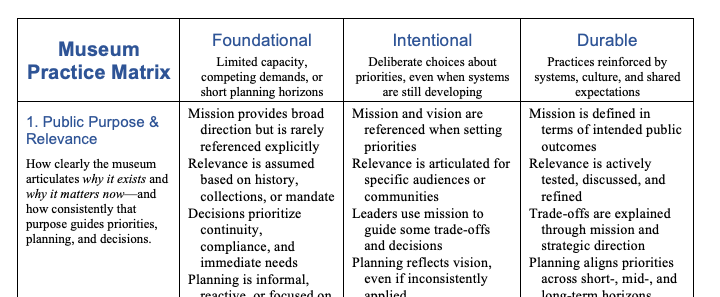
Category Archives: Performance measures

Who Does What? Clarifying Roles for Nonprofit Boards and Staff

One of the most common challenges for nonprofit organizations—whether museums, historic sites, or community groups—is understanding who does what when it comes to decision-making, planning, and day-to-day operations.

Board members sometimes worry they are getting too involved in management or don’t know enough about what’s going on. Staff members, on the other hand, can feel their authority is being questioned when board members step into operational details. Yet when everyone understands their distinct responsibilities, organizations thrive.

We would never expect a new volunteer to suddenly step into a historic house and deliver a flawless tour. They need orientation, resources, and time to develop their skills before they feel confident leading visitors.

Continue reading

What Should Stay, Grow, or Go? Let the Impact–Sustainability Matrix Help

Back in 2014, I shared a classic business matrix as a tool to help museums and historic sites think more strategically about their programs and activities. It plotted mission alignment on one axis and financial sustainability on the other, providing a quick visual way to categorize whether something was worth continuing, needed revision, or should be reconsidered altogether, using metaphors of stars, hearts, cash cows, and bunnies.

The response was strong—many found it useful for internal discussions, staff retreats, and board meetings. But since then, my thinking has evolved.

Over the last decade, I’ve come to see that we need a broader lens. It’s not enough to think about money and mission alone. Sustainability today must account for more than just dollars, and impact is shaped not only by mission statements, but also by vision and values.

A Matrix for Today

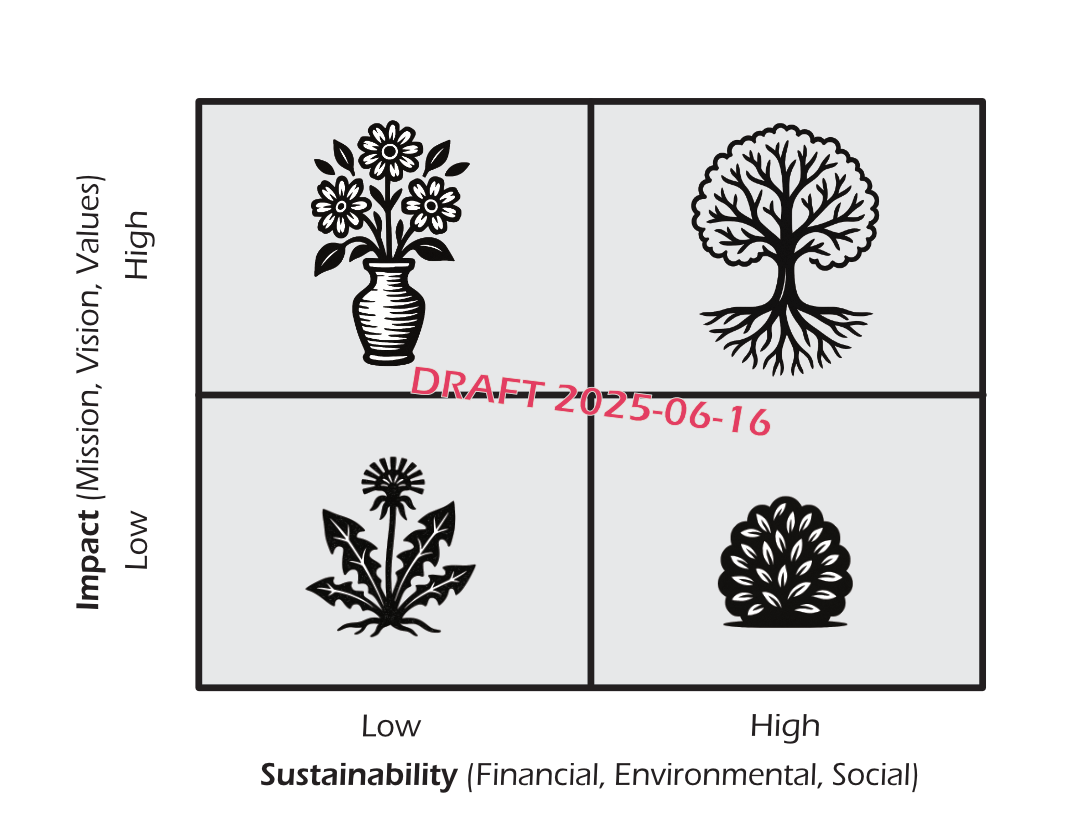
Here’s the updated version:

  • The vertical axis is now Impact, encompassing not just your mission but also your vision and values—your full organizational purpose.
  • The horizontal axis is now Sustainability, which considers financial, social, and environmental dimensions.

This updated Impact-Sustainability Matrix helps museum professionals assess whether a program or initiative is aligned with what matters most and whether it can endure in a resource-constrained world.

A Living Metaphor: From Bloom to Root

To make the matrix easier to understand and more memorable, I’m using a botanical metaphor. Every program or initiative can be thought of as a kind of plant—some deeply rooted and thriving, others beautiful but short-lived, and a few that are sadly distractions.  I’m not sure if the metaphor is as clear and apt as my previous star/heart/cash cow/bunny matrix, so I’d love your thoughts and suggestions in the comments below. 

Below are descriptions of each quadrant using this metaphor:

Continue reading

Why Board Diversity Matters for Museums (and When It Doesn’t)

Museums are facing a period of transformation—shifting visitor expectations, financial uncertainty, and growing pressure to be more inclusive and socially responsible. But who is making the decisions that shape how museums navigate these challenges?

A museum’s board of directors plays a crucial role in setting strategy, securing funding, and guiding institutional priorities. While board diversity has become a major talking point, research suggests that simply adding diverse voices isn’t enough. The type of diversity, how it’s measured, and how boards function together all influence effectiveness.

Three recent studies offer key insights into how board diversity affects decision-making, resilience, and institutional success. Together, they provide a roadmap for museums looking to build stronger boards.

Insight #1: Measuring Board Diversity Matters but Not All Diversity Is the Same

Behlau and colleagues provide a systematic review of how board diversity is measured and highlight a key problem: diversity is often discussed in broad terms without precise definitions. They categorize board diversity into three dimensions:

  1. Structural diversity, which includes factors like board size, term limits, and leadership roles.
  2. Demographic diversity, which includes observable characteristics like gender, age, and ethnicity.
  3. Cognitive diversity, which includes unobservable attributes like expertise, education, values, and skills.
Continue reading

Rethinking Goals in History Organizations: A New Framework for Internal and External Impact

For many years, history organizations—including history museums, historical societies, house museums, and historic sites—have measured success using a traditional planning framework focused on outputs (what an organization produces). By the 1990s, there was a growing recognition of the importance of outcomes (how visitors change because of that work), over merely completing tasks.

While the confusingly-named outputs and outcomes framework have improved museum projects, they often overlook how history organizations themselves evolve—how their staff, volunteers, and boards gain knowledge, shift perspectives, and take action to improve their work.

I’d like to introduce a new way of thinking about goals in museums, distinguishing between internal change (within the organization) and external change (within the community and visitors). Using the Know, Feel, Do framework, this model helps history organizations better understand their impact—both inside and outside the institution.

The Know, Feel, Do framework is a structured approach to understanding how individuals and organizations learn, experience emotions, and take action. It is based on Benjamin Bloom’s Taxonomy of Learning Domains, which classifies learning into three categories:

  1. Cognitive (Know) – Intellectual engagement and knowledge acquisition.
  2. Affective (Feel) – Emotional and attitudinal responses.
  3. Behavioral (Do) – Actions taken as a result of learning.

This model is widely used in education, marketing, nonprofit management, and project evaluation to design experiences that lead to meaningful change.


The Traditional Model: Outputs vs. Outcomes

Continue reading

Job Announcements Should Inspire, Not Confuse

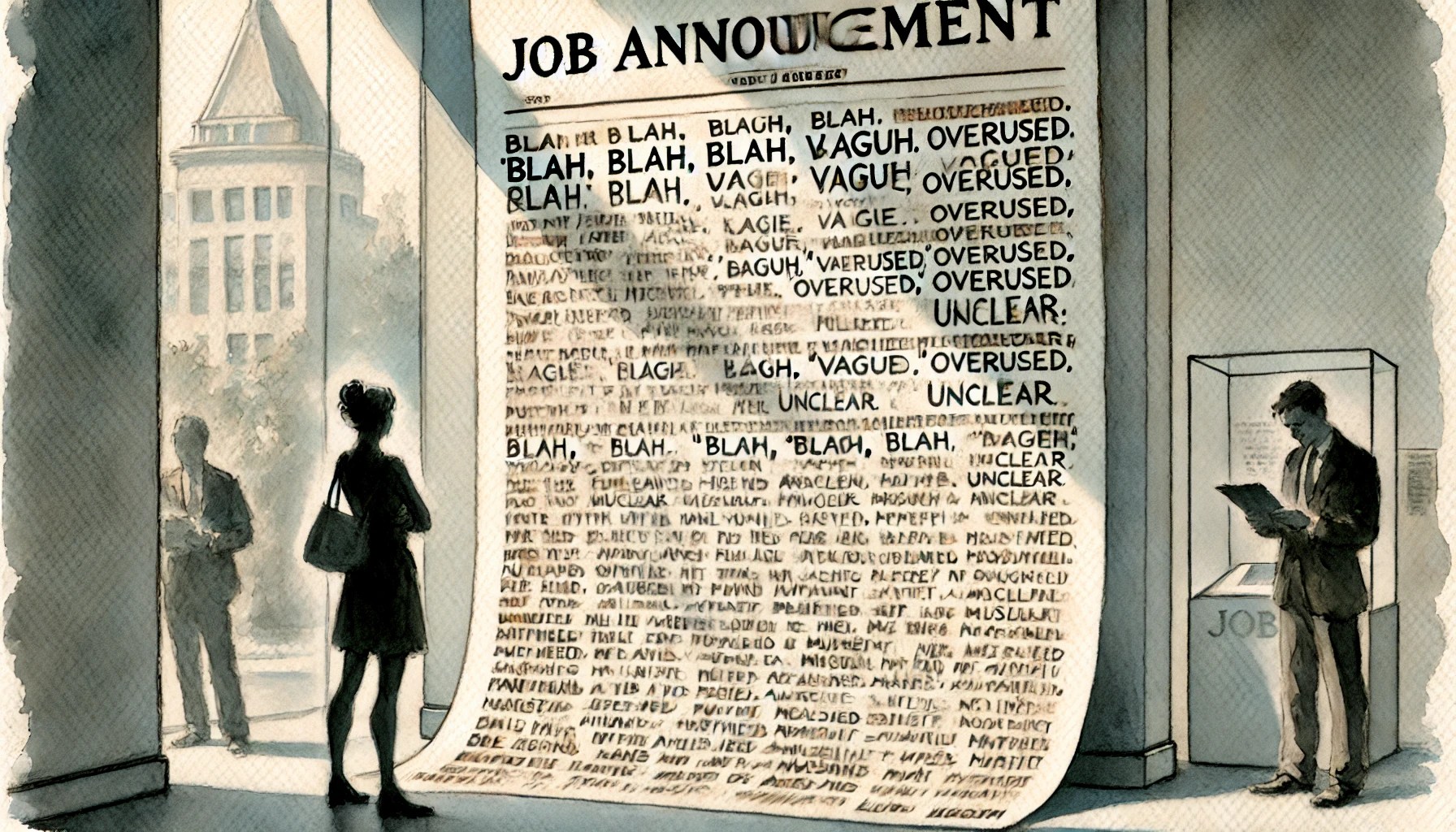
Recently, I came across a job announcement for a senior position at a museum that left me more frustrated than inspired. Despite the important role it advertised, the description was riddled with vague language, overused phrases, and an overwhelming list of responsibilities. If it weren’t for the letterhead, this could have been a job at nearly any museum in the country. Here’s what went wrong—and how we can do better:

1. Clear, Specific Language Beats Buzzwords

Phrases like “championing change management,” “leveraging opportunities,” or “fostering growth” sound impressive, but what do they actually mean? Without clarity, these terms are open to interpretation, leading to confusion or disagreements down the line. A good job description uses concrete language to convey expectations. For example, instead of “fostering growth,” specify what kind of growth: increasing visitor numbers? Expanding programming? Generating revenue?

2. Prioritize, Don’t Overwhelm

This particular job description listed a dozen “essential” duties and responsibilities, each with multiple sub-points. While comprehensive, such an exhaustive list signals a lack of prioritization. No one can excel at everything, and candidates may be deterred by the sheer scope of the expectations. Instead, focus on the top three to five priorities that are most critical to success in the role.

Continue reading

AI in Action: Enhancing Museum Programs with Audience-Driven Insights

In museums and historic sites, whether you’re designing school programs, workshops, docent training, or exhibitions, understanding the needs and interests of your audience is key to success. But how do you efficiently analyze diverse feedback and connect it to your goals? Recently, I experimented with a creative process that combined audience input and AI to revise the learning objectives for my graduate course, Creating Sustainable Museums. The results not only improved the course but also offered insights into how AI can be used to enhance museum work.  

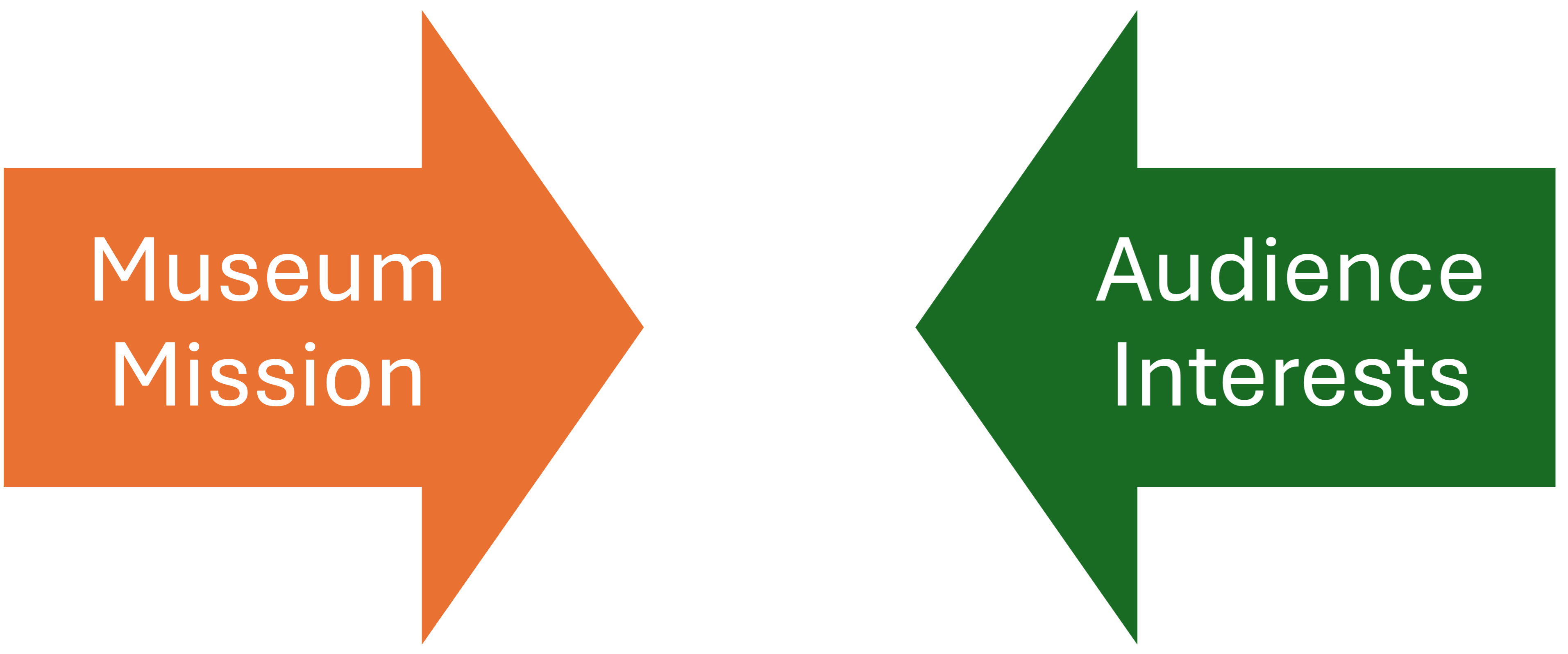
This approach was inspired by research conducted by Conny Graft at Colonial Williamsburg decades ago, which revealed that the goals of museum educators for school field trips often didn’t align with those of teachers. When those misalignments went unaddressed, they could lead to disappointment for both parties. Graft’s work emphasized the importance of finding common ground between institutional goals and participant expectations—a principle that remains essential in museum work today.

Start with Your Audience’s Goals

My course revision process began with a pre-course online survey, asking students to share what they hoped to know, feel, and do by the end of the semester. Using GPT, I quickly synthesized and categorized their responses to reveal predominant interests in financial, social, and environmental sustainability, as well as a strong desire to gain practical, job-ready skills. This step is akin to understanding your audience in a museum setting: what do your participants want to know, feel, or do? Are they looking for historical context, practical skills, or a new way to connect with the past?

Continue reading

Sustainable Museums in Action: Key Takeaways from the NEMA Conference

This session on the sustainability initiatives at the Rhode Island School of Design Museum was among the first sessions at NEMA 2024.

Last week I attended the New England Museum Association 2024 Conference in Newport, Rhode Island. About 800 museum professionals attended over the three days of sessions, vendor displays, professional affiliation group meetings, and receptions. The weather was sunny and sixties, surprisingly warm for the first week of November. Without the crowds of summer, it made Newport much more pleasant.

The conference offered numerous sessions on sustainability, and I’m attending as many as possible in preparation for my upcoming course, “Creating Sustainable Museums,” at George Washington University this spring.

In the session “Climate Emergency and Sustainability Taskforce at RISD,” several staff members from the Rhode Island School of Design Museum shared insights on their in-house sustainability efforts. What began as informal conversations among a few staff members evolved into a formal task force that resulted in the “Take Care” exhibition. Staff from all areas of the museum—not only curators and educators—selected objects from the collection and created interpretive labels addressing sustainability themes. In addition to this curatorial approach, the museum implemented practical sustainable practices, including standardizing frame sizes, reusing exhibition cases, turning off cameras in virtual meetings, and eliminating admission stickers and vinyl lettering.

Continue reading

Using “Verbs for Significant Learning Outcomes” in Museums and Historic Sites

As museum educators and managers, our goal is to create impactful and memorable experiences for our visitors. Whether we’re designing tours, exhibitions, programs, or events, it’s crucial to start with clear and measurable learning outcomes. “Verbs for Significant Learning Outcomes” can guide us in articulating what we want our visitors to know, feel, or do as a result of their experience. Here’s how you can use this taxonomy to develop effective learning outcomes for your museum or historic site.

1. Start with the End in Mind

Before diving into the content, consider the ultimate goals of your tour, exhibition, or school program. What do you want your visitors to know, feel, or do? Are you aiming to increase their knowledge, change their attitudes, or develop new skills? By defining these goals upfront, you can ensure that your entire project aligns with your desired outcomes.

2. Choose the Right Category

“Verbs for Significant Learning Outcomes” is divided into six categories: Foundational Knowledge, Application, Integration, Human Dimension, Caring, and Learning How to Learn. Each category addresses different aspects of learning in ever-deepening levels:

  • Foundational Knowledge: Focuses on understanding and remembering essential information.
  • Application: Involves using knowledge and skills in practical situations.
  • Integration: Encourages connecting and synthesizing ideas across disciplines.
  • Human Dimension: Emphasizes personal growth, empathy, and interpersonal skills.
  • Caring: Involves developing new feelings, interests, and values.
  • Learning How to Learn: Focuses on developing self-directed learning skills.

Select the category that best aligns with your goals. For instance, if you want to deepen visitors’ understanding of a historical period, you might focus on Foundational Knowledge. If you want to encourage visitors to apply what they’ve learned, consider the Application category. Most museums confine their outcomes to the most basic levels (the “green” experiences) so take a risk and try to add one from the more ambitious levels (the “yellow” experiences).

Continue reading

Verbs for Significant Learning Outcomes: New for Museums and Historic Sites

When it comes to developing tours, exhibitions, events, school programs, or publications, the most important concept is to start with the goal in mind or to “design backwards.” Goals are usually defined as products, services, or deliverables, but museums are educational institutions, so our goals should shift from being about the museum or historic site produces or creates to being about what the visitor learns. In other words, what do you want visitors to know, feel, or do as a result of your tour, exhibition, or program?

“Appreciate” and “understand” are often typical outcomes, but they’re hopelessly vague and amorphous. It’s too easy for us to have different definitions of what it means to “appreciate history” or “understand the Constitution.” Thankfully, educators, psychologists, and neuroscientists have been working on the science and practice of learning for decades, providing us with frameworks and methodologies to craft more precise and actionable learning goals.

The Popular but Incomplete Bloom’s Taxonomy (skip to next section if too nerdy)

Let’s start with a brief history of the development of educational taxonomies, which systematically classify learning goals and objectives. Bloom’s Taxonomy is perhaps the most well-known framework in this area. However, users often overlook that it was originally published in 1956 as part of a broader work titled Taxonomy of Educational Objectives: The Classification of Educational Goals. This foundational text was actually the first of three planned volumes.

The first volume, authored by Benjamin Bloom and colleagues, focused on the cognitive domain (knowledge). The second volume, which addressed the affective domain (emotion), was published in 1964 by David Krathwohl. Unfortunately, the third volume, intended to cover the psychomotor domain (action), was never completed, leaving Bloom’s Taxonomy somewhat incomplete despite its significant influence on educational theory and practice.

Continue reading

Demystifying Spending Patterns in Small Museums

In the world of small museums, location and audience significantly influence expenses, rendering a one-size-fits-all approach ineffective. However, gaining insight into the various types of expenses museums incur can shed light on common challenges and their causes. The non-profit financial Form 990 categorizes expenses into five areas, providing a framework for understanding spending patterns. Our goal is to simplify the concept of museum spending and guide museums toward prudent budget management by exploring these key expense categories.

Continue reading