Category Archives: Sustainability

Rethinking Board Governance in a Post-COVID World

At the recent Mid-Atlantic Association of Museums (MAAM) conference in Pittsburgh, I attended “Headwinds and Tailwinds: A Panel Discussion about the Financial and Operational Impacts on the Museum and Arts Management Field.” One of the panelists, Hayley Haldeman of the Pittsburgh Cultural Trust, offered particularly insightful observations about board governance in the post-COVID landscape. Her comments confirmed what many of us have observed firsthand—museum boards are facing more challenges and opportunities than ever before.

A Changing Landscape—But Familiar Structures

Despite the upheavals of recent years, Haldeman noted that few organizations have made major changes to their board structures. Most boards remain large, and many governance documents have yet to be updated. The notable exception has been a growing emphasis on board diversity—though progress toward real inclusion varies widely.

At the same time, museums are experiencing significant leadership transitions. Many long-serving executive directors have retired, while others are navigating the aftermath of the “Great Resignation,” which has affected both staff and board leadership. These changes can be destabilizing, but they also open the door for renewal.

New Pressures on Museums and Nonprofit Organizations

Board service today comes with new (and sometimes unexpected) responsibilities. Museums and other nonprofit organizations are grappling with a range of threats, both real and perceived:

  • Drops in individual giving and shifts in foundation priorities
  • Greater community expectations for accountability and transparency
  • Political and legal questions (e.g., DEAI initiatives, exhibition content)
  • Cybersecurity and AI-related risks

Meanwhile, board members are harder to recruit and retain. COVID-19 reshaped personal and professional priorities, making time an even scarcer resource. For organizations, that means it’s harder than ever to fill board seats, onboard new members, and keep them engaged—especially when board work happens virtually.

Continue reading

Reimagining Historic House Museums: Two Workshops Coming Up!

House museums across the country are confronting difficult questions about relevance, sustainability, and meaning in the 21st century. What worked twenty years ago—traditional tours, decorative arts displays, and carefully preserved interiors—often isn’t enough today to engage visitors or generate financial stability. Communities are changing, audiences have new expectations, and historic sites are under increasing pressure to demonstrate their value.

That’s why Ken Turino (formerly at Historic New England) and I developed Reimagining the Historic House Museum, an intensive one-day workshop that helps professionals and volunteers tackle these challenges head-on. Over the past decade, we’ve led this program at sites across the United States, working with hundreds of staff, board members, and volunteers to think creatively about interpretation, audience engagement, and business models. Each workshop is highly interactive, blending case studies, small-group activities, and practical exercises. Participants leave not only with new ideas, but with concrete tools to implement change at their own sites.

This fall and next spring, we’ll be offering two opportunities to join us in person:

Continue reading

What Should Stay, Grow, or Go? Let the Impact–Sustainability Matrix Help

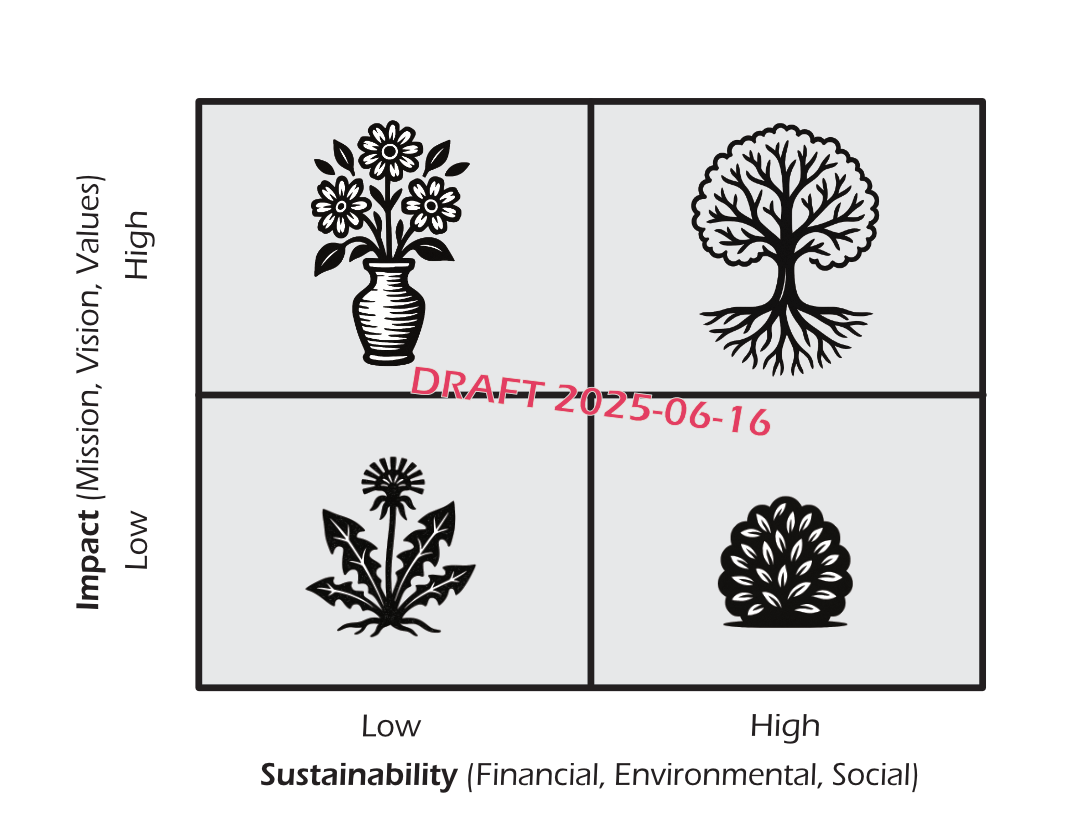
Back in 2014, I shared a classic business matrix as a tool to help museums and historic sites think more strategically about their programs and activities. It plotted mission alignment on one axis and financial sustainability on the other, providing a quick visual way to categorize whether something was worth continuing, needed revision, or should be reconsidered altogether, using metaphors of stars, hearts, cash cows, and bunnies.

The response was strong—many found it useful for internal discussions, staff retreats, and board meetings. But since then, my thinking has evolved.

Over the last decade, I’ve come to see that we need a broader lens. It’s not enough to think about money and mission alone. Sustainability today must account for more than just dollars, and impact is shaped not only by mission statements, but also by vision and values.

A Matrix for Today

Here’s the updated version:

  • The vertical axis is now Impact, encompassing not just your mission but also your vision and values—your full organizational purpose.
  • The horizontal axis is now Sustainability, which considers financial, social, and environmental dimensions.

This updated Impact-Sustainability Matrix helps museum professionals assess whether a program or initiative is aligned with what matters most and whether it can endure in a resource-constrained world.

A Living Metaphor: From Bloom to Root

To make the matrix easier to understand and more memorable, I’m using a botanical metaphor. Every program or initiative can be thought of as a kind of plant—some deeply rooted and thriving, others beautiful but short-lived, and a few that are sadly distractions.  I’m not sure if the metaphor is as clear and apt as my previous star/heart/cash cow/bunny matrix, so I’d love your thoughts and suggestions in the comments below. 

Below are descriptions of each quadrant using this metaphor:

Continue reading

What is the Future of Interpretation at Historic House Museums?

The world of historic house museums has been grappling with fundamental questions about purpose and sustainability for many years. Two significant gatherings, the Kykuit II Summit in 2007 and the recent 2025 Historic House Summit, highlight key moments in this ongoing discussion. Bridging these two events is the American Association for State and Local History’s (AASLH) STEPS program, particularly its standards for interpretation, which emerged directly from the needs identified in that earlier period. Looking at these three points in time reveals not only evolving ideas but also the increasing urgency and specific challenges facing interpretation today. 

The Kykuit II Summit: The Call for Sustainability and Standards

The Kykuit II Summit, held in April 2007 at the John D. Rockefeller estate, brought together leaders to discuss “the sustainability of historic sites.” This was a follow-up to a similar meeting five years prior. The discussions focused on finding ways for historic sites, the largest segment of the museum community, to thrive. Key questions included the challenging, “unmentionable” ones: “Does America need another house museum?” or “Can America support the existing historic sites it now has?”

Continue reading

Interpreting Historic House Museums Today: Reflections on the 2025 AASLH Summit

By Mary A. van Balgooy, Vice President, Engaging Places LLC

Last week, I attended the 2025 AASLH Historic House Museums Summit, “Interpreting Historic House Museums Today,” held at the Edsel and Eleanor Ford House in Grosse Pointe Shores, Michigan. Over 100 museum professionals from across the country came together to assess where interpretation stands today and how it should evolve over the next decade. The Summit’s objectives were clear: attendees would examine the current scope of historic house interpretation, identify trends for the next 10-15 years, and define the major issues shaping the field. Through keynotes, breakout sessions, and informal discussions, attendees tackled major questions about our roles, responsibilities, and hopes for the sector.

Big Ideas from the 2025 AASLH Summit

One of the most powerful themes to emerge was the need to embrace “whole history.” Instead of narrowly focusing on furniture, technology, or architectural details, participants stressed telling a full, human-centered story. This includes voices often left out of traditional interpretation: women, people of color, laborers, and marginalized groups. The idea is not merely to add these perspectives but to reframe interpretation through them, reflecting the complexity and moral ambiguity of historical figures and events.

A second major idea was that historic house museums must move beyond passive presentation into active engagement. Museums should create dialogic experiences where visitors reflect, question, and even challenge the past. Skills like listening, civil discourse, and conflict navigation were identified as essential for future staff training.

Finally, participants stressed the importance of using interpretation as a tool for healing and community building. At a time of social division, historic sites have a unique role to play in fostering empathy, historical curiosity, and nuanced understanding.

Findings and Recommendations

Continue reading

Why Board Diversity Matters for Museums (and When It Doesn’t)

Museums are facing a period of transformation—shifting visitor expectations, financial uncertainty, and growing pressure to be more inclusive and socially responsible. But who is making the decisions that shape how museums navigate these challenges?

A museum’s board of directors plays a crucial role in setting strategy, securing funding, and guiding institutional priorities. While board diversity has become a major talking point, research suggests that simply adding diverse voices isn’t enough. The type of diversity, how it’s measured, and how boards function together all influence effectiveness.

Three recent studies offer key insights into how board diversity affects decision-making, resilience, and institutional success. Together, they provide a roadmap for museums looking to build stronger boards.

Insight #1: Measuring Board Diversity Matters but Not All Diversity Is the Same

Behlau and colleagues provide a systematic review of how board diversity is measured and highlight a key problem: diversity is often discussed in broad terms without precise definitions. They categorize board diversity into three dimensions:

  1. Structural diversity, which includes factors like board size, term limits, and leadership roles.
  2. Demographic diversity, which includes observable characteristics like gender, age, and ethnicity.
  3. Cognitive diversity, which includes unobservable attributes like expertise, education, values, and skills.
Continue reading

Making Community Engagement Work: Fresh Ideas for Museums

Community engagement is essential to modern museum work—but let’s face it, it’s not always easy. Building authentic, long-term relationships with your community takes time, effort, and a willingness to rethink how your museum operates. Two recent studies in Curator: The Museum Journal offer practical tips and ideas to help you navigate the challenges and make a bigger impact.

Let the Community Lead

In “Unpacking the Complexities, Challenges, and Nuances of Museum Community Engagement Practitioners’ Narratives on Knowledge Production in Scotland” (Wallen et al., 2024) researchers explore how museums and communities can collaborate to co-create knowledge. The big takeaway? Museums need to value the lived experiences of their community partners as much as their own expertise. Smaller museums seem to do this best because their tight-knit teams often integrate community engagement into everything they do.

But it’s not always smooth sailing. Unequal power dynamics, emotional labor, and balancing community needs with organizational goals can make this work tricky. To address these challenges, the study suggests:

  • Making equity a priority from the start of any project.
  • Seeing relationship-building as an ongoing effort, not a one-time event.
  • Sharing decision-making power to let community voices shape museum projects.

This approach isn’t just about being inclusive—it can transform your museum into a space for authentic, diverse narratives.

Continue reading

AI in Action: Enhancing Museum Programs with Audience-Driven Insights

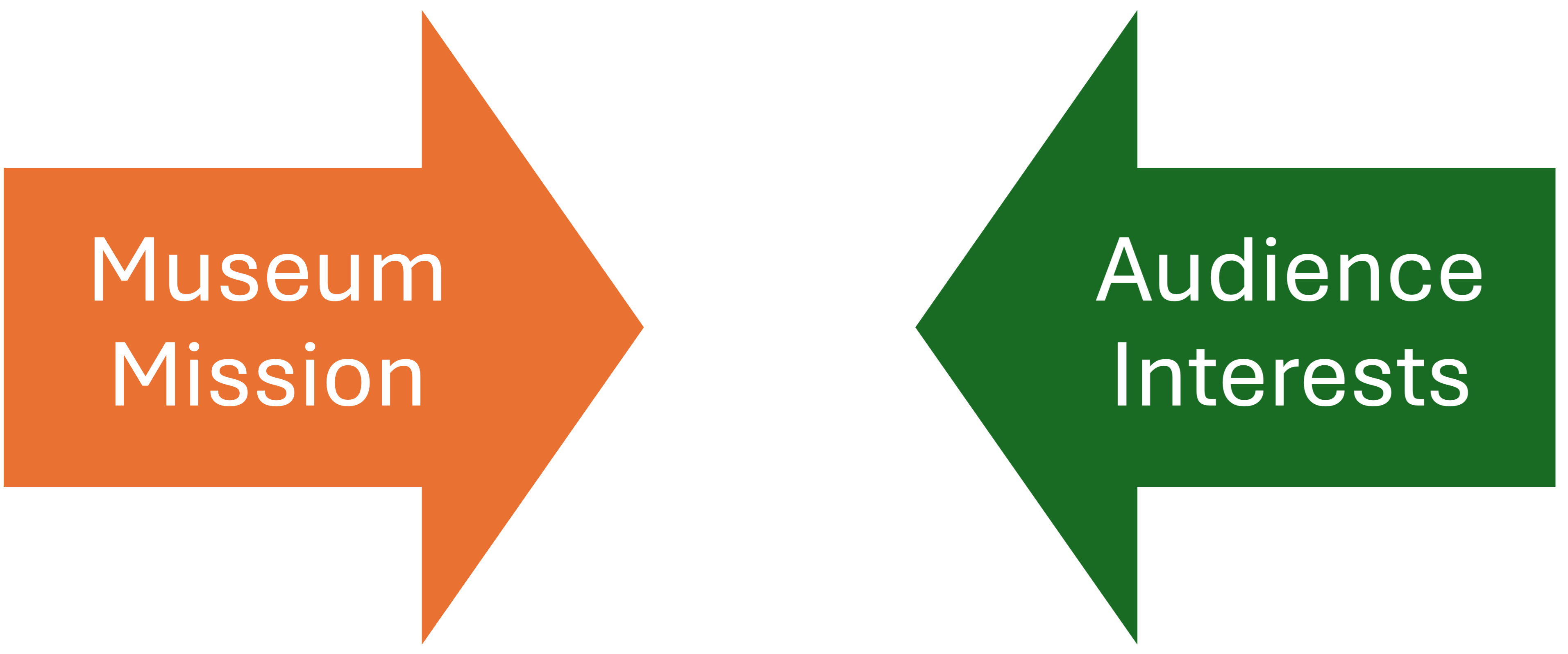
In museums and historic sites, whether you’re designing school programs, workshops, docent training, or exhibitions, understanding the needs and interests of your audience is key to success. But how do you efficiently analyze diverse feedback and connect it to your goals? Recently, I experimented with a creative process that combined audience input and AI to revise the learning objectives for my graduate course, Creating Sustainable Museums. The results not only improved the course but also offered insights into how AI can be used to enhance museum work.  

This approach was inspired by research conducted by Conny Graft at Colonial Williamsburg decades ago, which revealed that the goals of museum educators for school field trips often didn’t align with those of teachers. When those misalignments went unaddressed, they could lead to disappointment for both parties. Graft’s work emphasized the importance of finding common ground between institutional goals and participant expectations—a principle that remains essential in museum work today.

Start with Your Audience’s Goals

My course revision process began with a pre-course online survey, asking students to share what they hoped to know, feel, and do by the end of the semester. Using GPT, I quickly synthesized and categorized their responses to reveal predominant interests in financial, social, and environmental sustainability, as well as a strong desire to gain practical, job-ready skills. This step is akin to understanding your audience in a museum setting: what do your participants want to know, feel, or do? Are they looking for historical context, practical skills, or a new way to connect with the past?

Continue reading

Exploring Sustainability in Museums: A New Graduate Course at GWU

This spring, I’m excited to launch a new graduate course at George Washington University, Creating Sustainable Museums. Designed for those new to the topic, the course combines theory with practice to explore how museums can address sustainability through financial stability, social equity and access, and environmental responsibility.

At the heart of the course are three core texts that introduce students to sustainability’s principles, history, and practical applications. We begin with Jeremy Caradonna’s Sustainability: A History, a compelling exploration of sustainability’s roots in the 18th-century deforestation crises and the consumer revolution. Caradonna introduces key figures like John Muir and Gifford Pinchot and influential movements such as the Club of Rome. He also explains foundational terms like lifecycle analysis, greenwashing, carbon footprints, and B Corporations. By tracing sustainability’s evolution, the book helps students understand that this is not just a modern buzzword but a framework deeply embedded in our history and practices (although it becomes very dense in the second half of the 20th century).

Continue reading

Innovative Financial Strategies for Museums: Insights from Recent Research

Museums are feeling the pinch as public funding declines and operational costs grow. But don’t worry—there are creative ways to boost your financial health without losing sight of your mission. Two recent studies offer fresh ideas to help museums thrive while connecting more deeply with their audiences.

Make the Most of What You Offer
The first study, “Value Capture for Nonprofits: The Case of Museums’ New Business Models” (Thomas & Tobelem, 2024), urges museums to think more like entrepreneurs. Museums create tremendous value through exhibitions, programs, and digital content—but often struggle to turn that value into income. The solution? Find ways to align financial opportunities with what you already do best.

For instance, you could:

  • Introduce tiered pricing for digital experiences, like charging for premium virtual tours.
  • Partner with local businesses to create themed events that support your mission.
  • Offer exclusive experiences, like behind-the-scenes access, for a fee.

These strategies not only bring in revenue but also allow museums to stay true to their values. The takeaway: look at what you already offer and think creatively about how to monetize it in a way that feels authentic.

Continue reading