
 TED Talks has spawned the renewal of lectures as an engaging form of education (who would have guessed?) and many universities and organizations are regularly sharing lectures from their public programs, staff workshops, and student courses online with the public. They’re also a great resource for house museums and historic sites, who can use them for professional development and staff training, or to check out a potential speaker for a special event. They might even inspire museums to record their own events and share them online. Here are a couple programs that caught my eye: Continue reading
Video: Finding a Museum’s IRS Form 990
This blog shares lots of the intriguing ideas that I encounter at house museums and historic sites in my travels, and often they’re best explained through video. How else can you really understand how a hands-on activity works or how visitors behave during a tour? I’ve shared plenty of videos created by others but this past year I’ve been learning how to create my own videos for the museum field, using my ever-present iPhone to shoot video snippets, mastering ScreenFlow, and studying how others create videos on YouTube (e.g., Peter McKinnon, Curtis Judd, DottoTech, and Video Creators). Now my efforts have been nudged along by the classes I’ve started to teach this year at George Washington University where I’m incorporating “flipped learning” approaches to move some of my lectures online to devote as much time in the classroom to group discussions and activities.
I shared one of my initial forays into video creation several months ago on a cool interactive technique from a traveling exhibition at the Indiana State Museum and this week I’m posting two more videos which are a bit more complex. I’m hoping my videos will improve over time but I do want to maintain their “hand-crafted” nature so they stays personal (in other words, the quality should get better but don’t expect “high production values”).
I created today’s video for my museum studies classes to help students find the Form 990, Continue reading
Met Museum Segmenting Visitors to Improve Its Online Collections
 The Metropolitan Museum of Art recently shared the results of its research on the users of its online collections, which approach about 600,000 visitors per month. Digital analyst Elena Villaespesa collected information on motivations and knowledge through Google Analytics, heat maps, and an online survey to develop six core user segments: professional researchers, student researchers, personal-interest information seekers, inspiration seekers, casual browsers, and visit planners. This typology will help the museum “plan new content and prioritize production of new features for the online collection” and is a finer version of the “stroller/streaker/scholar” categories that are often used by museum educators.
Using visitor research to plan and design the online collection is good application, but the article also points out several other ideas that will be useful to history museums and historic sites: Continue reading
Video: Interactive “Book”
While I’m in Indianapolis for the Seminar for Historical Administration, I had a chance to view the “The Power of Poison“, a traveling exhibition at the Indiana State Museum. Organized by the American Museum of Natural History, it includes a wide variety of exhibition techniques but one I’ve never seen before is a “Harry Potter”-style interactive book that features moving images activated by touch as well as pages that can be turned. It’s best explained in a short video, so watch as these two girls look at the book to see what happens (and whose father told me it was their fourth visit to the exhibition).
The Big Challenges Facing Leaders at SHA
 The Seminar for Historical Administration completed the first of a three-week program in Indianapolis and we’re learning a lot—so much that it’s sometimes overwhelming. We’re getting great ideas from the presenters, classmates, and field trips. While we’re a bit quiet during our discussions, it’s probably more due to the processing of all the new information we’re receiving than from an unwillingness to share our opinions. At the end of the week, John Marks, Morgan L’Argent, and Jeff Matsuoka facilitated discussions around three major issues we encountered, including some of the major challenges they’ll be facing when they return to their institutions in a couple weeks. Do any of these sound familiar to you?
1. Managing change: How to best integrate new ideas in our institutions. Will management accept new ideas or recognize a need for change? Will we be allowed to discuss or instigate change? How can change occur within a hierarchical organization? Will our ideas be viewed as an inauthentic or insincere public relations effort? Will the staff and board take action? Are our expectations set too low, making new ideas too much to handle? Will our new ideas result in a loss of our job or alienate donors and supporters?
2. Broadening participation: Are we including other perspectives and voices? Are alternative opinions being heard? Are we working in an echo-chamber, just having a conversation of people who agree with us? How do we ensure volunteers are included?
3. The tyranny of the urgent: Too distracted by daily operations to tackle big issues. How do I pace myself when there’s a long list of things to do? How do I manage my existing workload while processing new ideas from SHA? How do I avoid being discouraged or feeling defeated?
4. Achieving alignment: Articulating a strategic plan that is progressive, cohesive, and relevant in an environment where status quo, non-reflection, and bureaucracy is the norm. How to overcome inertia? How to find alignment between a new vision for the organization and its mission, values, and priorities? How do I find the right team? How do I achieve ambitious goals within the limitations of my job description?
As the director of SHA, I’m absorbing all of these experiences, but I’m not thinking how I can apply them to my museum or historical society back home. Instead, my brain is rattling around with ways to make the program even better next year so that the participants are even more effective as leaders at their organizations and in the history field.
If you have suggestions or comments on these issues, I’d love to hear from you and I’ll be sure to share them with the class. You’ll also want to return to this blog in a few weeks to see how thinking has evolved. It’s great to have the time to step back and reflect on these issues!
Review: Historic House Museums in the US and UK by Linda Young (2017)
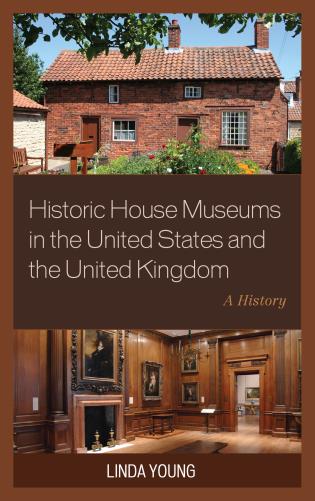 Historic House Museums in the United States and the United Kingdom: A History by Linda Young. Lanham, MD: Rowman & Littlefield, 2017. v + 299 pp.; bibliography, index; clothbound, $85.00; eBook, $80.00.
Historic house museums are one of the most popular ways that the public experiences history in the United States, although we only have a fragmentary understanding of their history. Linda Young tackles this topic not only for the United States but also the United Kingdom, with occasional examples from her homeland in Australia.
Linda Young is a senior lecturer in cultural heritage and museum studies at Deakin University in Melbourne, trained as a historian focused on nineteenth-century Britain. She has also worked as a curator at several house museums. After completing a survey of house museums in Australia, she expanded her scope to include the United Kingdom and United States in order to develop transnational comparisons that would reveal patterns in the motivations for transforming private houses into public museums (a process she calls ‘‘museumization’’). Furthermore, she wanted to distinguish house museums from other types of museums, giving them a distinctiveness and prominence that the museum field rarely considers. In a sense, she is giving house museums their own history and identity.
Her research into guidebooks, directories, Wikipedia entries, articles, and books, as well as field trips, convinced her that there are Continue reading
Seminar for Historical Administration underway in Indianapolis

Seminar for Historical Administration 2017 in Indianapolis
This year’s Seminar for Historical Administration (SHA) is meeting in Indianapolis and all of our hard work in selecting participants and presenters over the past months is coming to fruition. For three weeks in Indianapolis, a dozen people in the history field will be discussing the leading issues facing leaders and debating their solutions. I’ve assembled the schedule and directing the program, so I’m particularly excited to see how it unfolds each day. A big thanks to the dozens of people who are helping to make this extraordinary experience happen.
SHA opened on Sunday with Erin Carlson Mast, the President and CEO of President Lincoln’s Cottage, laying out the trends in the field. She noted how much has changed in the last ten years and that our work is more important than ever. I was particularly intrigued by her insistence that the mission and vision of the organization need to be manifested not only in the public programs and activities but also in the budget and operations. For example, their interpretation of slavery during Lincoln’s era motivated them to examine modern-day slavery (human trafficking) through their award-winning SOS program for teens AND make choices about the restoration materials used in the Cottage. Afterwards, we visited the library and archives at the Indiana Historical Society and had dinner together at a local restaurant.
Yesterday, David Young, Executive Director at Cliveden and Tim Grove of the National Air and Space Museum discussed the opportunities and challenges for making history relevant. It seems that everyone is struggling to make this happen, either through their programming or evaluation, and perhaps the most important discovery is that we need to learn more about our audience’s interests, motivations, and needs.
Today, Pamela Napier and Terri Wada at Collabo Creative will lead us through a short workshop on “design thinking” and then we’ll visit the Indiana State Museum to meet their new CEO Cathy Ferree and visit collections, and return to the Indiana Historical Society to learn about conservation.
Exhibiting Details: Decisions of War at the LBJ Library
One of the big challenges in interpreting history is conveying the uncertainty of the future. When we look back at the past, the decisions around the pitfalls seem so obvious but at the time, it’s hazy and unclear.
My recent visit to the LBJ Presidential Library in Austin, Texas presented an effective technique using a “touch table” to explore LBJ’s response to the Vietnam War, putting visitors in the hot seat. In this interactive activity, the President is faced with a decision, such as increasing U.S. ground troops in Vietnam, and you’re asked to advise him yes or no. On the screen you can explore primary documents, watch news reports, and when the phone rings, overhear LBJ talking about the issue. In the upper right hand corner, the clock reminds you that time matters and you can’t dawdle. After you provide your advice, you’re told what actually happened. I seemed to never give the right advice (or my good advice was ignored, depending on how you look at it), but nevertheless it was fun to have a glimpse of the moment (and thankful I didn’t have to make these decisions).
Gallagher and Associates designed the exhibition and Cortina Productions developed the interactives.
Building Capacity with a Virtual Receptionist
 One of the big challenges for small and medium-sized nonprofit organizations is building capacity. Staff salaries and wages are usually the largest expense and it’s hard to grow without a serious long-term hit to your budget. As a result, work tends to pile on the same people and threatening burnout. Thanks to the expansion of online technologies and the freelance economy there may be ways to build capacity as you need it.
I’m a big fan of Mac Power Users, a podcast that focuses on the hardware, software, and workflows that can make your business more productive. I’ve adopted their recommendations to use Evernote and the Fujitsu ScanSnap iX500 scanner with great success during the past few years. Although the podcast focuses Apple computers and applications, they can often be applied to other situations. For example, recent episode number 389 “The Mac-based Small Business” describes “virtual receptionists,” Continue reading
Greetings from New Orleans: SEMC
 I’m in back-to-back conferences—AASLH last week, SEMC this week—because I’m moderating sessions at both. The Southeastern Museums Conference is in New Orleans, which is enjoying incredibly beautiful weather, making it easy to wander the streets to find the many museums that are in walking distance. In the two days I’ve been here so far, I’ve visited the Southern Food and Wine Museum (which includes the Museum of the American Cocktail) and Historic New Orleans Collection, taken a guided tour of St. Louis Cemetery #1, and tonight I’ll be at the evening reception at the National World War II Museum. New Orleans has some unusual museums tackling such unusual topics as tattoos, Mardi Gras, and death but I’m not sure I’ll have time to visit them as well. Over the next few weeks, I’ll share what I’ve learned from the sessions that stood out for me but in the meantime, I’ll post my notes and observations on Twitter during the conference using #SEMC17.


 Engaging Places