Interpreting Race: Challenges and Solutions from NCPH

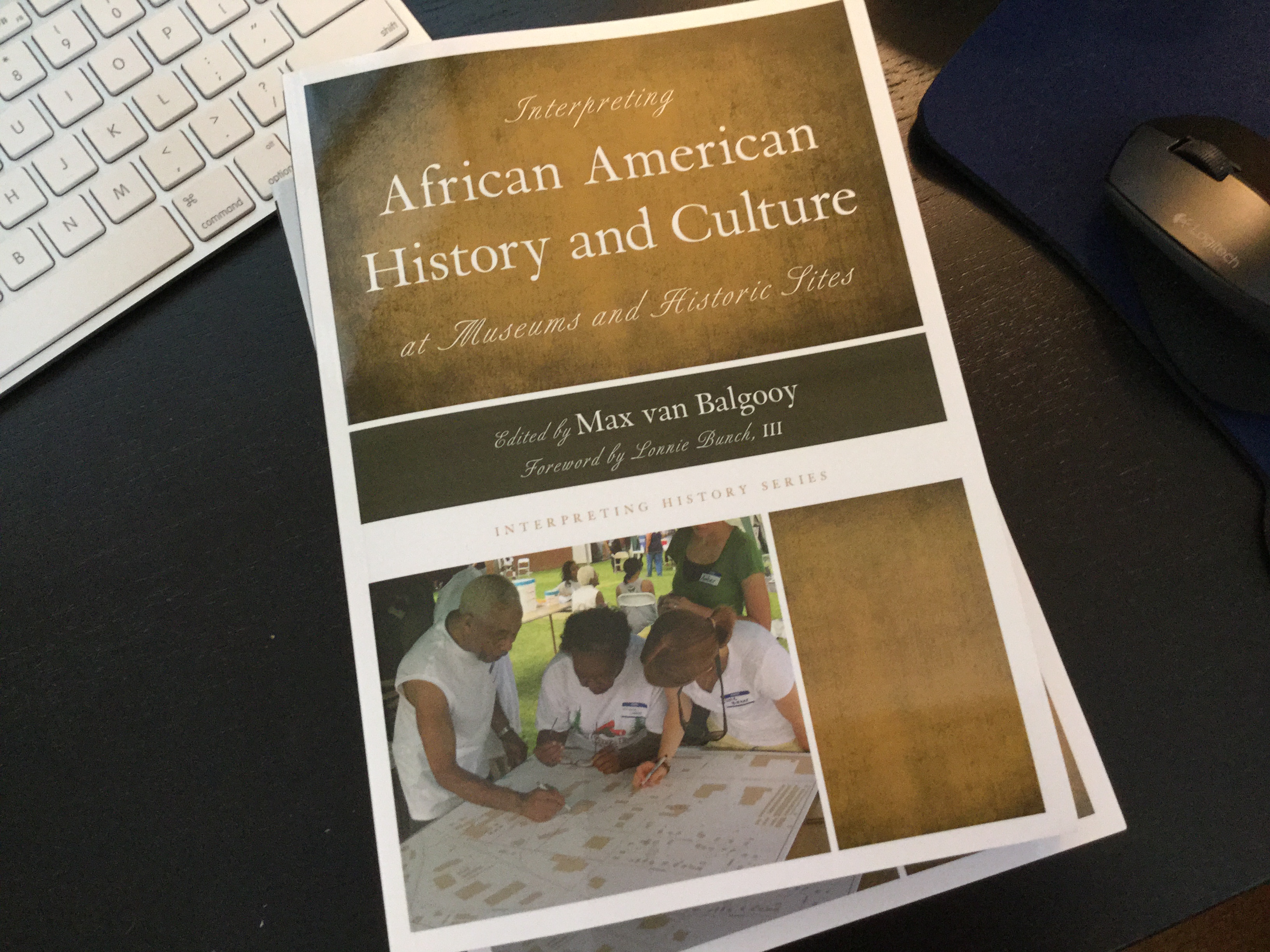
Interpreting African American History and CultureLast year when I was preparing Interpreting African American History and Culture at Museums and Historic Sites, it seemed that the obvious had been overlooked: race. Although we all advocated for the integration of African American history in interpretation in part to overcome racism, I wondered if instead we are inadvertently promoting the idea that races exist and we simply need to find ways to get along, just like dogs and cats in our homes. We never questioned or uncovered the assumptions about race that visitors may carry with them into museums and historic sites. Our bigger concern was that African American history was sufficiently significant to merit preservation and integration into the interpretation.

We know that races do not exist and it was a theory developed by scientists in the 18th and 19th century as a way to explain human differences.  Race has long been disproven, but certainly race and racism continues, probably in the minds of many of our visitors.  So if more of our visitors could understand that race is socially constructed and artificial, it may go a long way towards Continue reading

An App That Easily Merges Oral History and Images

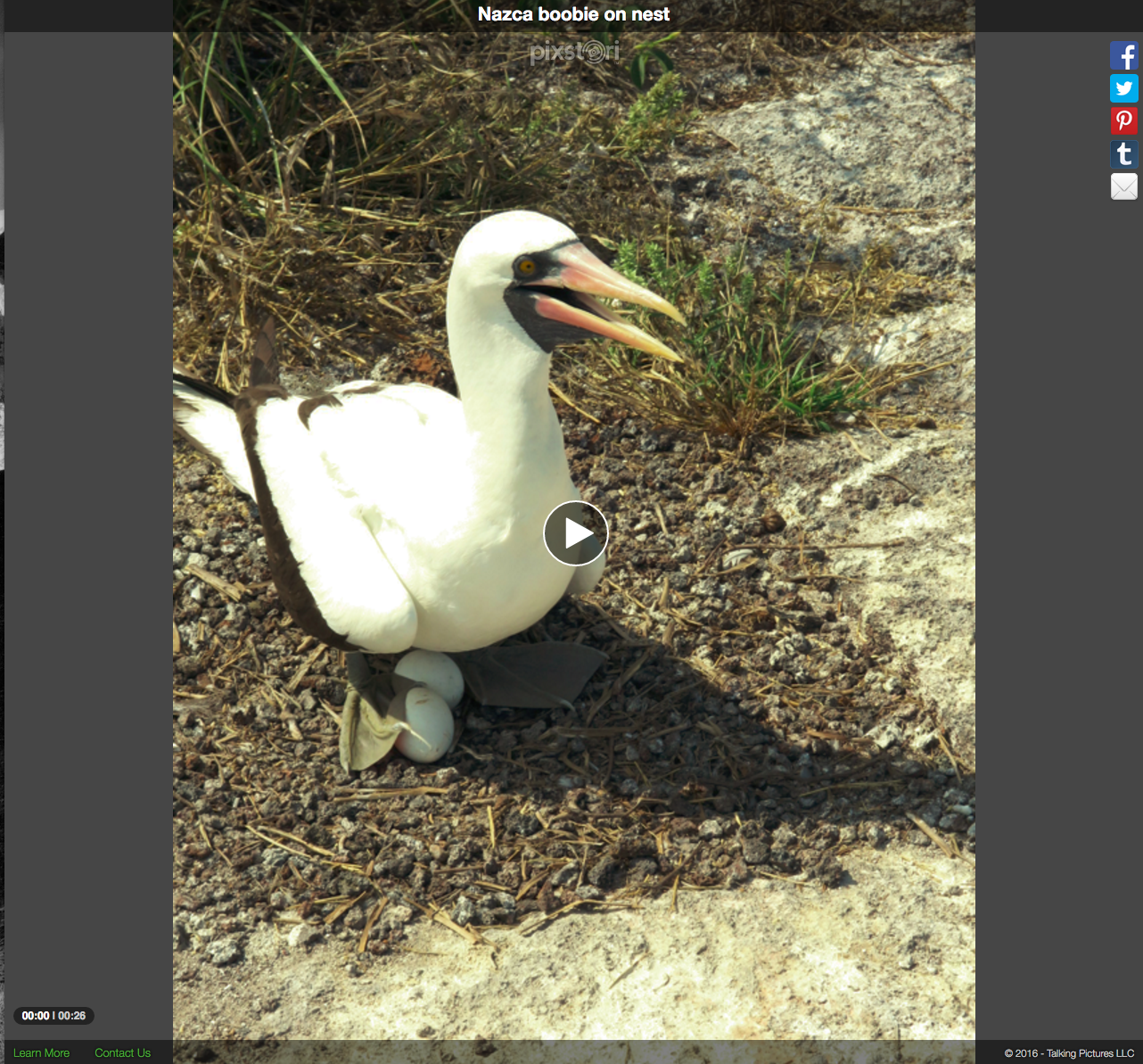
My recording about a bird nest on the Galapagos Islands using PixStori.

My recording about a bird nest on the Galapagos Islands using PixStori.

At the National Council on Public History conference last week in Baltimore, Michael Frisch of the University of Buffalo introduced PixStori, a iOS app that he helped develop that easily shares photographs with audio recordings.  Frisch is a leader among oral history practitioners and he developed the app as a way for people to record short oral histories to accompany photographs.

Users pull up a photo from their iPhone or iPad and then record a short message (up to 20 minutes), which can then be shared via email, Twitter, or Facebook.  I experimented with a photo of a bird and it’s remarkably easy to use.  It’s definitely fun for sharing photos, but I can easily see museums and archives using it to share historic images or documents with a comment by an historian or help promote an upcoming event.  But I can also see how it might be used in-house to record visitor reaction to proposed exhibit or to send a message to your staff about a site emergency. It appears that the recordings are stored at PixStori, so recipients don’t need to have the app installed but do need an internet connection to see and hear the file. The app is available free for iOS devices and an Android version is underway.

Webinar: How can Historic Sites Make History More Relevant?

History Relevance CampaignOn Monday, March 21 at 3:00 pm Eastern/12 pm Pacific, Tim Grove and I will be discussing the History Relevance Campaign during AASLH’s monthly Historic House Call.  For the past few years, a dozen people from various history organizations have studied the challenges and opportunities for changing the common attitude that history is nice, but not essential.  We won’t have overnight solutions and there’s lots of work to do, but we’ll share what we’ve learned, discuss how it impacts historic house museums, and provide a tool that organizations have found very helpful.  The webinar is free but preregistration is required.

If you’re not familiar with the Historic House Call, they are webinars offered through out the year by the Historic House Museum Community of the American Association for State and Local History (AASLH).  Upcoming webinars include religion and historic house interpretation and using futures thinking to navigate ongoing change, and a recording of an earlier webinar, “creating engaging and memorable tours” is available.  They also have a very active listserv on Yahoo Groups, a growing blog called “Views from the Porch,” and free resources, such as the Technical Leaflet, “How Sustainable is Your Historic House Museum?

Can the Folger Library Figure Out Its Schizophrenic Photo Policy?

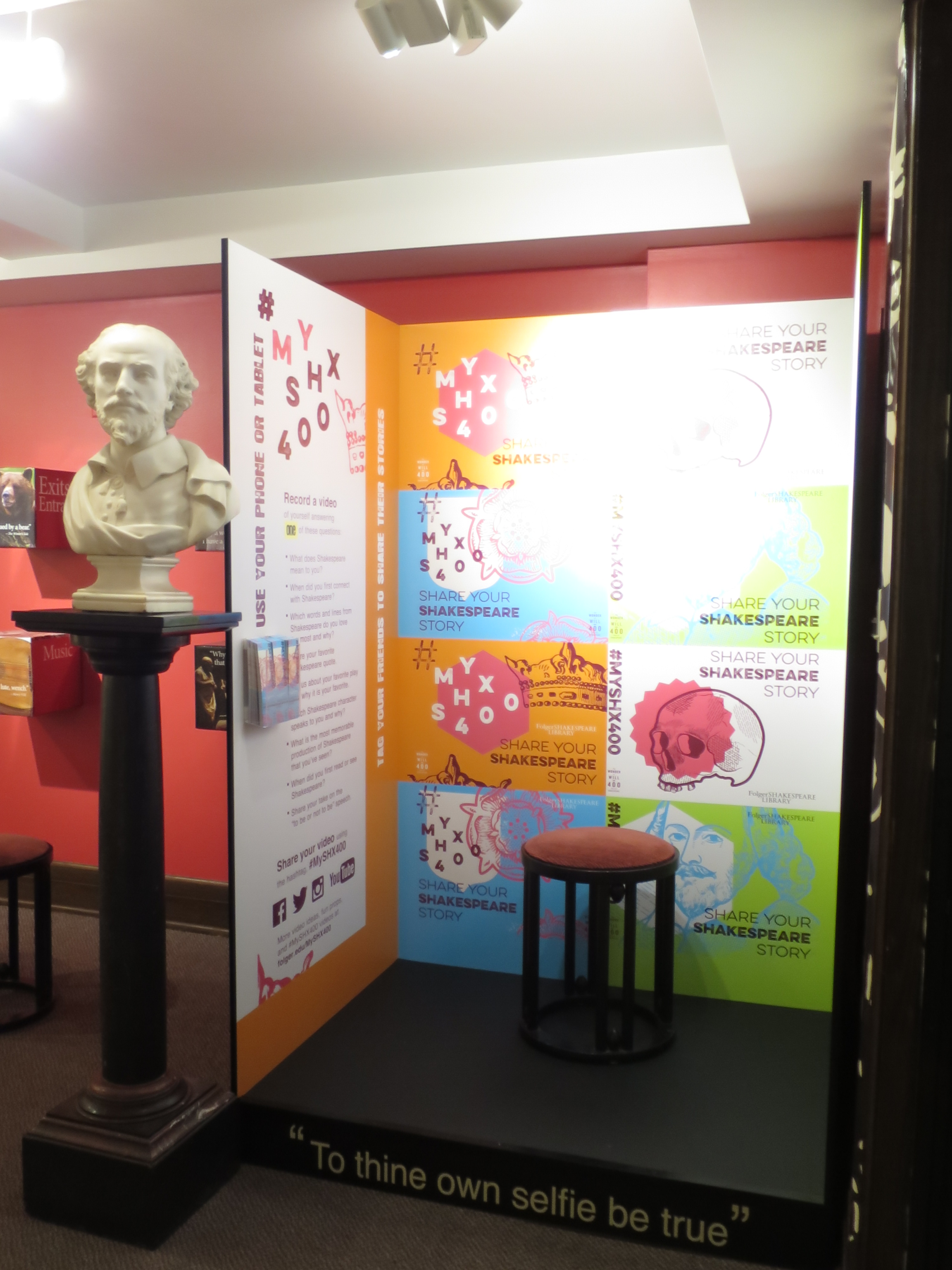
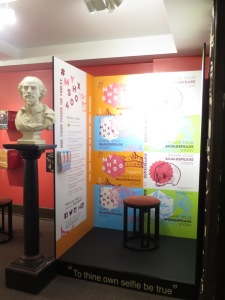
Photo booth at the exhibit that prohibits photography at the Folger Library.

Photo booth at the exhibit that prohibits photography at the Folger Library.

The Folger Library in Washington, DC is one of my favorite places because it’s about books and Elizabethan England, two things that fascinate me.  As an historian, books are not an unusual passion but as an American historian, I’m interested in the Elizabethan period because of the comparisons to our Colonial era.  So every time the Folger mounts an exhibit in their gallery, I go no matter the topic and want to document what I’ve seen and learned through photos (and share them with you!).  And yet, while copyright protects none of the material on exhibit, the guards frequently stop me from taking photos and one time I even had to prove I deleted the images from my camera.  The latest exhibit on Shakespeare was photo-prohibited because it was on loan, but again, none of the materials were protected by copyright (all pre-dated 1700). Ironically, at the entrance to the exhibit is a special booth where visitors were asked to share videos or photos of themselves talking about Shakespeare on Twitter, Instagram, and Facebook. Huh? To thine own selfie be true, as long as it doesn’t include any actual historic objects on exhibit.
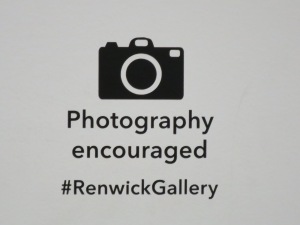
IMG_0499That’s such a contrast to other museums in DC which encourage photography.  The “Wonder” exhibit at the Renwick Gallery of Art in Washington, DC, is filled with contemporary art, which is typically tied up in a particularly rabid form of copyright protection, encourages photography with signs mounted in nearly every gallery. Somehow they’ve figured out how to allow photography by the public without jeopardizing their collections, reputation, or loan agreements.

Museums and libraries have to figure out how to embrace photography.*  While overall attendance has dropped for the past thirty years, interest in photography has grown by leaps in bounds.**  Indeed, it’s the only cultural or artistic activity that’s growing in the US and by prohibiting it unconditionally, museums and libraries are only further distancing themselves from the rest of America.

*The Rauschenberg Foundation recently developed a radical but thoughtful photography policy, which is described in the New York Times.

**National Endowment for the Arts, “Survey of Public Participation in the Arts,” 2012.

 

Interactive Station Using a Tablet and Stanchion

This slideshow requires JavaScript.

The equipment for interactive displays is becoming increasingly easier, thanks to powerful computer tablets that can show documents, images, and videos.  There’s no need to mount a monitor to the wall with a fat cable snaking to a computer unit tucked into a cabinet.  I recently saw a nice example of an interactive tablet system at the George Washington University Museum in Washington, DC.  The tablet (such as an Apple iPad or Samsung Galaxy Tab) is mounted on a stanchion with a special head from the Exhibit Stanchions Group.  That’s it. None of the tablet’s ports are blocked so it can be charged or updated even when it’s held in place.  The tablet is securely fastened and the stanchion is heavy enough to withstand a casual bump, but if you need to remove the stanchion for an event or use it elsewhere, it can be easily picked up (yes, a thief could steal the whole thing but if they’re walking out the door with a stanchion, you’ve got bigger problems).

Can You Tackle Today’s Tough Topics in a Garden?

200731_Longwood_Graduate_Program_Symposium_Fochs_Mackenzie-2_0This year’s Longwood Graduate Program Symposium will examine that issue with a top-notch series of nationally-recognized speakers on Friday, March 4, 2016 at Longwood Gardens in Kennett Square, Pennsylvania.  They’ve laid out a challenging agenda for dealing with topics such as environmental action, civic responsibility, and the evolution of public gardens as community assets. Here’s their description:

Public gardens and cultural institutions are centers of community, science, and art. Today’s society is often overwhelmed with debates in all of these areas. In a world where misspoken words amplify in a matter of minutes, how can institutions tactfully open discussion on today’s difficult topics? When and where do they provide research, resources, and opportunities to interact with new or contested ideas?

Sessions include: Continue reading

Visits to Historic Sites are a Humanities Indicator, says AAAS

Percentage of Americans Who Visited a Historic Park or Monument* in the Previous 12 Months, by Age, 1982–2012. Humanities Indicators, 2012.

Percentage of Americans Who Visited a Historic Park or Monument in the Previous 12 Months, by Age, 1982–2012. Humanities Indicators, 2016.

As part of their Humanities Indicators project, the American Academy of Arts and Sciences just released their analysis of visits to historic sites.  It shows that, “the percentage of people reporting at least one such visit in the previous year fell by more than a third from 1982 to 2012, with declines across most age groups.” At first, I saw this as a corroboration of the widely reported Survey of Public Participation in the Arts (SPPA), which the National Endowment for the Arts has conducted since 1982, but when I looked more carefully at the data, I realized it was based on the SPPA. So while there’s no news here, it does provide a useful summary:    Continue reading

New Deputy Director for Museum Services Appointed at IMLS

Paula Gangopadhyay, deputy director of museum services, IMLS

Paula Gangopadhyay, deputy director of museum services, IMLS

At Museums Advocacy Day, Kathryn Matthew, director of the Institute of Museum and Library Services, introduced the new deputy director for museum services, Paula Gangopadhyay.

I didn’t get a chance to meet her but she’s familiar with the challenges and opportunities that are faced by history museums and historic sites on a daily basis.  She was appointed last month and according to the IMLS web site:

She has worked in small, medium and large museums and cultural organizations, as well as government, business and education sectors, where she led systemic change and positive community impact at local, state and national levels. Ms. Gangopadhyay is a respected thought-leader on innovation in education and has been the recipient of several state and national awards and recognitions. Ms. Gangopadhyay has held a variety of positions including, serving as the Chief Learning Officer at The Henry Ford museums from 2008 to 2015; Executive Director of the Plymouth Community Arts Council from 2006 to 2008; Curator of Education, Public Programs, Visitor Services and Volunteers at the Public Museum of Grand Rapids from 2002 to 2006; and Executive Director of the Great Lakes Center for Education, Research and Practice from 2000 to 2001. She was Executive Director of the Commission for Lansing Schools Success (CLASS) from 1998 to 2000 and Executive Director of Meridian Historical Village from 1995 to 1998.  As an independent evaluation consultant for over seven years, she has led formative and summative evaluation directed at producing measurable outcomes. Gangopadhyay received her B.A. and M.A. in history from Indore University (India), her post-graduate certification in archival, museum, and editing studies from Duquesne University, Pittsburg, PA, and an education policy fellowship from the Institute for Educational Leadership (IEL).

She’ll probably be visiting national and regional museum conferences this year, so be sure to welcome her!

A Wet but Successful Museums Advocacy Day

This slideshow requires JavaScript.

Washington DC was cold and grim yesterday as hundreds of museum advocates visited the offices of senators and congressmen to encourage their support for the Institute of Museum and Library Services and the charitable tax deduction.  I had a short but very productive meeting with the staff in Congressman Van Hollen’s office, who has been a long-standing supporter of museums, libraries, and historic preservation, so despite the wet weather, my day felt great. I was also reminded how many other people are also promoting their causes and how easy it is for the value of museums and historic sites to get drowned out by others.

On Monday, we prepared for our visits with several solid briefings on IMLS and education policy, hearing some good news (the American Institute for Conservation will manage the Conservation Assessment Program, following the dissolution of Heritage Preservation) and some frustrating news (the recently adopted Every Student Succeeds Act restores history and civics to the curriculum but President Obama’s recently submitted budget eliminated the funding).  Of course, it was really fun seeing colleagues from around the country and hearing about the interesting work they’re doing (l discovered Building Public Will for Arts and Culture, which is surprisingly similar to the History Relevance Campaign).

Thanks to the American Alliance of Museums for coordinating this event!

Should Tour Guides be Tested and Certified?

tour-guide-antwerpAt the end of last month, the California Tour Guide Act (AB 836) died in committee in the California State Capitol. If it had passed, it would have established a “tour guide certification program” through the California Travel and Tourism Commission to test and certify persons who “practice tour guiding for compensation” (it would exempt guides who work at museums and amusement parks). The bill’s authors wanted to ensure that tourists “get the most of their visit and return to the Golden State.” It’s also a big business. According to the California Travel Association, the travel industry generated $106.4 billion in revenue from visitors and contributed $6.6 billion in state and local taxes in 2012. In 2013, California hosted nearly 16 million international visitors and is expected to grow at over 5 percent annually through 2016. To support this volume of visitors, nearly one million people work in the travel and tourism industry, including 3,000 tour guides.

We can debate various aspects of the proposed law, such as the $700,000 annual cost to manage the program or the need for a criminal background check, but I was more intrigued by the requirement that tour guides must have completed a “curriculum in California tour guiding and related subjects,” including “tour guide safety and California geography, history, and culture.”  How is that defined?  How is that evaluated?  The proposed law left the standards to Continue reading