The Many Flavors of Touring Historic Places

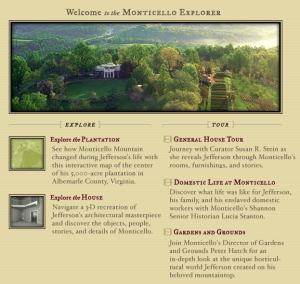
Monticello Explorer provides several virtual tours.

Monticello Explorer provides several virtual tours.

Although guided tours of period rooms is the most common form of interpretation at historic sites, audio tours, video tours, and virtual tours are growing in popularity thanks to technologies that are lowering the cost of production and increasing access to new audiences.  From a short list of examples, the students in my “historic site interpretation” class at George Washington University developed a list of ten best practices for different types of tours of historic sites.  You’ll discover that many of their suggestions emphasize the need for a plan, themes, and a focus–and projects that failed to have these elements were weaker and less effective.

A.  Guided Tours of Period Rooms

Reviewed by Johanna Bakmas, Melissa Dagenais, Emma Dailey
 

Suggested Best Practices

Do
  1. Develop an interpretive plan and themes
  2. Consult primary sources for the property
  3. Decide whether to have reproduction or original pieces Continue reading

Interpretive Planning at Historic Sites is a Three-Part Harmony

Historic sites and house museums probably represent the largest type of museum in the United States, and yet less than a handful of books or articles have been written about the interpretation of historic sites in the last fifty years.   Part of this weakness can be attributed to the usual “last place” position that historic sites hold in terms of funding, staffing, and other resources, but it can also be due to the additional complexity of historic sites compared to other educational and cultural institutions. If you imagine interpretation as a melody, most museums can choose from all the keys on a piano and play the notes as desired, whereas historic sites have to play specific notes, such as the buildings and landscapes, and often in a certain order.   Nevertheless, all museums have to address three primary areas to effectively teach and educate:  content, audience, and method.

  1. Content:  This comprises all the potential and unique Continue reading

A Second Helping of Local History from A to Z

Local history lovers, rejoice–the second edition of the Encyclopedia of Local History has just been published by AltaMira Press.  Under revision for the past few years by editors Carol Kammen and Amy H. Wilson, it’s a significant update from the 2000 edition and comes in at 655 pages as a result of 200 contributors and a gazillion entries (okay, I’m exaggerating a bit).  Encyclopedias are for quick reference, not reading from A to Z , however, if you’re a local history buff, you would enjoy dipping in at random and learning about a topic (copyright or culinary history), organization (Cambridge Group or History News Network), or source (maps or inventories) from some of the best minds in the field including Stuart Blumin, John Bodnar, Simon Bronner, Michael Kammen, David Kyvig, Brown Morton, Mary Beth Norton, Sandra Oliver, Philip Scarpino, and Carol Shull.  This encyclopedia also includes entries on every state of the union and Canada (and some other English-speaking nations), providing a Continue reading

Strategies for Year-End Fundraising Appeals

Another post this week inspired by the Chronicle of Philanthropy, with the article, “Charities Unveil Bold Year-End Appeals in Storm’s Big Shadow” in the November 15, 2012 issue prompting several ideas that might be useful for historic sites as they come to the end of the calendar year with its year-end fundraising appeals.  Hurricane Sandy and the 2012 federal election results are both affecting donations, with much attention given to disaster relief and to the possible limitation on charitable deductions.  Can your year-end appeals:

  • Emphasize your needs for storm-damage recovery or for disaster preparedness (e.g., roof replacement or repair, tree trimming, repairing gutters and downspouts, preparing a disaster plan).
  • Encourage major donors to give big gifts now, rather than Continue reading

What We Can Learn from America’s Biggest Non-profits?

Philanthropy 400 is the Chronicle of Philanthropy‘s annual list of the 400 groups that raised the most funds from private sources.  For 2011, these groups achieved a median 7.5-percent increase from last year, the third straight year of median gains for non-profits in the Chronicle‘s rankings.  That’s amazing considering the depths of the recession that affected most charities.  “Giving USA” said that charitable giving overall grew less than one percent last year.  About $1 out of every $4 donated by individuals, corporations, and foundations goes to these top 400, so what can we learn from them?

The lessons are a bit hard to uncover given the wide diversity of organizations represented on the list, primarily universities, social services, and health/medical,, followed closely by religious, youth, and education.  Topping the list are: Continue reading

Subtle Ways to Recognize Donors

This slideshow requires JavaScript.

During a recent visit to the Meridian International Center in Washington, DC, I encountered the most subtle donor recognition methods I’ve ever witnessed.  I usually discourage donor plaques within an historic house museum because it doesn’t advance the educational mission of the organization, distracts from the visitor’s experience of “imagining the past,” and can be installed in a manner that permanently damages the historic materials but if a director or board insists, the Meridian Center offers a potential solution.  The Meridian Center holds its offices and meeting rooms in two early twentieth century houses–Meridian House and White-Meyer House–that are listed on the National Register and although they aren’t museums, the donor recognition plaques are so subtle that they border on being acceptable in historic house museums.

Plaques can be found in nearly every room but are typically integrated into the existing decor with matching materials in small type or placed strategically and discretely to avoid attracting much attention, except if you take a close look.  They are considering a donor wall for their upcoming capital campaign, but it will be installed outdoors under the supervision of preservation architect Belinda Reeder.

Kat Imhoff named president of James Madison’s Montpelier

Kat Imhoff at James Madison’s Montpelier.

The Montpelier Foundation has appointed Katherine L. “Kat” Imhoff as president effective January 1, 2013.  The Foundation manages James Madison’s Montpelier, where Madison was born, developed his ideas for the Constitution, and retired after his presidency.  Imhoff returns to Virginia after a successful five-year tenure as State Director for The Nature Conservancy in Montana, where she led the organization’s Montana Legacy Project – the purchase of more than 300,000 acres for nearly $500 million – representing the largest conservation project ever undertaken by The Nature Conservancy.

“Montpelier is a place for making authentic, tangible connections with the past that can inspire us to build on James Madison’s legacy of constitutional self-government,” said Gregory May, Chairman of The Montpelier Foundation. “Kat Imhoff is a respected preservationist with demonstrated ability to generate support for visionary advances like those Montpelier now is prepared to undertake.”

Before she went to Montana, Imhoff was Continue reading

Picturing the Seasonal Changes at Your Historic Site

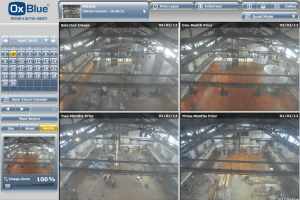
Views of the exhibit gallery under construction in January, February, March, and April 2012 at the Museum of History and Industry.

The Museum of History and Industry in Seattle is moving into a new facility this year and to give the public a chance to experience the work and construction progress behind-the-scenes, they’ve installed a webcam overlooking the main exhibit gallery.  Webcams aren’t a new idea (remember the panda cubs at the National Zoo?) but what’s clever about the construction camera provided by OxBlue is that users can see timelapse movies and four views for different dates at the same time.

Many historic sites change their programs, events, and exhibits throughout the year to reflect the changing seasons, but I wonder if this same system could be used to Continue reading

Responding to Frequently Requested Directions by Visitors

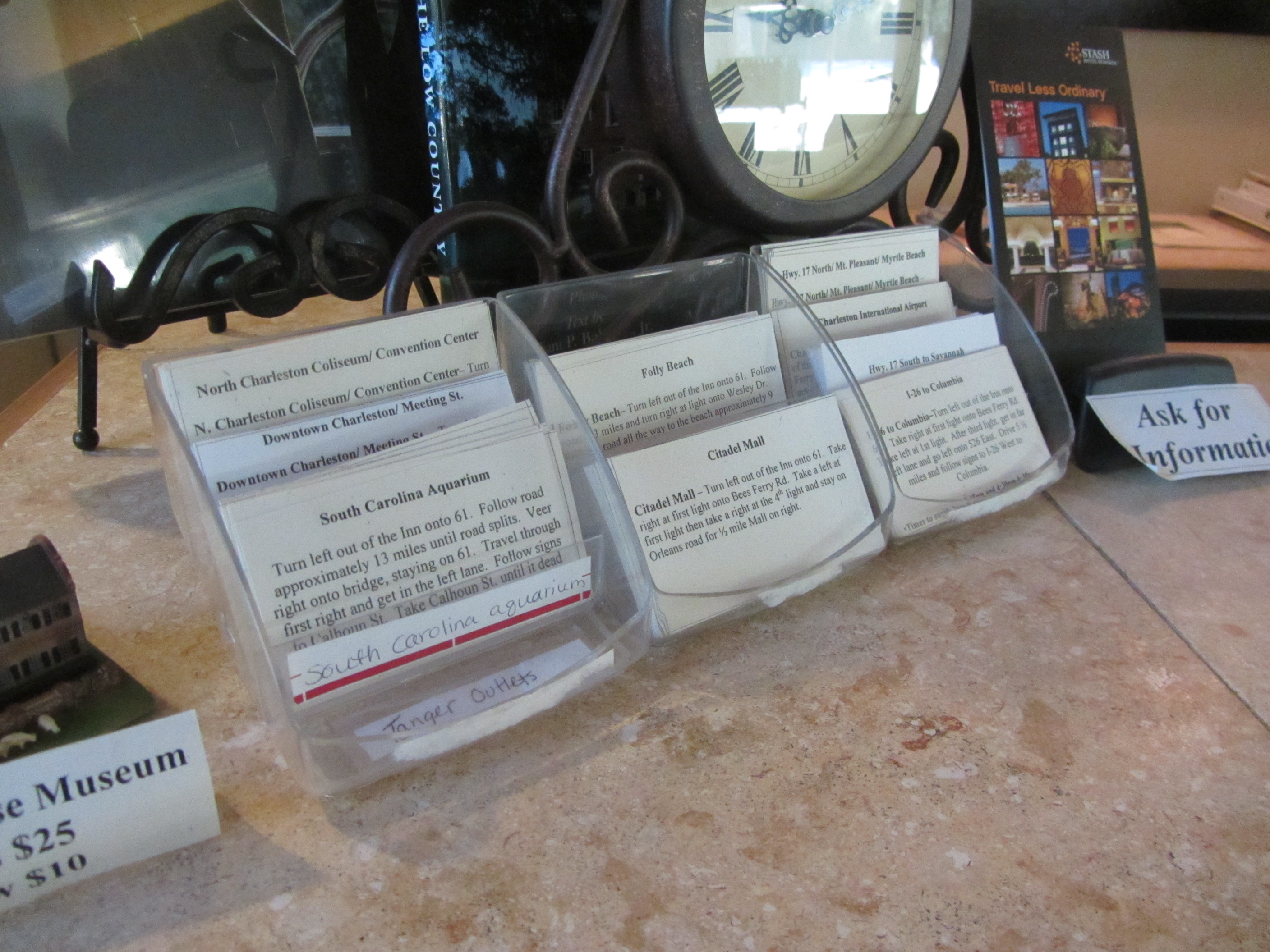
Business card rack with directions to frequently requested destinations.

At the reception desk at the Inn at Middleton Place, I spotted a clever way to share directions to frequently requested places.  It’s a plexiglass business card rack filled with written directions to the airport, downtown, and other historic sites on slips of paper.  Guests just pick up the directions they need and they don’t need to worry about remembering them or jotting them down correctly.

Here’s an example of the written directions:

Downtown Charleston/Meeting Street

Turn left out of the Inn onto 61.  Follow road approximately 13 miles until the road splits.  Veer right onto bridge.  Travel through 1st light and get in left lane.  Follow signs to Calhoun St.  Once on Calhoun, travel 9 lights up to Meeting St.  Take right on Meeting St. to go to Battery.  Turn left on Meeting St. to go to tourist visitor center.  Times to avoid: 7 am-9 am and 5 pm-7 pm.

Now you know why they wrote down those instructions!

By the way, if you like contemporary architecture and historic gardens, the Inn at Middleton Place in Charleston is a perfect place to stay.  The Inn has received an AIA Honor Award for its contemporary design and fits in peacefully with the surrounding landscape on the banks of the Ashley River.  Your stay includes admission for two to the adjacent Middleton Place, where you can enjoy the gardens, even after it has closed to the public.

AASLH and AAM Align Efforts to Raise Standards and Practices

The American Association for State and Local History (AASLH) and the American Alliance of Museums (AAM) recently announced they will work together to raise awareness of national museum standards and align their assessment programs in order to streamline application and self-study processes.  The agreement outlines ways in which applicants of AAM’s Museum Assessment Program (MAP) will benefit after completing AASLH’s StEPs program, in other words,  AASLH and AAM have linked StEPs with MAP.  If you understand that sentence, you’ve been working in this field a long time.

What’s this mean for historic sites?  Both StEPs and MAP are great programs for improving your organization’s work, but they’re very different from each other.  StEPs allows you to Continue reading