Museums are feeling the pinch as public funding declines and operational costs grow. But don’t worry—there are creative ways to boost your financial health without losing sight of your mission. Two recent studies offer fresh ideas to help museums thrive while connecting more deeply with their audiences.
Make the Most of What You Offer The first study, “Value Capture for Nonprofits: The Case of Museums’ New Business Models” (Thomas & Tobelem, 2024), urges museums to think more like entrepreneurs. Museums create tremendous value through exhibitions, programs, and digital content—but often struggle to turn that value into income. The solution? Find ways to align financial opportunities with what you already do best.
For instance, you could:
Introduce tiered pricing for digital experiences, like charging for premium virtual tours.
Partner with local businesses to create themed events that support your mission.
Offer exclusive experiences, like behind-the-scenes access, for a fee.
These strategies not only bring in revenue but also allow museums to stay true to their values. The takeaway: look at what you already offer and think creatively about how to monetize it in a way that feels authentic.
Historic sites and house museums have long relied on storytelling and visual appeal to captivate their audiences. Drawing inspiration from Walt Disney’s “weenie” and Alfred Hitchcock’s “MacGuffin” offers creative ways to enhance visitor experiences.
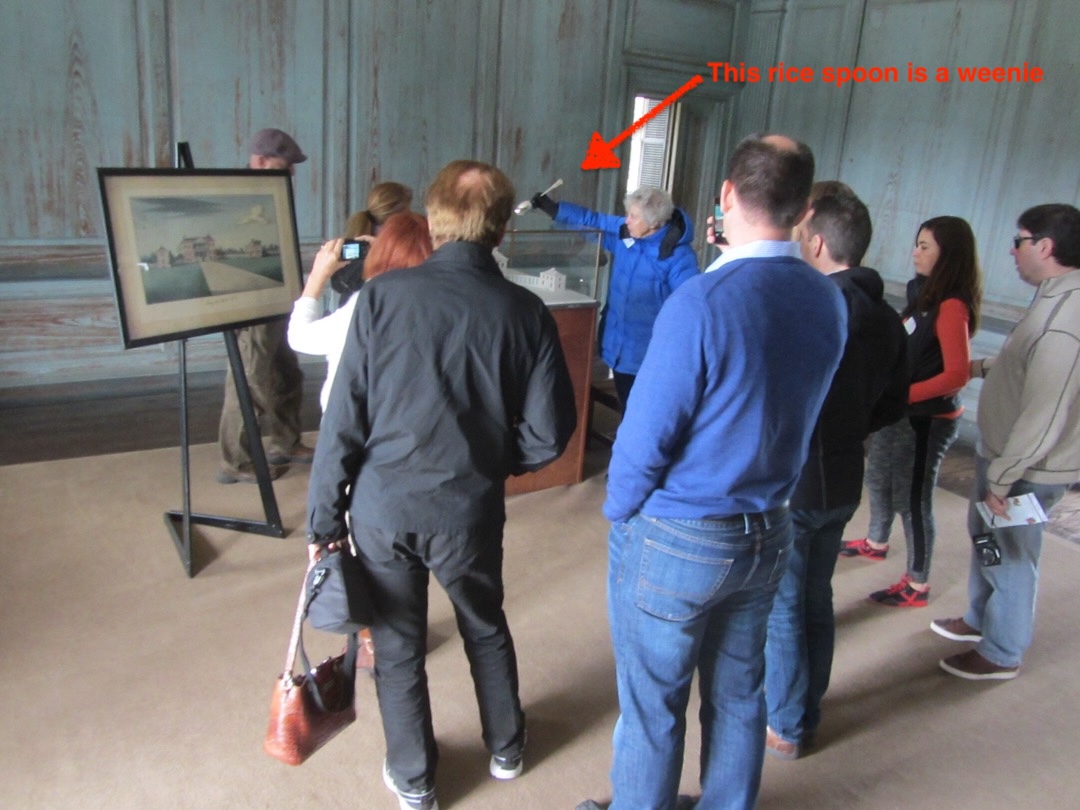
Disney’s “weenie” is a visual lure—a grand staircase, a striking artifact, or a distinctive monument such as Cinderella’s Castle—that draws attention and guides visitors through a space. It can be something small as well. At Drayton Hall, for instance, the guide uses a rice spoon (a large silver serving spoon historically linked to the region) as a pointer throughout the tour. The spoon is a weenie, pulling visitors into a closer examination of the house’s architecture and at the end of the tour, becomes a premium for visitors who become members that day.
Hitchcock’s “MacGuffin,” on the other hand, drives the narrative. It’s the letter that unlocks the secrets of a family’s past or the seemingly mundane object that sparks a larger story. I’ve seen several house museums use a historic newspaper to connect news, people, places, and advertising to provide an intriguing narrative. The best MacGuffins motivate visitors to explore, ask questions, and connect emotionally—a technique I’ve seen done incredibly well by experienced educators at art and natural history museums.
Combining these concepts creates a dynamic experience. Imagine a grand portrait (weenie) in a historic home that invites visitors to admire it, while the tour reveals it’s tied to a thrilling event (MacGuffin) that shaped the community’s history.
By strategically incorporating weenies and MacGuffins, historic sites can guide visitors visually while immersing them in compelling narratives, making their visit both engaging and memorable. How might you use these techniques at your site?
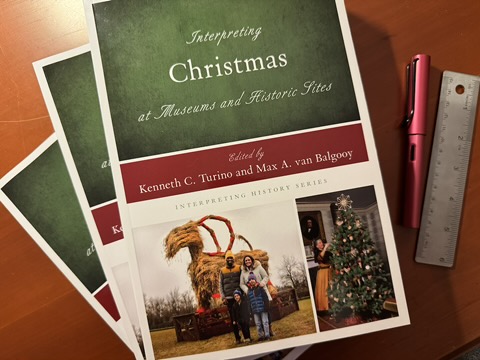
As 2024 comes to a close, it’s time to reflect on what turned out to be a busy and productive year. The highlight was completing Interpreting Christmas at History Museums and Historic Sites, co-edited with Ken Turino, which released in September. This project was a labor of love for the two dozen contributors, and it’s been gratifying to see it resonate with so many museum professionals.
Another major milestone was taking a sabbatical from George Washington University in the fall. During this time, I attended two intense and inspiring programs: the Newport Summer School, which focused on Victorian architecture and decorative arts, and the Royal Collection Studies course, which explored the management and interpretation of royal palaces and their collections. These experiences gave me fresh insights into interpretive strategies and leadership in historic sites that I look forward to integrating into my work and teaching. I can easily recommend these two professional development programs (and a sabbatical)!
Are you ready to explore how the holiday season can transform your museum? Today at 12 pm Central Time (1 pm Eastern), the Illinois Association of Museums is hosting its monthly “Museum People Call”, and this month’s topic is Christmas at Museums and Historic Sites!
I’ll be joined by Ken Turino, my co-editor of the new AASLH book series Interpreting Christmas at Museums and Historic Sites, to discuss how your organization can leverage the holiday season to its fullest potential.
We’ll cover key topics to help you:
Leverage the holiday season to attract visitors and engage your community.
Increase financial stability through creative programming, gift shop sales, and end-of-year giving campaigns.
Enhance cultural sensitivity and inclusivity, ensuring your holiday interpretation is meaningful and welcoming to diverse audiences.
Whether your site has a long history of holiday programming or you’re just starting to explore the possibilities, this session will offer practical tips and inspiring ideas to align holiday traditions with your mission.
Let’s come together to make the holiday season brighter, more inclusive, and impactful for your museum and its visitors. We look forward to seeing you there!
Last week, Ken Turino and I conducted two “Reimagining House Museums” workshops in Mesquite (near Dallas) and Houston. These sessions sparked meaningful conversations about the future of house museums, but the inspiration didn’t stop there. We used our free time to visit several nearby museums, each offering unique approaches that left us thinking about how museums can better serve their audiences. Here are some standout ideas we discovered:
1. Personalizing Donor Recognition and Wayfinding at the Perot Museum of Science and Nature
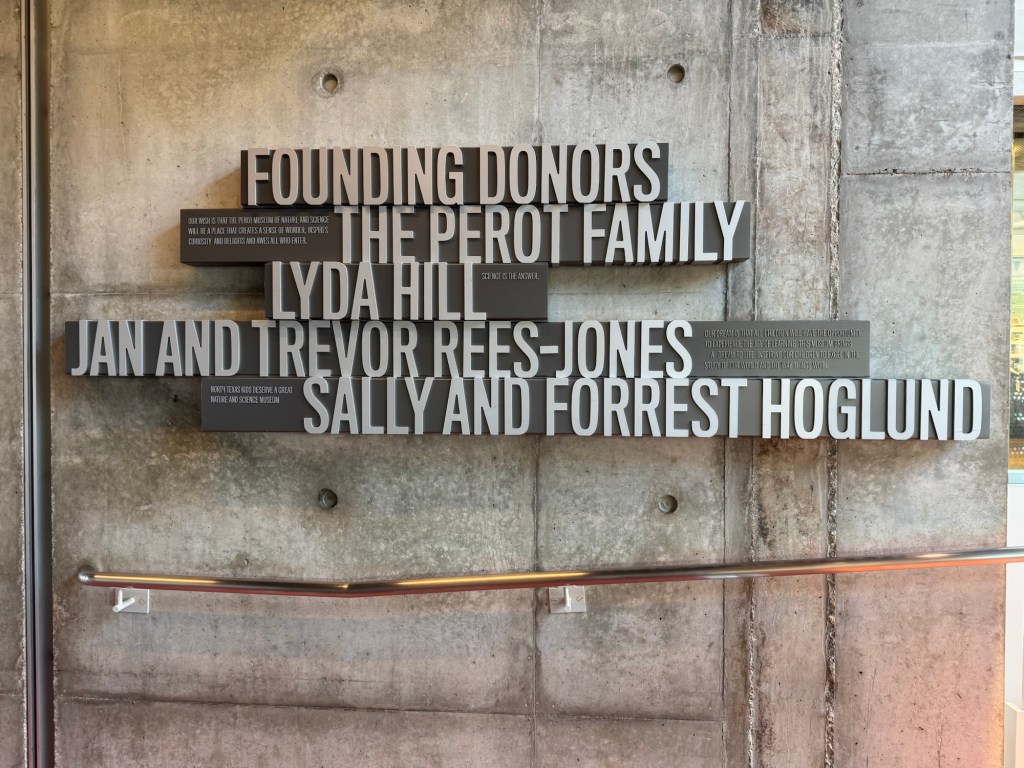
The Perot Museum caught our attention with its donor wall, which didn’t just list names but included statements of intent from the donors. This added a personal touch, connecting visitors with the motivations behind the support. Another smart detail: wayfinding signage that directed visitors to “more cool exhibits.” This casual yet engaging language was both clear and inviting, proving that small touches can make a big impact.
Donor wall with statements of intent at the Perot Museum in Dallas.Continue reading →
This session on the sustainability initiatives at the Rhode Island School of Design Museum was among the first sessions at NEMA 2024.
Last week I attended the New England Museum Association 2024 Conference in Newport, Rhode Island. About 800 museum professionals attended over the three days of sessions, vendor displays, professional affiliation group meetings, and receptions. The weather was sunny and sixties, surprisingly warm for the first week of November. Without the crowds of summer, it made Newport much more pleasant.
The conference offered numerous sessions on sustainability, and I’m attending as many as possible in preparation for my upcoming course, “Creating Sustainable Museums,” at George Washington University this spring.
In the session “Climate Emergency and Sustainability Taskforce at RISD,” several staff members from the Rhode Island School of Design Museum shared insights on their in-house sustainability efforts. What began as informal conversations among a few staff members evolved into a formal task force that resulted in the “Take Care” exhibition. Staff from all areas of the museum—not only curators and educators—selected objects from the collection and created interpretive labels addressing sustainability themes. In addition to this curatorial approach, the museum implemented practical sustainable practices, including standardizing frame sizes, reusing exhibition cases, turning off cameras in virtual meetings, and eliminating admission stickers and vinyl lettering.
The Burwell-Morgan Mill in Berryville, Virginia, which hosts the Art in the Mill shows in fall and spring.
On a recent road trip through the Shenandoah Valley, we passed through the small but charming village of Millwood (south of Berryville, Virginia). With its historic church, a corner gas station turned into a post office, a hip country store, and an 18th-century stone grist mill, it feels like you’ve stepped back into mid-century America. The mill, dating back to the 1780s, ceased operations in 1943, but thankfully the Clarke County Historical Association (CCHA) stepped in to preserve this important piece of local history. They restored and reopened the mill as a museum, offering milling demonstrations that continue to connect the community with its past—a business that, while no longer economically viable, resonates deeply with those of us who value local landmarks.
Fast forward 80 years, and the CCHA not only continues to produce flour at the mill but has expanded its offerings in creative and impactful ways for a county with 15,000 residents. Today, their mission—”to help preserve the historic resources and records of Clarke County and to foster their use, understanding, and enjoyment through stewardship and education”—may sound familiar, but their approach is anything but ordinary. Their programming stands out as a model for how historical societies can evolve, attract diverse audiences, and ensure long-term sustainability. Here’s a preview of some of the exciting events and initiatives they have planned for this fall:
Looking for new ideas to bring the magic of Christmas into your museum or historic site? Join us on Tuesday, November 26 at 3 p.m. Eastern for an engaging session of AASLH’s History Hour, where we’ll explore the many ways museums and historic sites are interpreting Christmas. It’s free to participate however pre-registration is required.
History Hour is a free, monthly online networking event hosted by the American Association for State and Local History that has grown from 6 participants in January to nearly 230 this month! It’s a fantastic way to connect with colleagues from around the country, share ideas, and pick up fresh tips.
I’ll be co-hosting with Ken Turino, and we’ll be diving into themes from our new book, Interpreting Christmas at Museums and Historic Sites, released in September. During the session, we’ll briefly introduce the topic and then jump into small group discussions where participants can talk through questions like:
How can historical and cultural traditions in your local communities be woven into your Christmas programs?
How have partnerships and sponsorships shaped your Christmas programming?
How do you ensure your Christmas interpretation aligns with your organization’s mission while staying relevant to today’s audience?
Given the diversity of Christmas traditions, how do you decide what to include or exclude in your interpretation?
What small steps have you taken to reinterpret Christmas at your site, and how have those changes influenced long-term planning?
After 30 minutes of lively group discussion, we’ll come together as a large group to share insights and takeaways. It’s a wonderful opportunity to gain new perspectives and learn from your peers.
Whether you’ve been interpreting Christmas for years or are just beginning, we’d love to have you join us for this festive and thoughtful event. Mark your calendar for November 26, and come ready to discuss your ideas and challenges!
As museums continue to evolve, so do the tools we use to connect with our audiences. Projection mapping is creating new opportunities to bring stories and objects to life. Although it’s been used for decades, it is increasingly adopted by museums and historic sites. I’m excited to share my new video, now available on YouTube, where I explore some fascinating projection mapping experiences in museums that I encountered while on the road this past year.
In this video, I take you through the basics of projection mapping, explaining how it works and offering real-world examples of its use in museums and historic sites in England, Italy, and the United States. From the virtual ledger of servants at Kensington Palace to the immersive storytelling at the Capitoline Museums in Rome, projection mapping is proving to be a versatile tool for creating memorable and educational museum experiences.
Whether you’re familiar with projection mapping from iconic attractions like the Haunted Mansion at Disneyland, or this concept is new to you, the video is designed to inspire museum professionals to think creatively about how to integrate this technology into exhibitions, tours, and programs. I’ll also show how more advanced applications, like the complex presentations at the Handel Hendrix House, are pushing the boundaries of how we engage with historical spaces and objects.
Projection mapping is about more than just projecting images—it’s about creating interactive, immersive environments that deepen the visitor’s connection with museum collections.
Check out the video now and see how your museum can harness the power of projection mapping to enhance visitor engagement and interpretation. Just be aware that it’s a handcrafted video that took me two days to edit and narrate, but it’s a topic better explained in a video than in text.
I’m excited to announce that I’ll be co-teaching two Reimagining the Historic House Museum workshops in Texas this November with Ken Turino, hosted by the American Association for State and Local History in collaboration with the Texas Historical Commission. It’s a big state, so we’re offering it twice! If you’re a museum professional, volunteer, or student interested in exploring fresh strategies for engaging visitors and revitalizing historic house museums, these workshops are a great opportunity to explore new ideas and connect with colleagues.
Why Attend?
Historic house museums are at a pivotal moment, navigating changes in visitor expectations, community needs, and funding models. These workshops are designed to help you tackle these challenges, offering practical solutions for making your house museum more accessible, sustainable, and relevant. By focusing on innovative interpretation, strategic planning, and community engagement, you’ll be empowered to breathe new life into your historic house museum.
What You’ll Learn
This one-day, hands-on workshop explores the most pressing challenges and rewarding opportunities facing historic sites in America today. We’ll delve into the latest social and economic research to help you identify how these trends impact your own house museum, sparking new ideas for growth and engagement.
Throughout the day, we’ll introduce a variety of field-tested tools and techniques drawn from diverse areas like non-profit management, business strategy, and even software development. You’ll hear about innovative historic sites that are successfully adopting new models to engage their communities, offering fresh interpretation and programming, and generating income to boost financial sustainability.
A key highlight of the workshop is our facilitated brainstorming session based on Michael Porter’s Five Forces framework, where you’ll work with fellow participants to reinvent an event or program for an actual house museum. This practical exercise not only puts theory into action but also showcases the power of collaborative thinking to drive change.
Details and Registration
Mesquite Workshop (near Dallas): November 12, 2024 – Heritage Plaza Visitor Center
Houston Workshop: November 14, 2024 – Bayou Bend Collection and Gardens
Cost: $350 for non-members, $225 for AASLH members
Registration: Visit AASLH’s website for more information and to sign up. Participation is limited.
I hope to see you there as we explore how to bring new life and relevance to historic house museums. Together, let’s make these vital cultural spaces vibrant, engaging, and sustainable for generations to come!




 Engaging Places