Tag Archives: American Association for State and Local History

At the press: Interpreting African American History and Culture

Cover Interpreting Af Am History smallMy book, Interpreting African American History and Culture at Museums and Historic Sites is now at the press and will be available in December from Rowman and Littlefield.  I’ve been assembling it for the past two years and just completed the index, so now it’s firmly in the hands of the publisher.  This book is part of a new “interpreting” series launched by Rowman and Littlefield and the American Association for State and Local History.  Also released this year are books on topics that include slavery, Native American history and culture, LGBT history, and the prohibition era.  If you’d like to order a copy of any of these books at a nice 25 percent discount, use the code 4F14MSTD by December 31, 2014.

Interpreting African American History and Culture at Museums and Historic Sites is another step in a path being laid by many people for nearly 150 years. Although much has been accomplished at museums and historic sites to enhance and improve the interpretation of African American history and culture, we’ve also learned Continue reading

Is it Time for a Membership Program Tune-up?

Museum Membership Pyramid QuestionOne of the basic ways to raise funds for museums and historic sites is through membership. It’s particularly valuable because those funds are unrestricted and pay for utilities, insurance, office supplies, maintenance, and yes, even salaries–those essential expenses that usually don’t excite donors.  We hope that most members will renew, thus increasing revenue while maintaining expenses, and a few will become more engaged and eventually become donors who contribute the funds that really make a difference.

On the other hand, membership programs are a continual management challenge for non-profit organizations.  The expense of maintaining a basic membership rarely covers the cost of administration (the printing and mailing of member newsletters, membership cards, and renewal notices).   Complicating matters is that it doesn’t seem that people want to be “joiners” any longer–membership  in all types of organizations, including unions, service clubs, professional associations, political parties, churches, and even bowling leagues has fallen.  If the membership piece of the pyramid is getting smaller, that means the number of donors will fall as well.

Museums and museum associations are rethinking membership to overcome these challenges by exploring some new directions and possibilities, including:

1.  Enlarging the pool of potential members (and other supporters).  Begin with a preliminary step of gathering contact information for as many potential supporters as possible.  Some may become members who pay annual dues, others will pay admission to attend events, and some will support a cause with money, time, or talent.  The Dallas Museum of Art went so far as to Continue reading

Hot Topics in Collections Management Tackled in St. Paul

The annual meeting of the American Association for State and Local History always covers a diverse range of topics, but collections management is certain to be among this.  This year in St. Paul was no exception and three very different projects caught my attention.

"Deteriora and the Agents of Destruction" by the Indiana Historical Society.

“Deteriora and the Agents of Destruction” by the Indiana Historical Society.

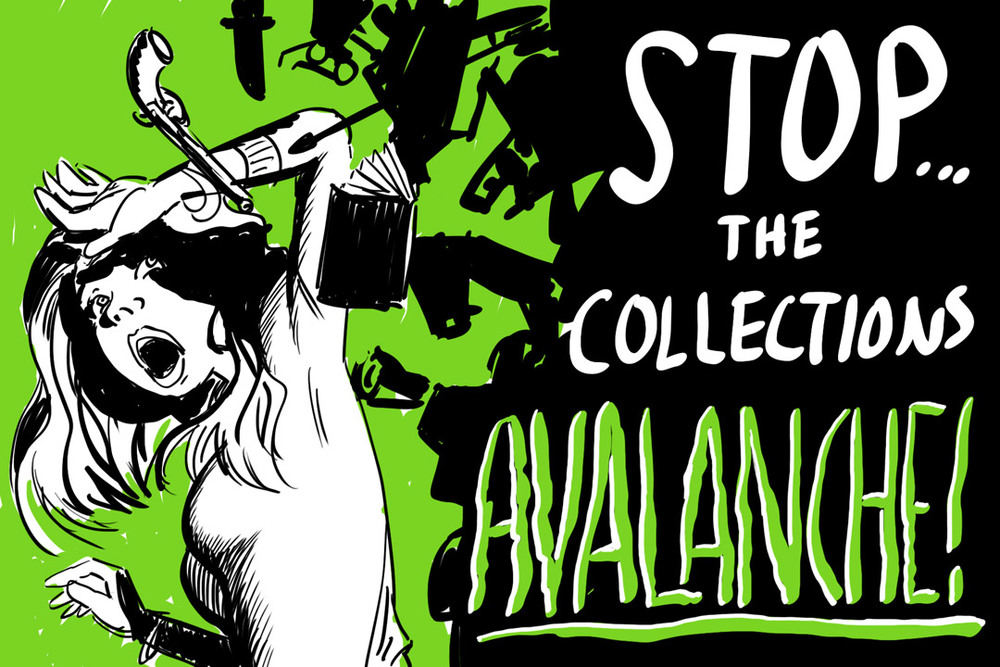
In a poster session, Tamara Hemmerlein shared Deteriora and the Agents of Destruction, a publication of the Indiana Historical Society.  Presented as a “living graphic novel,” it informs readers about the various ways to preserve collections from light damage, pests, dust, and mishandling (represented by such villians as Ultra Violet, Mass-O-Frass, and Miss Handler) and includes links for additional information.  I’m not sure of the intended audience, but it’s a lot more fun than reading a collections management policy.

collections avalancheChatting in the hallway, Continue reading

Know a Museum or Site Making an Impact with History?

Discussing the History Relevance Campaign at a packed session at AASLH in St. Paul.

Discussing the History Relevance Campaign at a packed session at AASLH in St. Paul. Photo by Lee Wright.

At the American Association for State and Local History annual meeting in St. Paul, the History Relevance Campaign presented an update on their work to a packed audience. During the session, we presented the Impact Project, a year-long process for identifying and studying historic sites and history museums that are making history relevant in their community. The goals of the Impact Project are to:

  • Increase the use of history as a way to understand and address critical community issues.
  • Help board members and staff make an impact in their communities by integrating best practices into their strategic and interpretive plans
  • Encourage AASLH and other professional associations to include standards on community relevance and impact
  • Encourage academic programs in history, public history, and museum studies to include community relevance and impact in their curriculum
  • Encourage elected officials, funders, and communities to provide more support for history organizations that are making an impact
  • Provide every Governor with at least one example of history organizations that are making an impact in their state

We Need Your Help

We are looking for history museums, historic sites, and similar organizations that are Continue reading

AASLH Annual Meeting Recap

This slideshow requires JavaScript.

The AASLH Annual Meeting in St. Paul was a whirlwind for me, starting on Wednesday by stepping off the plane and heading directly into a five-hour Council meeting and then joining the evening reception at the Mill City Museum.  The rest of the week held the same pace with walking tours of St. Paul at 7 am (had to skip breakfast), educational sessions throughout the day, and chatting with colleagues over dinner.  It was great fun but it didn’t give me much time share on this blog what was happening during the conference.  I’ll talk about a couple sessions in more detail later, but here are a few highlights in the meantime: Continue reading

Greetings from Minnesota!

St. Paul, Minnesota along the banks of the Mississippi River.

St. Paul, Minnesota along the banks of the Mississippi River.

This week I’m attending the annual meeting of the American Association for State and Local History in St. Paul, Minnesota, where I’ll be part of a couple educational sessions, debuting my new book on the interpretation of African American history and culture, and concluding my term on the Council.  The Minnesota Historical Society has worked hard to encourage participation and radio raconteur Garrison Keillor is giving the keynote address, so this is expected to be among the largest annual meetings in AASLH’s history.  The AASLH annual meeting has lots going on including more than 70 sessions and workshops, evening gatherings at the Minnesota History Center and Mill City Museum, a dozen tours of local museums and historic sites, affinity group luncheons, poster and pop-up sessions, an exhibit hall of vendors and companies, and lots of receptions.  It’s an ideal place to keep up with what’s happening in the field as well as catch up with my colleagues and friends.  If you won’t be able to make it in person, consider attending online (deadline to register is 5 pm on Wednesday, September 17).

On Thursday, I’l be moderating a session with debb Wilcox and Lee Wright, two marketing experts from outside Continue reading

Upcoming Workshop on Understanding Audiences

If you want to engage your audiences to build support and increase your impact, you first need to understand their interests, needs, and motivations.  In today’s busy world, the traditional tactics of advertising, rackcards, and signs are no longer sufficient to attract visitors to museums and historic sites.  We have to refresh our understanding of today’s audiences and develop new approaches that will engage them.

On September 22, 2014 from 9:00 am to 4:00 pm, I’ll be facilitating a one-day workshop on Understanding Audiences at the Middlesex County Community College in Edison, New Jersey.  Sponsored by the New Jersey Historical Commission and New Jersey Historic Trust, this is part of a series of three workshops on engagement for nonprofit history organizations.  The workshop will be based on the Standards and Excellence Program for History Organizations of the American Association for State and Local History.  Registration is $20 (a bargain) and includes breakfast and lunch (even better!); deadline is September 18.

Online Learning Opportunities for Historic Site Interpreters

The opportunities for sharpening your skills as an historic site interpreter continue to grow online, sometimes even for free.  Here are a sampling of a few non-degree granting organizations where you’ll find workshops and classes on the Internet to keep your thinking fresh and improve your technique.  All times are Eastern unless noted.

American Alliance of Museums

  • Embracing 360 Engagement, Widening the Circle.  September 2, 2014 at 2:00 pm Eastern.
  • Building Trust through High Performance, Becoming Essential.  December 3 at 2:00 pm.

American Association for State and Local History

  • Historic House Calls: Using Futures Thinking to Navigate Ongoing Change.  August 20, 2014 at 2:00 pm. Free for AASLH members.
  • Writing the Grant: What’s the Process Like?  August 27 at 3:00 pm.  $115; $40 members.

Coursera

Continue reading

AASLH Annual Meeting in September Offers Lots for Historic Sites

Alexander Ramsey House in St. Paul, an historic site of the Minnesota Historical Society.

Alexander Ramsey House in St. Paul, an historic site of the Minnesota Historical Society.

Historic sites and house museums will find lots of educational sessions and workshops just for them at the upcoming annual meeting of the American Association for State and Local History on September 17-20 in St. Paul, Minnesota (the right half of the Twin Cities).  There are more than 70 sessions and workshops offered this year, so I’m only highlighting a few to show the diversity of topics on or about historic sites:

  • Putting the Native American Voice into Historic Sites
  • Saving the Charnley Norwood House
  • Interpreting Religion at Historic House Museums
  • Two Very Different Historic Houses Ask:  We Got the Money–Now What?
  • Telling a Whole History:  Methods of Interpreting Domestic Servants
  • Welcoming All Visitors:  Accessible Programs at History Museums and Sites
  • Diversity and Inclusion:  What Does that Really Mean for Museums and Historic Sites?
  • Diversity in Education:  Teaching About Slavery, Innovative Strategies, and Best Practices
  • Making the Invisible Visible:  Using Mobile Technology to Reach New Audiences, Improve Accessibility, and Breathe New Life into a Virginia Historic Site
  • Redefining Success:  Tips and Techniques for Training Interpreters to Talk About Slavery
  • They Can’t All be Museums
  • Pocket Change:  Moving a House Museum into the 21st Century on a Budget

Of course, there are many more sessions that address related topics, such as boards, fundraising, Continue reading

AASLH Refreshes its Website

AASLH website 2013The American Association for State and Local History refreshed its website at aaslh.org, launching a significantly improved and enhanced version that’s rich with color and photos, along with continually updated news, blog posts, and tweets laid out in a magazine format.    You’ll need to explore the various pages to discover the new features and content, but I especially like News and Views to quickly soak up what’s happening and the Learn and Search Interests pages, where you can browse popular topics with just a click of a mouse, such as “administration” or “funding.”  There’s also a Your Feed page that allows you choose from a menu of topics that interest you, such as “best practices” or “historic houses” and viola! you get a special page created just for you.

As a member of the AASLH Council, I officially receive the credit for the new website, but it actually belongs to the AASLH staff, particularly Rebecca Price, Bob Beatty, and Terry Jackson.  This new website has been a longtime in coming, but it was worth the wait.

PS.  If the new website comes up broken, as it did for me at first, just refresh your browser to clear its memory of the old website.