Category Archives: Community engagement

New Guide for Historic Sites on the Scottsboro Boys Trials

This slideshow requires JavaScript.

Before I left the National Trust last October, I was the director of the Interpreting African American Historic Places Project, an experimental initiative funded by the Ford Foundation.  One of the elements was a grant program for collaborative projects between universities and historic sites to improve interpretation of African American history and culture through historic places and for a few years, the National Trust supported some amazing projects that are now just beginning to bear fruit.

One of the most interesting projects was the interpretation of the infamous Scottsboro Boys Trials of the 1930s by the New College at the University of Alabama and the Scottsboro Boys Museum and Cultural Center.  Ellen Griffith Spears and Shelia Washington initially sought to mark a few sites related to the trial in Scottsboro, but after some discussions with them, broadened their scope to look at all the places that were associated with this major civil rights event, providing a geographic context that’s often overlooked.  They’ve just shared with me Continue reading

Laurie Ossman Departs Woodlawn and Pope-Leighey House

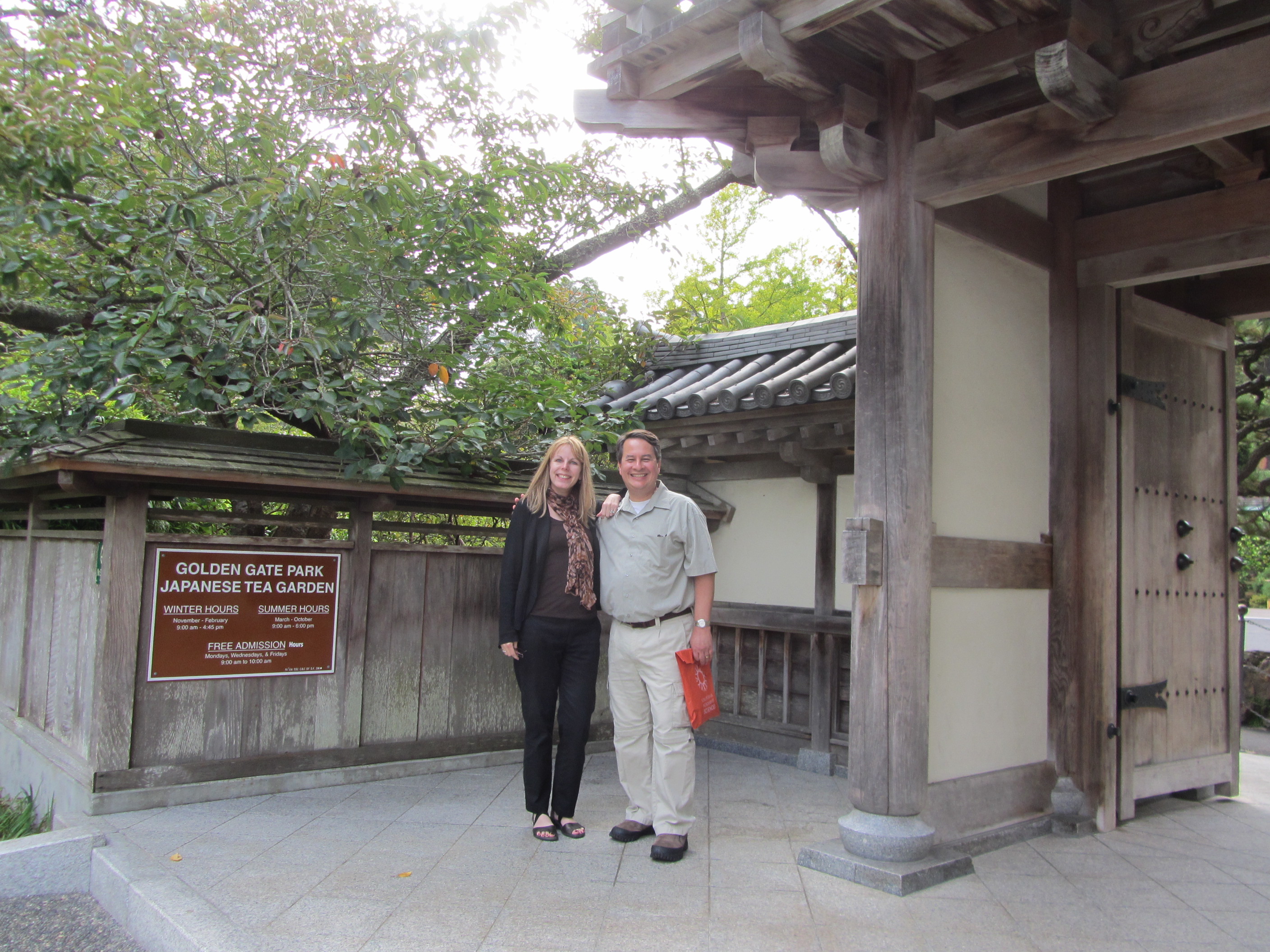
Laurie Ossman and Max van Balgooy meeting serendipitously in San Francisco in 2011.

Laurie Ossman has recently departed as director of Woodlawn and Pope-Leighey House, a National Trust Historic Site in Virginia, to advance her interest in re-imagining historic sites for today’s audiences through project-based endeavors and writing.  Her innovative work to reinterpret and reprogram the site has been featured by the American Association of Museums and the Washington Post, including the path-breaking Arcadia partnership with the Neighborhood Restaurant Group.  During her tenure, she also completed two major books with Rizzoli–a survey of Great Houses of the South and a study of the architectural firm of Carrere and Hastings (selected as the Washington Post‘s photo book of 2011)–which will be focus of several lectures in the coming month at Vizcaya, The Flagler, and the Sulgrave Club.  Laurie received her PhD. in architectural history from the University of Virginia and was previously responsible for the collections and scholarship at such nationally renowned historic sites as Vizcaya Museum and Gardens and Ca’ d’Zan at the Ringling Museum of Art.  She can now be reached at LaurieOssman@Comcast.net.

Susan Hellman has been promoted to Acting Director of Woodlawn and Pope-Leighey House and can be reached at Susan_Hellman@nthp.org.  Woodlawn and Pope-Leighey House are owned and operated by the National Trust for Historic Preservation and is one of 23 National Trust Historic Sites.

Grants Awarded for Experimental Interpretive Research

Congratulations to Jebney Lewis, Sandy Lloyd, Philip Seitz, and Randall Mason on their 2011 HPP Awards for Interpretive Inquiry and Investigation from the Heritage Philadelphia Program (HPP) of The Pew Center for Arts & Heritage. Formerly known as the HPP Scholars in the Interpretation of History, this professional development opportunity supports individual practitioners in the investigation of imaginative projects in public history by connecting the present to the past in engaging, imaginative, and meaningful ways; responding to audience/community interests or needs; and
demonstrating a complex understanding and presentation of history.  There are four recipients this year, an unprecedented number:

  • Jebney Lewis for We Make the City.  Lewis will develop and construct a small exhibit with a focus on the intersection of Broad and Market Streets between the years 1900–10. It will examine “how the aspirations of the industrializing city were embodied in the creation of grand expressions of pride and ostentation,” as illustrated through Continue reading

National Archives to Launch Dashboard to Engage Users

Pamela Wright of the National Archives describes the forthcoming Citizen Archivist Dashboard.

At the Seventh Annual William G. McGowan Forum on Communications on November 4, the National Archives previewed their Citizen Archivist Dashboard, a single place where users can actively participate in the work of the institution (the Archivist of the United States debuted it earlier in his blog). Pamela Wright, Chief Digital Access Strategist at the National Archives, stated that this would be a way to develop deeper levels of engagement with its users beyond the basic performance measures of “likes” and “followers”. Scheduled to launch in December, it will use crowd-sourcing strategies to improve access and understanding of its enormous collections by allowing visitors to: Continue reading

Upcoming Free Webinars for Historic Sites

The American Association for State and Local History is offering three free webinars that will particularly interest historic sites:  storytelling, interpretive planning, and engaging new audiences.  Thanks to an IMLS 21st Century Museum Professionals grant, webinar participation is free and open to staff, volunteers, board members of history organizations and anyone else interested in learning more about visitor engagement.  You can register for one, two, or all three!

Telling a Good Story

  • November 17, 2011
  • 2-3:15 pm Eastern
  • A good guided tour is a good story, told well, says guest speaker Linda Norris. Join us to explore telling stories to create Continue reading

Learn How the Museum Assessment Program Can Help Your Site

The Museum Assessment Program is one of those program that’s been a major benefit to the field for decades, but unless you’ve participated, it’s a mystery.  You may have heard how it can transform an organization, move it to the next level of development, or solve a vexing situation.  It sounds dramatic, but I’ve seen it happen at both large and small museums who have gone through the process.

So how does this happen?  You can find out at a free webinar about MAP on Thursday, November 10 at 3pm Eastern Standard Time presented by the American Association of Museums and the Institute of Museum and Library Services.  Registration isn’t required but Continue reading

Best Practices for Community Engagement and Interpretation Available

For your convenience, I’ve pulled together in one page the various standards and best practices for community engagement, public education, and historical interpretation at historic places and by historical organizations, including scholarship, curriculum development, visitor research, and staff training, as well as the broad range of public programs presented by historic sites, from tours and exhibits to publications and the Internet.  You’ll find “Best Practices” as a topic on the navigation bar on EngagingPlaces.net.

These resources can be used to: Continue reading