Category Archives: Fundraising

Seeing Indiana’s Historic Sites From an Artist’s Perspective

Ronald Mack. Photo courtesy of Indiana Plein Air Painters Association.

Ronald Mack. Photo courtesy of Indiana Plein Air Painters Association.

Indiana Landmarks, one of the most active statewide historic preservation organizations in the nation, has an innovative program that brings together local artists and historic sites.  To preserve the tradition of plein air painting and focus artists on capturing historic places, Indiana Landmarks is partnering with the Indiana Plein Air Painters Association (IPAPA) on the third volume of the coffee-table book series, Painting Indiana

“Plein air painting is an important tradition, famously practiced in the late nineteenth and early twentieth centuries by T. C. Steele, William Forsyth, Ottis Adams and other noted Hoosier artists,” says Indiana Landmarks’ president Marsh Davis. “When places are captured in paintings, it increases the public’s Continue reading

Nation’s Nonprofits Caught in a Fundraising Whirlpool

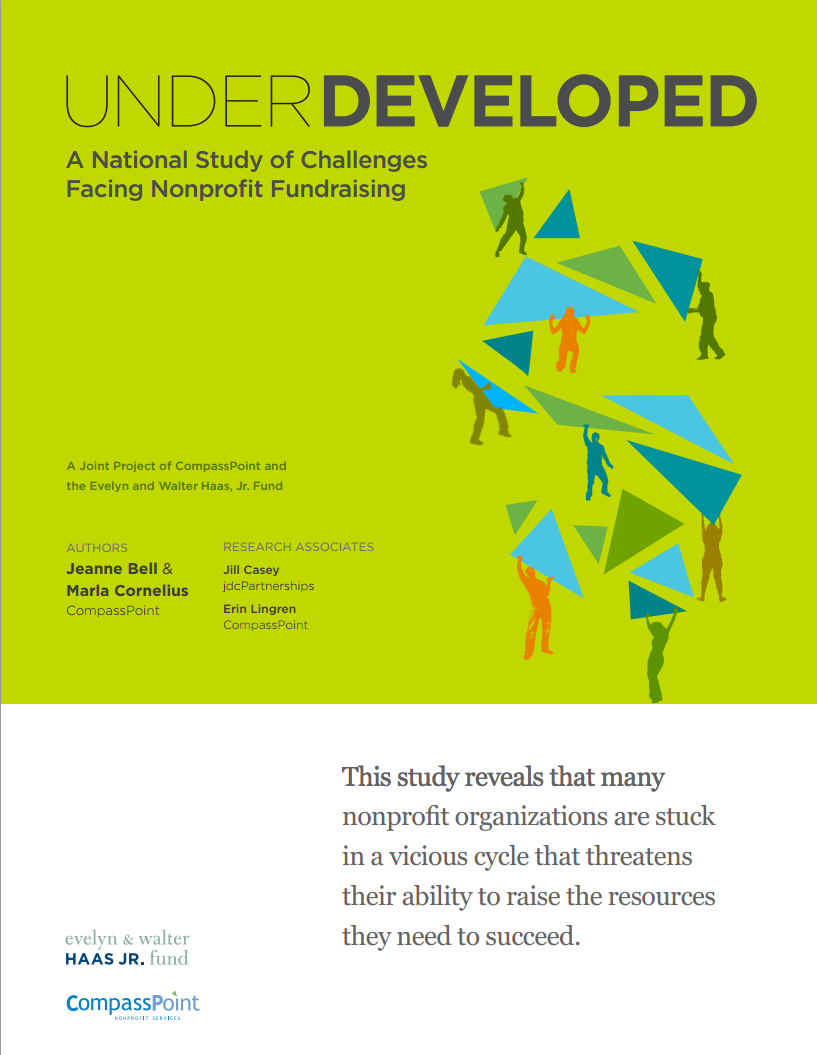
Under Developed 2013Many executive directors aren’t happy with their development directors and many development directors aren’t happy with their jobs–the result is an inability to adequately raise funds for the nation’s non-profit organizations and deliver much-needed community services and benefits.  That’s one of the findings of Under Developed, a recently released national study by Compass Point.  In a nutshell, “many nonprofit organizations are stuck in a vicious cycle that threatens their ability to raise the resources they need to succeed.”  Their findings and recommendations come from 2,700 surveys of both executive directors and senior development staff, and focus group discussions with 53 executives and board members across the country.

I always assumed that the “revolving door” in the fundraising office was a result of better opportunities (in my ten years at the National Trust, the development department turned over completely nearly three times) but the Compass Point report suggests there are more serious issues at work:   Continue reading

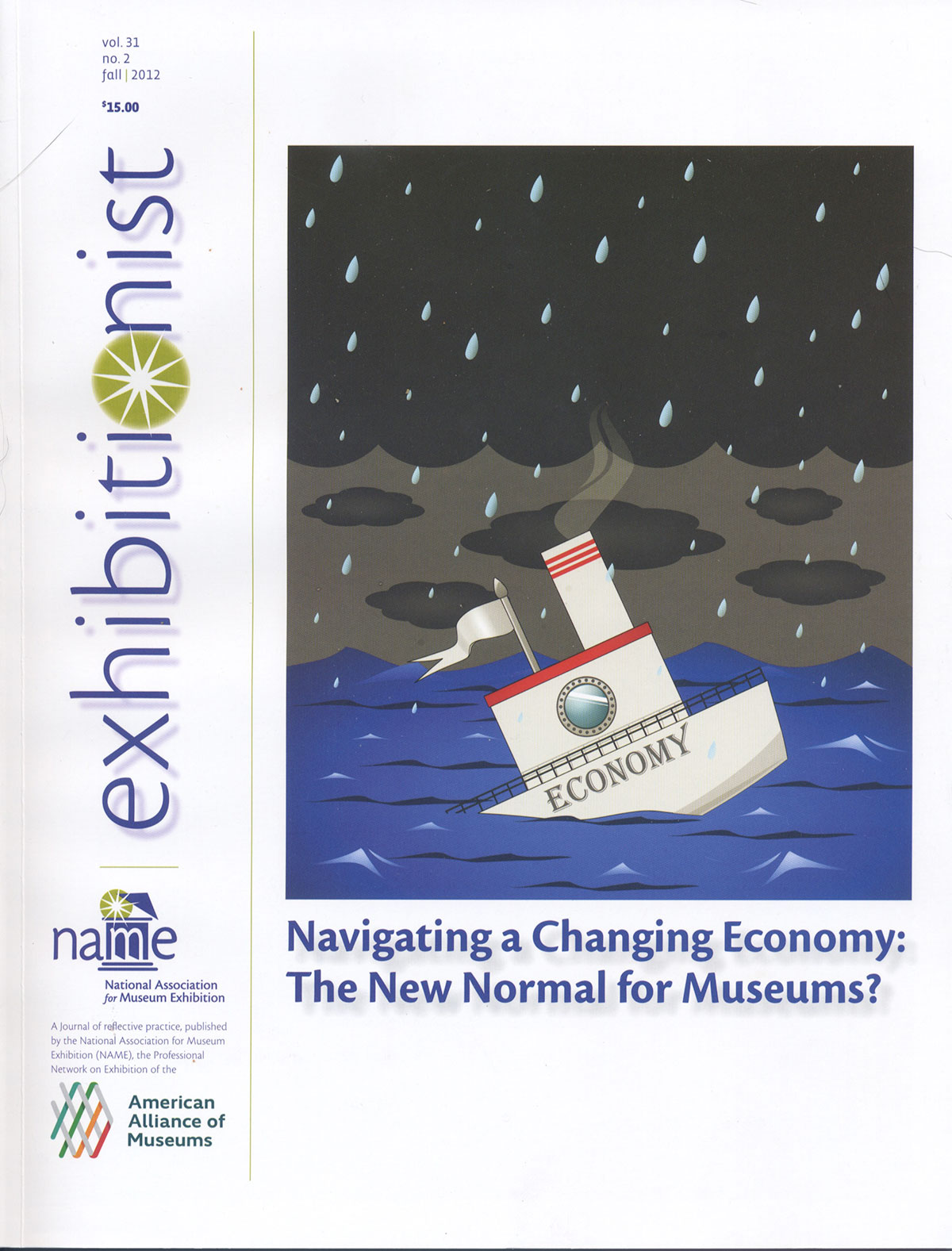
Navigating a Changing Economy: A New Normal for Museums?

Exhibitionist, Fall 2012

Exhibitionist, Fall 2012

The Exhibitionist, the journal of the National Association for Museum Exhibition (NAME), has devoted its fall 2012 issue to the longterm impact of the economic downturn on the museums.  Daniel Spock, director of the Minnesota History Center, and Marilyn Hoyt, a fundraising consultant, discuss the trends affecting exhibitions but whose lessons can apply to other museum departments.  Spock believes that museums may be, “moving into a period of permanent instability–a special challenge for museums which have traditionally been in the continuity business.”  Hoyt sees that museums are compensating by relying more on in-house resources and phasing projects, often with good side effects, including more prototyping of ideas and a fresh look at familiar collections.

Complementing these opening articles are: Continue reading

Donations Aren’t Keeping Pace with NPO Growth

Historic coinsIn its December 6, 2012 issue, the Chronicle of Philanthropy reported that, “the nonprofit world continues to grow both in number of organizations and in its share of the U. S. work force” but “fundraising isn’t keeping pace”–and the gap is especially wide for those working in arts, culture, and humanities (that includes historic sites and house museums).  If you felt that you’ve been spinning your wheels in the last few years, you can now confirm it with some national statistics.

In the last decade (2000-2010), the number of charities that focused on arts, culture, and humanities grew at 45% but the rise in revenue was only 26%–the bottom of the eight fields studied.  Compare that to health-related charities, whose number grew at 22.4% but their revenues rose by 96.6%.  At the top of the revenue growth for the decade were Continue reading

Strategies for Year-End Fundraising Appeals

Another post this week inspired by the Chronicle of Philanthropy, with the article, “Charities Unveil Bold Year-End Appeals in Storm’s Big Shadow” in the November 15, 2012 issue prompting several ideas that might be useful for historic sites as they come to the end of the calendar year with its year-end fundraising appeals.  Hurricane Sandy and the 2012 federal election results are both affecting donations, with much attention given to disaster relief and to the possible limitation on charitable deductions.  Can your year-end appeals:

  • Emphasize your needs for storm-damage recovery or for disaster preparedness (e.g., roof replacement or repair, tree trimming, repairing gutters and downspouts, preparing a disaster plan).
  • Encourage major donors to give big gifts now, rather than Continue reading

What We Can Learn from America’s Biggest Non-profits?

Philanthropy 400 is the Chronicle of Philanthropy‘s annual list of the 400 groups that raised the most funds from private sources.  For 2011, these groups achieved a median 7.5-percent increase from last year, the third straight year of median gains for non-profits in the Chronicle‘s rankings.  That’s amazing considering the depths of the recession that affected most charities.  “Giving USA” said that charitable giving overall grew less than one percent last year.  About $1 out of every $4 donated by individuals, corporations, and foundations goes to these top 400, so what can we learn from them?

The lessons are a bit hard to uncover given the wide diversity of organizations represented on the list, primarily universities, social services, and health/medical,, followed closely by religious, youth, and education.  Topping the list are: Continue reading

Subtle Ways to Recognize Donors

This slideshow requires JavaScript.

During a recent visit to the Meridian International Center in Washington, DC, I encountered the most subtle donor recognition methods I’ve ever witnessed.  I usually discourage donor plaques within an historic house museum because it doesn’t advance the educational mission of the organization, distracts from the visitor’s experience of “imagining the past,” and can be installed in a manner that permanently damages the historic materials but if a director or board insists, the Meridian Center offers a potential solution.  The Meridian Center holds its offices and meeting rooms in two early twentieth century houses–Meridian House and White-Meyer House–that are listed on the National Register and although they aren’t museums, the donor recognition plaques are so subtle that they border on being acceptable in historic house museums.

Plaques can be found in nearly every room but are typically integrated into the existing decor with matching materials in small type or placed strategically and discretely to avoid attracting much attention, except if you take a close look.  They are considering a donor wall for their upcoming capital campaign, but it will be installed outdoors under the supervision of preservation architect Belinda Reeder.

AASLH Workshops for Historic Sites

The American Association for State and Local History offers a wide range of educational workshops and professional training that is particularly helpful for staff and volunteers for work at historic sites and house museums–if you know where to look.  I’ve previously mentioned the sessions during its annual meeting but people often forget that it also has half-day and day-long workshops before and after the annual meeting to explore topics in depth.  What most people don’t know is that you can register for just these workshops; you don’t have to attend the annual meeting–a great advantage for local folks!

This year, AASLH is offering 14 workshops, including:

What Sites Can Learn from the Olympics

The summer Olympic games in London are now over and if you were watching, I bet you not only reveled in the athletic competition, but you also contemplated the logistics and expenses.  Those of us who work at historic sites don’t experience events like most other people.  Sure, we like the music, food, and tours, but we also look at the placement of signs, calculate ratios between attendance and restrooms, check out the store for items we can sell, and mentally map out visitor circulation and note the bottlenecks.  Or is that just me?

The Olympics is just another special event, although it’s huge and involves a cast of thousands and decades of planning.  The designers and planners of this event are the best of the best, so what can historic sites, at a much smaller scale, learn from their experience?  One of the most valuable lessons is that Continue reading

NEH Announces $39M in Grants but Sites Fare Poorly IMHO

At the end of July, the National Endowment for the Humanities (NEH) announced $39 million in grants for 244 projects across 15 program areas (e.g., America’s Historical and Cultural Organizations, Landmarks of American History and Culture, and Sustaining Cultural Heritage Collections Grants).  NEH is the major federal source of funds for historic sites and house museums, so these grant announcements provide a sense of what’s happening in the field to see what’s innovative or excellent (or what attracts funding).  Some examples of grant recipients who are focused on historic sites include:

Chicago Architecture Foundation
NEH Program: Landmarks of American History, $172,393
Project Director: Jean Linsner
Project Title: The American Skyscraper: Transforming Chicago and the Nation
Project Description: Two one-week workshops for eighty school teachers on the
development of the skyscraper in Chicago and the relationship of skyscrapers to
urbanization.

U.S.S. Constitution Museum 
NEH Program: Landmarks of American History, $179,548
Project Director: Sarah Watkins
Project Title: The U.S.S. Constitution and the War of 1812
Project Description: Two one-week workshops for eighty school teachers on the naval War of 1812 and its most important and complex artifact, the United States frigate Constitution, anchored in Boston.

Wilderstein Preservation
NEH Program: Sustaining Cultural Heritage Collections, $50,000
Project Director: Duane Watson
Project Title: Planning for a Sustainable Preservation Environment in the Wilderstein Mansion
Project Description: A planning project to identify ways to create and maintain Continue reading