Category Archives: Historical interpretation

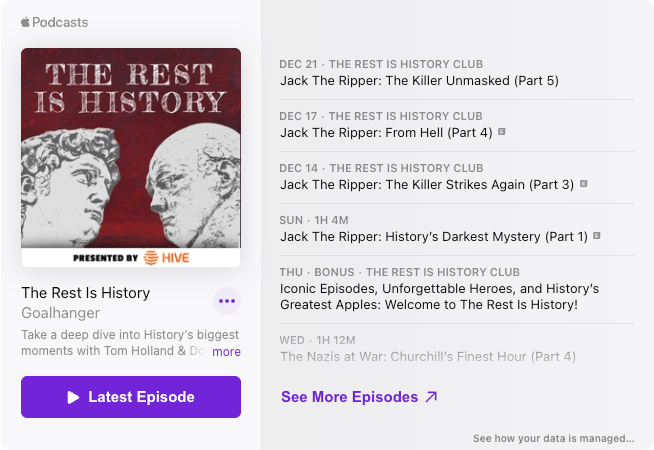
A History Podcast Wins Big—And Offers Clues for Museums’ Future

Apple Podcasts recently named The Rest is History its Podcast of the Year, and in a December 4 interview on In Conversation from Apple News, hosts Dominic Sandbrook and Tom Holland reflected on why history is resonating so strongly today. Sandbrook argues that despite assumptions, young people are deeply interested in the past—provided it is presented through compelling stories and vivid characters. Academic historians, he suggests, sometimes struggle to reach broad audiences because they avoid narrative. For Sandbrook, stories of the Second World War, Greek myth, the Trojan War, and Rome endure because they are foundational to human identity.

Holland adds that today’s students confront unprecedented content pressures, but unlike earlier generations, they are no longer limited to school as the sole venue for learning. The internet has created a lifelong landscape for historical discovery—“an enormous seam of gold,” as he describes it.

Continue reading

Eight Ways to Engage Visitors at Museums and Historic Sites

Move beyond what we tell visitors to what they actually do—and discover how eight types of experiences can deepen learning and meaning.

When we think about interpretation in museums and historic sites, we often focus on what we want to say—the stories, facts, and insights that bring history to life. But what if we focused instead on what visitors do?

That simple shift—from content to experience—changes how we design tours, exhibitions, and programs. It encourages us to move beyond “telling” and toward engaging, offering visitors a range of ways to learn, reflect, and connect.

Recently, I’ve been revisiting an idea from educational research called the Eight Learning Events Model, developed at the University of Liège in Belgium. It identifies eight ways people learn: receiving, imitating, practicing, experimenting, exploring, creating, debating, and reflecting. Although the language in their articles is academic (and a bit European in tone), the concept translates beautifully into the world of museums. With a little adaptation, I’ve reimagined these eight learning events as the Eight Ways to Engage Visitors.”

A Spectrum of Engagement

At one end of the spectrum, visitors receive information. They listen, read, or watch as museums provide structure and context—through a guided tour, an introductory panel, or a short video.

The next few experiences—observing, practicing, and experimenting—invite more active participation. Visitors watch a demonstration, try out a skill, or test how something works. These steps increase a visitor’s sense of agency. The museum moves from telling to showing to inviting.

Continue reading

When “Accuracy” Means Ideology: A Closer Look at the Heritage Foundation’s Historic Sites Guide

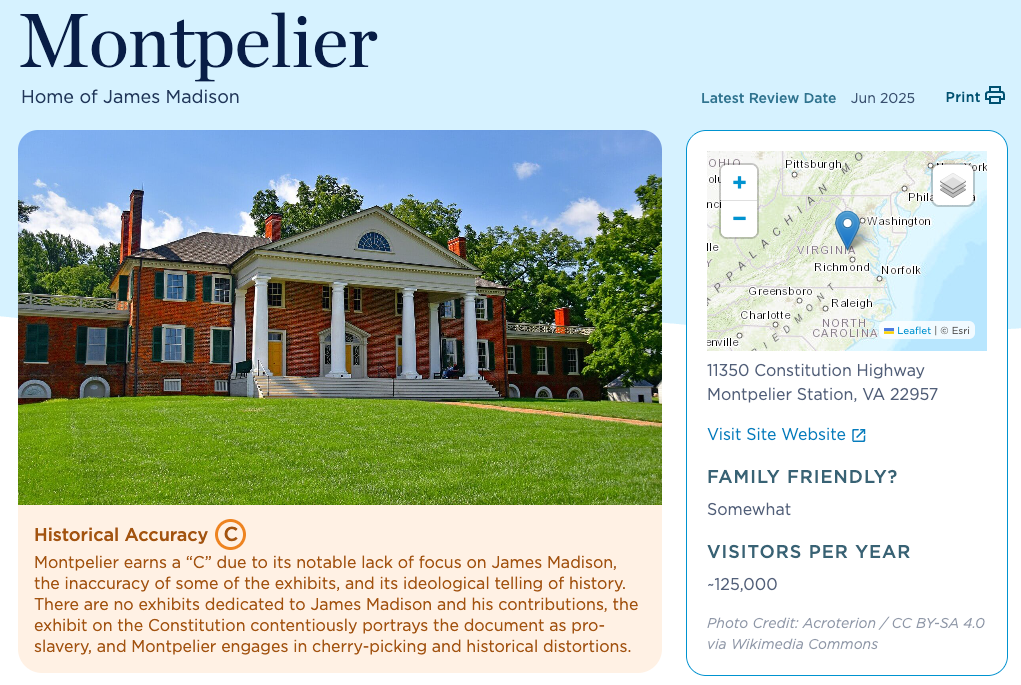
The Heritage Foundation’s new The Heritage Guide to Historic Sites: Rediscovering America’s Heritage promises to help Americans find “accurate” and “unbiased” history at presidential homes and national landmarks. Presented as a travel and education tool for the nation’s 250th anniversary, the site grades historic places from A to C for “accuracy” and “ideological bias.”

At first glance, it looks like a public service. But a closer look reveals that even when Heritage cites “evidence,” its historical reasoning exposes deep methodological and ideological flaws.

The Appearance of Evidence

The Heritage Foundation awards James Madison’s Montpelier in Virginia a C for historical accuracy, claiming the site shows a “notable lack of focus on James Madison” and that:

Continue reading

Rethinking Timelines: How Women’s History Can Reframe the Past

The timeline is one of the most familiar tools in our interpretive toolkit. It helps us organize facts, identify turning points, and connect events over time. Yet the decision of what to include or exclude shapes the story we tell. Most timelines highlight wars, political milestones, or technological achievements. For many women, those events barely touched their daily lives.

As historian Joan Kelly famously asked, “Did Women Have a Renaissance?” Her answer revealed that what was celebrated as a golden age for men was, in fact, a period of restriction for women. That same question can and should be asked at every historic site: Did women’s lives improve or decline during the turning points we highlight? Or were their defining moments entirely different?

Reimagining the Timeline

What if, instead of centering wars and political leaders, we built timelines around women’s legal rights, economic opportunities, or access to education and institutions?

Continue reading

From Julia Child to Lowriders: Interpreting History at the Smithsonian on the Eve of a Shutdown

Although the federal government shutdown has started, the Smithsonian museums will remain open at least through Monday, October 6. Despite the media’s attention on 12:01 am on October 1, shutdowns don’t happen immediately because stopping a huge bureaucracy takes time, plus each agency has to determine who will be furloughed and who is essential—that’s why air traffic controllers keep working at airports but not educators at museums. Secondly, agencies can use private funds to continue operating, which is why the Smithsonian can keep the doors open a few more days.

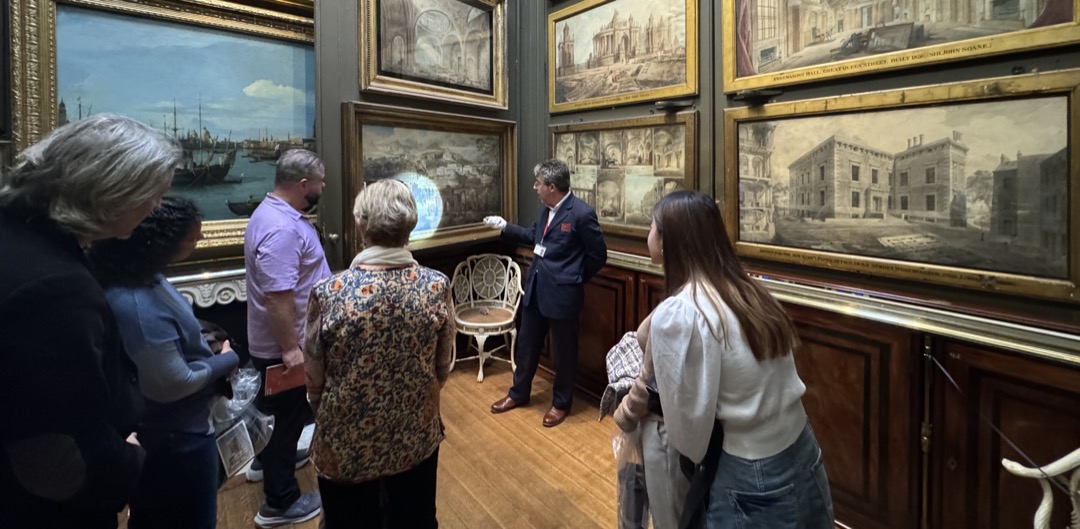
I was fortunate to visit the National Museum of American History on September 30 with my “Interpreting Historic Sites and House Museums” course at George Washington University. For a couple of hours, my students analyzed the interpretation in two exhibitions that included historic buildings: Food (featuring Julia Child’s kitchen) and Within These Walls (featuring the 1750s Ipswich House, the largest object in the collection). They did a terrific job uncovering topics and themes, discussing how women are represented, and the assessing the use of objects.

Continue reading

Carrying the American Revolution in a Name

“My name is my identity and must not be lost,” declared abolitionist and suffragist Lucy Stone. Her words remind us that names are more than just labels. They tell stories, carry history, and hold cultural significance. They shape how we see ourselves and how others see us. The act of naming—whether giving, changing, or choosing a name—can express individuality, family ties, culture, faith, or resistance. Moreover, it is a deeply personal act, yet also public. A name declares: this is who I am.

As the United States marks the 250th anniversary of its Revolution, historic house museums have a unique opportunity to reflect on the women of their sites—especially those interpreting the nineteenth century. How were their names connected to individuals of the founding era? How important was it for women to assert ties to that legacy?

For women in the nineteenth century, marriage customarily submerged female identity under a husband’s surname. Often, that is where the trail seems to end. Yet some women found ways to hold onto their maiden or ancestral names—an intentional act of memory-keeping that linked them to Revolutionary roots and preserved family history across generations.

Doing History Through Names

Continue reading

Navigating Community Engagement in Museums in a Charged Political Climate

I attended a timely and thought-provoking session at this year’s AASLH Annual Meeting called Bridging Divides: Navigating Challenging Histories Through Community Engagement on September 13. It gathered five panelists—Angela O’Neal, Columbus Metropolitan Library, Columbus, OH; Rebecca Asmo, Ohio Humanities, Columbus, OH; Jason Crabill, Decorative Arts Center of Ohio, Lancaster, OH; Kaitlyn Donaldson, Lorain Historical Society, Lorain, OH; Doreen Uhas-Sauer, Rickenbacker Woods Foundation, Columbus, OH—who shared practical advice for how museums and historic sites can continue doing meaningful work in an era of heightened scrutiny, political pressure, and declining trust. I want to share my notes here, not as a verbatim report, but as highlights of ideas that struck me as especially useful for our field.

Protecting Institutions While Advancing Mission

The panel emphasized that today’s environment did not emerge overnight, so institutions can look to history and the humanities for guidance. Two watchwords were don’t obey in advance and don’t over-comply. When regulations restrict action—such as a requirement to remove feminine hygiene products from restrooms—organizations can comply while still serving their audiences by relocating them to staffed areas. Institutions should avoid inviting unnecessary trouble, ensuring content is evidence-based, factual, and defensible. Even the naming of grants matters: choose descriptive, straightforward titles rather than attention-grabbing language that might provoke critics.

Building Credibility Through Storytelling and Relationships

Telling concrete, factual stories is essential. Because American history is often taught as headlines rather than complex narratives, museums must provide depth while remaining accessible. Community review of working drafts helps ensure relevance and reduces backlash. Listening for common ground creates ownership and fosters support. In some cases, reframing exhibits as art rather than history opens doors to difficult conversations. Festivals, events, and everyday relationship-building are as important as the exhibits themselves.

Continue reading

Peel-and-Replace Signage: A Durable and Flexible Alternative for Outdoor Interpretation

A large interpretive sign at Kinderdjik in the Netherlands.

On a recent trip to Europe, I encountered one of the most durable yet inexpensive approaches to outdoor signage I’ve seen: printed sheet vinyl applied to thin aluminum laminate panels, typically 1/8 to 1/4 inch thick. These signs can be cut into custom shapes, mounted to walls or posts, and grouped together to present text in digestible sections. When panels need revision or repair, the vinyl surface is simply peeled away and replaced.

The advantages are striking. Because the medium is printed vinyl, designers can easily incorporate full-color photographs, maps, diagrams, and QR codes alongside text. Unlike banners, these signs don’t wrinkle or sag, giving them a crisp, professional appearance. Compared with porcelain enamel or glass-based panels—beautiful but costly and still prone to damage—the peel-and-replace model offers museums and nonprofits a flexible, affordable option.

There are cautions. Outdoor durability must be tested over time to ensure resistance to fading or peeling, and they may need to be framed if the sharp corners pose a safety hazard in high-traffic areas. If you’re in the Southwest, these metal signs could become hot enough to shorten the life-span of vinyl. Still, the opportunity is clear: this approach lowers barriers to producing high-quality interpretative signs. Next steps for museums include piloting small-scale installations to measure longevity, visitor response, and cost savings before broader adoption.

Continue reading

Reimagining Historic House Museums: Two Workshops Coming Up!

House museums across the country are confronting difficult questions about relevance, sustainability, and meaning in the 21st century. What worked twenty years ago—traditional tours, decorative arts displays, and carefully preserved interiors—often isn’t enough today to engage visitors or generate financial stability. Communities are changing, audiences have new expectations, and historic sites are under increasing pressure to demonstrate their value.

That’s why Ken Turino (formerly at Historic New England) and I developed Reimagining the Historic House Museum, an intensive one-day workshop that helps professionals and volunteers tackle these challenges head-on. Over the past decade, we’ve led this program at sites across the United States, working with hundreds of staff, board members, and volunteers to think creatively about interpretation, audience engagement, and business models. Each workshop is highly interactive, blending case studies, small-group activities, and practical exercises. Participants leave not only with new ideas, but with concrete tools to implement change at their own sites.

This fall and next spring, we’ll be offering two opportunities to join us in person:

Continue reading

Mapping Slavery in Amsterdam: Reflections on a Heritage Guidebook

During a recent trip to the Netherlands, I picked up a copy of Amsterdam Slavery Heritage Guide (Gids Slavernijverleden Amsterdam) , the second extended edition published in 2018. Although it’s been around for nearly a decade, this was my first encounter with it—and I’m glad I made the discovery. As someone interested in the interpretation of African American history and culture, as well as city guides, I found it to be a compelling model for documenting and acknowledging slavery’s legacy in public spaces.

The full-color Guide identifies over 100 locations throughout the city connected to slavery, from major institutions to architectural details that would be easy to overlook. Each site is presented with a bilingual (Dutch and English) description that varies in length, sometimes accompanied by historical context. The locations are not limited to traditional sites such as mansions and churches—many are ordinary houses or warehouses, gablestones, offices, or former homes of prominent individuals. A map at the beginning allows you to design your own exploration of the city’s slavery heritage.

The content is categorized among four topics:

  • Trade and Profit
  • Africans and Asians in Amsterdam
  • Resistance and Abolition
  • Museums and Archives
Continue reading