
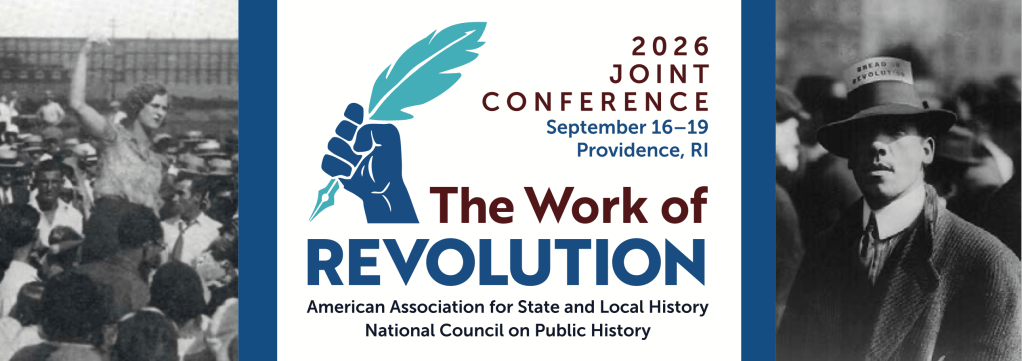
I’ll be in Providence, Rhode Island, September 16–19 for the 2026 joint annual meeting of the American Association for State and Local History and the National Council on Public History. This year’s theme, The Work of Revolution, seems particularly apt at a moment when museums and public history organizations are reconsidering how we work, whom we serve, and how we sustain public trust.
I’ll be participating in several conversations during the conference, and I hope you’ll join me for one—or find me in the halls and say hello.
Wednesday, September 16, 5:30 p.m. — History Leadership Institute Reception
I’ll start the conference at the History Leadership Institute reception. If you’re curious about HLI, thinking about applying, or are one of its graduates, please join us. The reception is an opportunity to meet alumni, facilitators, current participants, and others interested in leadership in the history field.
HLI has long been one of the profession’s most distinctive opportunities to step away from day-to-day responsibilities and think more broadly about leadership, organizations, and the future of our field. I’m always glad to talk with people considering whether it might be right for them.
Thursday, September 17, 8:30 a.m. — Love the Mission, Fix the Job: Rethinking Museum Work
Thursday morning I’ll be part of a facilitated discussion about museum workplace culture. Debates about museum work have flourished online and through worker-led movements, while our formal professional literature has often struggled to keep pace.
Continue reading

 With the new year on the horizon, I’ve been evaluating my projects from the last year to determine how I can help historic places better connect to their audiences. For the past two years, I’ve used Twitter to share news about history, historic sites, historic preservation, and history museums. Each morning I scan the New York Times and other newspapers for stories, aiming to tweet about three stories daily to my
