Category Archives: Historical interpretation

Recap of Historic House Museum Symposium at Gunston Hall

This slideshow requires JavaScript.

On Saturday, the Historic House Museum Consortium of Washington DC hosted an all-day symposium on “how are historic house museums adapting to the future?” at Gunston Hall in Virginia.  The sold-out symposium featured three speakers, a tour of Gunston Hall, and lots of time to chat with colleagues during breaks and over lunch.   The cost?  A mere $15, truly a bargain.  The symposium not only attracted professionals from Virginia, Maryland, and DC, but as far away as Connecticut!

I opened the symposium by discussing Michael Porter’s “Five Forces” as a way of identifying opportunities and threats to help historic sites prepare and adapt.  If you’re not familiar with the Five Forces, it’s a framework for identifying those issues that have the biggest impact on your operations.  This is a much more useful alternative to SWOT, which may be a good outline for summarizing an analysis, but it’s not a helpful way to analyze a situation.  If you’d like to get an introduction to the Five Forces and how it applies to historic sites, take look at my presentation (warning: it’s an 18 Mb pdf).  Even better was the discussion that followed, which explored a wide range of ideas from the growing role of photography to changing demographics to the interpretation of African American history.

Jana Shafogoj at Morven Park discussed how the current emphasis on STEM has allowed their site to Continue reading
Video: Luminous Hall

The Centenary of the University of Western Australia was celebrated with “Luminous Hall” on February 8, 2013, a 20-minute performance created by Illuminart.   Luminous Hall is a “narrative architectural projection” on the exterior of the historic Winthrop Hall that combines mapped projection with music, stories, and drama interpreting the history of the university and local community. Moving beyond son et lumier, the form engages the viewer in history in an extraordinary way.  Other examples using Norwood Town Hall and a Night Mural Picnic are available.

Video: Ask a Slave, Episode 1

In honor of Black History Month, we’re sharing Ask a Slave, a series of short interviews with Lizzie Mae, “personal housemaid to President and Lady Washington.”  It’s based on the experiences of Azie Dungey, who was an interpreter at George Washington’s Mt. Vernon.  She wrote, produced, and created these videos as a way to, “present all of the most interesting, and somewhat infuriating encounters that I had, the feelings that they brought up, and the questions that they left unanswered. I do not think that Ask A Slave is a perfect way to do so, but I think that it is a fun, and a hopefully somewhat enriching start.”  Although Dungey portrays an enslaved African servant, many of her experiences are shared by others who interpret historic sites, no matter the period or topic.  For those of us working at historic sites, they’re incredibly funny but they also reveal some of the challenges we have interpreting other times and places.  You’ll want to look at some the comments on YouTube to get the full national scope, plus take a look at the number of views to get a sense of the impact.

Dungey is currently working in Los Angeles on another series, although focused on the 19th century.  Can’t wait to see what she produces.

Interpreting African American History at Your Site or Museum?

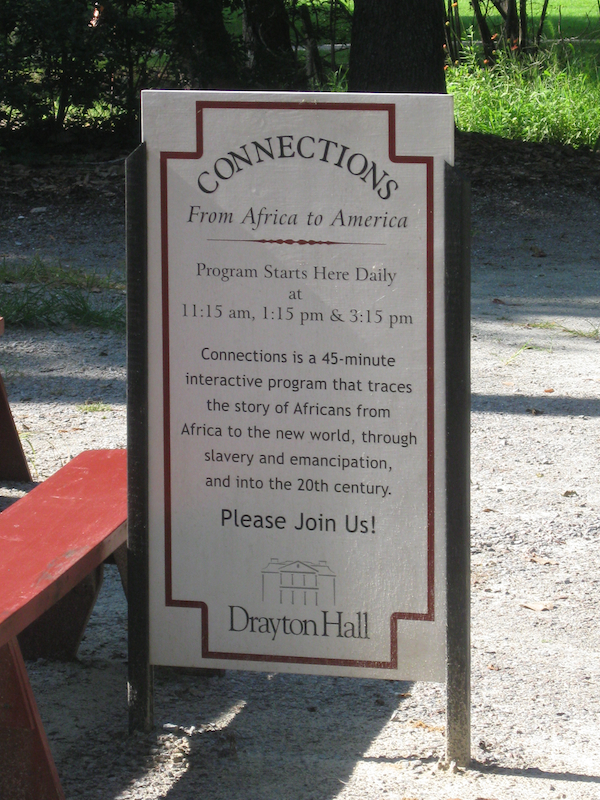
Every day Drayton Hall offers "Connections," a 45-minute program that traces the story of Africans from Africa to the new world and into the 20th century.

Every day Drayton Hall offers “Connections,” a 45-minute program that traces the story of Africans from Africa to the new world and into the 20th century.

If you’ve been involved with the planning, development, presentation, or evaluation of an outstanding exhibit, program, or project interpretation of African American history and culture at a museum or historic site in the last five years, consider sharing it as a case study for a book I’m editing for Rowman and Littlefield Publishers.  This book will be part of a series on the interpretation of various topics published by the American Association for State and Local History that are slated for release later this year.  The first part of the book will be a wide-ranging anthology of articles written by experts and scholars from a variety of perspectives, including Bernard Powers, Matthew Pinsker, Kristin Gallas, James DeWolf Perry, George McDaniel, Amanda Seymour, Donna Graves, Julia Rose, and Lila Teresa Church with a foreword written by Lonnie Bunch.  If you know any of these people, you know it’ll be an interesting and thought-provoking book.

I need help with the second half of the book: a set of 12-16 case studies of exemplary programs that can be adapted by others.  Are you aware of any Continue reading

Exploring History and Historic Sites in Monterey in March 2014

Historic downtown Monterey with the Cooper-Molera Adobe in the background.

Historic downtown Monterey with the Cooper-Molera Adobe in the background.

The National Council on Public History will hold its annual conference in Monterey, California from March 19-22, 2014.  It will be the first time I’ve attended a NCPH conference and I’m thrilled–the schedule is packed with a variety of sessions that will appeal to those who are working on the cutting edge of historic sites and house museums, including:

  • Educational sessions on co-created exhibits, tribal partnerships, preserving LGBT sites, interpreting slavery, the history of museums, stewardship of archaeological sites, cultural landscapes, and the sustainability of museums. 
  • THATCamp NCPH” is an afternoon learning laboratory on digital projects that Continue reading

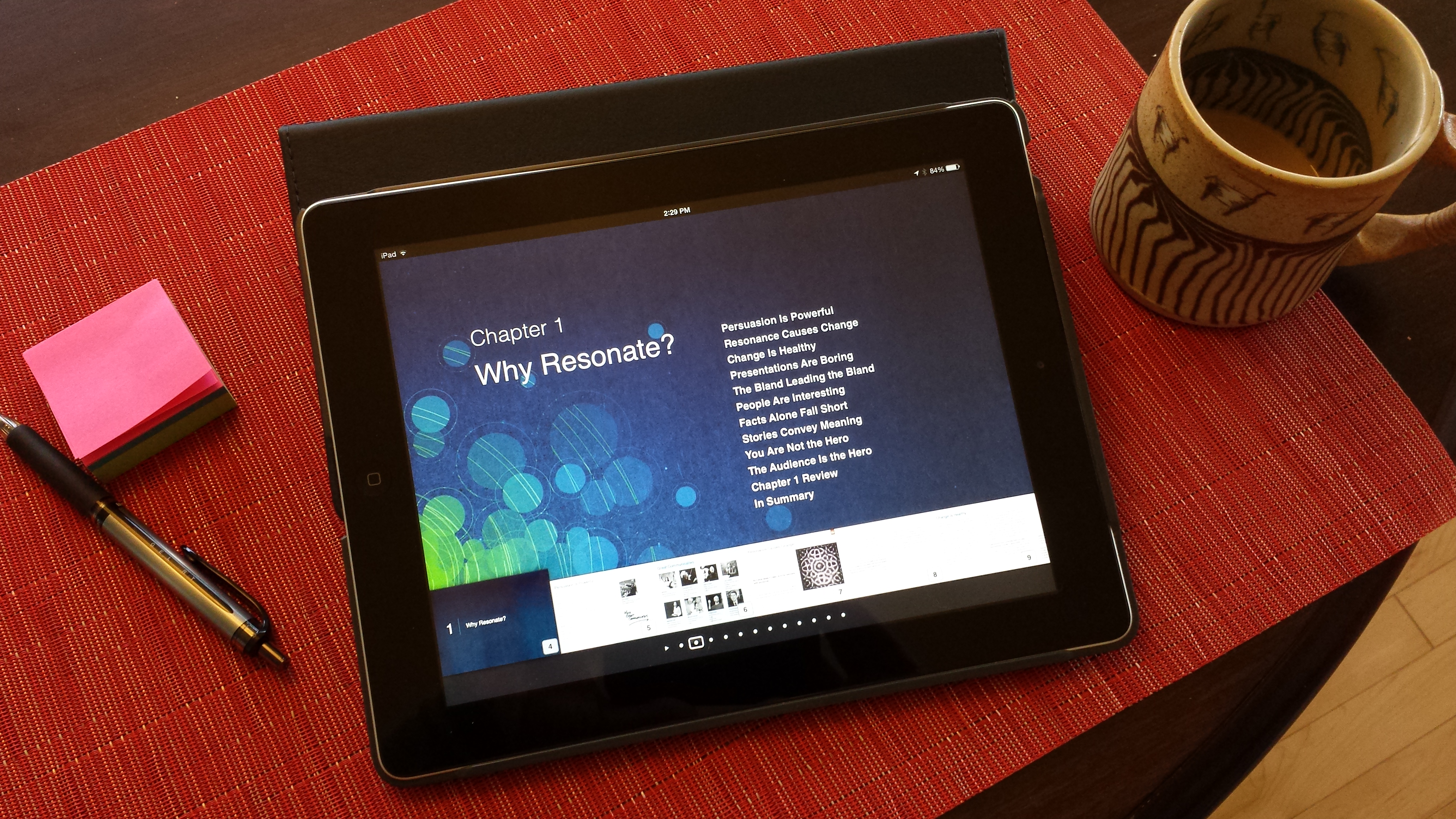
Nancy Duarte’s “Resonate” Free on iPad

A multi-touch version of Resonate is available free on iPad.

A multi-touch version of Resonate is available free on iPad.

Nancy Duarte is one of the leading producers of presentations, including the Academy Award-winning film, “An Inconvenient Truth” with Al Gore.  There may not be agreement on climate change, but everyone was impressed by the quality of that documentary.  Duarte has shared her expertise through Slide:ology and Resonate, and these books have not only helped me improve and enhance my Powerpoint presentations but also my interpretation skills.  Her approach is firmly grounded in the techniques of effective communication, which can be applied to many situations at museums and historic sites.  If you’re not familiar with Nancy Duarte, she explains her ideas in an 18-minute presentation at TEDxEast in 2011.

The good news for iPad owners is a “multi-touch” version of Resonate is available free through iBooks.  All of the content from the book is supplemented with videos, quizzes, backstories, and other interactive experiences to better engage you.  You’ll not only learn about building better presentations and communicating more effectively, but you’ll also experience an example of one of the most effective eBooks available.  If you’re not sure how to do this, open the iBooks application and search the Store for “Resonate by Nancy Duarte”.

Cleaning Out My Cabinet of Curious Stories

Like all good museologists, I have a small cabinet of curiosities where I collect things of wonder, inspiration, and imagination.  Mine is virtual and sits in Evernote.  It’s time for a year-end clean-up, so here are a few that didn’t develop into full blog posts but even in their unrefined state, seem sufficiently interesting to share:

Google Maps Historical Society 2013

Google is continually looking for ways to get information to us as quickly and easily as possible. The last couple years it’s been creating quick descriptions of places using five keywords–but I’m not sure how they’re derived. A recent search for “historical society near Maryland” in Google Maps associated the American Historical Association with “symbol” and the Historical Society of Washington DC with “celebrities.” Who doesn’t like attention like that? The most surprising, though, is the description of the DAR National Headquarters with Continue reading