Category Archives: Historical interpretation

On the Road: Newport Summer School

We’re now at the midpoint of the Newport Summer School and by the end of each day, we all share sore feet and stiff backs—except for Richard Guy Wilson, the director of the program. He may be in his 80s, but he has a bottomless reserve of energy.

Participating in the course are a wide range of interests. We have a couple people who lead historic preservation organizations and a couple more who are in graduate school and getting ready to enter the field. We have a handful who work with historic sites, including Edith Wharton’s The Mount, National Park Service, and Lisbon Cathedral. A couple of interior designers and a few who don’t work in the field but love the art and architecture of the 19th century. Ages stretch from early 20s to late 60s.

The diversity of interests and experiences makes for fun conversations and as several noted, can feel comfortable “nerding out” about a preservation issue or an architectural feature. But I’ve also discovered the value of the program—and it varies. Everyone wants to learn about 19th century architecture in Newport, which has an extraordinary collection by some of America’s best architects and interior designers. The combination of illustrated lectures and field sessions allows us to see a lot in a very short time. For graduate students, it creates a foundation of knowledge that will inform their studies and careers. For mid-career professionals, it provides comparisons for our projects and communities, broadening our perspectives. Perhaps more importantly, it also “feeds our soul,” providing a much needed break from the demands of the office while refreshing our passions.

Today we head north to Providence, starting earlier and returning later than usual, so I expect another exhausting day. But it will be worth it.

On the Road: Gilded Age Newport in Color

I’m in Newport, Rhode Island for the Newport Summer School. The Victorian Society in America (an offshoot of the one in London) has been hosting this week-long program for 42 years. Directed by Dr. Richard Guy Wilson, a well-recognized expert in the field of architectural history, it is a mix of lectures and guided tours of significant houses, churches, and civic buildings that are both open to the public and private. In a week, you gain a deep understanding of the history of Newport through architecture—and a network of new colleagues.

Our first day was devoted to the 18th century, considered Newport’s first Golden Age because it brought new wealth to the town and a higher level of architectural design. That wealth came from trade, including enslaved people, a topic that is increasingly being addressed in the interpretation at historic sites and museums.

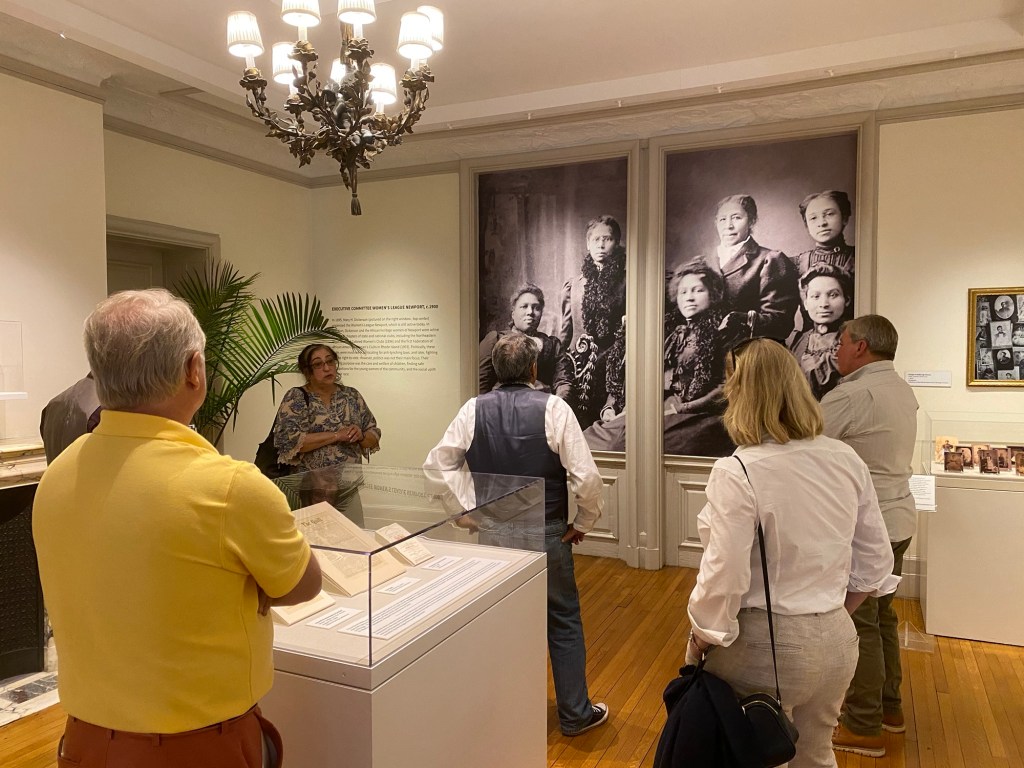
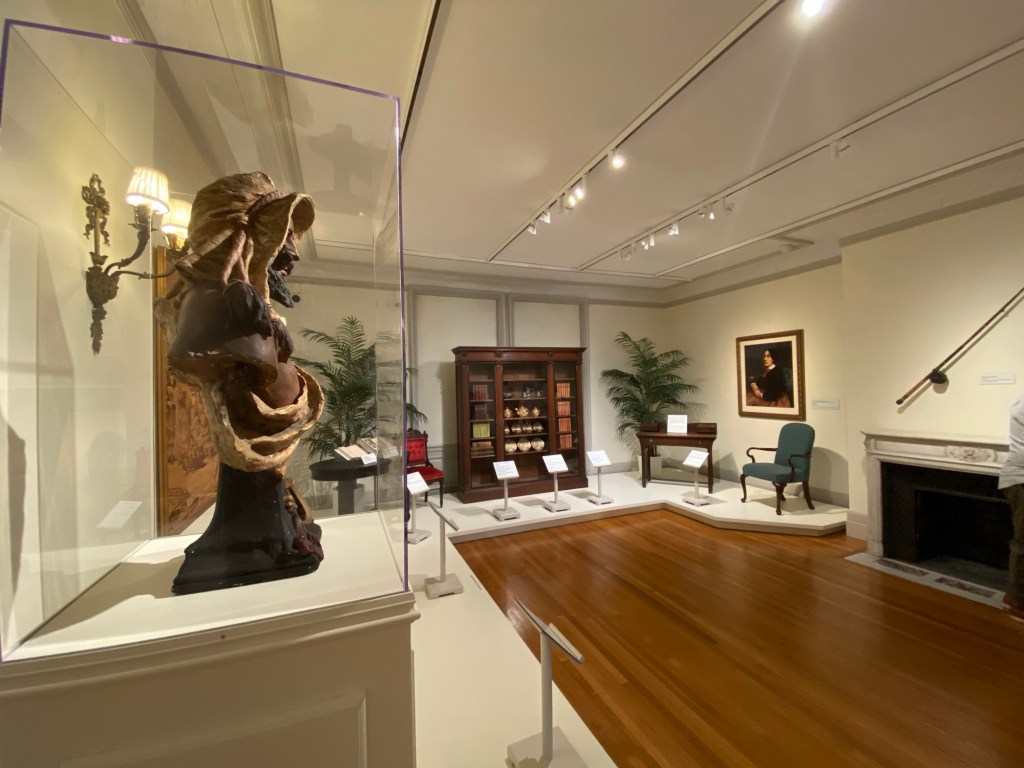
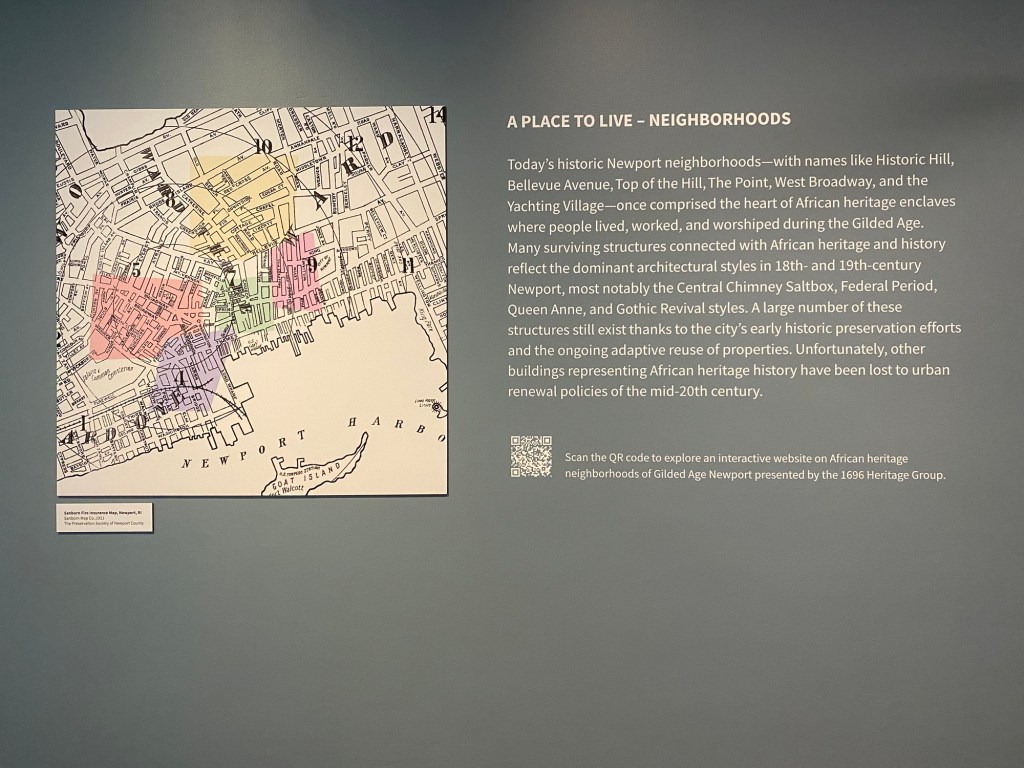
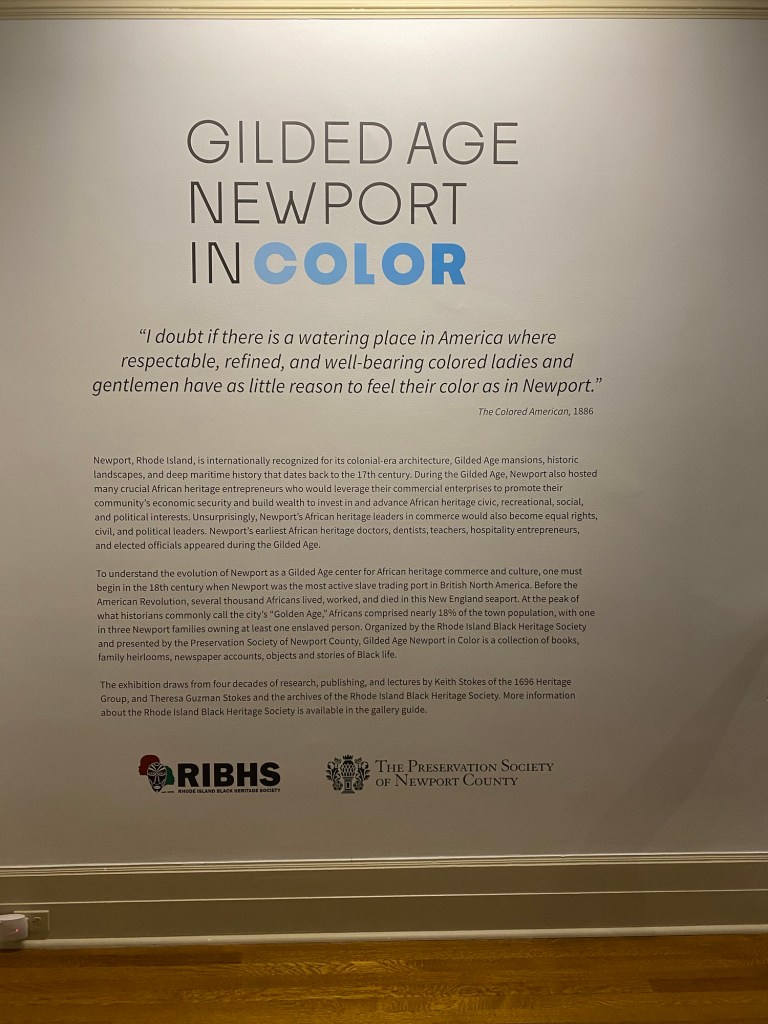
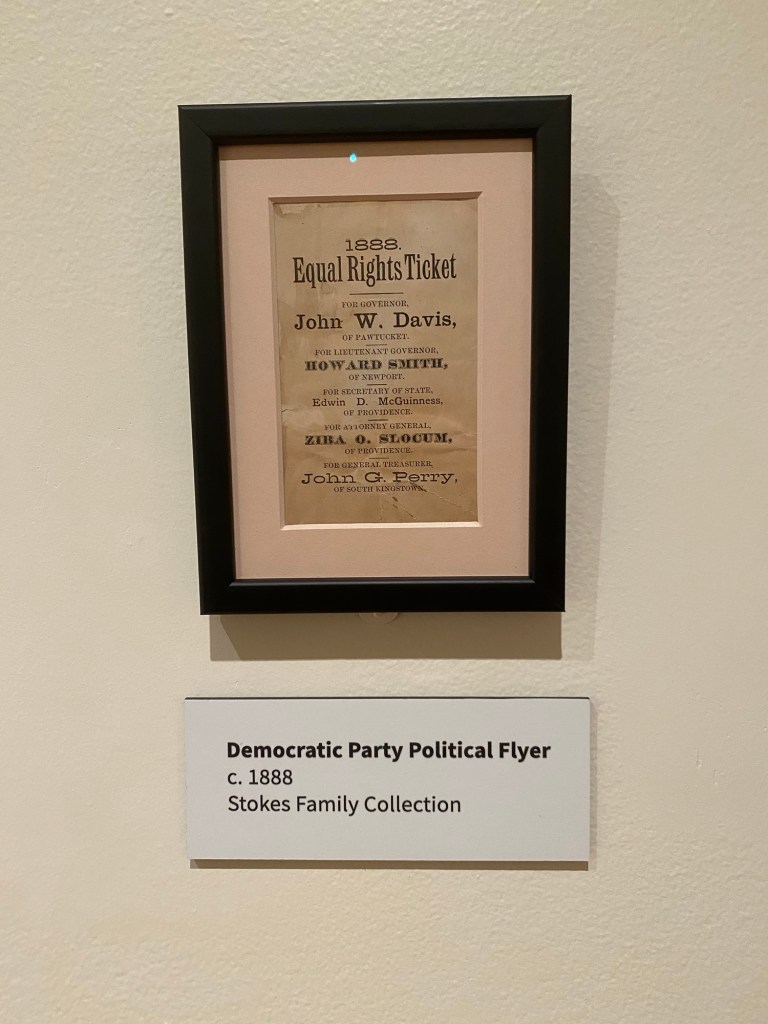
Indeed, the Rhode Island Black Heritage Society, Newport Historical Society, and the Preservation Society of Newport County are collaborating on exhibitions on the history and contributions of African Americans in the region. Before we officially began the course, Soni Stokes, curator of the exhibition, generously gave me and a small group of colleagues a tour of “Gilded Age Newport in Color” at Rosecliff, one of the mansions owned by the Preservation Society. It discusses the lives of dozens of people and families of African heritage through geography, biography, and topics such as business, entrepreneurship, religion, recreation, and politics. What most impressed me was the variety of documents and objects in the exhibition, most on loan from a private collection, giving me a much more holistic view into the lives of African Americans in New England.

A Sneak Peek at “Interpreting Christmas”

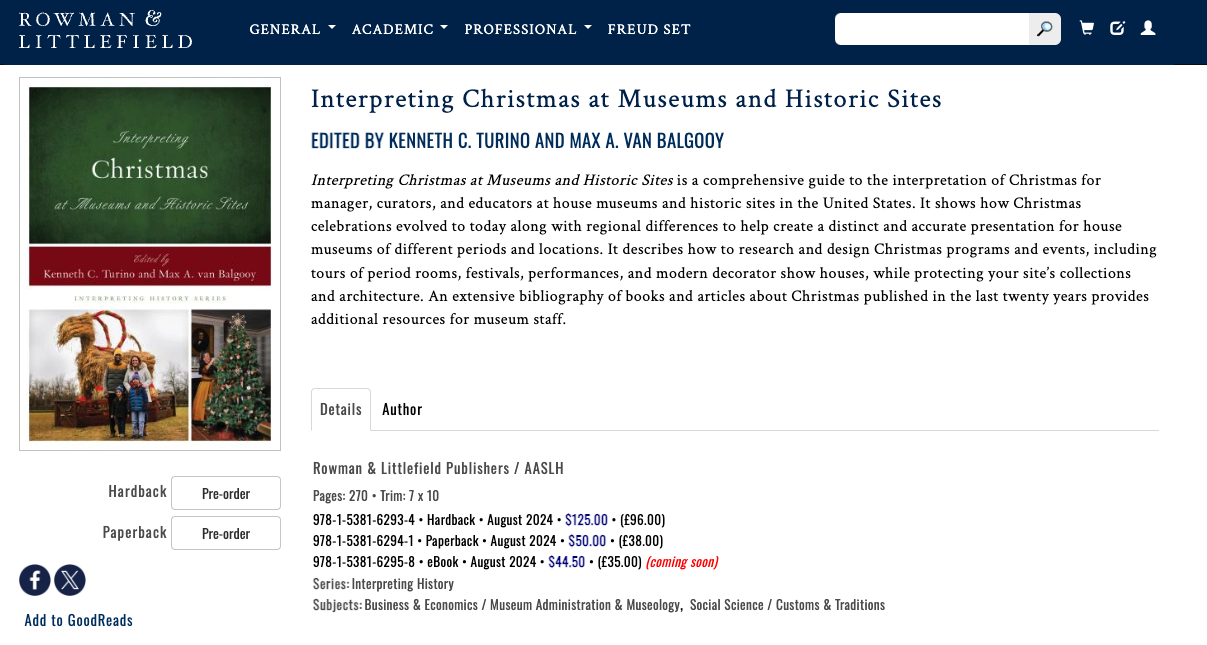
Ken Turino, Sara Bhatia, and I are currently compiling the index for our book Interpreting Christmas at Museums and Historic Sites, while the other authors are meticulously reviewing the proofs for any final corrections. But we are much more excited to announce that we have a colorful cover featuring images from Old World Wisconsin and Strawbery Banke, and that Rowman and Littlefield have made the 270-page book available for pre-orders at this link.

To get a start on the holidays, join us in July when we’ll be hosting a live AASLH webinar, “Jingle All the Way: Maximizing Your Museum’s Holiday Potential.” Drawing from some of the insights in the book, we’ll discuss how your historic house or history museum can leverage December’s holiday season to enhance community engagement.  Mark your calendar for July 23 at 3 p.m. Eastern and secure your spot by registering here for $45 ($25 for AASLH members).

For a preliminary glimpse inside Interpreting Christmas, I’m sharing the proofs for the table of contents and introduction. Just remember, they’re publisher’s proofs so they are subject to change!

Studying House Museums in Newport and London

The Newport Summer School visiting one of the many historic houses in Newport, Rhode Island. Source: Victorian Society of America.

George Washington University recently awarded me a semester-long sabbatical for fall 2024, which will give me a break from teaching in the museum studies program and allow me to more actively pursue my interests in:

  • the early history of house museums to better understand their formation and evolution of interpretive practices;
  • the interpretation of house museums; and
  • the management of historic sites, especially in strategy and leadership to move performance up to the next level or respond to an ever-changing environment.

For a deep dive into these topics, I’m delighted that I’ve been selected for two prestigious programs:

  • In June, I will be in Newport, Rhode Island attending the Victorian Society’s Summer School. Over ten days, our class will explore four centuries of American architecture, art, culture, and landscape guided by renowned architectural historian Dr. Richard Guy Wilson. The program will delve into Newport’s rich history, often referred to as the “Queen” of American resorts, and includes exclusive tours of private homes, behind-the-scenes access to America’s grandest mansions, and insightful presentations by leading scholars.
  • In September, I will be in England for Royal Collection Studies, organized by The Attingham Trust for the Study of Historic Houses and Collections. This ten-day residential course in Windsor provides extraordinary access to one of the world’s leading collections of fine and decorative art, all housed within the grand architecture of the royal palaces. The course combines lectures and tutorials, visits to both occupied and unoccupied palaces in and around London, and close-up object study, aiming to give heritage sector professionals a deeper understanding of this remarkable collection.

If you’re working in a house museum or historic site, these specialized residential mid-career courses are both incredibly educational and refreshing. Participating in the Attingham Summer School in 2008 significantly enriched my scholarship, and fifteen years later I continue to draw upon the principles and practices learned during our site visits and insightful discussions. You’ll find a professional development experience for nearly any interest or length of time, and many offer scholarships. For example, if you’re seeking a course more focused on management, consider the History Leadership Seminar or the SEMC Leadership Institute (it appears that the [Getty] Museum Leadership Institute is no longer operating).

And alas, this schedule also means that my plans for attending the AASLH Annual Meeting in September will be postponed to 2025 in Cincinnati, Ohio. And if I don’t see you there, I hope it’s because you’ll be participating in an incredible professional development opportunity (remember to apply 6-8 months in advance!).

Interpreting Christmas at Museums: A New Guide Nears Completion

Ken Turino and I started on Interpreting Christmas at Museums and Historic Sites three years ago and I’m delighted that it is now in production at Rowman and Littlefield. Our goal is to have the book available for the AASLH annual conference in September 2024, but that’s a very tight deadline, so no promises. 

It will be among the latest titles in the Interpreting series of the American Association for State and Local History, which started ten years ago and included my book, Interpreting African American History and Culture at Museums and Historic Sites. There are now nearly two dozen Interpreting books available to the field on a wide range of topics, filling a huge gap in the literature.

As part of the publication process, two colleagues reviewed the manuscript anonymously (thank you, whoever you are!) and provided lots of helpful suggestions along with the overall evaluation that, “With a superstar group of contributors, the editors have assembled a handy and engaging collection that offers abundant practical advice and interpretive guidance for public historians who are developing and running holiday programs. Museum educators, curators, interpreters, and managers will be thrilled to have such a helpful collection as a reference and guide.”

With the hope for publication in fall 2024, Ken is proposing a session for the NEMA annual meeting in Newport, Rhode Island, and for an AASLH webinar. If the book is out in time for the AASLH annual conference in September, the publisher will host a book signing. We also have a standing invitation for an interview on the NPS blog.  If you have other suggestions for regional conferences or other presentations, please let Ken or me know. We are happy to consider any potential sessions or presentations about the book as a whole or a focused topic around research, diverse traditions, planning, and public programming. 

Untangling the “Other” Revenue Stream

In the colorful tapestry of history-focused organizations, every thread of revenue has a role to play in the success of the organization. Perhaps the most unique collection of these threads is the “Other” revenue category. This singular “Other” thread houses a miscellany of revenue sources that don’t fit into the categories of “Investment Income”, “Program Service Revenue”, and “Contributions and Grants”. At first glance, this classification may appear insignificant, yet it often proves to be a silent contributor that underpins the fiscal health of History-Focused Organizations [Museums (NTEE A50), History Museums (A54), History Organizations (A80), and Historical Societies & Historic Preservation (A82)].

Understanding this “Other” revenue can be like deciphering an ancient dialect. It is made no easier by the fact that IRS Form 990 at times uses the terms revenue and income interchangeably. While some categories of this revenue such as royalties and inventory sales may be familiar, “miscellaneous” often contains difficult to parse odds and ends such as third-party events, insurance proceeds, ATM fees, and revenue from hosting satellite towers. Most often this miscellaneous revenue is unspecified and simply named “miscellaneous” or “other” which can make it difficult to get the full picture of a particular institution’s revenue sources. We advise limiting the classification of your total revenue as “miscellaneous” to no more than 1%. While judicious use of this category can help define your other revenue streams more clearly, overuse could lead to a lack of clarity about a significant portion of your revenue. It is crucial to maintain a comprehensive understanding of your financial situation.

Continue reading

Historic House Museum Summit This Week

This small selection of historic sites operated by The National Society of The Colonial Dames reveals the enormous diversity of house museums and historic sites in the United States.

In 2007, I helped organize the Forum on Historic Site Stewardship in the 21st Century, which resulted in an influential issue of Forum Journal that laid out the major challenges and opportunities, including the need for financial sustainability, a willingness to change in response to the needs of the community, and a balance between the needs of buildings, landscapes, collections, and the visiting public. It also recognized that museum standards may not be the best practices for historic sites and that the profession “must develop new measures, beyond attendance, that document the quality of visitor engagement at sites and the extent of community outreach beyond the bounds of historic sites.”

So what has happened in the 16 years that followed? We’ll find out this week as the American Association for State and Local History hosts a virtual summit on the Sustainability, Relevance, and the Future of Historic House Museums on July 11-12. Sessions will address measuring the impact of house museums, broadening interpretation, care of buildings and landscapes, and the evolution of mission statements.

Continue reading

Impact, Sustainability, and Non-Profit Programs

For small non-profit organizations operating on less than a million dollars annually, programs are often the beating heart of the operation. The best programs balance mission and financial sustainability to serve their audiences. Program revenue (admissions, events, and membership dues) can be a vital means of maintaining financial stability and growth. For History-Focused Organizations [Museums (NTEE A50), History Museums (A54), History Organizations (A80), and Historical Societies & Historic Preservation (A82)] as overall revenue grows, so does the share of program revenue. This means as your organization grows, so should the prominence of your programs as a true revenue driver (see figure 1 below).

As small history-focused organizations expand, it’s crucial to manage their programs wisely to increase income while keeping the mission in mind. For small groups, program decisions can be very personal, often influenced by board or staff interests. Taking a strategic approach to these decisions can boost the organization’s growth and success.

Continue reading

New NEH Interpretive Planning Grant for Small Organizations

Scholars reviewing the archives at the Haas-Lilienthal House.

The National Endowment for the Humanities, a federal granting agency, recently announced a special grant program to support interpretive planning at small organizations for up to $25,000, no match required.

What does “small” mean? You need to meet at least two of the following:

  • Annual operating expenses of less than $1,000,000
  • Located in a community with less than 300,000 residents
  • A staff of less than 50 people
  • Rely primarily on volunteers or part-time staff.
  • A mission to interpret under-told stories or serving a non-traditional audience

Hmm…that describes most history organizations in the US, so if you’re reading this post, you’re probably eligible.

Now, what will it support? Nearly anything that improves or enhances the interpretation of your collection, site, or community, such as:

  • help you think creatively about the hidden strengths of your collections or historic site
  • generate new ideas for engaging with the community
  • train staff and volunteers on interpretive methods and techniques
  • develop a framework for developing public programs
  • creating interpretive plans for exhibitions, tours, or school programs
  • visiting other historic sites or museums to sharpen skills and knowledge
  • evaluating existing tours or exhibitions
  • testing new programs for their ability to engage new audiences
  • conducting historical research to support new interpretive themes

Projects must include at least one scholar from a humanities discipline (e.g., history) or one consultant specializing in interpretation to the public (Engaging Places can help you with this), as well as at least one expert on your local community. 

Applications are due June 28, 2023 for one to two year projects beginning between March 1 and May 1, 2024. You will need all of that time to prepare an application and NEH will read draft applications submitted by May 24. Remember to register in advance with the System for Award Management (SAM) and Grants.gov—those are steps you cannot do at the last minute.

For more details, scan the overview or jump right to the 35-page grant application instructions (officially called a Notice of Funding Opportunity).

Planning for the 250? This Webinar Will Help You Get Started

Join Conny Graft and Max van Balgooy on May 24 at 3:00 pm Eastern for a ninety-minute webinar on interpretive planning as we prepare for the U.S. 250th anniversary in 2026. To help you feel more confident in this specialized topic, we will discuss the basic process of interpretive planning, provide a simple rubric to develop goals, and distinguish topics and themes (and why themes are more valuable). As a bonus, we’ll briefly mention ways to identify target audiences and expand your thinking about methods and formats. Registration is $20; $10 for AASLH members.

It’s the start of a three-part series on interpreting the 250th at historic sites and house museums. Other sessions will dive into the field-wide themes for the 250th with Ashley Jordan (African American Museum in Philadelphia) and Steve Murray (Alabama Department of Archives and History) and offer an interactive platform to workshop ideas with fellow practitioners with Sarah Pharaon (Dialogic Consulting). Whether you have a clear tie to the Revolution or not, this webinar series will help you make history relevant and captivating for your audience. Attend all three webinars for $55; $25 for AASLH members.

The American Association for State and Local History is hosting these webinars. Scholarships to attend all three webinars are available on a first come, first served basis, thanks to support from the Classical American Homes Preservation Trust.