Category Archives: Objects

Are There Cultural Connections Between North and South?

Newport Symposium Banner 2015On April 26-29, 2015, the Preservation Society of Newport County (aka the Newport Mansions) is hosting a symposium on the cultural connections between the North and South from the Colonial Period to the Gilded Age as seen through furnishings, silver, textiles, painting, architecture, and interiors.  Scholars include:

  • Daniel Kurt Ackerman, Associate Curator, Museum of Early Southern Decorative Arts
  • Brandy Culp, Curator, Historic Charleston Foundation
  • Caryne Eskridge, Project Manager & Research Coordinator, The Classical Institute of the South
  • Stephen Harrison, Curator of Decorative Art & Design, Cleveland Museum of Art
  • Brock Jobe, Professor of American Decorative Arts, Winterthur Museum, Garden & Library
  • Alexandra Kirtley, The Montgomery Garvan Associate Curator of American Decorative Arts, Philadelphia Museum of Art
  • Jefferson Mansell, Historian, Natchez National Historical Park
  • George McDaniel, Executive Director, Drayton Hall
  • George H. McNeely IV, Vice President, Strategic & International Affairs, World Monuments Fund
  • Richard Nylander, Curator Emeritus, Historic New England
  • Tom Savage, Director of Museum Affairs, Winterthur Museum, Garden & Library
  • Susan P. Schoelwer, Robert H. Smith Senior Curator, George Washington’s Mount Vernon
  • Arlene Palmer Schwind, Curator, Victoria Mansion
  • Carolyn Weekley, Juli Grainger Curator, Colonial Williamsburg Foundation
  • Martha Willoughby, Senior Specialist, Christie’s

Registration is $600 and includes an opening reception at Rosecliff (1902) and dinner in the Great Hall at the Breakers (1895).  Scholarships are available to undergraduate and graduate students, as well as arts and humanities professionals.  To register or for more information, contact symposium@NewportMansions.org or call 401-847-1000 x 160.  Tell them that you heard about it from Engaging Places and you’ll receive a 10% discount!

Historic House Museums Gather for AASLH Workshop in Charleston

This slideshow requires JavaScript.

For the past fifteen years, George McDaniel and I have taught a two-day workshop on the management of historic house museums for the American Association for State and Local History.  We cover a wide range of topics from fundraising to interpretation to disaster response to collections management–we really need a week, especially if there’s a lot of discussion.  That was certainly our experience last week in Charleston, South Carolina (and thanks to our hosts, the Historic Charleston Foundation!), where our discussions were so rich that I wasn’t able to complete most of my presentations.  That’s okay because the workshop is for the participants and as long as they find a topic that’s worth exploring, I’ll stay with them.  Indeed, George and I often find that we’re not instructors but facilitators, raising ideas and questions to provoke thoughtful discussions to help participants improve the management of their historic sites.

At the core of workshop is each participant’s “burning question.” They share their biggest concern or issue at the start of the class and at the end, they describe how they might address it when they return to their site.  It’s not only a way to make the workshop more relevant to the participants, but it also gives us a glimpse into the issues facing historic house museums around the country.  This year the questions included: Continue reading

Hot Topics in Collections Management Tackled in St. Paul

The annual meeting of the American Association for State and Local History always covers a diverse range of topics, but collections management is certain to be among this.  This year in St. Paul was no exception and three very different projects caught my attention.

"Deteriora and the Agents of Destruction" by the Indiana Historical Society.

“Deteriora and the Agents of Destruction” by the Indiana Historical Society.

In a poster session, Tamara Hemmerlein shared Deteriora and the Agents of Destruction, a publication of the Indiana Historical Society.  Presented as a “living graphic novel,” it informs readers about the various ways to preserve collections from light damage, pests, dust, and mishandling (represented by such villians as Ultra Violet, Mass-O-Frass, and Miss Handler) and includes links for additional information.  I’m not sure of the intended audience, but it’s a lot more fun than reading a collections management policy.

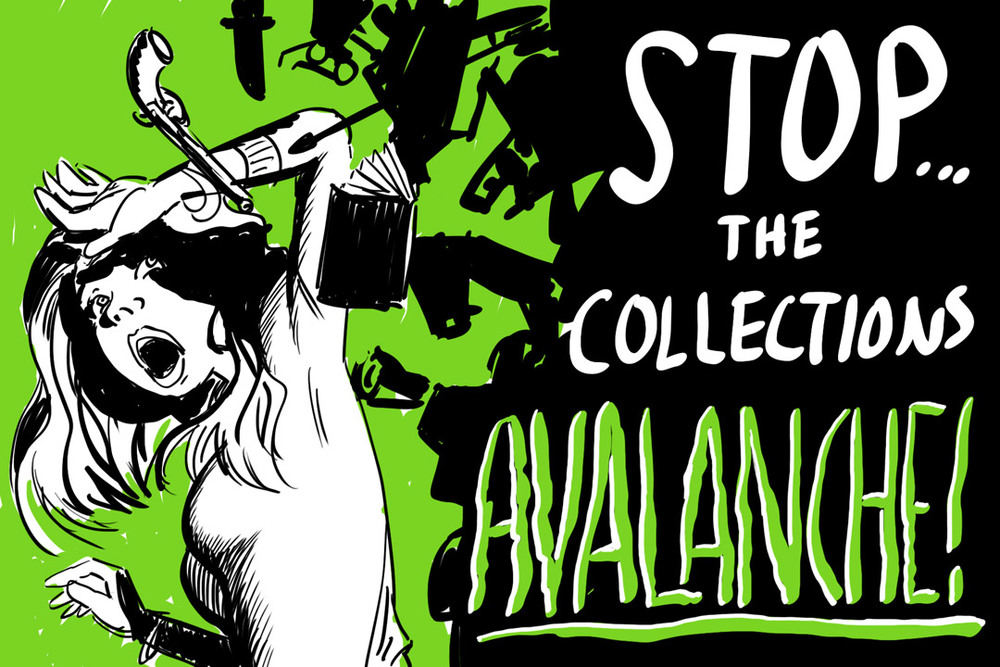
collections avalancheChatting in the hallway, Continue reading

Video: Behind the Scenes: Alan, Curator

This 2:53 video features Alan Jutzi discussing his work as the chief curator of rare books at the Huntington Library.  It’s one of five videos comprising “Behind the Scenes: Staff and Researchers at the Huntington Library,” which gives visitors a peek into the inner workings of a library that is normally off public view. The videos focus on day-to-day processes—and personalities—of a conservator, curator, archivist, page, and “reader” (the Huntington’s term for a scholar/researcher). Visitors to the Huntington can view them on iPads in “The Library Today,” an education display in a room adjacent to main exhibit, “Remarkable Works, Remarkable Times.”  Yes, it’s missing an educator but it does help explain the work of some of the people at a research library.  Is this something that would help the public, donors, and supporters better understand the work you do?  You’ll find more details about the videos in Jennifer Watts’ post on the Huntington blog.

Pushing the Period Room Beyond the Period at Hunter House

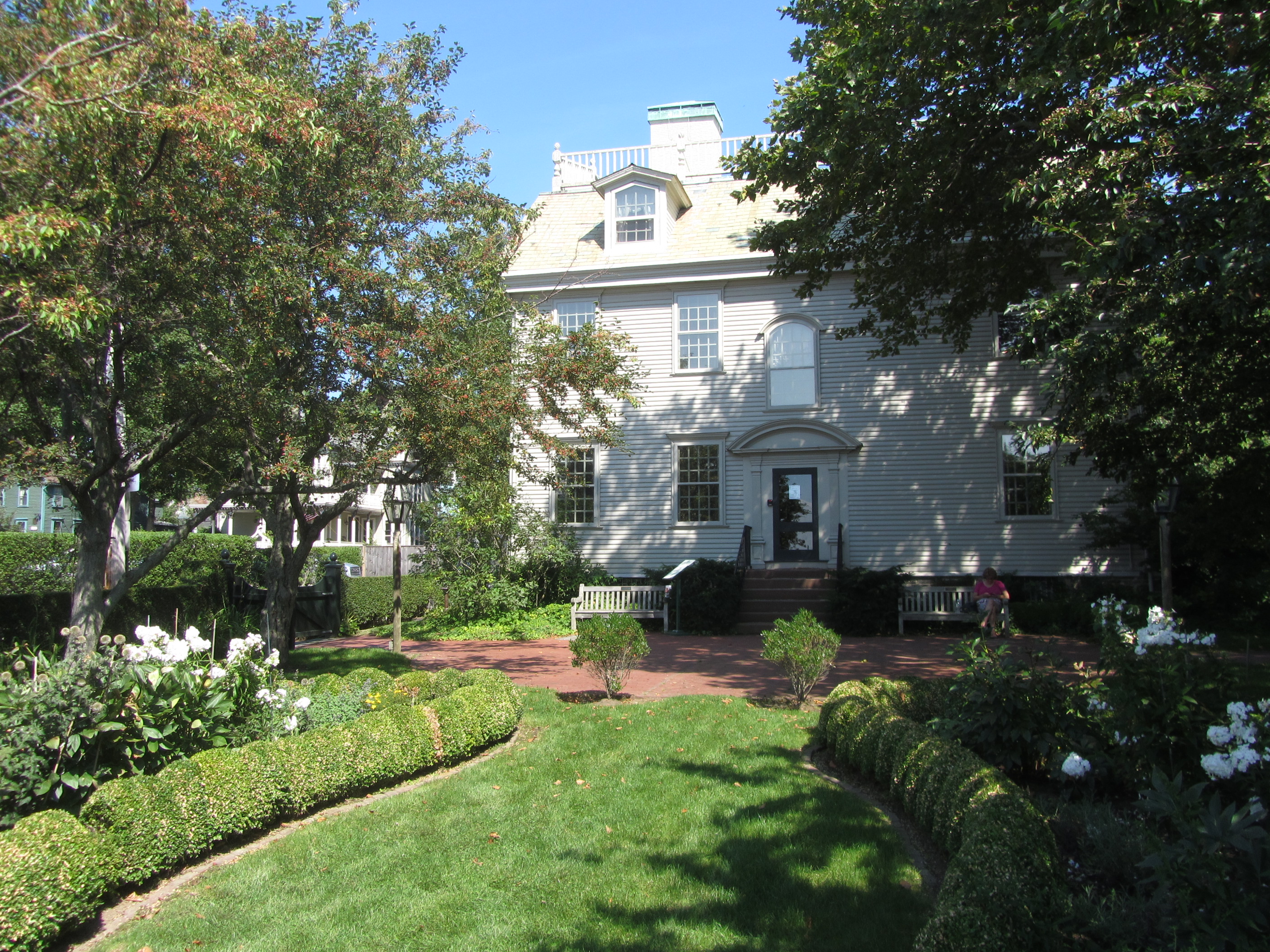
Hunter House, Newport, Rhode Island.

Hunter House, Newport, Rhode Island.

Last week I was in Newport, Rhode Island (no, I wasn’t traveling with the President; I was conducting a marketing assessment for an historic site) and visited Hunter House, the historic house that prompted the formation of the Preservation Society of Newport County.  Today the Society is best known for its Gilded Age Mansions (or Cottages depending on your point of view).  Hunter House has a beautiful view of the harbor but it’s off the beaten path and focused on colonial history, which doesn’t attract the crowds who make the pilgrimage to The Breakers and other grand estates along Bellevue Avenue.

The lower profile gives Hunter House the opportunity to try a different approach to period rooms, one that I find much more successful from an interpretive perspective.  Although visitors often believe that period rooms show how people actually lived, curators know they are exhibits created to evoke an era.  While they may contain authentic furnishings, they are often displayed or arranged in inauthentic ways for aesthetics, safety, security, or lack of sufficient knowledge.  Period rooms are also victims of tradition and nostalgia–how many times have you seen Continue reading

Video: National Museum of American Illustration

This 10:00 video introduces the collection, artists, and setting for the National Museum of American Illustration in Newport, Rhode Island.  It’s narrated by Judy and Lawrence Cutler, the husband and wife team that own and operate the museum; Whoopi Goldberg (yes, the comedian and actor); and Joanna Maxfield Parrish, granddaughter of Maxfield Parrish.  This appears to be a 2009 production by Daybreak Productions.

Video: Art Splash at the Philadelphia Museum of Art

Jill Frechie produced this 2:00 video explaining Art Splash, a summer program for families at the Philadelphia Museum of Art.  Emily Schreiner, associate curator of education, explains some of the 300 programs offered during the ten week period, which features a different object each week.  Three hundred programs in ten weeks? I’m exhausted just thinking about it.

Video: Museum of Water at Somerset House

This is a 2:38 amateur video documenting the “Museum of Water,” an unusual “live artwork” by Amy Sharrocks at the historic Somerset House, a new arts and culture center in London.

A melted snowman. Droplets from a baby’s bath. Sacred draughts from an Indian river. Just some of the items donated to London’s newest museum. In the atmospheric underground spaces of Somerset House, Amy Sharrocks invites you to consider our relationship with the most precious liquid the world has to offer.

Can the Exploratorium Help Us Explore History?

Last week I visited the Exploratorium in its new home on Pier 15 in San Francisco. If you haven’t veen there, it’ll seem like a science center but you’ll quickly discover it’s really a place about learning, especially through direct experiences with art, tinkering, and phenomena (yep, that’s how they describe it).  It’s an incredibly active place (almost to the point of overwhelming) that seems to effectively engage its visitors, so I continually watch to see if any of their exhibits or ideas can be applied to historic sites or history museums.  During my latest visit, I found two exhibits that with a mild tweak could be really be innovative for interpreting history.

This slideshow requires JavaScript.

1.  Question Bridge:  Black Males.  This temporary exhibit is, “comprised of many individuals asking and answering questions about the experience of black men in modern America.”  Inside the small dark room are Continue reading