Video: Detour’s High-Tech Audio Tours Come to Museums

Groupon founder Andrew Mason guides Casey Newton of Verge through the San Francisco Museum of Modern Art using the latest version of Detour, a location-based outdoor audio tour app that now works indoors as well.  Through your smartphone, Detour knows your location in the museum and presents the artworks in that specific gallery along with the associated audio recordings so you can wander (giving you the right information in the right place), as well as 15-30 minute “walks”.  Parts of this Verge video are silly and the background music too loud, but it looks like smartphone technology now has the capability to be used at historic sites for self-guided tours of the buildings, landscape, and neighborhood in a way that’s more flexible and responsive to visitor interests.

The video below is a better explanation of Detour’s ability to “automatically guide you as you walk, almost like you’re there with a real person”.  It debuted last year with ten Detours of San Francisco (including architecture) at $4.99.

Brucemore Encouraging Membership with Members

Detail from Brucemore's membership brochure.

Detail from Brucemore’s membership brochure.

At last week’s workshop on historic house management in Iowa, I discovered that Brucemore, a historic house museum in Cedar Rapids, is encouraging membership with testimonials from members.  Inside a tri-fold brochure (pdf), three members—an artist, volunteer tour guide, and a neighbor—share what they like about Brucemore and how it’s made a difference in their lives and the community.

Angela Billman, Actress, Brucemore Member

When I was 14 years old, my family took me to the Classics at Brucemore to see Romeo and Juliet. The experience introduced me to Shakespeare, outdoor theater, and inspired me to become an actress. The estate enriches the community in so many ways and inspires people every day.

It’s a clever idea because it shifts from the site promoting itself to members promoting the site.  It’s people connecting with people, not a faceless organization talking to the general public, which is the most effective way to raise funds and build membership.

Notice, too, the contemporary graphic design that uses sans serif typefaces, photos placed at an angle, tint blocks, textures, and three-dimensional elements (such as the paperclips).  This moves it away from the Times Roman typeface, fixed grid of photos, and goldenrod paper that’s far too common at house museums.

If you’re revising your membership brochure, you might want to consider these techniques to make your content and design more attractive and engaging.

Video: Self-portraits from Rembrandt to Selfie

This 1:22 video promotes an exhibition of self-portraits (“autoportraits”) at the Museum of Fine Arts in Lyon, France without any words. Showing a series of portraits that transition through the eyes, it also maintains engagement with subtle and dramatic visual effects. It might be an approach for giving historic images or objects a stronger visual presence in orientation films.

Video: Hackney Museum: Learning Together, Staying Connected

This 5:45 video provides a behind-the-scenes view with staff and residents about a 2014 collaborative exhibition between the Hackney Museum and a local neighborhood.  This film documents what the museum staff and community partners learned together, both successes and failures, when they created the “Side by Side: Living in Cazenove” exhibition at the Hackney Museum, located in a suburb northeast of London.

Tackling Challenges for Historic Sites in St. Louis

This slideshow requires JavaScript.

Last week, Ken Turino of Historic New England and I gave a one-day workshop on reinventing historic house museum in St. Louis, Missouri for the American Association for State and Local History.  It was a sold-out workshop with more than 50 people participating, mostly from the St. Louis region, so it was a great opportunity to meet so many of our colleagues, including a couple places who were starting new house museums (glad to have people learning about this specialized field before they open the doors!).  A big thanks to Andy Hahn at the Campbell House for hosting the workshop and to the St. Louis Public Library for allowing us to meet at the historic Central Library.

Ken and I continue to refine the workshop based on the evaluations we receive from the participants, and one of the elements we added to the beginning of the workshop is asking, “What is the biggest challenge facing your house museum?” and “What needs to be reinvented at your historic site?”  Here are some of the responses we received: Continue reading

Video: “Every Student Succeeds Act” Overview

In this 3:38 video, Education Week’s Alyson Klein provides an overview of the changes brought by the Every Student Succeeds Act (ESSA), which replaces No Child Left Behind (NCLB) in the 2017-18 school year.  Responsibilities for performance, curriculum, and testing shift from the federal government to the states.  For museums and historic sites, that means that your local school district may be adopting new standards of learning, which could prompt you to revise your school programs.  States are required to adopt “challenging” academic standards, which could be Common Core but it isn’t required.  For more details, take a look at Education Week’s written summary or the analysis in The Atlantic.


Looking for Exhibit Ideas? Check Out These Online Files

Exhibit Files 2016Looking for an idea for an upcoming exhibit? Need some alternatives for an interactive activity? Want to know if anyone else has installed an outdoor exhibit at a bus station? You’ll want to explore “Exhibit Files,” a free online collection of exhibition records and reviews for exhibit designers and interpretive planners.  The Association of Science-Technology Centers launched this website in 2007 with funding from the National Science Foundation, but despite those affiliations, you’ll find plenty of files related to history, including a case study of Lewis & Clark (the national Bicentennial exhibition); a review of Terror House in Budapest by Daniel Spock of the Minnesota Historical Society; and a case study of a low-tech document-based interactive exhibit at the Missouri State Archives. Because most exhibit techniques can be used with any subject, you can adapt many ideas for your specific needs. The files can be searched by title, date, tag, or topic (such as history or architecture).   And if you have an exhibit experience to share or you’re looking to solve a problem, you can join for free and become one of the nearly 3,000 members.

Webinar: The Five Forces Affecting House Museums

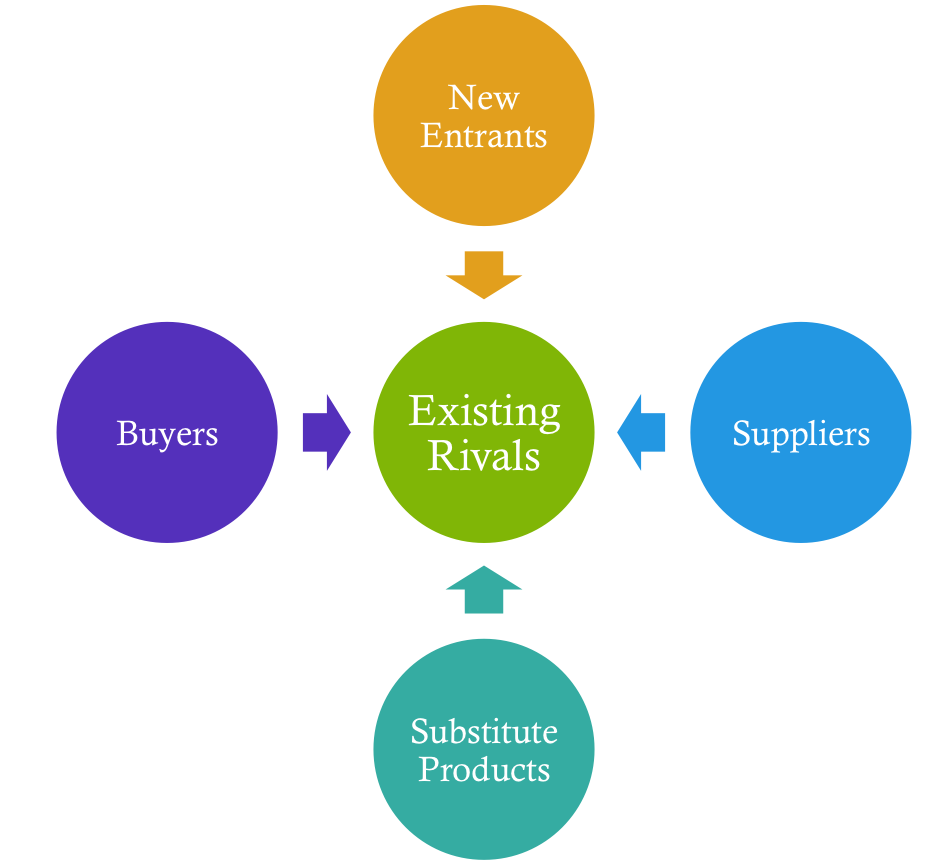
Five Forces 2015This Friday, April 8, I’ll be discussing the five forces facing historic house museums in a free webinar hosted by the Wisconsin Historical Society.  It’s based on simple and incredibly useful framework developed by Michael Porter at the Harvard Business School more than 30 years ago but little known outside the corporate business world. I’ll not only examine how the five forces are affecting history museums and historic sites on a national level, but how we can harness those five forces to improve and enhance tours, events, and other public programs.  The webinar starts at 10:30 am Central/11:30 am Eastern for about an hour with time for questions and discussion. Registration is free and available online but limited to 100 people (and you don’t have to be from Wisconsin!).

It’s part of series of local history webinars offered every spring for staff and volunteers at local historical societies, historic preservation organizations, and museums.  In April and May they are offering nine different webinars, including an introduction to PastPerfect 5 with Sarah Kapellusch, the basics of collections care with Craig Deller, and a fresh look at walking tours with Anthony Rubano.  Hats off to the Wisconsin Historical Society for providing this service to museums and historic sites not just in their state, but the rest of the country.

Curated Nutrition Bars Interpret Collections and Earn Income

Curated-Blue-and-Gray-Battle-BarCurated nutrition bars are turning out to be an effective way to interpret collections and earn income for museums and historic sites across the country.  First introduced by the Friends of Gettysburg National Battlefield for the July 2015 re-enactment, the “Blue & Gray Battle Bar” drew inspiration from the historic Civil War battle.  “We knew the kinds of foods soldiers were eating so it was just a matter of coming up with a combination that tasted good and was good for you,” said curator John Rupp, “Hard tack, peas, and coffee had to be in there, of course, but we had to work with food scientists to figure out how to include salt pork.  Quinoa wasn’t my idea, but someone said we had to include it for marketing purposes.”  Fortunately, the curators were also able to have some fun and included minie balls, which also resolves a major deaccessioning challenge because of the thousands that fill their collection.

Other museums and historic sites heard about the success of this venture, especially after it was featured in the fall issue of Museum Business.  Currently under development are:

  • Big Met Bar: It’s so big, you’ll be full before you’re even halfway through.
  • Smithsonian Behring Bar: a sprinkling of stars from a spangled banner, dinosaurs, pandas, air, space, and some wonder. So many flavors you can’t tell what you’re eating.
  • Colonial Williamsburg’s Christiana Campbell Bar:  crab, salet, and corn pudding dipped in heritage chocolate (with zombies!).   It’ll be about 4 inches high and equally thick.

If you know of a museum or historic site that’s developing a Curated bar, please share it in the comments below!


Video: Online Event Sales and Promotion via EventBrite

In this 8:55 video, Steve Dotto at DottoTech explains Eventbrite, a tool that allows you to setup, manage, and promote an event online.  Eventbrite can handle paid or free events, allows for discounts, and can accept donations, plus it can create ads for email, Facebook, an event page, or a countdown widget for your website.  Eventbrite is free but collects a service fee for each ticket sold for paid events (2.5% + 99¢ per ticket; for nonprofits it is 2.0% + 99¢ per ticket; if the event is free, there’s no charge!).  Fees can be passed on to the customer or can be absorbed into the ticket price (a $10 ticket for a museum would incur $1.49 in service fees).  You can use PayPal to process payments or use Eventbrite’s payment processing service for 3% of the ticket price.

If your museum or historic site has experience working with Eventbrite, please share what’s worked or not in the comments below.