Job Hunting in Tough Times: Three Books for Museum Professionals

The museum field has always been a challenging place for job seekers. Even in the best of times, there are often more talented people than positions available, and salaries tend to lag behind comparable roles in business or government. But with the recent elimination of federal funding through IMLS and NEH, and with looming threats of layoffs at the Smithsonian Institution, National Park Service, and National Gallery of Art, the situation is becoming even more precarious. I’m deeply concerned about what lies ahead for our field, not just for those losing jobs, but for the ripple effects on institutions, communities, and careers.

Fifteen years ago, I faced a similar moment when the National Trust for Historic Preservation laid off about a third of its staff. I was fortunate: I had a generous severance package and a consulting project waiting (thank you, Jim Vaughan!). But not everyone will be so lucky this time. In that difficult season, a few books proved invaluable to me, and I strongly recommend them to anyone now facing an unexpected job search:

Continue reading

Video: Chicago Style Basics

Strong research and writing skills are essential for museum professionals, whether you’re publishing an article, preparing grant proposals, or mentoring new colleagues.
That’s why I created a new eight-minute video, Chicago Style Basics, to introduce the fundamentals of citation and documentation using the Chicago Manual of Style — just updated with its 18th edition ($75!).

The video walks through what a citation is, why citations matter, and the basic parts of a properly formatted citation. It also provides real examples of how to cite a book with one author, a chapter within a larger book, and a journal article — essential formats for anyone writing in our field. The video closes with a quick summary and a few resource suggestions for those who want to dig deeper.

At the Museum Studies Program at George Washington University, we require our graduate students to demonstrate professional-level research and writing, and this video was created to support those expectations. But it’s also a useful refresher for anyone preparing manuscripts for publication, developing course materials, or helping new professionals get their footing.

You can watch Chicago Style Basics at https://youtu.be/X9c1DQEcwhw.

I hope you’ll find it a handy reference — and please feel free to pass it along to anyone who might appreciate a refresher.

What is the Future of Interpretation at Historic House Museums?

The world of historic house museums has been grappling with fundamental questions about purpose and sustainability for many years. Two significant gatherings, the Kykuit II Summit in 2007 and the recent 2025 Historic House Summit, highlight key moments in this ongoing discussion. Bridging these two events is the American Association for State and Local History’s (AASLH) STEPS program, particularly its standards for interpretation, which emerged directly from the needs identified in that earlier period. Looking at these three points in time reveals not only evolving ideas but also the increasing urgency and specific challenges facing interpretation today. 

The Kykuit II Summit: The Call for Sustainability and Standards

The Kykuit II Summit, held in April 2007 at the John D. Rockefeller estate, brought together leaders to discuss “the sustainability of historic sites.” This was a follow-up to a similar meeting five years prior. The discussions focused on finding ways for historic sites, the largest segment of the museum community, to thrive. Key questions included the challenging, “unmentionable” ones: “Does America need another house museum?” or “Can America support the existing historic sites it now has?”

Continue reading

Fundraising After Crisis: Lessons from the Gamble House

Extent of Eaton Fire, 2025. Courtesy Wikimedia Commons.

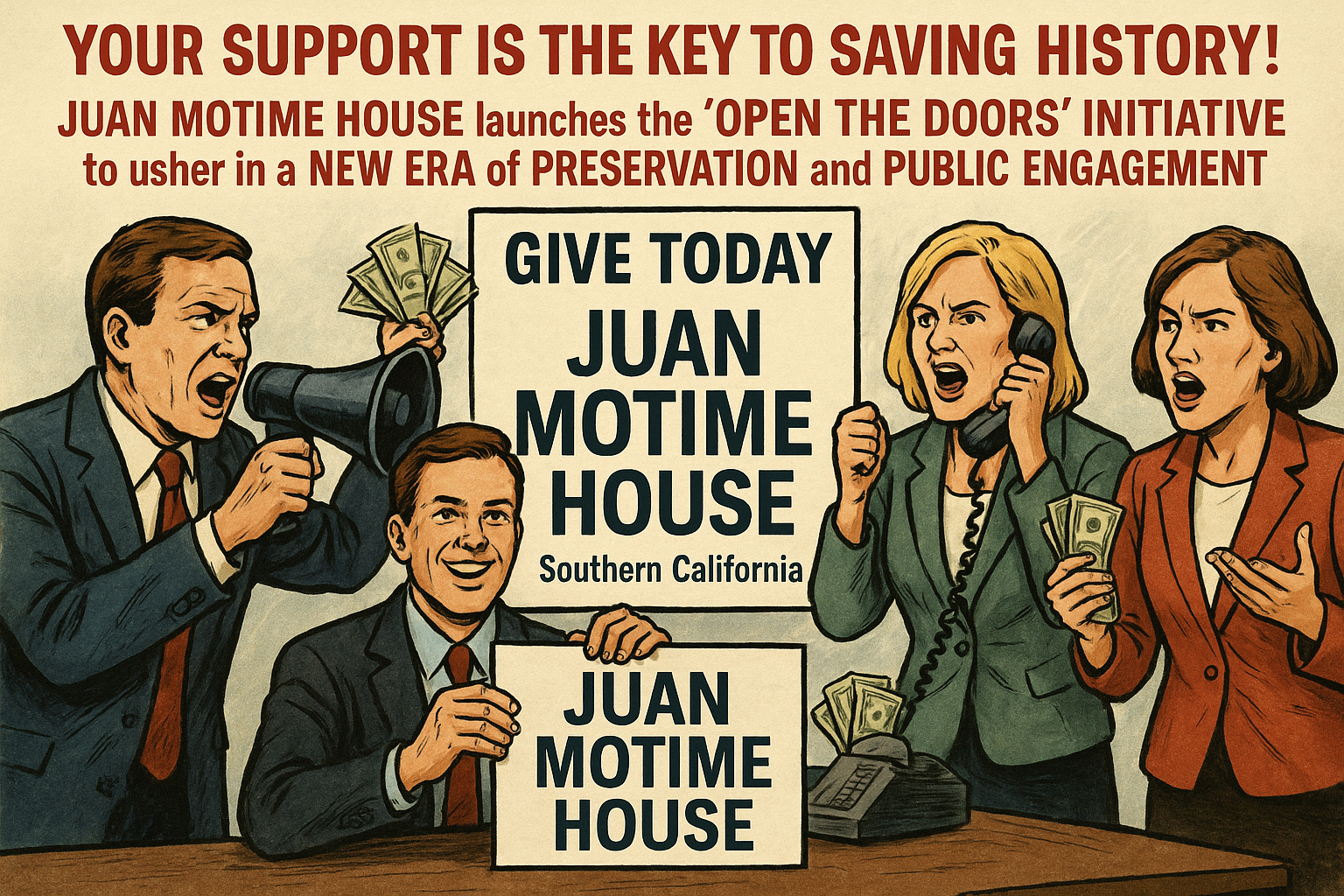
When disaster strikes, how should a museum approach fundraising? A recent appeal from the Gamble House Conservancy offers an excellent model.

Following the devastating Eaton Fire in January 2025, the Gamble House framed its appeal not simply around its own needs, but around its role in the community’s recovery. The letter powerfully connects the Gamble House to the larger regional tragedy, emphasizing the museum as a place of respite, inspiration, and service. Rather than focusing solely on damage or lost revenue, the appeal highlights how the museum has already acted: removing collections, supporting staff and volunteers, surveying visitors to guide future programs, and partnering with displaced nonprofits like the Pasadena Audubon Society.

The Conservancy also effectively maintained its core mission. Ongoing conservation efforts, such as addressing water intrusion and repairing the side yard gate, are presented alongside expanded community initiatives. This dual focus reassures donors that their gifts support both immediate public needs and long-term stewardship.

Finally, the letter makes giving easy. In addition to traditional mail-in donations, a QR code directs supporters to a secure online portal, meeting donors where they are.

The takeaway for museums and nonprofits? After a crisis, connect your organization’s needs to the broader recovery, demonstrate early action, and align core mission work with new community service roles. Fundraising after a disaster isn’t just about survival — it’s about showing how your institution remains essential to the life of the community it serves.

Interpreting Historic House Museums Today: Reflections on the 2025 AASLH Summit

By Mary A. van Balgooy, Vice President, Engaging Places LLC

Last week, I attended the 2025 AASLH Historic House Museums Summit, “Interpreting Historic House Museums Today,” held at the Edsel and Eleanor Ford House in Grosse Pointe Shores, Michigan. Over 100 museum professionals from across the country came together to assess where interpretation stands today and how it should evolve over the next decade. The Summit’s objectives were clear: attendees would examine the current scope of historic house interpretation, identify trends for the next 10-15 years, and define the major issues shaping the field. Through keynotes, breakout sessions, and informal discussions, attendees tackled major questions about our roles, responsibilities, and hopes for the sector.

Big Ideas from the 2025 AASLH Summit

One of the most powerful themes to emerge was the need to embrace “whole history.” Instead of narrowly focusing on furniture, technology, or architectural details, participants stressed telling a full, human-centered story. This includes voices often left out of traditional interpretation: women, people of color, laborers, and marginalized groups. The idea is not merely to add these perspectives but to reframe interpretation through them, reflecting the complexity and moral ambiguity of historical figures and events.

A second major idea was that historic house museums must move beyond passive presentation into active engagement. Museums should create dialogic experiences where visitors reflect, question, and even challenge the past. Skills like listening, civil discourse, and conflict navigation were identified as essential for future staff training.

Finally, participants stressed the importance of using interpretation as a tool for healing and community building. At a time of social division, historic sites have a unique role to play in fostering empathy, historical curiosity, and nuanced understanding.

Findings and Recommendations

Continue reading

Webinar: Interpreting Winter Holidays on June 12

I know, we’re barely out of winter and we’re talking about winter holidays?? If you work at a museum or historic site, I know you’re already planning and we’re here to help!

Building upon the AASLH publication Interpreting Christmas at Museums and Historic Sites and our 2024 webinar on Maximizing Your Museum’s Holiday Potential, this webinar will explore how historic houses and history museums can transform the holiday season into a powerful opportunity for community engagement, inclusivity, and innovation. Focusing on Christmas, Hanukkah, and Kwanzaa, this presentation will offer case studies of successful programming and exhibits from across the country and brainstorming on how participants can scale and adapt these ideas to fit their local contexts and community needs.

Presenters include:

DATE: June 12, 2025

TIME: 3:00 – 4:15 pm EASTERN (Remember to adjust for your time zone)

COST: $25 AASLH members/$45 nonmembers

To register or for more details, visit the AASLH Resource Center.

The VRIO Framework: Looking Inward, Thinking Forward

When I was chatting with John Wetenhall, director of the GW Museum, he mentioned a business analysis tool I had never heard of: VRIO. It was a surprisingly lively conversation about whether this corporate framework could apply to museums and historic sites—and it piqued my curiosity. Developed by Birger Wernerfelt in his landmark 1984 article “A Resource-Based View of the Firm,” and later refined by Jay Barney in “Firm Resources and Sustained Competitive Advantage” (1991), VRIO offers a way to evaluate whether an organization’s internal assets truly contribute to long-term success. The acronym stands for Value (does it help the organization exploit opportunities or neutralize threats?), Rarity (is it scarce among competitors?), Imitability (is it difficult to duplicate or substitute?), and Organization (is the organization structured to fully leverage it?).

What began as a theoretical framework for corporations turns out to have practical potential for cultural institutions as well. Tools like logic models and Porter’s Five Forces are helpful, but what about the museum’s internal capabilities? How do we know if our collections, staff, or community ties are truly strategic advantages? Two articles by Paul Knott at the University of Christ Church (New Zealand) offer guidance by critically examining the popular VRIO framework—and how it can work better for cultural institutions.


Insight #1: Strengthening Strategy with an Expanded VRIO Model

In “Integrating Resource-Based Theory in a Practice-Relevant Form” (2009), Knott builds on the traditional VRIO model—Value, Rarity, Imitability, Organization—to create a more actionable and dynamic approach. He emphasizes that internal resources (like a museum’s brand, reputation, or community partnerships) are only strategic if they are used under the right conditions. Critically, he introduces a matrix that shows how the same resource can be a strength, weakness, missed opportunity, or rigidity depending on how it’s managed. This is a significant improvement over the traditional SWOT exercise because it requires you to evaluate each asset or resource with specific questions.

Continue reading

What if the Executive Order Applied to Us? Imagining the Impact on American History Museums

Last week, President Trump issued an executive order titled “Restoring Truth and Sanity to American History”. Aimed at federal cultural institutions—especially the Smithsonian—it calls for more patriotic presentations of American history, emphasizing unity, greatness, and optimism while discouraging exhibits that focus on racism, inequality, or gender identity.

Right now, the order applies only to federal museums. But what if it didn’t?

Let’s imagine the impact on non-federal museums and historic sites across the country—many of which have spent years expanding their stories to include previously marginalized voices and difficult truths.

What the Executive Order Says

The order encourages museums to promote “our extraordinary heritage” and to avoid what it calls “ideological indoctrination or divisive narratives.” It criticizes content that is “inherently racist, sexist, oppressive, or otherwise irredeemably flawed” and that “deepens societal divides and fosters a sense of national shame.” Instead, it wants museums to emphasize “American excellence” and the “progress America has made.”

While these directives may be aimed at the Smithsonian Institution, many worry they signal a broader trend—one that could influence funding, public opinion, and professional standards.

Site by Site: Imagined Impacts

Current approach: Includes honest depictions of slavery and Washington’s complicated legacy.
Potential impact: Decreased focus on the lives of enslaved people; Greater emphasis on Washington’s military victories and presidency; Shift toward a more heroic and simplified narrative

Continue reading

Warning: Objects in Museums May Be More Complicated Than They Appear

Today, the White House issued an executive order titled “Restoring Truth and Sanity to American History”, which aims to reshape the presentation of history within federal institutions—particularly the Smithsonian. The directive calls for the removal of “divisive or anti-American ideology,” restoration of monuments that have been “improperly removed,” and new restrictions on federally funded exhibits that “degrade shared American values.” While some may see this as a return to patriotic education, as a historian and museum professional, I see troubling implications for our field.

The Illusion of a Single Truth

At the heart of the order is the assertion that a “true” version of American history must be restored. But history is not a static set of facts—it is a discipline grounded in evidence, interpretation, and debate. Historical understanding evolves as new sources emerge, as questions shift, and as voices long excluded are brought into the conversation. There is no single, timeless narrative to return to—only a continuing effort to make sense of the past as honestly and inclusively as possible.

Independence Under Threat

The Smithsonian Institution, like many of our most trusted public history institutions, relies on scholarly rigor and curatorial independence. By assigning Vice President JD Vance a role in overseeing content and linking congressional appropriations to ideological compliance, this executive order politicizes museum interpretation and undercuts professional standards. When history is shaped by political power instead of evidence, public trust erodes.

Continue reading

History Redacted? What Museums Can Do About Censorship and Content Restrictions

Across the United States, museums and historic sites are feeling the pressure of growing efforts to limit how history is interpreted and shared with the public. Whether it’s school boards restricting curricula, exhibitions removing stories about women or African Americans, or state legislatures targeting specific narratives, the landscape for public history is shifting. Two recent statements—one from national associations of professional historians and another from a leading association of history organizations—offer timely guidance for navigating this challenge.

Upholding Academic Freedom and Public Access to History

In their joint statement, the American Historical Association (AHA) and the Organization of American Historians (OAH) raise alarm over federal directives aimed at censoring public-facing historical content. Specifically, they object to restrictions on the use of terms like “diversity,” “equity,” and “inclusion,” as well as efforts to remove access to resources about gender, race, and immigration history across government platforms. These actions, the associations argue, “deny the American public access to the complex, nuanced, and evidence-based historical knowledge that is essential to democratic society.”

For museum professionals, this serves as a reminder that we are not only stewards of collections but also of public understanding and trust. AHA and OAH call on historians–including those in museums and historic sites–to resist these pressures by reaffirming their commitment to historical accuracy, critical inquiry, and public service. The practical takeaway? Review interpretive plans, online content, and programs to ensure they are grounded in evidence-based scholarship, even–and especially–when the topics are politically charged.

Standing with the National Park Service: A Sector-Wide Response

Continue reading