The Burwell-Morgan Mill in Berryville, Virginia, which hosts the Art in the Mill shows in fall and spring.
On a recent road trip through the Shenandoah Valley, we passed through the small but charming village of Millwood (south of Berryville, Virginia). With its historic church, a corner gas station turned into a post office, a hip country store, and an 18th-century stone grist mill, it feels like you’ve stepped back into mid-century America. The mill, dating back to the 1780s, ceased operations in 1943, but thankfully the Clarke County Historical Association (CCHA) stepped in to preserve this important piece of local history. They restored and reopened the mill as a museum, offering milling demonstrations that continue to connect the community with its past—a business that, while no longer economically viable, resonates deeply with those of us who value local landmarks.
Fast forward 80 years, and the CCHA not only continues to produce flour at the mill but has expanded its offerings in creative and impactful ways for a county with 15,000 residents. Today, their mission—”to help preserve the historic resources and records of Clarke County and to foster their use, understanding, and enjoyment through stewardship and education”—may sound familiar, but their approach is anything but ordinary. Their programming stands out as a model for how historical societies can evolve, attract diverse audiences, and ensure long-term sustainability. Here’s a preview of some of the exciting events and initiatives they have planned for this fall:
I’m in Newport, Rhode Island for the Newport Summer School. The Victorian Society in America (an offshoot of the one in London) has been hosting this week-long program for 42 years. Directed by Dr. Richard Guy Wilson, a well-recognized expert in the field of architectural history, it is a mix of lectures and guided tours of significant houses, churches, and civic buildings that are both open to the public and private. In a week, you gain a deep understanding of the history of Newport through architecture—and a network of new colleagues.
Our first day was devoted to the 18th century, considered Newport’s first Golden Age because it brought new wealth to the town and a higher level of architectural design. That wealth came from trade, including enslaved people, a topic that is increasingly being addressed in the interpretation at historic sites and museums.
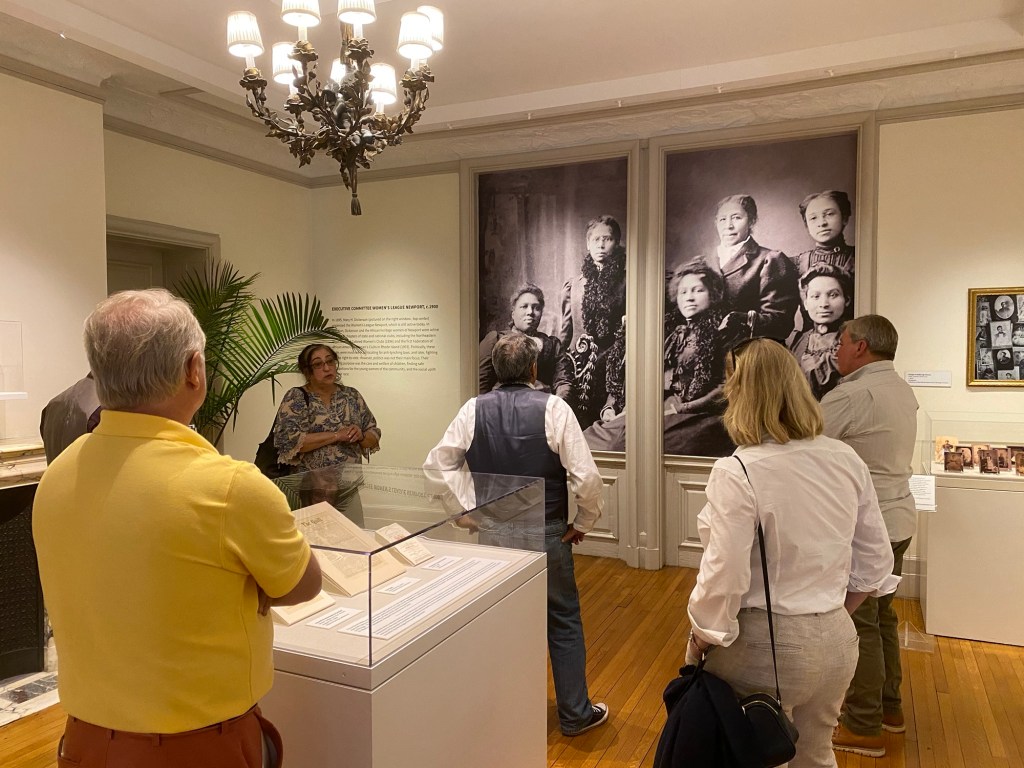
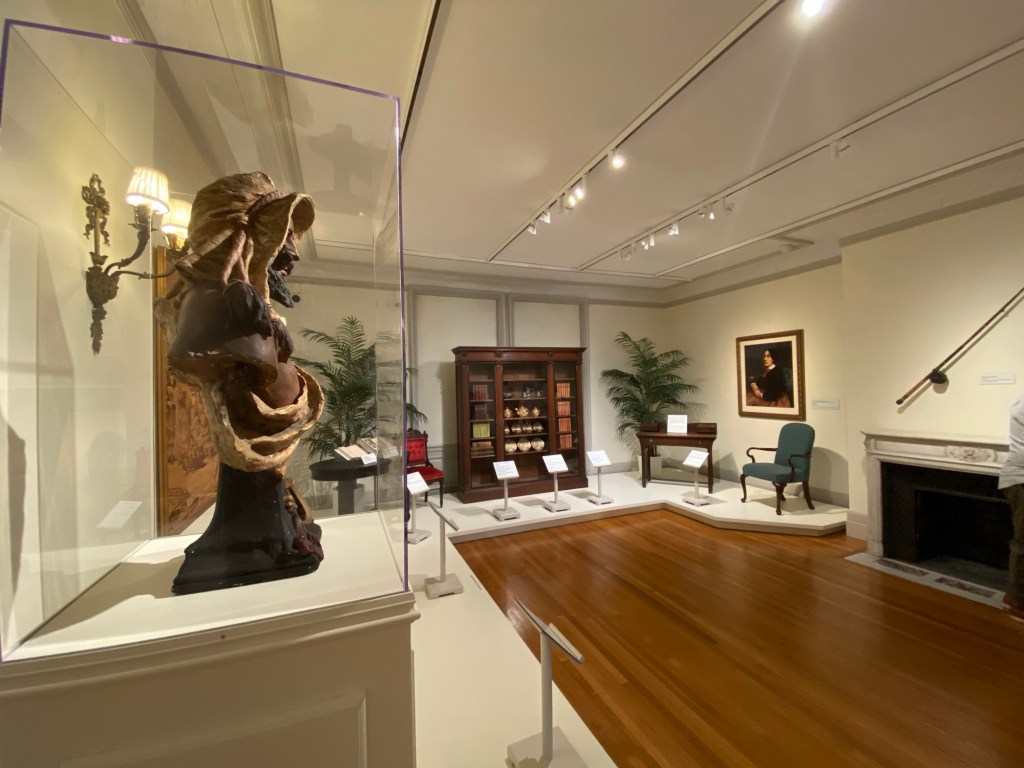
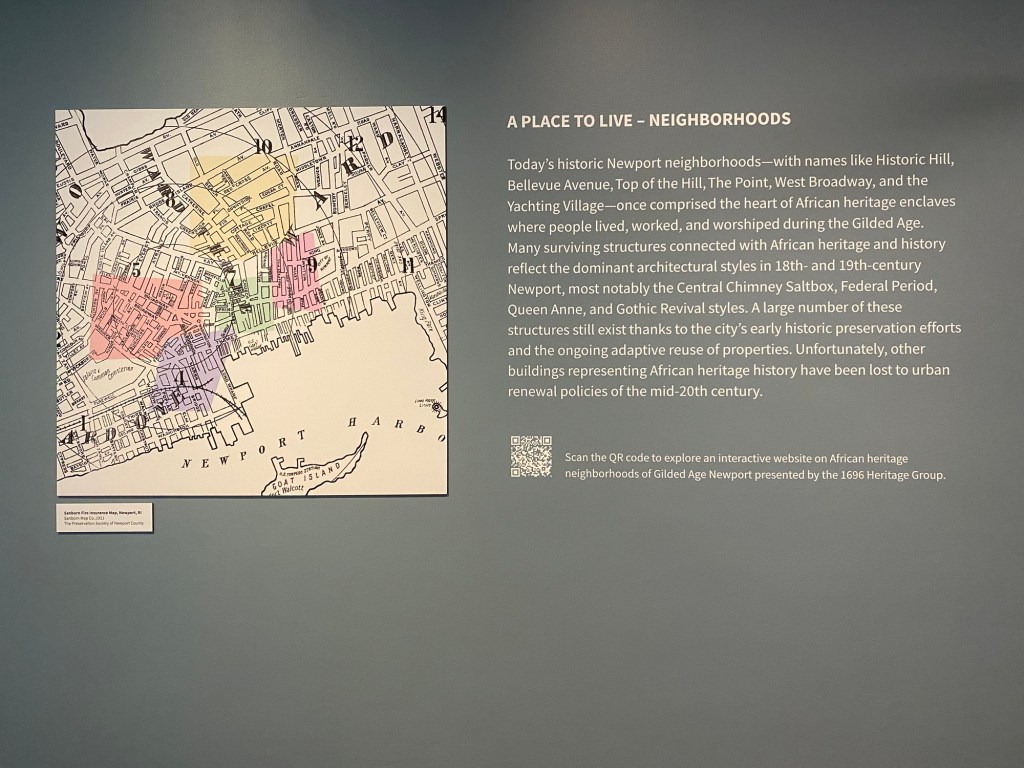
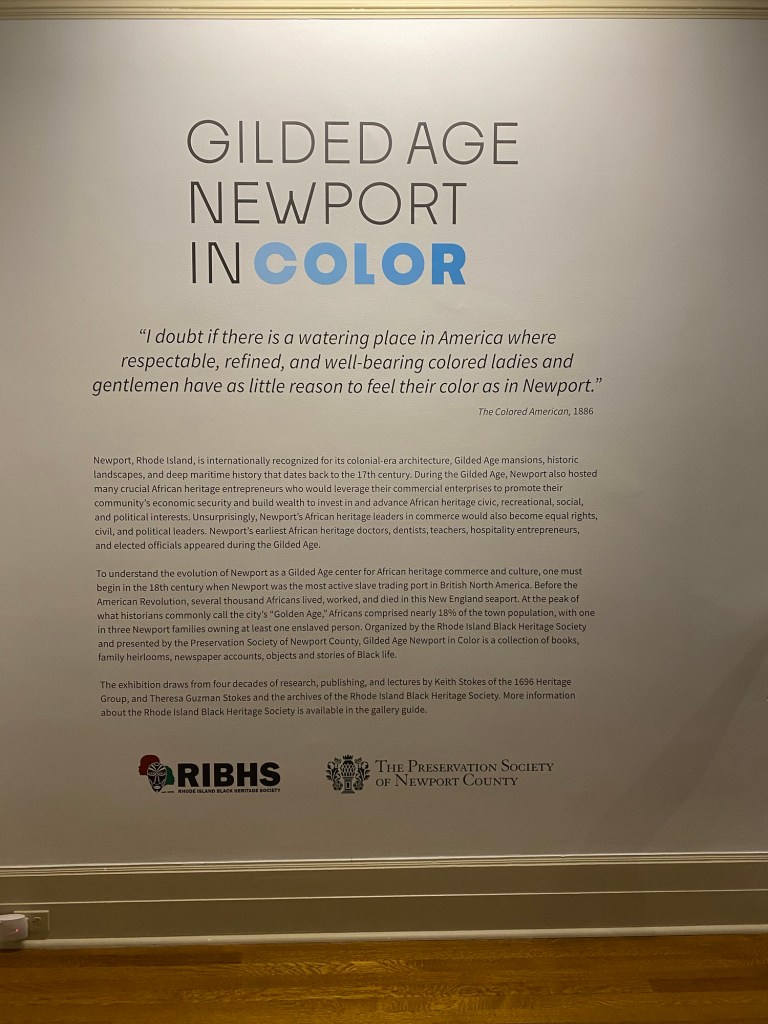
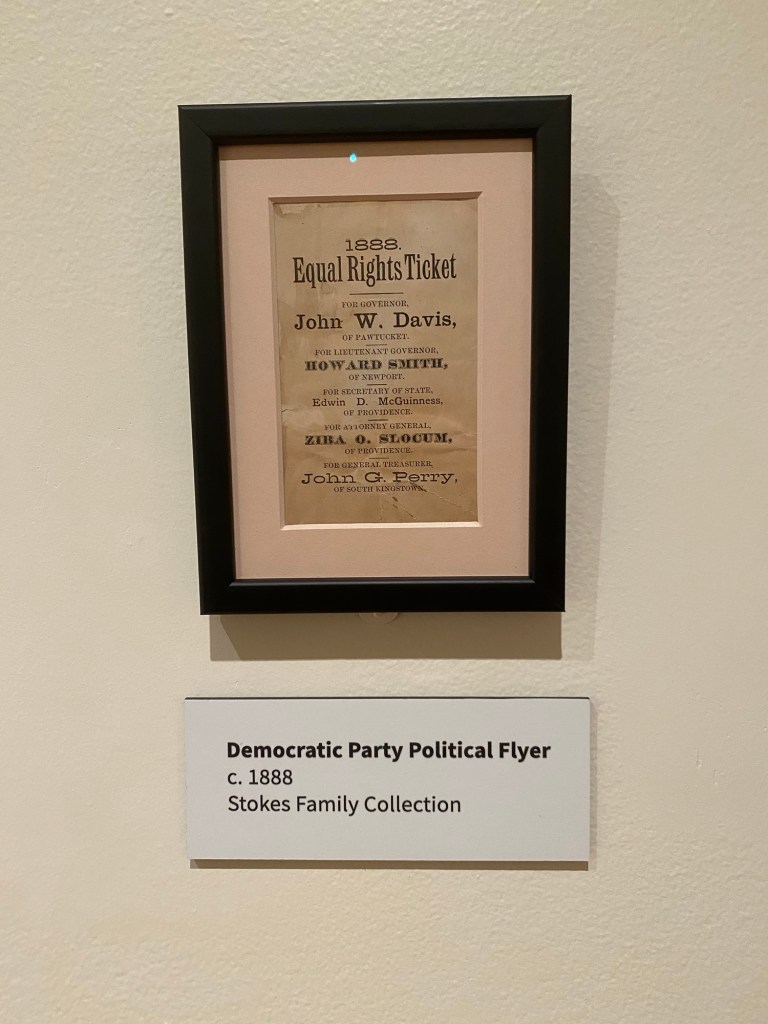
Indeed, the Rhode Island Black Heritage Society, Newport Historical Society, and the Preservation Society of Newport County are collaborating on exhibitions on the history and contributions of African Americans in the region. Before we officially began the course, Soni Stokes, curator of the exhibition, generously gave me and a small group of colleagues a tour of “Gilded Age Newport in Color” at Rosecliff, one of the mansions owned by the Preservation Society. It discusses the lives of dozens of people and families of African heritage through geography, biography, and topics such as business, entrepreneurship, religion, recreation, and politics. What most impressed me was the variety of documents and objects in the exhibition, most on loan from a private collection, giving me a much more holistic view into the lives of African Americans in New England.
Soni Stokes discussing the role of women. Section on recreation and spot.African heritage neighborhoods in Newport.Introductory label to the exhibition.Equal Rights party ticket, 1888.
Readers of History News will have caught a preview of her new book in a Technical Leaflet that accompanied the Winter 2021 issue. In this Leaflet, Kristin lays out a compelling need to change our approach:
Presenting the history of slavery inclusive and conscientious school programs is difficult and necessitates challenging the prevailing, and incomplete, narrative. It requires diligence and compassion—for the history itself, for those telling the story, and for those hearing the stories. It is a necessary part of the collective narrative about our past, present, and future.
We must talk with young people about slavery and race, as it is not enough to just talk to them or about the subject. By engaging students in dialogue about slavery and race, they bring their prior knowledge, scaffold new knowledge, and create their own relevance—all while adults hear them and show respect for what they have to say. We cannot fail future generations of learners the way many of us were failed by the sites we visited as children.
Her new book will provide more advice, examples, and replicable practices for the comprehensive development and implementation of slavery-related school and family programs at museums and historic sites.
If you haven’t met Kristin, she’s worked in museums for nearly 30 years. She holds a master’s degree in museum education from George Washington University (where I now teach in the museum studies program) and has led the education departments at the Montana Historical Society and the USS Constitution Museum and is currently the project manager for education development at the Tsongas Industrial History Center. She facilitates workshops for museums and historic sites on developing comprehensive and conscientious interpretation of slavery and speaks regularly at public history and museum conferences.
The “Silence is Not an Option” banner on the website of the Birmingham Civil Rights Institute links to their statement.
Across the country, history museums and historical societies have issued statements in response to the recent police killing of George Floyd and protests against racism—but it’s a mixed bag. I’ve examined more than fifty history organizations and found that while there are some common values in the field, there’s a wide disparity of thought.
Who is Concerned?
About twenty percent of the history organizations in this study made no statement but it is likely lower because statements were posted on websites, as news releases, sent as emails to members, or shared on Twitter or Facebook (and rarely on more than one channel), which makes it difficult to easily collect statements. Where you make a statement is just as important as what you say. Listing a “Statement from the CEO” in the “Press” section of a website is different from a banner on the home page is different from an email sent to a few hundred members is different from a single tweet.
“A Message from the Arizona Historical Society” on the News page of the Arizona Historical Society website.
Typically, the CEO or executive director issued the statement and very few included the board chair. Did the CEO take a personal risk to issue a statement? Are boards unwilling to get involved or unable to achieve consensus? Will current events force organizations to rethink their mission, vision, or values?
Without conducting interviews, it’s unclear why this pattern exists. It could be uncertainty about what to say, fear of offending donors or their community, a lack of consensus among staff and board, a policy on statements, or an effort to avoid conflict or current events. Nevertheless, the patterns are revealing and suggest that history organizations have a long way to go in their efforts to be a relevant and meaningful part of their entire community. I strongly encourage all history organizations who are making statements to include them on their websites—unless there’s an important reason to avoid it.
History organizations issued their statements as early as May 30 and most during the first week of June, about a week after George Floyd’s murder on May 25 and when the protests had spread nationally. These statements are more challenging to write and I know some went through extensive review processes to gain consensus and approval, which can take days to accomplish. I also sense that Floyd’s death was a tipping point for many organizations because African Americans had been senselessly killed for decades but rarely had historical societies responded. About half of the statements mentioned George Floyd by name and about a quarter also included Ahmaud Arbery and Breonna Taylor, so recent events seem to have been the greatest influence on these statements. About ten percent named other victims as far back as the beating of Rodney King in Los Angeles in 1991, but some looked back centuries to put recent events in historical context, such as the American Historical Association, Historic Germantown, Maine Preservation, and Minnesota Historical Society. I recommend that history organizations clearly connect their statements to their mission or vision to ensure this is not merely a token effort; connect your concerns to the history of the region or period you interpret because, well, you’re a history organization; and include individual names whenever possible to move from the abstract to the personal.
A year ago, James Madison’s Montpelier invited me to the National Summit on Teaching Slavery to create a “methodology for how public historians work with descendants” (program, 6 Mb pdf). Over a long weekend, fifty people from across the country with a wide range of experiences and perspectives worked in small groups to define and prioritize standards and best practices for interpretation, research, and involving the descendant community. It builds upon Montpelier’s award-winning exhibition, A Mere Distinction of Colour, to help “Americans of all types truly understand the ongoing struggle for freedom, rights, and equality in our nation.” The National Council on Public History recently posted a nice series of discussions on the exhibition with students in the Cooperstown Graduate Program.
One of the major challenges was determining what is distinctive about teaching slavery from interpreting other topics, such as women or Asians. At first, the discussions identified practices that had already been figured out years ago by the American Historical Association and the National Association for Interpretation, but that was to be expected because many participants had little experience in scholarship or interpretation–what bound us together was improving and enhancing the interpretation of slavery at museums and historic sites. Although the rehash of these professional practices was frustrating and I wondered why we were going over old ground, it eventually dawned on me that Continue reading →
UnSeen: Our Past in a New Light at National Portrait Gallery (2018)
Ken Gonzales-Day and Titus Kaphar are exhibiting a series of their contemporary paintings and photographs at the National Portrait Gallery that explore how American history could be interpreted, using the perspective of African American history and Native American history. The works are large and dramatic, clearly conveying counter-narratives or stories that often overlooked or ignored. As a historian, much of it resonated with me but I did wonder if others found it puzzling or undecipherable. But surprisingly, many people read the labels and it may be because there was enough of an image that was familiar but the rest of it was mysterious, so they sought answers in the labels.
In case you can’t visit Unseen this year at the National Portrait Gallery, here are a few photos of the exhibition and excerpts from the labels to give you a taste (boy, they write exemplary labels at NPG!). Continue reading →
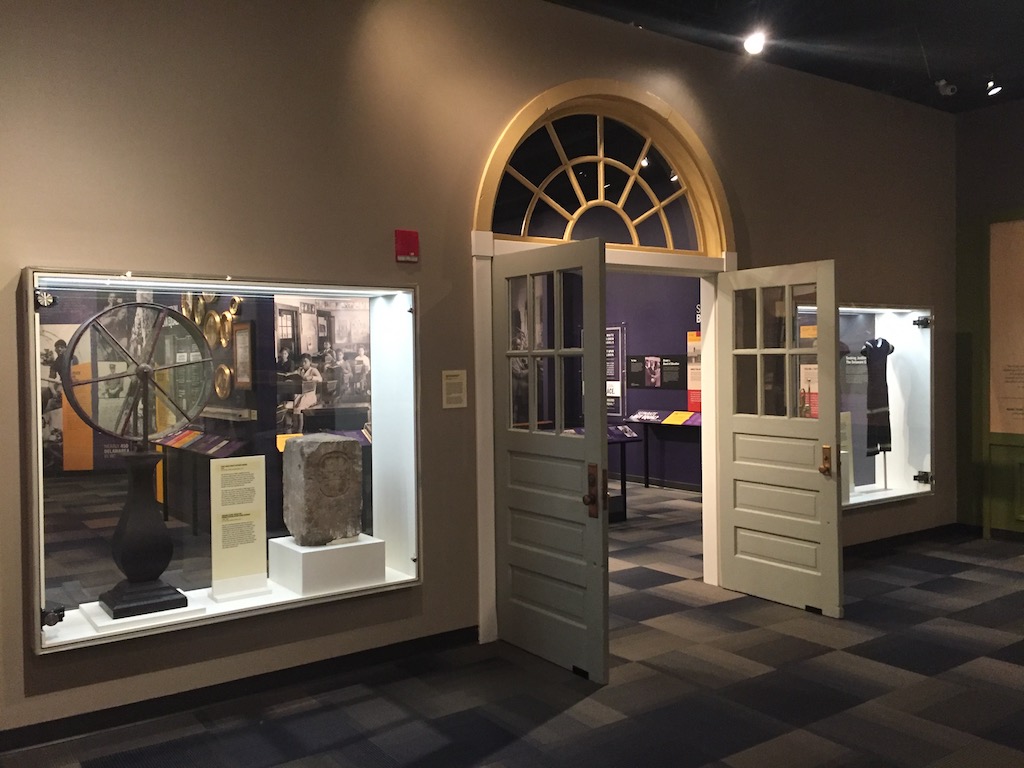
Wall between two exhibitions at the Delaware Historical Society.
The Delaware Historical Society reopened their museum last fall with two new complementary exhibitions designed by the Gecko Group, one a comprehensive history of the state and the other on the history of African Americans in Delaware. I recently visited the museum with Scott Loehr, the CEO, who pointed out a clever interpretive technique. The two exhibitions share a common wall, which has a doorway that allows visitors to walk from one to the other and exhibit cases on either side. It’s not immediately obvious, but the objects on display are interpreted differently depending on which side of the wall you’re standing.
For example, a Crown Stone from the Pennsylvania-Maryland Border has a two-sided label. The side facing Continue reading →
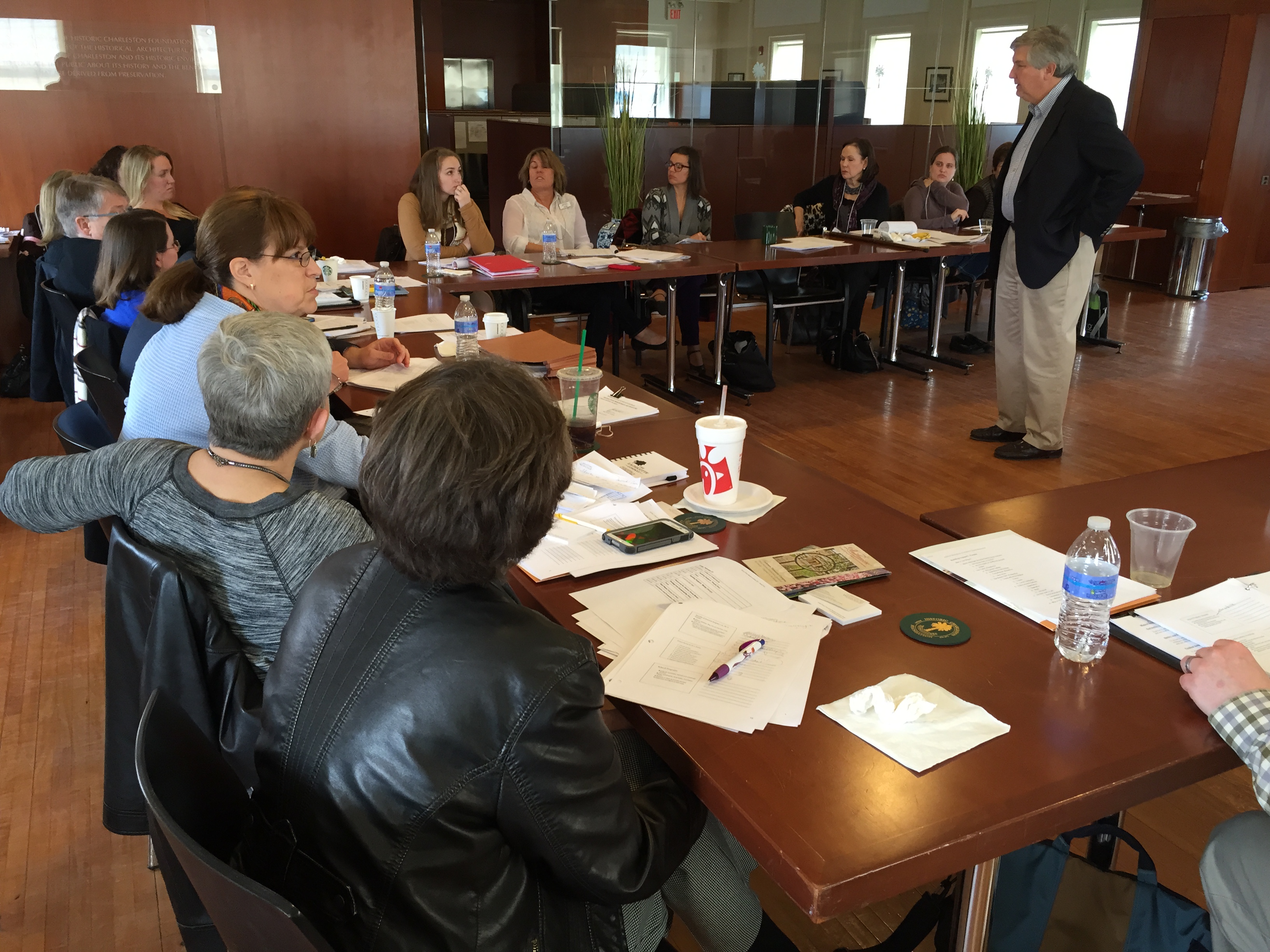
For the past 15 years, McDaniel also taught the AASLH Historic House Issues and Operations Workshop with Max van Balgooy, most recently in Charleston, South Carolina.
The Drayton Hall Preservation Trust (DHPT), a privately funded nonprofit organization responsible for the operation and administration of Drayton Hall, a National Trust Historic Site, today announced that President and Executive Director George W. McDaniel, Ph.D. would be stepping down on June 30.
“Drayton Hall has been my passion and purpose for more than 25 years,” said McDaniel, “and I can’t imagine a better or more fulfilling vocation. But the time has come to turn over leadership responsibilities so I can focus on family, research, writing and other projects. I thank the Drayton family, whose vision made all of this possible, and the Drayton Hall Preservation Trust board of trustees, our outstanding staff and the thousands of Friends and visitors who have supported us during my tenure.”
In this 34-second time-lapse video, James Madison’s Montpelier in Virginia constructs a log “field quarter” (a dwelling for enslaved field workers). It’s first constructed in a building to cut and fit all the pieces in a protected place during winter, then re-assembled in the field on a beautiful spring day in 2015. It’s now on the exact spot where the foundations for a house were uncovered through archaeology (if you look carefully to the horizon on the left, you’ll see the Visitor Center).
Montpelier is in the midst of reconstructing many of the lost buildings associated with the enslaved African community, using archaeological and documentary evidence assembled over the past decade. Their major project is the South Yard, six buildings next to the Madison’s mansion, which will be completed in the next few years, thanks to a generous gift from David Rubenstein.
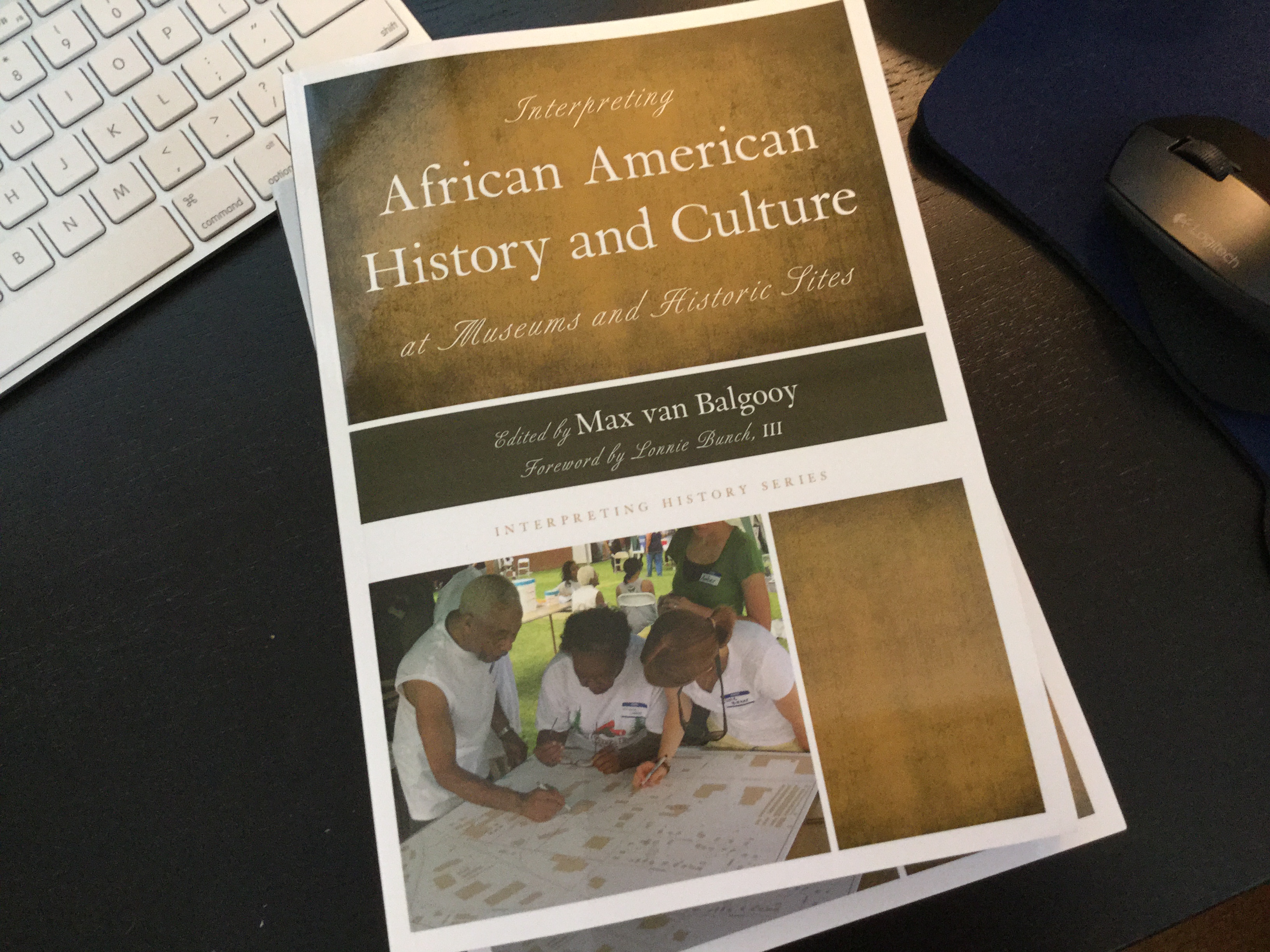
This morning brought the first snow of the season. While schools closed and cars were slipping on the road in front my house, the mail arrived with a thump on my doorstep. Inside was Interpreting African American History and Culture at Museums and Historic Sites, the book I worked on for the last few years with two dozen contributors. I try not to judge a book by its cover, but Rowman and Littlefield has increased its attention to graphic design and it really paid off. It’s a handsome book. But it’s even better inside!






 Engaging Places