Author Archives: Max van Balgooy

Unknown's avatar

About Max van Balgooy

President of Engaging Places LLC, a design and strategy firm that connects people to historic places.

Wireless Audio Guides and Digital Donor Board at MIM

Last week I visited the huge Musical Instrument Museum (MIM) in Phoenix, Arizona and spent four hours just walking through the exhibits.  Whenever I visit a historic site or museum, the first thing I often do is just walk through the entire place to get an overall sense of its organization, design, and content, rarely stopping to read labels or watch videos.  At MIM it took four hours.  Thank goodness for the cafe.  I haven’t seen so many guitars, violins, drums, or bagpipes in my life, but I guess that’s the point.

Along the way I spotted a couple unusual interpretive and fundraising techniques that caught my eye that might interest you:

This slideshow requires JavaScript.

1.  MIM has the usual big donor walls in the lobby but next to the exit door, they have a colorful digital version for current donors along with an eye-catching donation box.  The big touch screen is divided into two sections: the top half has announcements for upcoming events and volunteer opportunities and the bottom half has a scrolling list of donors for the last twelve months.  Because it’s digital, it can be easily updated (but of course, requires someone with IT skills for maintenance).  A navigation bar lets you choose the donor category by size of gift from $250 to $5 million+.  Next to the digital display is a donation box featuring the shiny silver bell of a sousaphone with the message, “Blown Away? Join Our Band of Donors” and a window so you can see your money fall inside.  I bet this encourages kids to drop their change (or encourages kids to tell their parents to drop a dollar).  Clever eh?  And notice there’s nothing else around it–no clutter of chairs, signs, or plants to keep visitors focused on support as they leave the museum.

This slideshow requires JavaScript.

2.  Interpretation at MIM relies heavily on wireless headsets that are automatically activated as you approach an exhibit.  The headsets consist of a pair of light headphones connected to a Sennheiser GuidePORT device, which is slightly larger and heavier than the old classic iPods.  The device controls volume, holds a rechargeable battery, and contains the antennae that receives the audio in the exhibit.  Most of the exhibits have a monitor showing a series of short videos of musical performances or a demonstration of their manufacture.  The videos cycle continuously and when the visitor comes within about ten feet, the headset connects to the audio. When you finish watching a video, you can take a couple steps, and watch a different video on another monitor without touching the device or punching in a number.  The exhibits can be packed tightly with video screens without worries about sound bleed and turning the exhibit galleries into a cacophony of sounds.  However, it wasn’t perfect.  About five percent of the time it wouldn’t connect to the video and I had to watch it in silence (and when it’s a musical performance, a silent video isn’t very helpful).  Secondly, visitors (especially kids) occasionally dropped their devices. Every time I heard the smack on floor, I cringed.  The admission desk provides lanyards to hang the audio system around your neck, but not all visitors use them. Sigh.


What Historic Sites Have Learned After 25 Years with ADA

ADA logoThis month marks the 25th anniversary of the Americans with Disabilities Act (ADA), which ensured equal access to persons with limited mobility, limited vision, limited hearing, and other disabilities. Shortly after this law was enacted in 1990, museums and historic sites were scrambling to figure out the consequences, especially the cost of installing ramps or hiring sign-language interpreters.

Much of it also revolved thinking bigger and realizing that improving access for the disabled would improve the experience for everyone.  For example, lever handles replaced doorknobs, which makes it easier to open a door when you’re carrying a package; enlarging type and increasing contrast on exhibit labels makes them easier to read (which I really appreciated as I grew older); and integrating ramps and removing thresholds is nice for visitors in wheelchairs and for staff who are always hauling tables and chairs for events.  For several years, professional associations hosted sessions and printed books to explain ADA to help museums figure out how to respond in an effective and thoughtful manner.

Little discussed, however, is that the US Department of Justice (DOJ) also investigated several museums and historic sites for Continue reading

Interpretive Planning Workshop coming to Tennessee

AASLH Historic House Museum workshop at the Oaklands Museum, 2013.

AASLH Historic House Museum workshop at the Oaklands Museum, 2013.

On Monday, August 17, I’ll be leading a one-day workshop on interpretive planning for history museums and historic sites in Murfreesboro, Tennessee.  Sponsored by the American Association for State and Local History, Humanities Tennessee, and the Tennessee Association of Museums, the workshop will layout effective strategies for interpreting history and the humanities at museums and historic sites, explain how to use StEPs as a model for standards and best practices, and show how to conduct a self-evaluation of interpretation in order to prioritize activities.  It’ll be hot in Middle Tennessee but the workshop will be held in the comfortable and cool visitor center at the Oaklands Museum.  Registration is $75 and $15 for members (you read that correctly–$15!) and includes lunch.  To register or for more details, visit AASLH.org.

“State of the First Amendment” Survey Results Released by Newseum

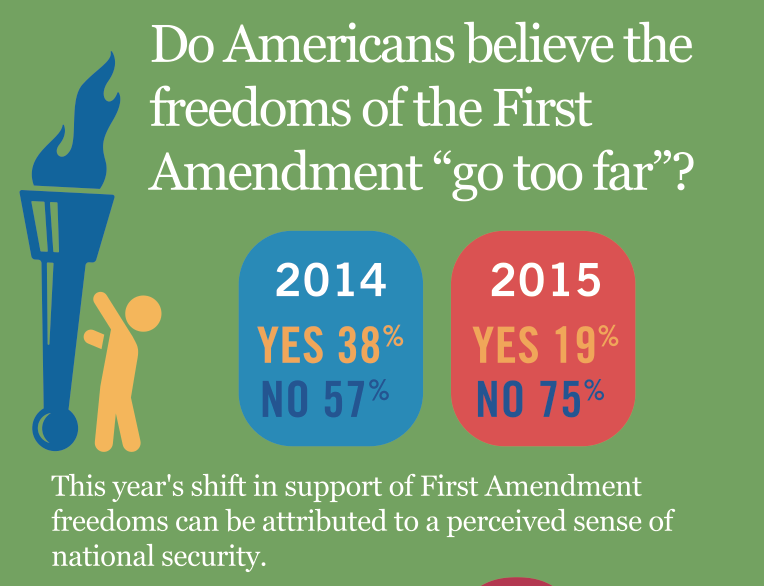
First Amendment 2015The State of the First Amendment survey, conducted each year since 1997 by the Newseum Institute’s First Amendment Center, tests Americans’ knowledge of their core freedoms and samples their opinions on First Amendment issues of the day.  The survey again found that most Americans are unable to name more than one or two of the five freedoms in the First Amendment —religion, speech, press, assembly and petition— and that one-third cannot name any of the five.  Looks like a great opportunity for history organizations!

The 2015 survey questions also covered topics including the use of Confederate flags Continue reading

Openluchtmuseum Requires Mental Gymnastics in Historical Interpretation

Telephone booth, 1933-1965.

Telephone booth, 1933-1965.

The Openluchtmuseum, or Open Air Museum, in Arnhem in the Netherlands is one of the oldest outdoor/living history museums in the world. Opened in 1918, it preserves traditional and folk cultures by collecting vernacular buildings, furnishing them to specific periods, and using them to demonstrate historic crafts and skills.  In the last decade, they’ve expanded these approaches by adding multimedia presentations along with interpreting the post-war period as part of an effort to create a national history museum interpreting the “Canon of the Netherlands” (the canon is a divergent idea worth investigating).  In this post, I’ll examine their interpretation of the post-war period and in a later post discuss various unusual exhibition techniques.

At first glance, the Open Air Museum seems to be comprised of distinct clusters of farm buildings from a distinct region and time, where you can wander through houses and barns and watch someone in costume making brooms or working a plow.  But the layering of history is complex and I found myself continually asking, “what time is it?” and “how are these things related?” to make sense of my visit.  There are lots of historical anomalies, such as a 1960s phone booth in front of a 1910s train depot, but perhaps they’re not anomalies if you mentally reinterpret the scene by finding the overlapping period, such as the 1930s.  These intellectual gymnastics don’t always work, but then again, the entire concept shaping the Open Air Museum allows for the artificial juxtaposition of historical places, times, and objects–which is what often happens in art museums and can also be bewildering (ever visit the Robert Lehman Gallery at the Met?)

The experience caused me to think hard about the role and purpose of interpretation Continue reading

Using Archaeological Research to Interpret Your Site?

Archaeological excavations at James Madison's Montpelier in Virginia.

Archaeological excavations at James Madison’s Montpelier in Virginia.

If your historic site or history museum is using or would like to use archaeology in your research (even if you’re not conducting archaeology), the Society for American Archaeology (SAA) is seeking your suggestions and advice to improve and enhance the “For the Public” section of their website via a survey (open until July 22).

SAA launched For the Public in 2006 as a clearinghouse to share resources, best practices, and general information about the discipline of archaeology with both the professional community and the interested public.  The site has now grown to a complex tangle of over 400 linked pages. Many of the pages need substantive revision in content, function, and aesthetic perspectives. As they continue the process of revision, they would appreciate Continue reading

Hangout with Historians to Discuss the Nation’s Report Card

NAEP History Scores 1994-2014Discuss strategies to improve history education in our schools with people coming at it from different perspectives on Tuesday, July 7 at 12 noon (Eastern) in a Google Hangout co-hosted by the National Assessment Governing Board and the American Historical Association.  It’s in response to the latest results of the Nation’s Report Card, which shows that many students lack a strong understanding of our nation’s history (as seen in the chart, scores have been flat for the past twenty years, and the conversation will explore ways that students can become more engaged and informed.  Hmm, can historic sites and house museums play a role?

Participants include

  • Jim Grossman, executive director of the American Historical Association
  • Chasidy White, history and geography teacher at Brookwood (Ala.) Middle School and member of the National Assessment Governing Board
  • Judith Gradwohl, MacMillan associate director for education and public engagement at the National Museum of American History
  • Libby O’Connell, chief historian at the History channel
  • Frank Valadez, executive director of the Chicago Metro History Education Center

and the conversation will be moderated by Jessica Brown, contributing writer at Education Week.

To register or for more information, visit Why History Matters at the National Assessment Governing Board.

So Many Possibilities for Historic Sites at AASLH Annual Meeting

AASLH Louisville 2015The American Association for State and Local History (AASLH) just delivered the preliminary program for its annual meeting, which will be held in Louisville, Kentucky from September 16-19, 2015.  Obviously, the conference is centered around history but there are several sessions, workshops, and field trips that focus on historic sites and house museums, including:

  • Heritage Tourism in the 21st Century with James Stevens of ConsultEcon Inc., who recently studied the heritage tourism sector in Philadelphia
  • Restoration and Reconstruction: Fulfilling the Possibilities of a 21st Century Museum, a discussion about the reinterpretation of the Woodrow Wilson Family Home in South Carolina (also reviewed in the recent issue of the Public Historian and the Journal of American History; not to be confused with the Woodrow Wilson Boyhood Home in Georgia)
  • Old House, New Diverse Stories, a brainstorming session led by Ken Turino of Historic New England
  • An Untapped Resource: How to Locate and Use Legal Cases at Historic Sites, a session to learn how to mine legal case files to find compelling narratives for exhibits and programs
  • Interpreting Religion at Historic Sites, a discussion on leveraging “historical truth when interpreting religion” led by the historian of the Navigators.
  • An afternoon tour of the exuberant Second Empire Culbertson Mansion and Farmington, the Federal-style home of Lucy and John Speed.
  • There may be bourbon at the breakfast for historic house museums when Dennis Walsh from Buffalo Trace Distillery discusses the preservation of this historic sites (and it’s pretty cool website, too)
  • An evening at Locust Grove, a National Historic Landmark, with costumed interpreters, live music, and a three-course buffet.
Sam Winburg

Sam Wineburg

With 65 sessions, there is much, much more happening and you’ll be torn about what to do.  There’s certainly enough to appeal to directors, curators, historians, educators, and preservationists.  I’m particularly eager to hear Sam Wineburg, professor of education and history at Stanford University and author of Historical Thinking and Other Unnatural Acts: Charting the Future of Teaching the Past (see “A History of Flawed Teaching“), and the follow-up discussion led by Tim Grove, chief of museum learning at the Smithsonian National Air and Space Museum.  Wineburg is currently developing new forms of assessment to measure historical understanding and undertaking a longitudinal study on the development of historical consciousness among adolescents in three communities.  But I don’t want to neglect the three other outstanding plenary speakers: Wendell Berry, James Klotter, Renee Shaw, and Carol Kammen.

I rarely ever skip the AASLH annual meeting and I plan to be there this year.  Registration is $250 if you jump in before July 24 and there’s the alternative online conference featuring six sessions.


What’s the Twack Record for Your Tweets?

Followers Dashboard from Twitter.

Followers Dashboard from Twitter.

The growth of social media has added new layers of complexity to the promotional efforts at museums and historic sites.  Along with mailing newsletters and event announcements and maintaining a website, we feel an increasing need to connect with our supporters through blogs, Twitter, Facebook, and LinkedIn.  But is all this work having any impact? How can I better use these tools to engage my audiences?

You may have noticed that I’ve been experimenting with Twitter this past year, adding a feed to the sidebar of my blog and sending out about three tweets each morning on news related to museums and historic sites using @maxvanbalgooy (@engagingplaces was already taken) and tagging them with #museum or #preservation.  It’s nice to see the number of Followers grow and merit a Favorite or Retweet occasionally (thanks Bob!), but what’s the impact?  You may find some answers in the Followers dashboard that Twitter recently launched.

The dashboard provides several analytical tools that not only highlights Continue reading

Historic House Museums a Special Focus for the Public Historian

Jane Addams Hull-House Museum by Brandon Bartoszek

Jane Addams Hull-House Museum by Brandon Bartoszek

The May 2015 issue of the Public Historian was just released and provides a dozen articles related to historic house museums.  Lisa Junkin Lopez, associate director of the Jane Addams Hull-House Museum and guest editor of this special issue, provides the criteria that helped her select the articles and her vision of historic house museums:

Though a number of sites have turned to revenue-generating activities like weddings and farmers’ markets to stay afloat, rigorous historical content has not necessarily been quashed in favor of parlor room cocktail hours and heirloom tomato beds. Many sites have recommitted to the project of excavating their own histories, digging deeper to find relevance with contemporary audiences and identifying new methods for engagement along the way.

The individual essays are case studies of various projects at historic house museums, but many question and even break the basic assumptions of museum practices and historic preservation standards.  This shift will need to be watched because Continue reading