Author Archives: Max van Balgooy

Unknown's avatar

About Max van Balgooy

President of Engaging Places LLC, a design and strategy firm that connects people to historic places.

Upcoming Workshop on Understanding Audiences

If you want to engage your audiences to build support and increase your impact, you first need to understand their interests, needs, and motivations.  In today’s busy world, the traditional tactics of advertising, rackcards, and signs are no longer sufficient to attract visitors to museums and historic sites.  We have to refresh our understanding of today’s audiences and develop new approaches that will engage them.

On September 22, 2014 from 9:00 am to 4:00 pm, I’ll be facilitating a one-day workshop on Understanding Audiences at the Middlesex County Community College in Edison, New Jersey.  Sponsored by the New Jersey Historical Commission and New Jersey Historic Trust, this is part of a series of three workshops on engagement for nonprofit history organizations.  The workshop will be based on the Standards and Excellence Program for History Organizations of the American Association for State and Local History.  Registration is $20 (a bargain) and includes breakfast and lunch (even better!); deadline is September 18.

Video: Behind the Scenes: Alan, Curator

This 2:53 video features Alan Jutzi discussing his work as the chief curator of rare books at the Huntington Library.  It’s one of five videos comprising “Behind the Scenes: Staff and Researchers at the Huntington Library,” which gives visitors a peek into the inner workings of a library that is normally off public view. The videos focus on day-to-day processes—and personalities—of a conservator, curator, archivist, page, and “reader” (the Huntington’s term for a scholar/researcher). Visitors to the Huntington can view them on iPads in “The Library Today,” an education display in a room adjacent to main exhibit, “Remarkable Works, Remarkable Times.”  Yes, it’s missing an educator but it does help explain the work of some of the people at a research library.  Is this something that would help the public, donors, and supporters better understand the work you do?  You’ll find more details about the videos in Jennifer Watts’ post on the Huntington blog.

Pushing the Period Room Beyond the Period at Hunter House

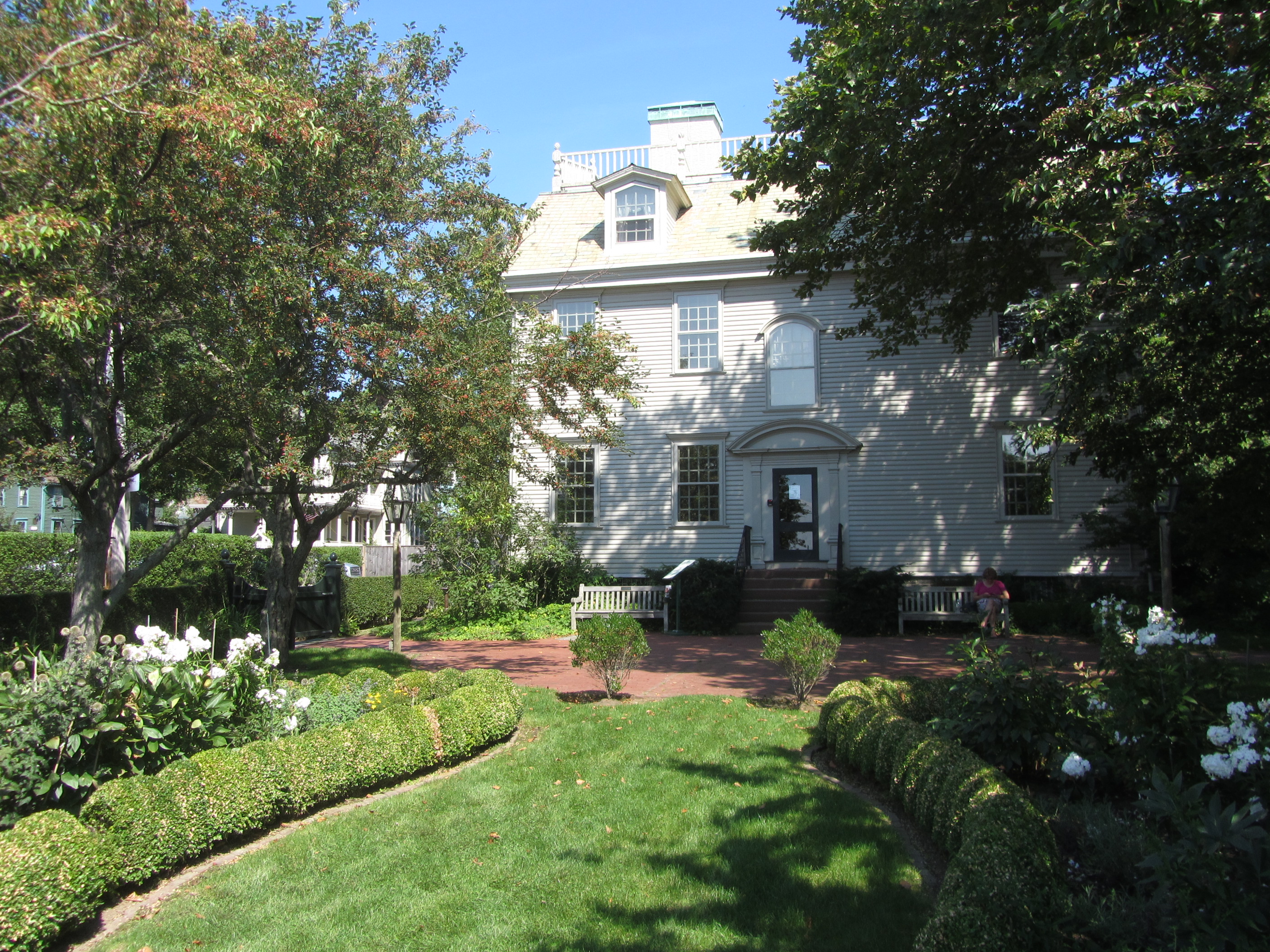
Hunter House, Newport, Rhode Island.

Hunter House, Newport, Rhode Island.

Last week I was in Newport, Rhode Island (no, I wasn’t traveling with the President; I was conducting a marketing assessment for an historic site) and visited Hunter House, the historic house that prompted the formation of the Preservation Society of Newport County.  Today the Society is best known for its Gilded Age Mansions (or Cottages depending on your point of view).  Hunter House has a beautiful view of the harbor but it’s off the beaten path and focused on colonial history, which doesn’t attract the crowds who make the pilgrimage to The Breakers and other grand estates along Bellevue Avenue.

The lower profile gives Hunter House the opportunity to try a different approach to period rooms, one that I find much more successful from an interpretive perspective.  Although visitors often believe that period rooms show how people actually lived, curators know they are exhibits created to evoke an era.  While they may contain authentic furnishings, they are often displayed or arranged in inauthentic ways for aesthetics, safety, security, or lack of sufficient knowledge.  Period rooms are also victims of tradition and nostalgia–how many times have you seen Continue reading

Why History Matters is Foundational to Historic Site Interpretation

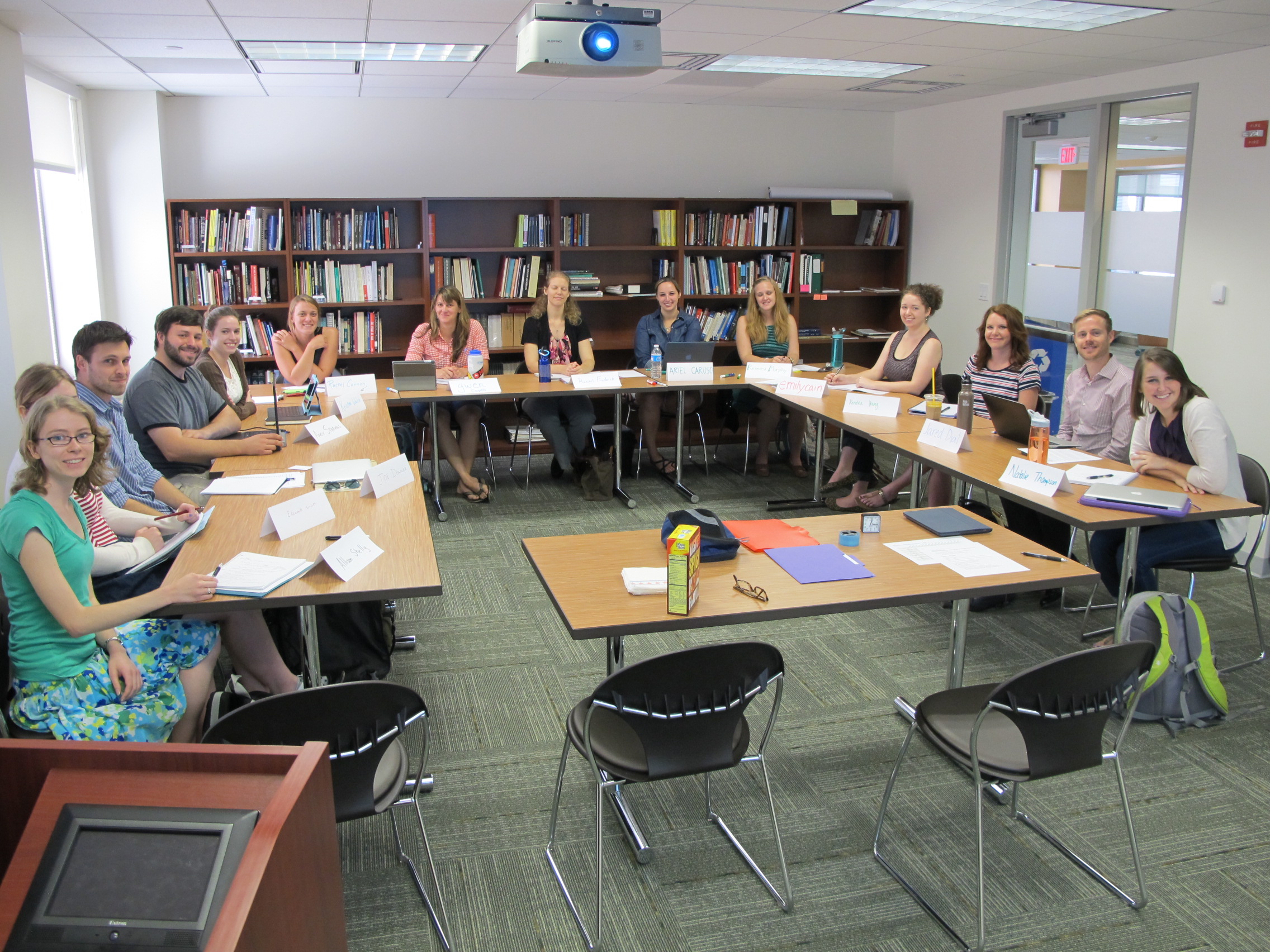
Historic Site Interpretation Class, Fall 2014, Museum Studies Program, George Washington University.

Historic Site Interpretation Class, Fall 2014, Museum Studies Program, George Washington University.

My annual fall class on interpreting historic sites and house museums started yesterday at George Washington University, and as usual, I’ve made some revisions to the course syllabus.  Not only does my thinking continue to evolve through my experiences working with sites across the country and from the work of my colleagues in the field, but my students provide a lengthy evaluation at the conclusion of each semester.  

I’ve increasingly found that in our efforts to create programming and activities that engage the public at historic sites, we often forget why we’re doing it.  After all, if you don’t know why you’re interpreting an historic site, it’s very difficult to know how to do it well.  So this year I’m starting the course with the writings of three different people who were passionate about history and saw historic places as meaningful and valuable aspects of our lives:  Ada Louise Huxtable, Dolores Hayden, and Gerda Lerner.  My students had never heard of any of them, so I’m delighted to introduce them for our study of historic site interpretation.  In case you want to read along, here are the first week’s assignments:

  • “Where Did We Go Wrong?” (1968) and “Lively Original Versus Dead Copy” (1965) in Goodbye History, Hello Hamburger by Ada Louise Huxtable (1986)
  • “Contested Terrain,” chapter 1 in The Power of Place by Dolores Hayden (1995)
  • “Why History Matters,” chapter 12 in Why History Matters by Gerda Lerner (1997)

This class will be reading dozens of articles this semester but we also have a set of core books: 

  • Interpreting Historic House Museums edited by Jessica Foy Donnelly (Altamira, 2002)
  • Design for How People Learn by Julie Dirksen (New Riders, 2012)
  • Interpretation: Making a Difference on Purpose by Sam H. Ham (Fulcrum, 2013)

Donnelly’s book, alas, is now a dozen years old and it’s becoming more difficult to assign.  It still contains good ideas but the case studies are aging, the impact of the Internet is barely felt, and the growing emphasis on visitor research, intentionality, and social relevance are not addressed adequately.  And surprisingly, so many of the authors have left the museum field (what does that say about our profession?).  If you’ve found a good book on the theory and methodology of interpreting historic sites suitable for graduate students, please share it in the comments below.
Video: Aurora Indiana Moveable Feast

Indiana Landmarks‘ “Moveable Feasts” are three summer evening events that each feature a different place in Indiana through a multi-course progressive dinner at several historic sites, along with walking tours, presentations, and films.  This 2:00 video provides an overview of the June 13, 2014 Moveable Feast in Aurora, Indiana on the banks of the Ohio River.  Cost is $50; $45 for members.

Video: The Fairbanks House

This 2:20 video by Nick Papps provides a contemplative introduction to the 1637 Fairbanks House in Dedham, Massachusetts, believed to be the oldest surviving timber frame house in North America and now an historic house museum.  The video blends contemporary and historic images accompanied by the reading of a 1937 poem by Elizabeth Fairbank Rock.

September Symposium on Interpreting the Victorian House

The Glessner House Museum and the Victorian Society in America host a day-long symposium on the interpretation of the Victorian house on Saturday, September 27, 2014 from 9:00 am to 4:00 pm at the Glessner House Museum in Chicago. Speakers include:

  • Richard Guy Wilson, keynote speaker and Commonwealth Professor’s Chair in Architectural History, University of Virginia on “Creating the Victorian House”
  • Laura Gundrum, Chief of Interpretation, Lincoln Home on “Interpreting Abraham Lincoln as a Family Man at Lincoln Home”
  • Lise Dube-Scherr, Executive Director, Richard H. Driehaus Museum on “Contemporary Perspectives on Historic Houses: Building Community through Diversified Programming”
  • Marta Wojcik, Executive Director and Curator, Frank Lloyd Wright’s Westcott House and Westcott Center for Architecture + Design on “A Frank Lloyd Wright House as a Community Anchor”

Continue reading

Video: National Museum of American Illustration

This 10:00 video introduces the collection, artists, and setting for the National Museum of American Illustration in Newport, Rhode Island.  It’s narrated by Judy and Lawrence Cutler, the husband and wife team that own and operate the museum; Whoopi Goldberg (yes, the comedian and actor); and Joanna Maxfield Parrish, granddaughter of Maxfield Parrish.  This appears to be a 2009 production by Daybreak Productions.

Museums and Historic Sites Climbing Out of Recession Slowly

Museum Revenue 2009-2014 According to data from the U. S. Department of Commerce, museums, historic sites, and similar institutions are climbing out of the 2008 recession but it’s been slow and rocky.  For 2009, quarterly revenues averaged $2.6 billon and for 2013 it grew to an average of $2.9 billion per quarter.  The overall upward trend is slow (red line in chart) but each passing year has improved.  Annual revenues have grown from 1 percent in 2010 to 7 percent in 2013 when compared to the previous year.   On a quarterly basis, however, it is a very rocky road. Within a single year, revenues fluctuated 18 to 38 percent, suggesting that while revenues are looking better over the long run, in the short run Continue reading

Brown University and National Trust Provide Recommendations for Historic House Museums

The financial sustainability and social relevance of historic house museums continue to intrigue scholars, preservationists, organizations, and even pundits on National Public Radio (I was recently interviewed by them about this topic) and adding to the conversation are two recent publications by the John Nicholas Brown Center at Brown University and the National Trust for Historic Preservation.

Bedroom at Liberty Hall Museum, Kean University, New Jersey.

Bedroom at Liberty Hall Museum, Kean University, New Jersey.

If historic house museums are historic sites that primarily educational (not commercial) in purpose, how would they be different if they were managed by educational institutions? “University-Affiliated Historic House Museums,” a report by the John Nicholas Brown Center at Brown University may provide some answers. Prepared for the 1772 Foundation by Hillary Brady, Steven Lubar, and Rebecca Soules, the report examines the issues facing historic house museums that are owned or operated by colleges and universities based on a survey of existing practices at ten sites.  Offering recommendations for “new ways to make these museums more useful to the university community,” it concludes with a half dozen alternatives for the Liberty Hall Museum at Kean University, which might be applicable to sites that are not affiliated with universities (swap “campus” and “students” with “community” and “residents”).  By the way, the Center is hosting an intriguing colloquium in May 2015 on “lost museums“.

Future of Historic Sites Forum Journal 2014In 1949, Congress created the National Trust for Historic Preservation to Continue reading