
In this 3:35 video, The Verge interviews Aaron Cope, the head of engineering, about the new high tech exhibits at the Cooper Hewitt Museum, which is in the former home of Andrew Carnegie and part of the Smithsonian Institution. The Cooper Hewitt closed for the last three years for an extensive renovation to imagine a museum that was part of the Internet and served as a bridge to their huge 130-million-object collection.
Author Archives: Max van Balgooy

How to Get a Behind-the-Scenes Look at Historic New England
 Historic New England presents its annual Program in New England Studies (PINES), an intensive week-long exploration of New England from Monday, June 15 to Saturday, June 20, 2015. PINES includes lectures by noted curators and architectural historians, workshops, behind-the-scenes tours, and special access to historic house museums and collections. The program offers a broad approach to teaching the history of New England culture through artifacts and architecture in a way that no other museum or historic site in the Northeast can match. It’s like the Attingham Summer School as a week in New England.
Examine New England history and material culture from the seventeenth century through the Colonial Revival with some of the country’s leading experts in regional architecture and decorative arts. Curators lecture on furniture, textiles, ceramics, and art, with information on history, craftsmanship, and changing methods of production. Architectural historians explore architecture starting with the seventeenth-century Massachusetts Bay style through the Federal and Georgian eras, to Gothic Revival and the Colonial Revival.
Expert presenters include: Continue reading
Are There Cultural Connections Between North and South?
 On April 26-29, 2015, the Preservation Society of Newport County (aka the Newport Mansions) is hosting a symposium on the cultural connections between the North and South from the Colonial Period to the Gilded Age as seen through furnishings, silver, textiles, painting, architecture, and interiors. Scholars include:
- Daniel Kurt Ackerman, Associate Curator, Museum of Early Southern Decorative Arts
- Brandy Culp, Curator, Historic Charleston Foundation
- Caryne Eskridge, Project Manager & Research Coordinator, The Classical Institute of the South
- Stephen Harrison, Curator of Decorative Art & Design, Cleveland Museum of Art
- Brock Jobe, Professor of American Decorative Arts, Winterthur Museum, Garden & Library
- Alexandra Kirtley, The Montgomery Garvan Associate Curator of American Decorative Arts, Philadelphia Museum of Art
- Jefferson Mansell, Historian, Natchez National Historical Park
- George McDaniel, Executive Director, Drayton Hall
- George H. McNeely IV, Vice President, Strategic & International Affairs, World Monuments Fund
- Richard Nylander, Curator Emeritus, Historic New England
- Tom Savage, Director of Museum Affairs, Winterthur Museum, Garden & Library
- Susan P. Schoelwer, Robert H. Smith Senior Curator, George Washington’s Mount Vernon
- Arlene Palmer Schwind, Curator, Victoria Mansion
- Carolyn Weekley, Juli Grainger Curator, Colonial Williamsburg Foundation
- Martha Willoughby, Senior Specialist, Christie’s
Registration is $600 and includes an opening reception at Rosecliff (1902) and dinner in the Great Hall at the Breakers (1895). Scholarships are available to undergraduate and graduate students, as well as arts and humanities professionals. To register or for more information, contact symposium@NewportMansions.org or call 401-847-1000 x 160. Tell them that you heard about it from Engaging Places and you’ll receive a 10% discount!
SlideShare: Promoting Teen Night Out Using Social Media
In this 17 slide deck, the Lukens Company explains how they promoted Teen Night Out at the Seattle Art Museum using social media. Since 2007, the museum has held thirteen Teen Night Outs with over 8,000 attendees. You’ll find that it’s a well-rounded campaign that carefully defined the target audience and used several measures of success. If you want to reach teenagers, you’ll want to check this out.
IMHO: The National Trust’s Collections Management Policy is Not Ready to Eat
Last year, the National Trust for Historic Preservation adopted a new Collections Management Policy (CMP) and widely promoted it at professional conferences and in national publications as a model to house museums and historic sites to resolve some of their stewardship challenges. At its heart is,
“a new approach—one that treats the historic structures and landscapes, and the object collections, as being the same type of resource. This approach places the historic buildings and landscapes on a par with objects and documents, strengthening the interconnected stewardship and interpretation of these historic resources.”
It’s a good idea but it’s not a new approach.
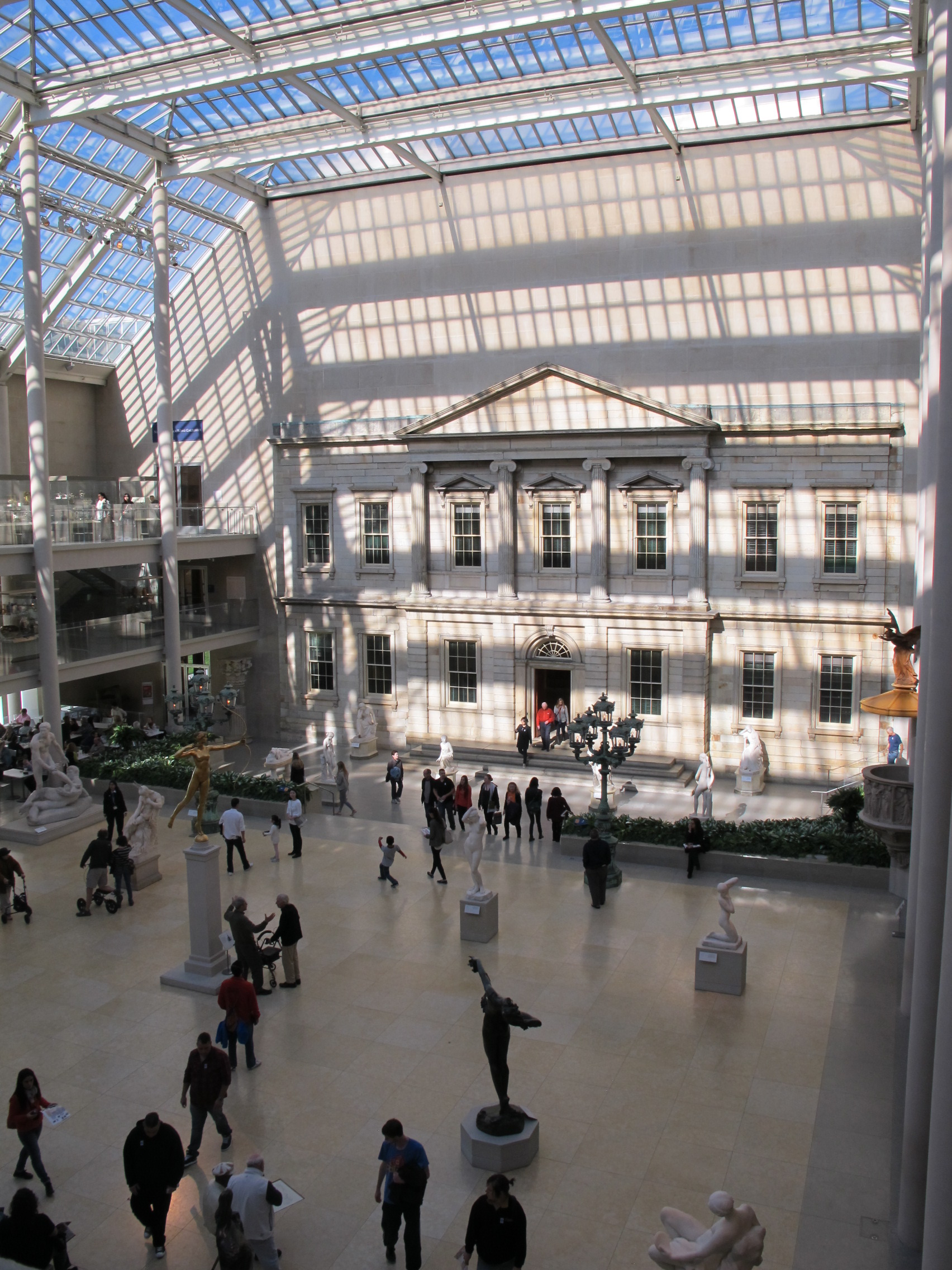
American Wing at the Met featuring the facade of the 1822 Branch Bank of the United States.
Early in the twentieth century, museums of various types began collecting buildings. Henry Ford moved Edison’s laboratory and the Wright Brothers bicycle shop to his Greenfield Village, John D. Rockefeller quietly bought dozens of buildings to create Colonial Williamsburg, and the Metropolitan Museum of Art installed the facade of the Branch Bank of the United States as the featured object of its 1924 American Wing. Much later, landscapes were considered worthy of preservation and now most historic estates, such as Casa del Herrero, Miller House and Garden, and Marsh-Billings-Rockefeller National Historical Park, treat their gardens and landscapes with the same respect as the furniture and art works at their sites.
The National Trust’s rationale for their new approach is that, “conflicts between Continue reading
SlideShare: Some Other Wild Ideas About the Participatory Museum
In this 33 slide deck, Nina Simon explains how museums need to change their relationship with visitors to be more relevant and meaningful. Nina is the executive director of the Museum of Art and History in Santa Cruz, California and author of The Participatory Museum.
Museums Responding to Mosul and Nimrud
According to reports received by the New York Times, ISIS has “destroyed parts of two of northern Iraq’s most prized ancient cities, Nimrud and Hatra. On Sunday, residents said militants destroyed parts of Dur Sharrukin, a 2,800-year-old Assyrian site near the village of Khorsabad.” The extent of the destruction is shown in this video (not for the faint of heart):
It’s a reminder of the important role that museums and historic sites play in preserving heritage and culture–and how easy it is for it to be destroyed and lost. It’s also a reminder that places far away from America can affect us, both politically, economically, and culturally. Some museums have found a way to make this connection through temporary exhibits, including this vacant vitrine at the Field Museum:

Exhibit case at the Field Museum noting destruction at the Mosul Museum in Iraq.
If your organization is also responding to the destruction of museum collections and historic sites in Iraq, please share your ideas in the comments below.
SlideShare: How to Kill a Word
In this deck of 79 slides, Patrick McLean explains how and why writers should tighten up their writing. A useful reminder whenever you’re writing an exhibit label, newsletter article, blog post, or even a memo.
Historic House Museums Gather for AASLH Workshop in Charleston
For the past fifteen years, George McDaniel and I have taught a two-day workshop on the management of historic house museums for the American Association for State and Local History. We cover a wide range of topics from fundraising to interpretation to disaster response to collections management–we really need a week, especially if there’s a lot of discussion. That was certainly our experience last week in Charleston, South Carolina (and thanks to our hosts, the Historic Charleston Foundation!), where our discussions were so rich that I wasn’t able to complete most of my presentations. That’s okay because the workshop is for the participants and as long as they find a topic that’s worth exploring, I’ll stay with them. Indeed, George and I often find that we’re not instructors but facilitators, raising ideas and questions to provoke thoughtful discussions to help participants improve the management of their historic sites.
At the core of workshop is each participant’s “burning question.” They share their biggest concern or issue at the start of the class and at the end, they describe how they might address it when they return to their site. It’s not only a way to make the workshop more relevant to the participants, but it also gives us a glimpse into the issues facing historic house museums around the country. This year the questions included: Continue reading
History Relevance Campaign Convenes at Mt. Vernon
Thanks to the support of The Fred W. Smith National Library for the Study of George Washington at Mount Vernon, the steering committee of the History Relevance Campaign held a retreat this past week to plan its next steps. Randi Korn facilitated the retreat to clarify our impact and distinctiveness as well as begin to draft outcomes for our work. It was a long day and a half but we made tremendous progress. Although we won’t be ready to share the results for another month or so (our draft ideas are still being discussed), we are making progress in several other areas:
1. “The Value of History: Seven Ways It Is Essential” is available and we encourage history organizations of all sizes to integrate it into their activities and programs. Add the name of your organization to Continue reading

