Author Archives: Max van Balgooy

Unknown's avatar

About Max van Balgooy

President of Engaging Places LLC, a design and strategy firm that connects people to historic places.

What’s the Twack Record for Your Tweets?

Followers Dashboard from Twitter.

Followers Dashboard from Twitter.

The growth of social media has added new layers of complexity to the promotional efforts at museums and historic sites.  Along with mailing newsletters and event announcements and maintaining a website, we feel an increasing need to connect with our supporters through blogs, Twitter, Facebook, and LinkedIn.  But is all this work having any impact? How can I better use these tools to engage my audiences?

You may have noticed that I’ve been experimenting with Twitter this past year, adding a feed to the sidebar of my blog and sending out about three tweets each morning on news related to museums and historic sites using @maxvanbalgooy (@engagingplaces was already taken) and tagging them with #museum or #preservation.  It’s nice to see the number of Followers grow and merit a Favorite or Retweet occasionally (thanks Bob!), but what’s the impact?  You may find some answers in the Followers dashboard that Twitter recently launched.

The dashboard provides several analytical tools that not only highlights Continue reading →

Historic House Museums a Special Focus for the Public Historian

Jane Addams Hull-House Museum by Brandon Bartoszek

Jane Addams Hull-House Museum by Brandon Bartoszek

The May 2015 issue of the Public Historian was just released and provides a dozen articles related to historic house museums.  Lisa Junkin Lopez, associate director of the Jane Addams Hull-House Museum and guest editor of this special issue, provides the criteria that helped her select the articles and her vision of historic house museums:

Though a number of sites have turned to revenue-generating activities like weddings and farmers’ markets to stay afloat, rigorous historical content has not necessarily been quashed in favor of parlor room cocktail hours and heirloom tomato beds. Many sites have recommitted to the project of excavating their own histories, digging deeper to find relevance with contemporary audiences and identifying new methods for engagement along the way.

The individual essays are case studies of various projects at historic house museums, but many question and even break the basic assumptions of museum practices and historic preservation standards.  This shift will need to be watched because Continue reading →

AAM Provides Update on the Direct Care Debate, but no Solution

Direct Care“Direct Care” is the most troubling word in the museum lexicon but it doesn’t look like the specially-charged task force at the American Alliance of Museums will be able to resolve it, according to their recent update:

The Direct Care Task Force met during the Alliance annual meeting in Atlanta to discuss the results of the opinion survey conducted in February and to frame the forthcoming White Paper. Their lively and thoughtful discussions covered discipline-specific issues, philosophies and viewpoints, and frequently went back to the topic of financially motivated deaccessioning.

Representatives from New Knowledge, the non-profit think tank and planning group that conducted the survey for AAM, presented their findings and analysis of the data.A very broad range of museum types and job functions were represented by the survey’s 1258 respondents.

• Nearly three quarters of the respondents identified their primary role in the museumindustry as responsible for Collections (74.1%) while a quarter (24.4%) hold executive office. Nearly all the remaining respondents hold primary roles that are either executive or managerial; a handful are in other roles.

• The types of museum participating broke down as: History 32%; Art 28%; Specialized, Multi-disciplinary or visitor center 17%; Natural History 11%; Science/Technology 5%; Arboretum/ Botanical or Public Garden 4%; Children’s / Youth 2%; Aquarium/Zoo 1%.

Before seeing the results, the Task Force hypothesized that a respondent’s position in an organization and the discipline of participating institutions would influence the outcome of the survey. However, the analysis found no statistical differences. In examining both the open-ended responses and general ratings, it appears that respondents were most likely considering their audience, the Alliance, and answering altruistically as professionals in the field rather than as representatives of a particular disciplinary viewpoint.

Survey results showed 1) a few areas of consensus from a statistical perspective and 2) a vast gray area. The most common of the open-ended final comments expressed appreciation for the timeliness of the survey and the need for resolving the parameters for direct care. As a result, the Task Force focused on identifying guiding principles and criteria for decision-making, not creating a definitive yes/no list or a singular definition of “direct care.”

The survey results provided the Task Force with a useful scan of the attitudes on the issue of direct care and acquisition costs, from a wide variety of viewpoints. They will inform the White Paper to be released in the spring of 2016. The Task Force agreed that the White Paper should not be prescriptive but should clarify the ethical issues surrounding the topic of direct care and provide guidance for museums in their decision-making.

Looks like they’re agreeing to disagree and won’t be Continue reading →

George McDaniel of Drayton Hall Announces Retirement

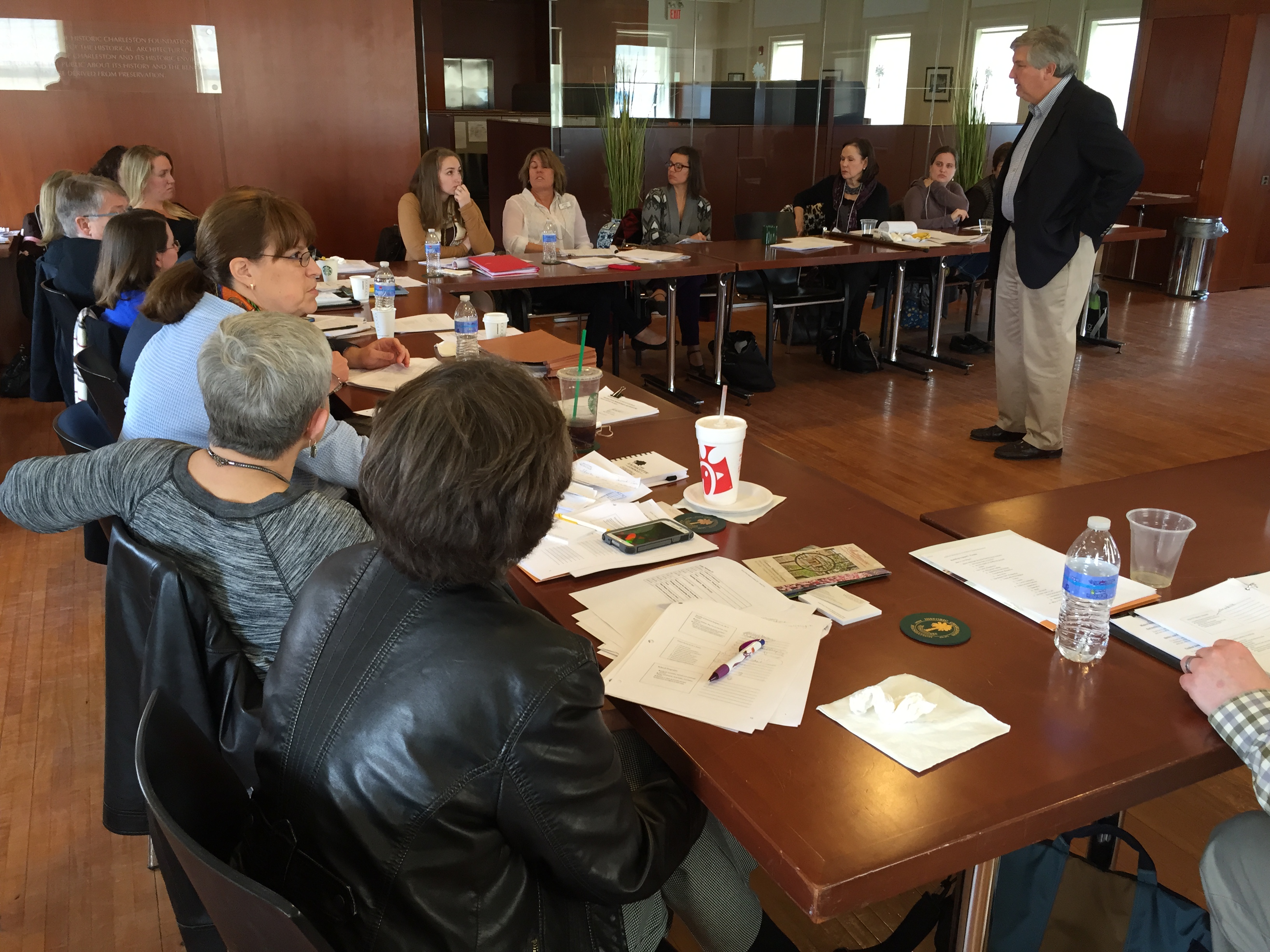
For the past 15 years, McDaniel also taught the AASLH Historic House Issues and Operations Workshop with Max van Balgooy, most recently in Charleston, South Carolina.

For the past 15 years, McDaniel also taught the AASLH Historic House Issues and Operations Workshop with Max van Balgooy, most recently in Charleston, South Carolina.

The Drayton Hall Preservation Trust (DHPT), a privately funded nonprofit organization responsible for the operation and administration of Drayton Hall, a National Trust Historic Site, today announced that President and Executive Director George W. McDaniel, Ph.D. would be stepping down on June 30.

“Drayton Hall has been my passion and purpose for more than 25 years,” said McDaniel, “and I can’t imagine a better or more fulfilling vocation. But the time has come to turn over leadership responsibilities so I can focus on family, research, writing and other projects. I thank the Drayton family, whose vision made all of this possible, and the Drayton Hall Preservation Trust board of trustees, our outstanding staff and the thousands of Friends and visitors who have supported us during my tenure.”

Under McDaniel’s leadership, Drayton Hall earned Continue reading →

Two Ways to Easily Secure Student Lunches and Backpacks

If your historic site is visited by school groups, no doubt you’ve had to temporarily store dozens of lunches or backpacks while they’re exploring your buildings and grounds.  Perhaps they’re left on the bus or stashed in big boxes in an empty room, but if you’re looking for something more portable or secure, I encountered a couple ideas from museums I recently visited.

Basket trucks at the Asian Museum in San Francisco.

Basket trucks at the Asian Museum in San Francisco.

The Asian Art Museum in San Francisco uses “basket trucks” that you typically find in hotels for collecting laundry.  The carts easily roll around and hold lots of stuff, but some versions can collapse for storage and be cleaned by tossing the big cloth bag in the laundry.  The Museum attaches a big plastic sleeve on the frame to slip in a temporary label to identify the school so the cart can be easily retrieved for lunch time.

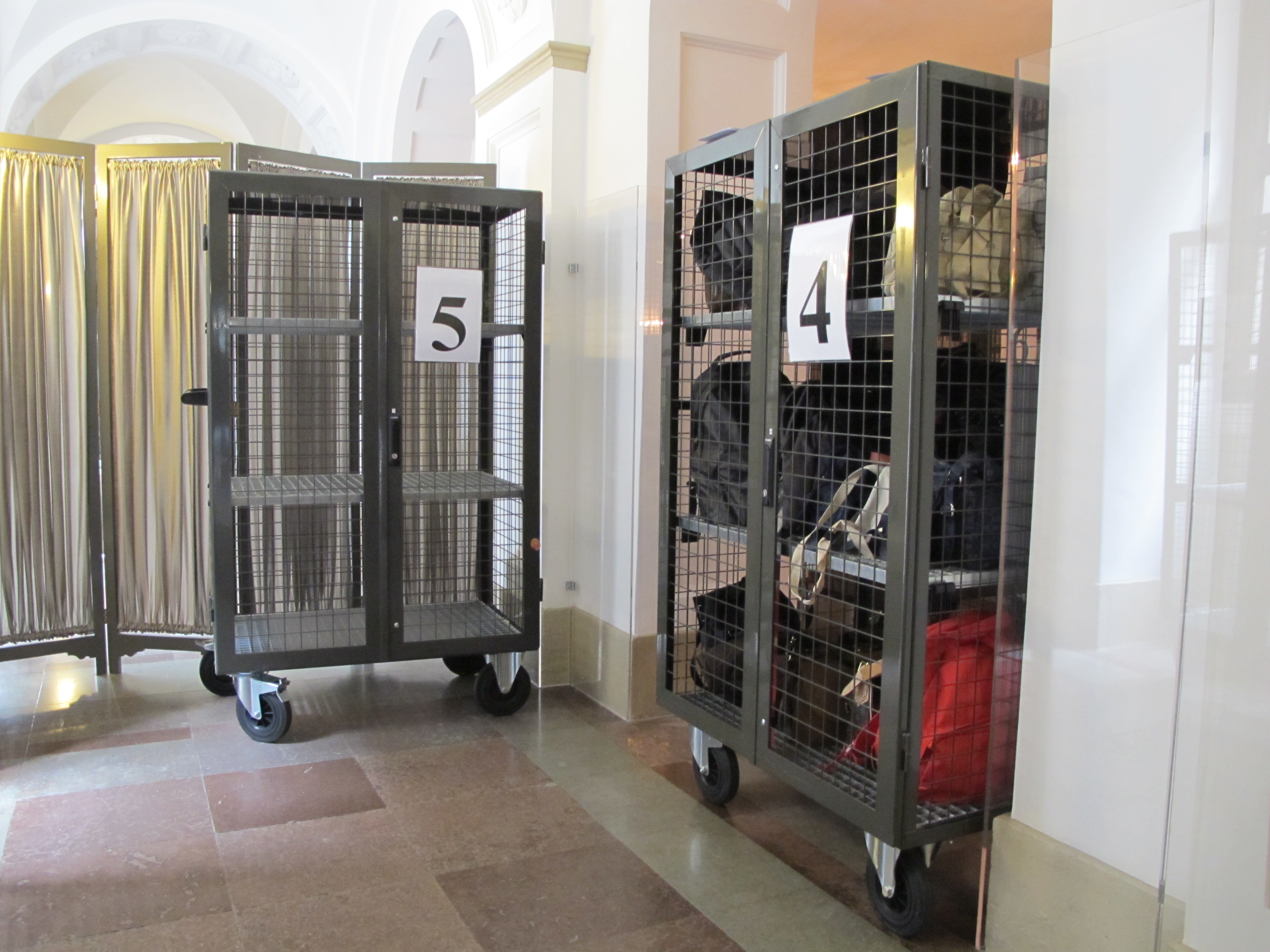
Security carts at the Dam, the royal palace in Amsterdam.

Security carts at the Dam, the royal palace in Amsterdam.

The Dam, the royal palace in Amsterdam, uses tall carts with steel shelves that are enclosed with steel mesh.  Not only can they be locked for security (nowadays, kids are carrying expensive electronics) but still allow for visibility inside.  They’re designed for moving valuable parts in warehouses and called “security carts”–many versions are available.

If you’ve found other clever way to handle student belongings during field trips, please share them in the comments below.

A Process for Rethinking the Historic House Museum

Mission-Sustainability Matrix Next week I’ll be at the Margaret Mitchell House in Atlanta, Georgia leading a workshop with Ken Turino of Historic New England on the rethinking the historic house museum.  We’re not the only ones who are working on this topic, indeed, Michelle Zupan at Hickory Hill  assembled a five-page bibliography of books, articles, and dissertations for the workshop, so long that I’m hesitant to distribute it because it could be discouraging (“what? I have to know all this to rethink my historic house?”).

And if we want to go beyond historic house museums, the list would be even longer. Businesses have been “rethinking” for decades in order to grow in size or increase their profits.  They have the resources to study this topic rigorously and there is a lot we can borrow for our field (and much that doesn’t apply and can Continue reading →

Looking to Improve the Deaccessioning Process at Your Site?

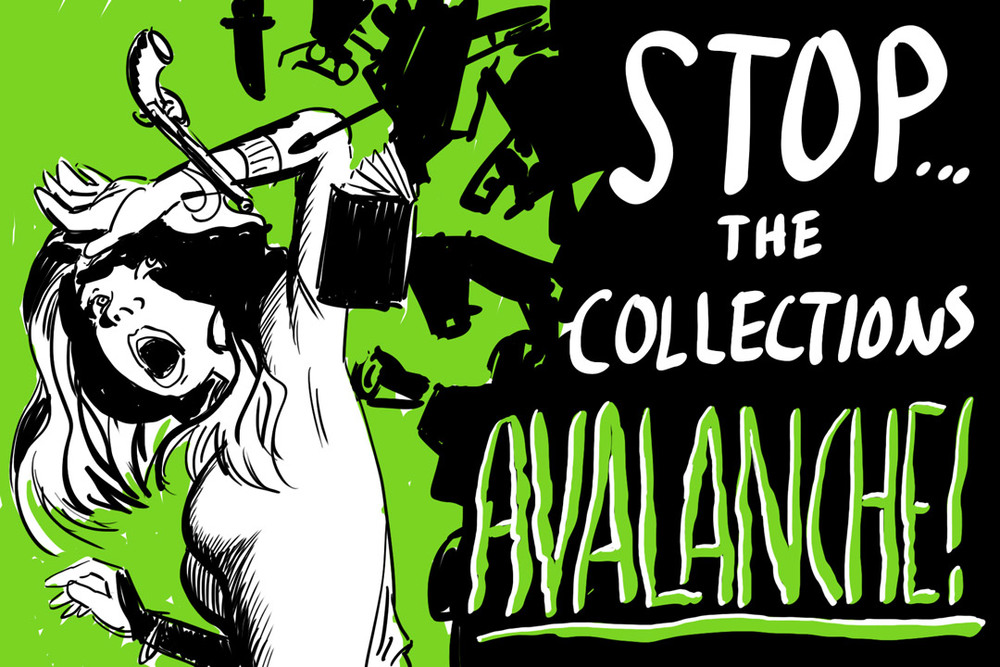
collections avalancheThe Active Collections group is developing a new model to streamline the deaccessioning process, but they need information about current practices at house museums and historic sites to figure out how to best go about this.  If you’d like to share what’s happening at your institution as well as your thoughts on the process and impact of decessioning, please take their online survey.  This is part of a field-wide survey, so we really want to be sure historic sites and house museums are well represented.  To learn more, visit ActiveCollections.org.

If You Visit the Netherlands, Get a MuseumKaart

Museum KaartI’ve just returned from a week-long study trip to the Netherlands, a whirlwind visit that included nearly two dozen museums and historic sites, thanks to the MuseumKaart.  This card provides free (and sometimes discounted) admission at most museums in the Netherlands for a year.  It can be purchased at any participating museum for €55 and although it was a lot of money to pass over on my first day, I received it back quickly because admission fees range from €5 (Edam Museum) to €17.50 (Rijksmuseum).  As a museum geek, they definitely lost money with me. Even better, it’s good for a year, unlike the 1-3 day “I am Amsterdam” card, so there’s no rush.  The card not only saved me money, but encouraged me to see places I wouldn’t ordinarily visit, such as the Museum of Bags and Purses or the Willet-Holthuysen Museum.

My week in the Netherlands was provocative and I’ll be sharing some of the best and most interesting experiences in the coming weeks.  In general, museums and historic sites in the Netherlands seem to:

Continue reading →

Using Windows for Interpretation

Every historic site (well, perhaps 98% of them) have windows but they are rarely used in the interpretation.  Here are several ways to use windows to set the stage, enhance the experience, or provoke thinking.

1.  Windows can set the stage for interpretation

Dayton Aviation Heritage National Historical Park in Dayton, Ohio.

Dayton Aviation Heritage National Historical Park in Dayton, Ohio.

The easiest way is to use windows is as an introduction to the site by using a bold image or intriguing message that prepares the visitor for what’s inside.  Perforated vinyl is ideal for this situation because it can display graphics while allowing light to flow inside and permitting views outside.  At the Dayton Aviation Heritage National Historical Park, perforated vinyl signs on the two-story windows of the visitor center feature enormous Continue reading →

Knowledge of US History Unchanged Overall for 8th Graders, but Differences Are in the Details

Average score changes between 2010 and 2014 in NEEP at grade 8 by subject.

Average score changes between 2010 and 2014 in NEEP at grade 8 by subject. To view the full report, go to NationsReportCard.gov.

The National Center for Education Statistics, which administers National Assessment of Educational Progress (NAEP, also known as the Nation’s Report Card), recently announced that overall academic performance of eighth-graders in U.S. history, geography and civics has remained unchanged since 2010, though Hispanic students have made gains in U.S. history and geography.

NAEP reports performance using average scores and percentages of students performing at or above three achievement levels: Basic, Proficient and Advanced. The Basic level denotes partial mastery of the knowledge and skills needed for grade-appropriate work; Proficient denotes solid academic performance; and Advanced represents superior work. The assessment is based on nationally representative samples of more than 29,000 eighth-graders in total across the country.

The 2014 results for U. S. history show that 18 percent of eighth-grade students performed at or above Proficient, which is basically unchanged from 17 percent in 2010 and 2006. There are significant differences by ethnicity: Continue reading →