Ask any museum professional about barriers to participation, and you’re likely to hear about time, cost, or location. But two recent studies suggest the real obstacles may be more subtle—and more solvable. Whether your museum operates online, outdoors, or in a traditional building, one persistent challenge remains: many potential visitors don’t know what you offer or don’t believe it’s for them.
Non-Visitors Aren’t Uninterested—They’re Unaware or Uncertain
Wilcox et al. studied visitation patterns at two urban National Park Service sites in Washington, DC: Rock Creek Park and the C&O Canal. They surveyed both visitors and non-visitors during the pandemic and found that the most common constraint for non-visitors wasn’t disinterest—it was lack of awareness. Many simply didn’t know what the parks offered, where they were located, or whether they were open to the public.
Over the past year, the National Gallery of Art has begun experimenting with how it presents art in the West Building—the museum’s original home, long known for its restrained elegance and traditional installations. While the building remains largely unchanged since it opened in the 1940s, these recent “interventions” offer a glimpse into how the museum is rethinking its interpretive and design strategies as it prepares for a broader transformation.
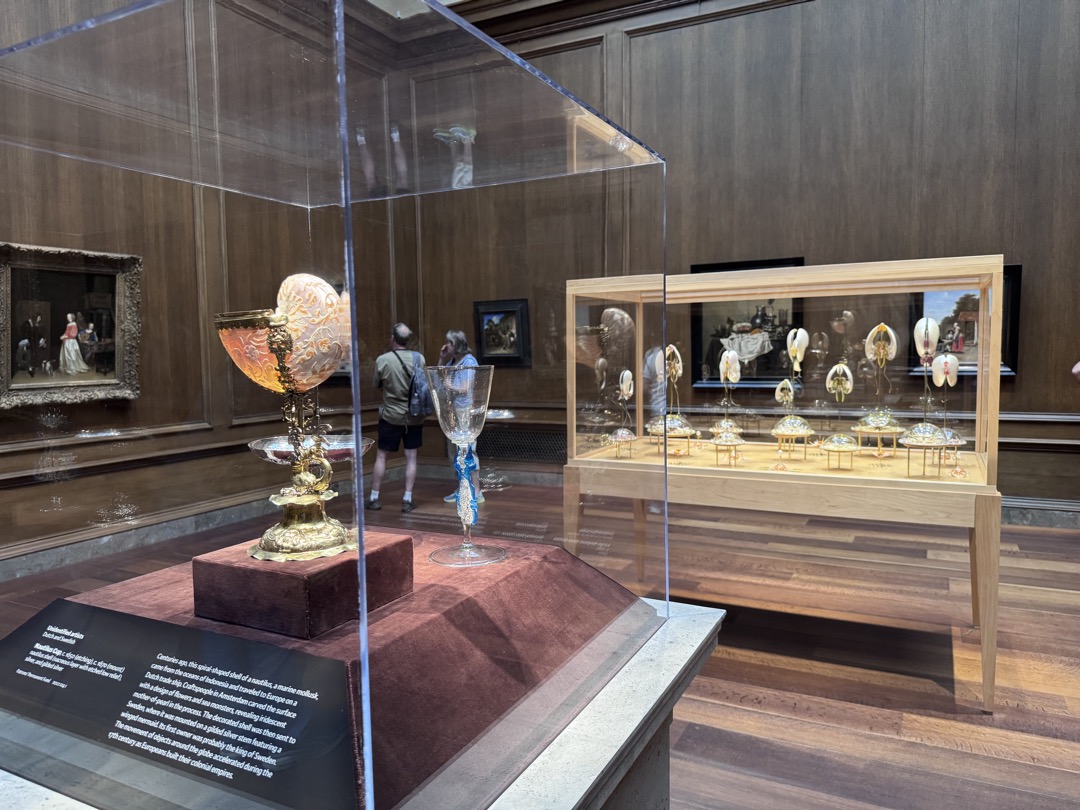
In a previous post, I discussed the National Gallery’s process of reimagining its West Building. Now we’re seeing that process move from discussion to experimentation. Here are three interventions currently on view, each testing new ways to engage visitors and reframe the collection:
1. Nature and Objects in Dutch Landscapes
In the 17th-century Dutch landscape paintings gallery, two display cases offer a fresh angle on how nature shapes artistic imagination. One features three European decorative objects—a silver footed bowl, an elaborate stemmed glass, and a nautilus shell mounted on a gilt stand—designed to echo the forms and themes found in nearby paintings. The other case introduces a striking contemporary counterpart: Small Crafts on Sisyphean Seas by Dario Robleto, a mixed-media work combining natural materials like seashells, coral, urchin spines, and nautilus shells. These subtle interventions ask visitors to consider how objects, both functional and fantastic, reflect the human impulse to capture the natural world.
The National Gallery of Art in Washington, DC has quietly launched an ambitious reimagining of its original West Building, a structure completed in the early 1940s and long known for its grand architecture and displays of masterpieces. For generations, galleries have been organized by geography and time period, with paintings neatly arranged on walls in a format familiar—and comforting—to many visitors. But as expectations change and audiences diversify, the NGA is reconsidering what a national art museum can and should be in the 21st century.
Project Goals: From Comfort to Connection
The West Building Reimagining Project is driven by a compelling vision: to make visible the profound links between art and our shared humanity. The project seeks to move beyond static displays and conventional categorizations to create exhibitions that are more resonant, inviting, and engaging—especially for multi-generational families and first-time visitors. The team aims to evoke a broader range of responses, from curiosity to awe, while incorporating a wider variety of objects and histories than traditionally seen in the West Building.
Listening, Learning, and Prototyping
The project began in earnest in 2023 with a series of listening sessions involving both staff and visitors. One key insight quickly emerged: diversity—of objects, perspectives, and people—matters. Since then, the Gallery has taken a human-centered design approach, engaging more than 100 participants across departments and partnering with faculty from the Corcoran School of Art at George Washington University (including me!).
Subcommittees were formed in 2024 to tackle specific challenges, and in 2025 the focus has shifted to testing experimental display strategies. These prototypes will be refined throughout the year, with recommendations to the NGA’s president and CEO slated for 2026. The process is intentionally iterative, emphasizing learning and responsiveness over rigid outcomes.
Back in 2014, I shared a classic business matrix as a tool to help museums and historic sites think more strategically about their programs and activities. It plotted mission alignment on one axis and financial sustainability on the other, providing a quick visual way to categorize whether something was worth continuing, needed revision, or should be reconsidered altogether, using metaphors of stars, hearts, cash cows, and bunnies.
The response was strong—many found it useful for internal discussions, staff retreats, and board meetings. But since then, my thinking has evolved.
Over the last decade, I’ve come to see that we need a broader lens. It’s not enough to think about money and mission alone. Sustainability today must account for more than just dollars, and impact is shaped not only by mission statements, but also by vision and values.
A Matrix for Today
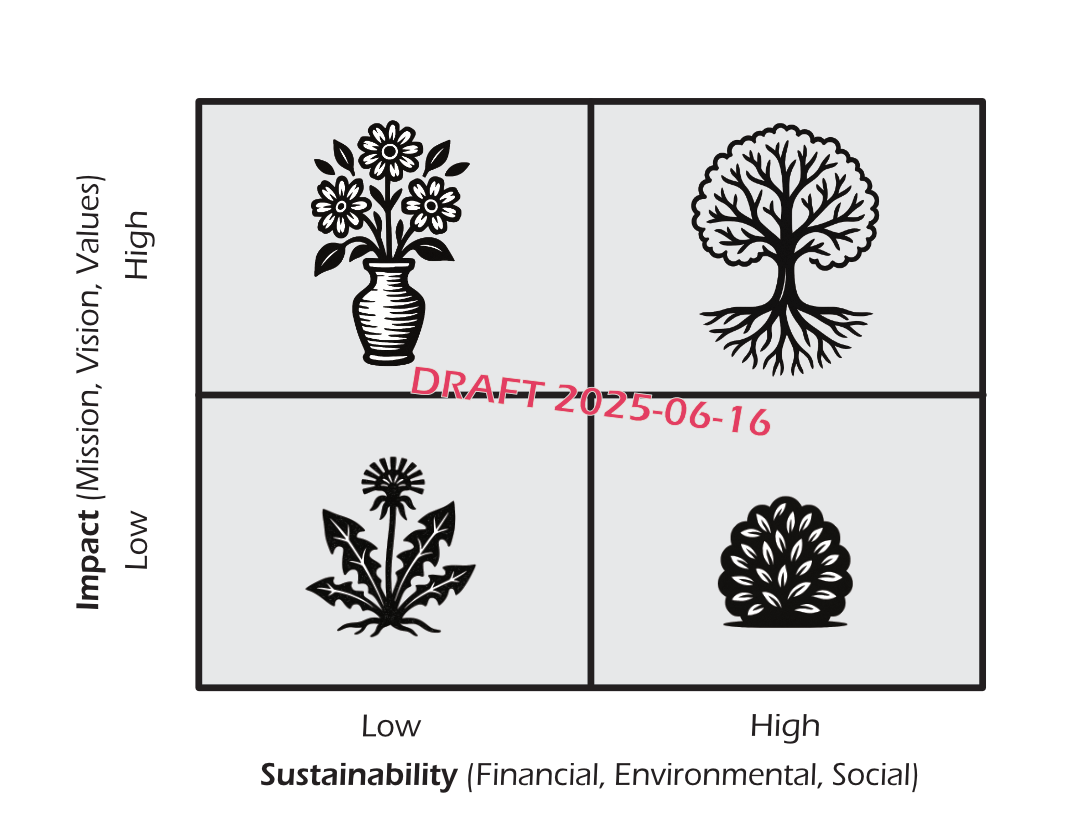
Here’s the updated version:
The vertical axis is now Impact, encompassing not just your mission but also your vision and values—your full organizational purpose.
The horizontal axis is now Sustainability, which considers financial, social, and environmental dimensions.
This updated Impact-Sustainability Matrix helps museum professionals assess whether a program or initiative is aligned with what matters most and whether it can endure in a resource-constrained world.
A Living Metaphor: From Bloom to Root
To make the matrix easier to understand and more memorable, I’m using a botanical metaphor. Every program or initiative can be thought of as a kind of plant—some deeply rooted and thriving, others beautiful but short-lived, and a few that are sadly distractions. I’m not sure if the metaphor is as clear and apt as my previous star/heart/cash cow/bunny matrix, so I’d love your thoughts and suggestions in the comments below.
Below are descriptions of each quadrant using this metaphor:
Fundraising from members has never been more critical. With the elimination of federal grants from agencies like IMLS and NEH, many museums and historic sites are facing serious gaps in funding. So where do you turn for help?
What if you borrowed a playbook from one of the most successful (and controversial) fundraising machines in the country?
Imagine hiring the same team that writes the direct mail letters for Judicial Watch—the political juggernaut that’s raised millions from everyday Americans, including, I should note, my own mom. Their formula? Urgency, clarity, conviction—and a whole lot of bolded phrases.
So, what would a museum fundraising letter sound like in their hands?
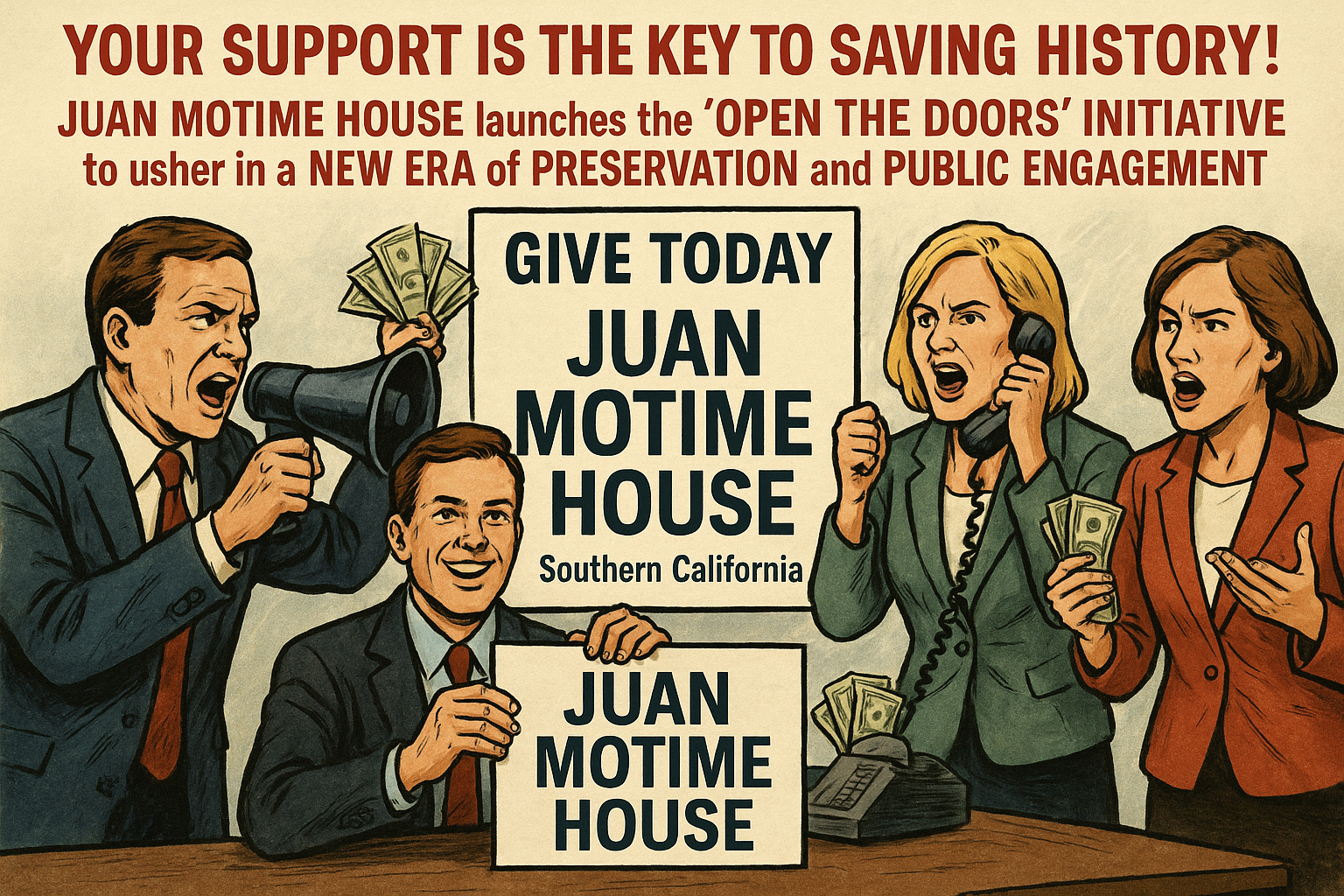
Here’s what GPT came up with when I asked it to write a high-energy, parody-style appeal for the Juan Motime House, an imaginary small historic house museum in Southern California:
The winter holidays are some of the most beloved and heavily attended times of year for museums and historic sites—but interpreting them can be a challenge. Whose stories are told? What traditions are represented? How can we ensure our programs are welcoming, accurate, and relevant to our communities?
If you’ve been asking these questions, join me at an upcoming webinar hosted by the American Association for State and Local History (AASLH):
“Interpreting Winter Holidays with Your Community”
I’ll be speaking alongside Ken Turino, Martha Katz-Hyman, and Morgan Lloyd, each of whom brings experience and insights into crafting more inclusive, community-centered holiday programs. We’ll explore ways that museums and historic sites can move beyond nostalgic or monolithic narratives and instead embrace a richer variety of traditions and histories—from Hanukkah to Kwanzaa, from secular seasonal festivals to the complexities of Christmas. Whether you’re revamping long-standing programs or launching something new, this session will offer fresh ideas, examples, and practical steps for engaging your community during the holiday season.
In my portion of the webinar, I’ll share strategies for refreshing an existing Christmas event by incorporating research on state and local history, helping organizations better connect with their communities and interpret traditions in a meaningful context.
The webinar is inspired in part by the recent bookInterpreting Christmas at Museums and Historic Sites, which Ken and I co-edited and which features contributions from many practitioners grappling with these same questions. As a bonus, webinar attendees will receive a 30% discount on the book.
The museum field has always been a challenging place for job seekers. Even in the best of times, there are often more talented people than positions available, and salaries tend to lag behind comparable roles in business or government. But with the recent elimination of federal funding through IMLS and NEH, and with looming threats of layoffs at the Smithsonian Institution, National Park Service, and National Gallery of Art, the situation is becoming even more precarious. I’m deeply concerned about what lies ahead for our field, not just for those losing jobs, but for the ripple effects on institutions, communities, and careers.
Fifteen years ago, I faced a similar moment when the National Trust for Historic Preservation laid off about a third of its staff. I was fortunate: I had a generous severance package and a consulting project waiting (thank you, Jim Vaughan!). But not everyone will be so lucky this time. In that difficult season, a few books proved invaluable to me, and I strongly recommend them to anyone now facing an unexpected job search:
Strong research and writing skills are essential for museum professionals, whether you’re publishing an article, preparing grant proposals, or mentoring new colleagues. That’s why I created a new eight-minute video, Chicago Style Basics, to introduce the fundamentals of citation and documentation using the Chicago Manual of Style — just updated with its 18th edition ($75!).
The video walks through what a citation is, why citations matter, and the basic parts of a properly formatted citation. It also provides real examples of how to cite a book with one author, a chapter within a larger book, and a journal article — essential formats for anyone writing in our field. The video closes with a quick summary and a few resource suggestions for those who want to dig deeper.
At the Museum Studies Program at George Washington University, we require our graduate students to demonstrate professional-level research and writing, and this video was created to support those expectations. But it’s also a useful refresher for anyone preparing manuscripts for publication, developing course materials, or helping new professionals get their footing.
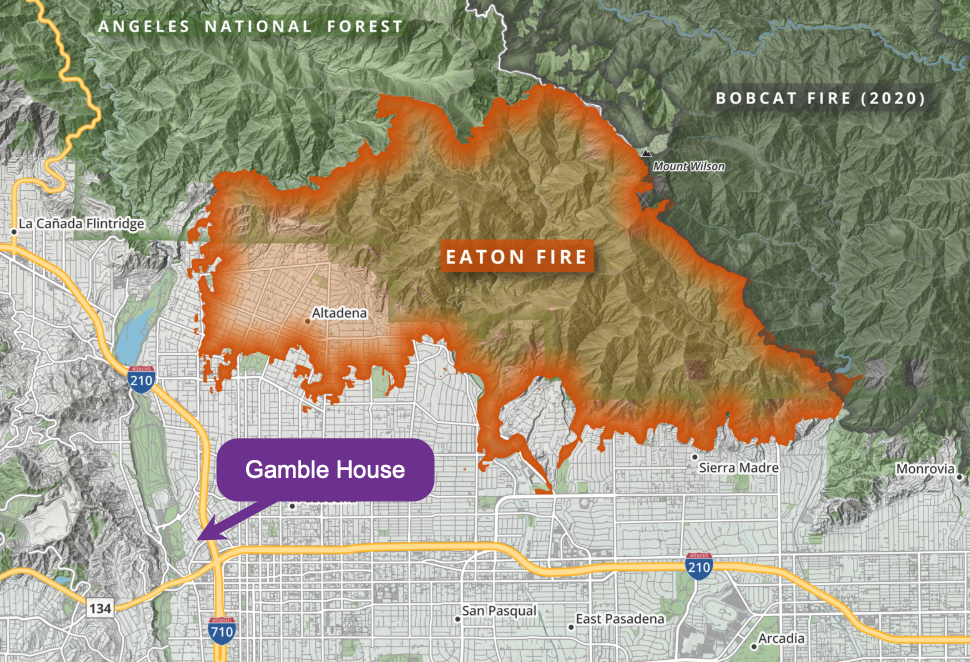
Extent of Eaton Fire, 2025. Courtesy Wikimedia Commons.
When disaster strikes, how should a museum approach fundraising? A recent appeal from the Gamble House Conservancy offers an excellent model.
Following the devastating Eaton Fire in January 2025, the Gamble House framed its appeal not simply around its own needs, but around its role in the community’s recovery. The letter powerfully connects the Gamble House to the larger regional tragedy, emphasizing the museum as a place of respite, inspiration, and service. Rather than focusing solely on damage or lost revenue, the appeal highlights how the museum has already acted: removing collections, supporting staff and volunteers, surveying visitors to guide future programs, and partnering with displaced nonprofits like the Pasadena Audubon Society.
The Conservancy also effectively maintained its core mission. Ongoing conservation efforts, such as addressing water intrusion and repairing the side yard gate, are presented alongside expanded community initiatives. This dual focus reassures donors that their gifts support both immediate public needs and long-term stewardship.
Finally, the letter makes giving easy. In addition to traditional mail-in donations, a QR code directs supporters to a secure online portal, meeting donors where they are.
The takeaway for museums and nonprofits? After a crisis, connect your organization’s needs to the broader recovery, demonstrate early action, and align core mission work with new community service roles. Fundraising after a disaster isn’t just about survival — it’s about showing how your institution remains essential to the life of the community it serves.
By Mary A. van Balgooy, Vice President, Engaging Places LLC
Last week, I attended the 2025 AASLH Historic House Museums Summit, “Interpreting Historic House Museums Today,” held at the Edsel and Eleanor Ford House in Grosse Pointe Shores, Michigan. Over 100 museum professionals from across the country came together to assess where interpretation stands today and how it should evolve over the next decade. The Summit’s objectives were clear: attendees would examine the current scope of historic house interpretation, identify trends for the next 10-15 years, and define the major issues shaping the field. Through keynotes, breakout sessions, and informal discussions, attendees tackled major questions about our roles, responsibilities, and hopes for the sector.
Big Ideas from the 2025 AASLH Summit
One of the most powerful themes to emerge was the need to embrace “whole history.” Instead of narrowly focusing on furniture, technology, or architectural details, participants stressed telling a full, human-centered story. This includes voices often left out of traditional interpretation: women, people of color, laborers, and marginalized groups. The idea is not merely to add these perspectives but to reframe interpretation through them, reflecting the complexity and moral ambiguity of historical figures and events.
A second major idea was that historic house museums must move beyond passive presentation into active engagement. Museums should create dialogic experiences where visitors reflect, question, and even challenge the past. Skills like listening, civil discourse, and conflict navigation were identified as essential for future staff training.






 Engaging Places