An introduction to the U. S. Army Women’s Museum in Virginia. It’s celebratory and vague (you can easily swap the word “women” with “African Americans,” “Virginians,” or even “Latvians,” and not change the patriotic message very much) but who knew such a place existed.
Category Archives: Collections
Video: Interpreting a woman suffrage photo
The Local History Specialist of the Pikes Peak Library District in Colorado interprets a 1915 photo of women seated in an open car advocating for the woman’s right to vote. The content is a bit overwhelming for me (its needs some themes and fewer discrete facts) but it provides an example of interpreting collections through video. It’s part of the “Framing Community, Exposing Identity” series to interpret “iconic images capturing life at the foot of Pikes Peak.”
New England’s History and Architecture Explored in June
 Historic New England presents the tenth annual Program in New England Studies (PINES), an intensive learning experience with lectures by curators and architectural historians, workshops, and behind-the-scenes tours of Historic New England’s properties and collections, as well as of other museums and private homes in the region. This year’s program begins on June 17 with Cary Carson on the 17th century in the Boardman House and ends on June 22 with Richard Nylander and Nancy Carlisle on the Colonial Revival at Beauport.
PINES examines New England history and material culture from the seventeenth century through the Colonial Revival, and delves into building design and technology, and the wide-ranging lifestyles illustrated by the historic sites on the itinerary. Highlights include private tours of Historic New England properties in Greater Boston; Essex County, Massachusetts; Portsmouth, New Hampshire; South Berwick, Maine; and Woodstock, Connecticut; workshops in furniture, ceramics, and textiles at Historic New England’s facility in Haverhill, Massachusetts; and a private tour of Continue reading
WebWise Conference Coming Up in Early March

WebWise 2012: Project demonstrations
WebWise, the annual conference hosted by the Institute of Museum and Library Services, will be held in Baltimore on March 6-8, 2013. This year’s conference is co-sponsored by the Roy Rosensweig Center for History and the New Media and is being organized and presented in a very different manner. In advance, participants (anyone, actually) voted on the proposed workshop topics and then the conference organizers recruit speakers to fill the slots. For the project demonstrations, the participants will be divided into three groups and then rotate through three different sets of presentations. In addition, there will be a series of three-minute lightning talks over lunch, facilitated project/partnership incubator groups, and one-on-one speed consulting sessions. Indeed, there’s only one plenary session scheduled for the entire conference–Audrey Watters of Hack Education–as a keynote on the last day.
I’ve attended as many WebWise Conferences as possible because the content has been outstanding and I often come away with new approaches and strategies, even from the sessions that are far outside my field. This year’s reformatting seems intriguing, but much of the content remains a mystery so Continue reading
Video: The Sound of Lincoln
Soundworks documents the creation of “authentic sound” for Steven Spielberg’s film, Lincoln. The sound designer discusses his efforts to collect sounds at historic sites and in museum collections, such as the clocks and doors at the White House and a pocket watch at the Kentucky Historical Society.
Workshops for History Museums and Historic Sites
The American Association for State and Local History unveiled an assortment of workshops for spring (there’s one in every time zone!):
Project Management for History Professionals
Dates: March 7 – 8
Location: History Colorado, Denver, CO
Instructor: Dr. Steven Hoskins, Trevecca Nazarene University, Nashville, TN
Cost: $475 members / $550 nonmembers
$40 discount if payment is received by January 31 (coming up next week!)
This unique two-day workshop improves how history museums operate and serve their community by teaching the fundamentals of project management to history professionals. Everyday work—exhibitions, programming, fundraising, special events, outreach, and collections care—benefit from the knowledge gained. Registration for the onsite workshop also includes access to an online course with related material.
From Children to Adults: Public Programming at History Organizations
Dates: March 14 – 15
Location: Homestead Museum, City of Industry, CA
Instructors: Tim Grove, National Air and Space Museum, Smithsonian Institution, Washington, DC; Alexandra Continue reading
Historic Homeowners Get Special Behind-the-Scenes Access
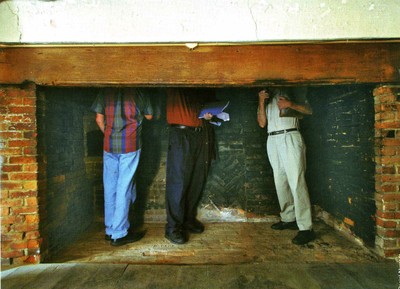
Getting a closer look at the chimney in the 17th century Boardman House in Massachusetts.
This month Historic New England launched, “Insight on Site: Inside the Old House” to give historic homeowners an opportunity to go behind the scenes with staff and learn how to date building materials and identify architectural styles.
Insight on Site takes visitors into parts of Historic New England properties rarely seen by the public, such as the Modern house located adjacent to the newly acquired Eustis Estate in Milton, Massachusetts; a caretaker’s residence at the seventeenth-century Browne House in Watertown, Massachusetts; and the newly reacquired Jewett Eastman House in South Berwick, Maine. Free and exclusively for Historic Homeowner members, the series of four Insight on Site programs runs from January 12 to Continue reading
Collecting Memories from Visitors
Maymont, a Gilded Age estate that’s now a public park in Richmond, Virginia, has an extensive exhibit on the domestic servants in the first half of the twentieth century. To continue to collect stories about and remember the many people who work in domestic service, the exhibit includes a small area that invites family, friends, and neighbors to share their memories with a label that reads:
Sharing Memories
In creating this painting–a symbolic tribute to the individuals who worked as domestic employees at Maymont–I felt special gratitude to my own loved ones. My grandmother, mother, two aunts, and three uncles were all once employed on the Dooley staff.
Was there a significant person in your life who Continue reading
Navigating a Changing Economy: A New Normal for Museums?
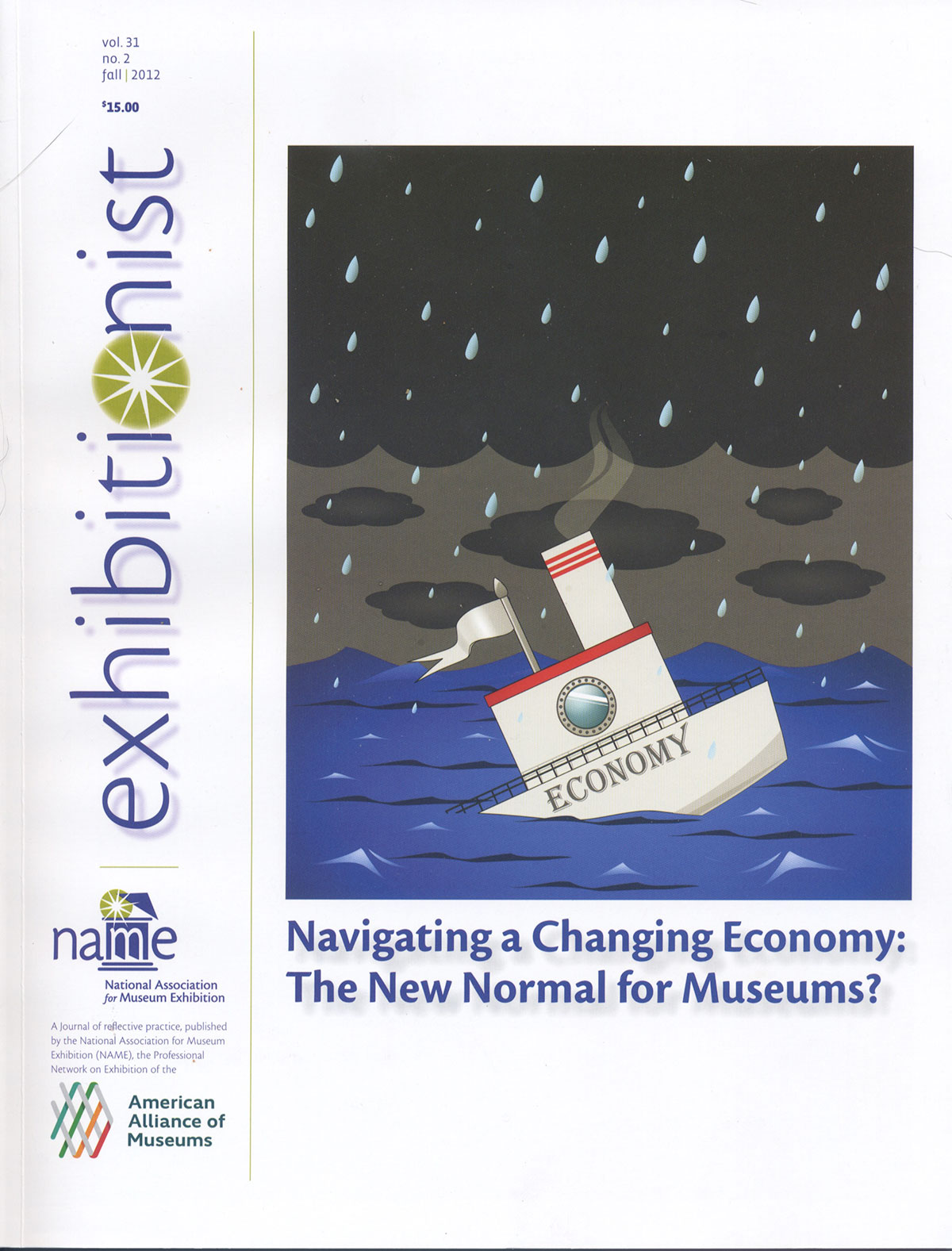
Exhibitionist, Fall 2012
The Exhibitionist, the journal of the National Association for Museum Exhibition (NAME), has devoted its fall 2012 issue to the longterm impact of the economic downturn on the museums. Daniel Spock, director of the Minnesota History Center, and Marilyn Hoyt, a fundraising consultant, discuss the trends affecting exhibitions but whose lessons can apply to other museum departments. Spock believes that museums may be, “moving into a period of permanent instability–a special challenge for museums which have traditionally been in the continuity business.” Hoyt sees that museums are compensating by relying more on in-house resources and phasing projects, often with good side effects, including more prototyping of ideas and a fresh look at familiar collections.
Complementing these opening articles are: Continue reading
AASLH and AAM Align Efforts to Raise Standards and Practices
The American Association for State and Local History (AASLH) and the American Alliance of Museums (AAM) recently announced they will work together to raise awareness of national museum standards and align their assessment programs in order to streamline application and self-study processes. The agreement outlines ways in which applicants of AAM’s Museum Assessment Program (MAP) will benefit after completing AASLH’s StEPs program, in other words, AASLH and AAM have linked StEPs with MAP. If you understand that sentence, you’ve been working in this field a long time.
What’s this mean for historic sites? Both StEPs and MAP are great programs for improving your organization’s work, but they’re very different from each other. StEPs allows you to Continue reading
 Engaging Places