
Over the past year, the National Gallery of Art has begun experimenting with how it presents art in the West Building—the museum’s original home, long known for its restrained elegance and traditional installations. While the building remains largely unchanged since it opened in the 1940s, these recent “interventions” offer a glimpse into how the museum is rethinking its interpretive and design strategies as it prepares for a broader transformation.
In a previous post, I discussed the National Gallery’s process of reimagining its West Building. Now we’re seeing that process move from discussion to experimentation. Here are three interventions currently on view, each testing new ways to engage visitors and reframe the collection:
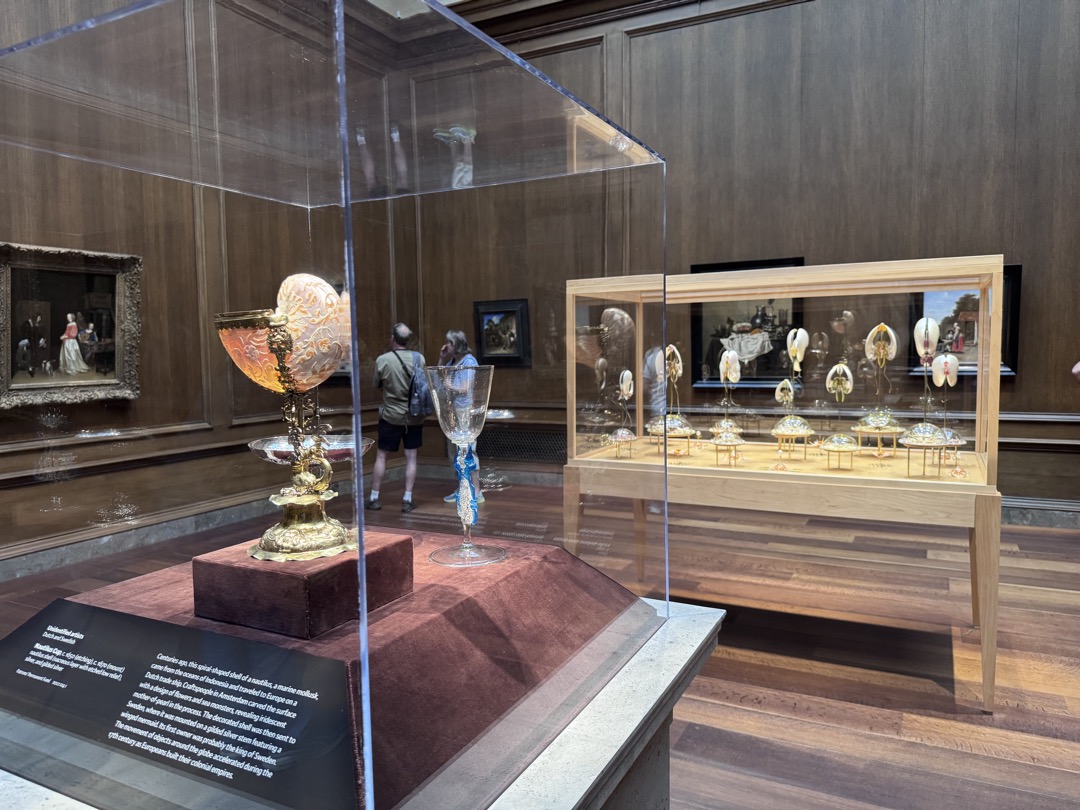


1. Nature and Objects in Dutch Landscapes
In the 17th-century Dutch landscape paintings gallery, two display cases offer a fresh angle on how nature shapes artistic imagination. One features three European decorative objects—a silver footed bowl, an elaborate stemmed glass, and a nautilus shell mounted on a gilt stand—designed to echo the forms and themes found in nearby paintings. The other case introduces a striking contemporary counterpart: Small Crafts on Sisyphean Seas by Dario Robleto, a mixed-media work combining natural materials like seashells, coral, urchin spines, and nautilus shells. These subtle interventions ask visitors to consider how objects, both functional and fantastic, reflect the human impulse to capture the natural world.
Continue reading





 Engaging Places