

Over the past year, Engaging Places has been looking over individual segments of the museum field. While these segments are unique in specific ways, as demonstrated by the data, several of them do share a common theme and mission: an overall goal to promote history. These four segments are History Museums (A54), History Organizations (A80), Historical Societies & Historic Preservation (A82), as well as the broad Museums (A50) category. By combining these segments we can focus on the history-centric portion of the museum field that makes up close to half of its revenue and consists of a whopping 89% of its institutions (see Figure 1). This block of museums is incredibly dominant within the field and a major focus of Engaging Places’ work. For ease of reference, we will be referring to them as History-Focused Organizations.
It is important to remember that as an aggregate these History-Focused Organizations still trend small. Over 90% operate on less than $1 million in revenue annually, with contributions and grants bringing in over half of that vital revenue. For these smaller museums, financial security is a constant and essential priority. While many of these History-Focused Organizations are unable to achieve large pools of investment to stabilize operations, unlike some of their larger counterparts, they can develop practices to move them in this direction.
Continue reading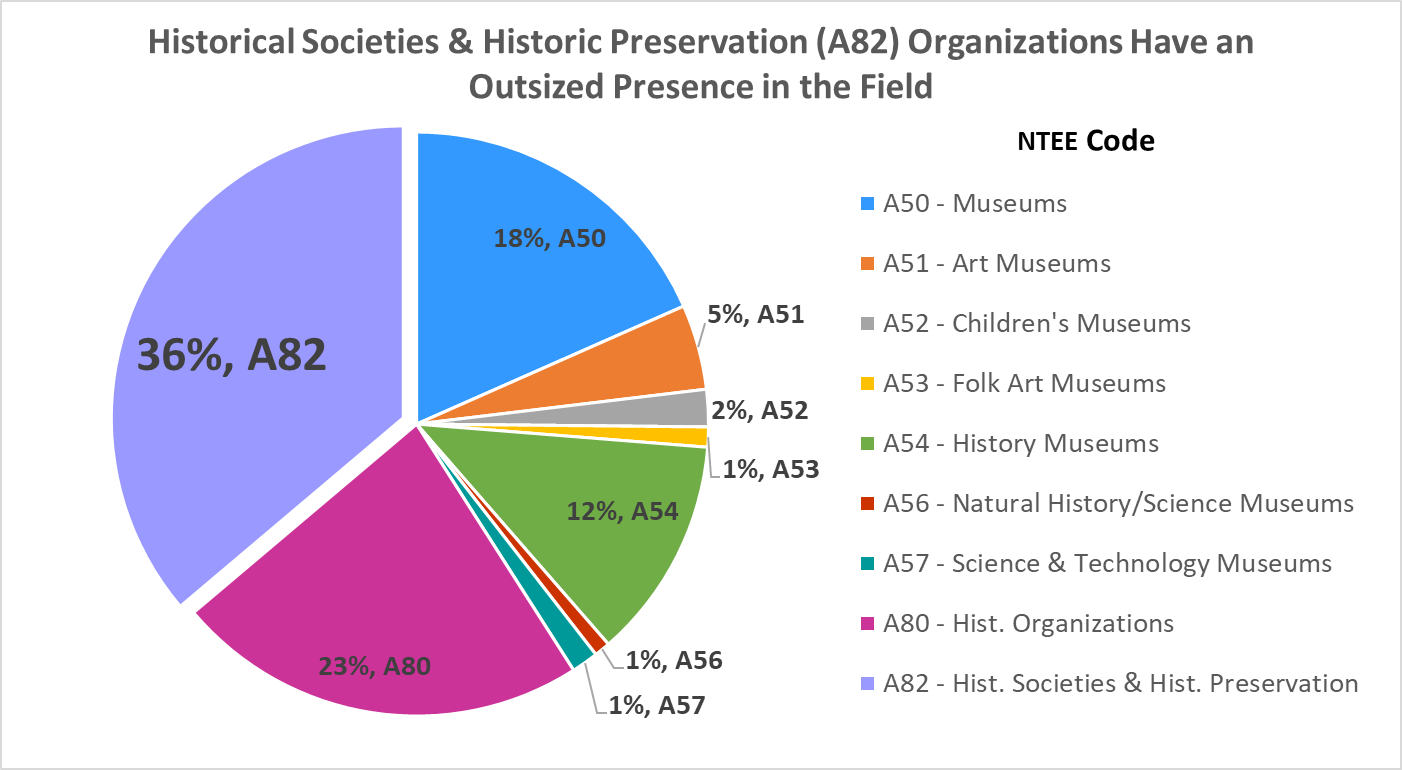
 This blog has been fairly sparse this past year because Ken Turino and I were editing and assembling two dozens essays for Reimagining Historic House Museums: New Approaches and Proven Solutions, an anthology to be published by Rowman and Littlefield as part of the AASLH series. I’m delighted to announce that it is now off my desk and in the hands of the publisher; we expect it will be released in fall 2019.





 Engaging Places