Category Archives: History

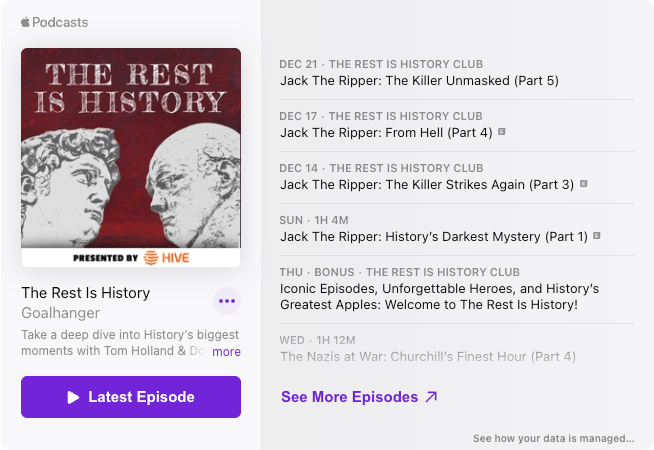
A History Podcast Wins Big—And Offers Clues for Museums’ Future

Apple Podcasts recently named The Rest is History its Podcast of the Year, and in a December 4 interview on In Conversation from Apple News, hosts Dominic Sandbrook and Tom Holland reflected on why history is resonating so strongly today. Sandbrook argues that despite assumptions, young people are deeply interested in the past—provided it is presented through compelling stories and vivid characters. Academic historians, he suggests, sometimes struggle to reach broad audiences because they avoid narrative. For Sandbrook, stories of the Second World War, Greek myth, the Trojan War, and Rome endure because they are foundational to human identity.

Holland adds that today’s students confront unprecedented content pressures, but unlike earlier generations, they are no longer limited to school as the sole venue for learning. The internet has created a lifelong landscape for historical discovery—“an enormous seam of gold,” as he describes it.

Continue reading

When “Accuracy” Means Ideology: A Closer Look at the Heritage Foundation’s Historic Sites Guide

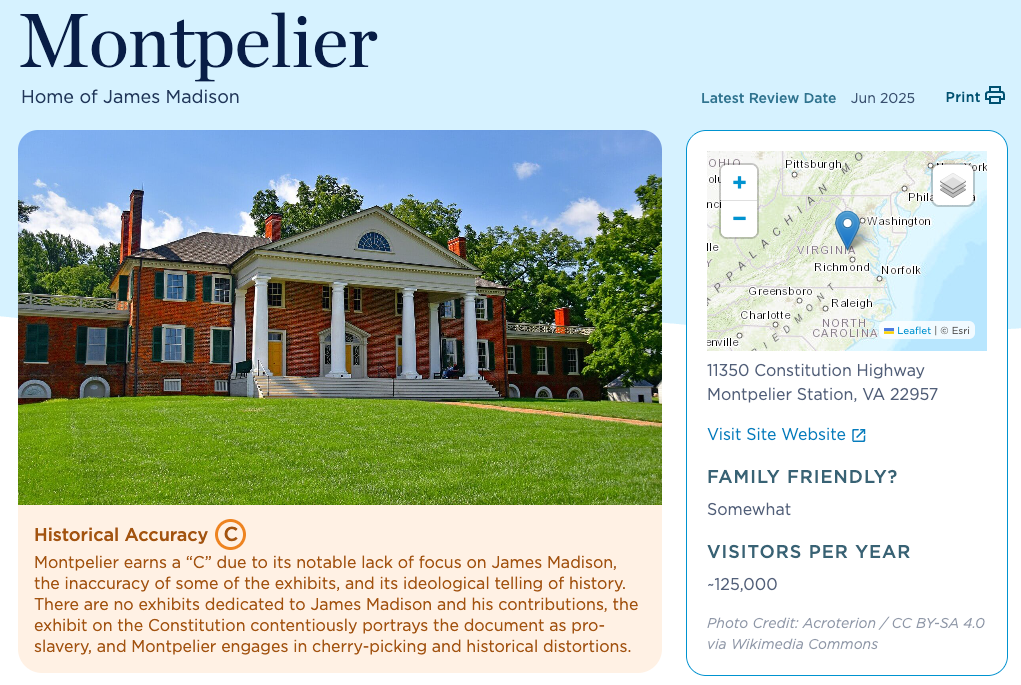
The Heritage Foundation’s new The Heritage Guide to Historic Sites: Rediscovering America’s Heritage promises to help Americans find “accurate” and “unbiased” history at presidential homes and national landmarks. Presented as a travel and education tool for the nation’s 250th anniversary, the site grades historic places from A to C for “accuracy” and “ideological bias.”

At first glance, it looks like a public service. But a closer look reveals that even when Heritage cites “evidence,” its historical reasoning exposes deep methodological and ideological flaws.

The Appearance of Evidence

The Heritage Foundation awards James Madison’s Montpelier in Virginia a C for historical accuracy, claiming the site shows a “notable lack of focus on James Madison” and that:

Continue reading

Rethinking Timelines: How Women’s History Can Reframe the Past

The timeline is one of the most familiar tools in our interpretive toolkit. It helps us organize facts, identify turning points, and connect events over time. Yet the decision of what to include or exclude shapes the story we tell. Most timelines highlight wars, political milestones, or technological achievements. For many women, those events barely touched their daily lives.

As historian Joan Kelly famously asked, “Did Women Have a Renaissance?” Her answer revealed that what was celebrated as a golden age for men was, in fact, a period of restriction for women. That same question can and should be asked at every historic site: Did women’s lives improve or decline during the turning points we highlight? Or were their defining moments entirely different?

Reimagining the Timeline

What if, instead of centering wars and political leaders, we built timelines around women’s legal rights, economic opportunities, or access to education and institutions?

Continue reading

Carrying the American Revolution in a Name

“My name is my identity and must not be lost,” declared abolitionist and suffragist Lucy Stone. Her words remind us that names are more than just labels. They tell stories, carry history, and hold cultural significance. They shape how we see ourselves and how others see us. The act of naming—whether giving, changing, or choosing a name—can express individuality, family ties, culture, faith, or resistance. Moreover, it is a deeply personal act, yet also public. A name declares: this is who I am.

As the United States marks the 250th anniversary of its Revolution, historic house museums have a unique opportunity to reflect on the women of their sites—especially those interpreting the nineteenth century. How were their names connected to individuals of the founding era? How important was it for women to assert ties to that legacy?

For women in the nineteenth century, marriage customarily submerged female identity under a husband’s surname. Often, that is where the trail seems to end. Yet some women found ways to hold onto their maiden or ancestral names—an intentional act of memory-keeping that linked them to Revolutionary roots and preserved family history across generations.

Doing History Through Names

Continue reading

What Happens When a Museum Asks Questions Instead of Giving Answers?

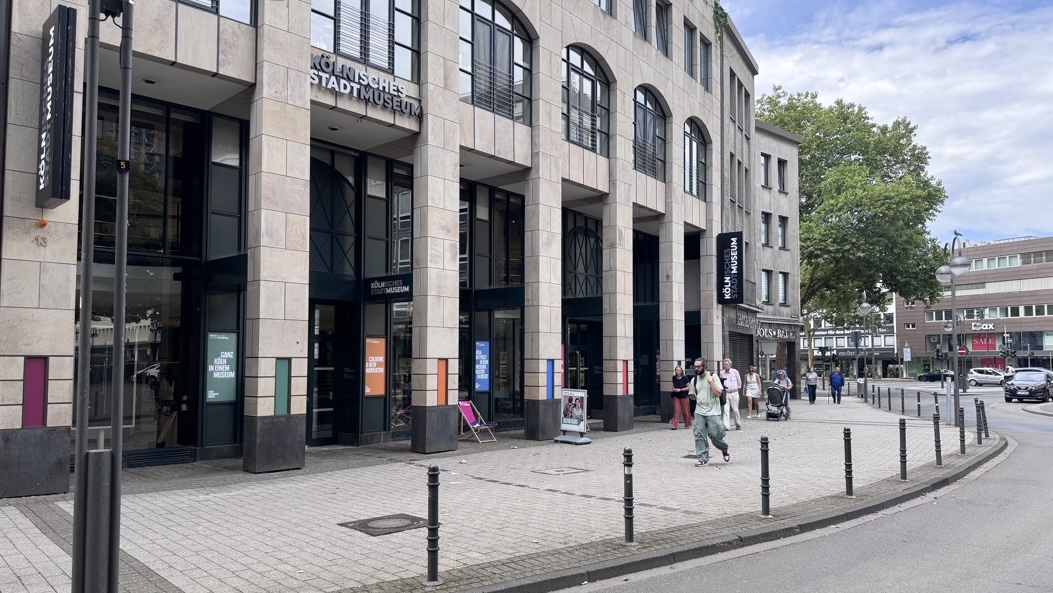
Köln City Museum

In March 2024, the Cologne City Museum (Kölnisches Stadt Museum) in Germany reopened in an unexpected setting: a former luxury department store in the heart of the city’s shopping district. The museum has been around since 1888, but a 2017 water leak forced it out of its former location. Its latest incarnation takes a bold new approach to presenting the city’s history, promoting itself with “Cologne: A New Narrative.”

Rather than organizing its permanent exhibition chronologically or thematically, the museum focuses on emotions using eight big questions to explore both the past and present of Cologne for residents and tourists. Throughout they incorporated responses and personal objects from their “Cologne Experts,” fifteen diverse residents who represented different perspectives.

From the moment you enter, the museum signals something different. The large black-and-white lobby features a central stairway leading both a half-story up and a half-story down, offering a tantalizing glimpse of what’s to come. The introductory label in the lobby reads:

Continue reading

What if the Executive Order Applied to Us? Imagining the Impact on American History Museums

Last week, President Trump issued an executive order titled “Restoring Truth and Sanity to American History”. Aimed at federal cultural institutions—especially the Smithsonian—it calls for more patriotic presentations of American history, emphasizing unity, greatness, and optimism while discouraging exhibits that focus on racism, inequality, or gender identity.

Right now, the order applies only to federal museums. But what if it didn’t?

Let’s imagine the impact on non-federal museums and historic sites across the country—many of which have spent years expanding their stories to include previously marginalized voices and difficult truths.

What the Executive Order Says

The order encourages museums to promote “our extraordinary heritage” and to avoid what it calls “ideological indoctrination or divisive narratives.” It criticizes content that is “inherently racist, sexist, oppressive, or otherwise irredeemably flawed” and that “deepens societal divides and fosters a sense of national shame.” Instead, it wants museums to emphasize “American excellence” and the “progress America has made.”

While these directives may be aimed at the Smithsonian Institution, many worry they signal a broader trend—one that could influence funding, public opinion, and professional standards.

Site by Site: Imagined Impacts

Current approach: Includes honest depictions of slavery and Washington’s complicated legacy.
Potential impact: Decreased focus on the lives of enslaved people; Greater emphasis on Washington’s military victories and presidency; Shift toward a more heroic and simplified narrative

Continue reading

History Redacted? What Museums Can Do About Censorship and Content Restrictions

Across the United States, museums and historic sites are feeling the pressure of growing efforts to limit how history is interpreted and shared with the public. Whether it’s school boards restricting curricula, exhibitions removing stories about women or African Americans, or state legislatures targeting specific narratives, the landscape for public history is shifting. Two recent statements—one from national associations of professional historians and another from a leading association of history organizations—offer timely guidance for navigating this challenge.

Upholding Academic Freedom and Public Access to History

In their joint statement, the American Historical Association (AHA) and the Organization of American Historians (OAH) raise alarm over federal directives aimed at censoring public-facing historical content. Specifically, they object to restrictions on the use of terms like “diversity,” “equity,” and “inclusion,” as well as efforts to remove access to resources about gender, race, and immigration history across government platforms. These actions, the associations argue, “deny the American public access to the complex, nuanced, and evidence-based historical knowledge that is essential to democratic society.”

For museum professionals, this serves as a reminder that we are not only stewards of collections but also of public understanding and trust. AHA and OAH call on historians–including those in museums and historic sites–to resist these pressures by reaffirming their commitment to historical accuracy, critical inquiry, and public service. The practical takeaway? Review interpretive plans, online content, and programs to ensure they are grounded in evidence-based scholarship, even–and especially–when the topics are politically charged.

Standing with the National Park Service: A Sector-Wide Response

Continue reading

Navigating New Federal Policies: What Executive Orders Mean for History Museums and Historic Sites

Museums are no strangers to navigating shifting policy landscapes, but recent executive orders issued by the White House signal significant changes that will affect funding, interpretation, and educational outreach. Whether you work in a history museum, a historic preservation organization, or a community-based historical society, understanding these policies is crucial for adapting to new challenges and opportunities.

Key Themes Across the Executive Orders

1. A Shift Toward Patriotic and Nationalist Narratives

Executive Orders 14190 (Ending Radical Indoctrination in K–12 Schooling) and 14189 (Celebrating America’s 250th Birthday) prioritize “patriotic education” and reinforce a government-endorsed interpretation of American history. This shift is exemplified by the reestablishment of the 1776 Commission and the creation of Task Force 250, which will oversee programming related to the 250th anniversary of American independence. “Patriotic education” is defined as “the history of America grounded in:

  • (i) an accurate, honest, unifying, inspiring, and ennobling characterization of America’s founding and foundational principles;
  • (ii) a clear examination of how the United States has admirably grown closer to its noble principles throughout its history;
  • (iii) the concept that commitment to America’s aspirations is beneficial and justified; and
  • (iv) the concept that celebration of America’s greatness and history is proper.”

2. The Elimination of Federal DEI and Environmental Justice Programs

Executive Order 14151 (Ending Radical and Wasteful DEI Programs and Preferencing) eliminates all federal support for diversity, equity, and inclusion (DEI) initiatives. This includes the termination of DEI-related grants, plans, contracts, programs, initiatives, training programs, offices, positions, and employment policies within federal agencies, “under whatever name they appear.” Museums that have benefited from federal DEI funding or programs may need to reassess their funding strategies and institutional policies.

3. Renaming and Monument Preservation

Executive Order 14172 (Restoring Names That Honor American Greatness) renames Denali back to Mount McKinley and designates the Gulf of Mexico as the Gulf of America. Additionally, the reinstatement of the National Garden of American Heroes and the protection of existing monuments signal a renewed emphasis on traditional historical figures. Museums may face increased scrutiny when interpreting contested histories, particularly around geographic names and public commemorations.

Continue reading

Join Today’s Museum People Call on Interpreting Christmas at Museums!

Are you ready to explore how the holiday season can transform your museum? Today at 12 pm Central Time (1 pm Eastern), the Illinois Association of Museums is hosting its monthly “Museum People Call”, and this month’s topic is Christmas at Museums and Historic Sites!

I’ll be joined by Ken Turino, my co-editor of the new AASLH book series Interpreting Christmas at Museums and Historic Sites, to discuss how your organization can leverage the holiday season to its fullest potential.

We’ll cover key topics to help you:

  • Leverage the holiday season to attract visitors and engage your community.
  • Increase financial stability through creative programming, gift shop sales, and end-of-year giving campaigns.
  • Enhance cultural sensitivity and inclusivity, ensuring your holiday interpretation is meaningful and welcoming to diverse audiences.

Whether your site has a long history of holiday programming or you’re just starting to explore the possibilities, this session will offer practical tips and inspiring ideas to align holiday traditions with your mission.

🎄 Join Us on Zoom 🎄
Click here to join the meeting
Meeting ID: 861 3328 4346

Let’s come together to make the holiday season brighter, more inclusive, and impactful for your museum and its visitors. We look forward to seeing you there!

PS. On Wednesday, December 25, the Gilded Age and Progressive Era podcast will release an interview about the Interpreting Christmas book with me, Ken, and Lenora Henson, formerly director of the Theodore Roosevelt Inaugural Historic Site in Buffalo, New York.

Learning Outcomes for the Semiquincentennial

In a previous post, I offered a detailed guide on using the “Verbs for Significant Learning Outcomes” framework. However, I find that many people benefit from concrete examples, particularly when it comes to the deeper learning experiences—the “yellow” ones related to the human dimension, caring, and learning how to learn.

As a case study, let’s use the “Unfinished Revolutions” theme from the Making History at 250: The Field Guide for the Semiquincentennial:

In the United States, the fight for liberty, equality, and justice has a long and complex history. Through formal politics, grassroots organizing, boycott, protest, litigation, war, and a wide range of other mass and individual actions, people have continually challenged America to live up to our highest ideals—often drawing on ideas expressed in our founding documents. Before, during, and after the Revolution, people have fought for their rights to life, liberty, and the pursuit of happiness and worked tirelessly to secure the blessings of liberty for themselves and their posterity. This history is not a consistent march of progress, but a complex story full of both advancements and setbacks. These stories reveal the ways the Revolution began before 1776 and reverberates through to the present.

Examples of Outcomes

Some potential outcomes for adults during a two-hour visit to a history museum or historic site based on the Unfinished Revolutions theme are:

Foundational Knowledge

1. Visitors will identify three key figures and three pivotal events in U.S. history that significantly contributed to the fight for liberty, equality, and justice.

2. Visitors will describe two core principles from the U.S. founding documents and their influence on major social justice movements.

3. Visitors will define and contextualize three essential terms related to equality and fairness, such as civil rights, freedom, and suffrage.

Application

Continue reading