Category Archives: Travel and tourism

How to Turn Exploratory Visitors into Loyal Fans

Museums and historic sites face a persistent challenge: how to transform mildly interested visitors into deeply engaged patrons. These exploratory visitors—those who follow your social media accounts, visit the website, or attend an occasional event—represent a critical audience segment with untapped potential. How can museums help these visitors feel more connected and motivated to return?

Three recent studies offer actionable insights into addressing this challenge: one on the power of framing and emotional relevance, another on the role of clear wayfinding in reducing visitor anxiety, and a third on the holistic visitor experience at heritage attractions.

Lesson 1: Framing and Emotional Relevance Matter

In “The Role of Framing, Agency, and Uncertainty in a Focus-Divide Dilemma,” Justin Claydon et al highlight how contextual framing—presenting information in a familiar, relatable way—dramatically improves motivation and engagement. When tasks are abstract or unfamiliar, people struggle to prioritize and engage effectively. Conversely, framing a task with real-world relevance reduces uncertainty and increases interest.

Continue reading

The Charles Dickens Museum: Is it Worth Visiting?

I’m gearing up for my upcoming trip to London, and I’ve noticed that many museums now require advance ticket purchases. This makes planning more complex and leaves less room for spontaneity. As I navigate through various websites to check public hours and ticket availability, I’ve also come across some surprisingly clever visitor information along the way.

At the Charles Dickens Museum, there’s a Frequently Asked Questions section on the Admissions page which includes, “do I have to pay?” and “is it worth it?”

Frequently Asked Questions section on the Admissions page of the Charles Dickens Museum in London.

The Home page features a well-organized matrix of visitor information, covering everything from visiting hours and shopping options to exhibitions, performances, and unique tour experiences. Among these are evening and special-topic guided tours. Unfortunately, I’ll have to miss out on the intriguing “Sex, Gin, and Opium” tour, which only runs monthly. Otherwise, I’d be there, ready to dive into “Dickens’s world of boozy parties, illicit romances, and dangerous medical treatments.” And, wow, such bright happy colors for a historic house museum! It’s further proof that history doesn’t have to be brown and beige.

A well-organized matrix of visitor information at the Charles Dickens House.

On the Road: Chimney Rock National Historic Site

Chimney Rock National Historic Site, western Nebraska.

History Nebraska (formerly known as the Nebraska Historical Society) has six historic sites, including Chimney Rock near Bayard. Growing up in California, this natural landmark figures prominently in the schoolbook history of western settlement with images of slowly moving wagons crossing empty plains accompanied by men carrying rifles and women carrying children.

As my first experience in Nebraska, my road trip showed me the physical challenges of living in the mountains and plains of the western United States. That’s one of the big reasons I love to travel because it establishes the physical context for historical events and places that can’t be adequately captured in books or exhibitions. It’s one of the reasons I’m so committed to the preservation and interpretation of historic sites—it’s where history happened.

History Nebraska debuted a renovated Visitor Center at Chimney Rock in July 2020 and received a Rising Star Award as an outstanding tourism attraction from the NebraskaLand Foundation. My chance to see it last month showed that it was a terrific experience for tourists with families from the architecture to the exhibitions to the restrooms. It’s a significant improvement from a couple years ago, as described by Karrin Doll Tolliver at A Taste for Travel.

Continue reading

On the Road: Post-COVID Reopening Trends and Opportunities

I’ve now traveled from Maryland to California and noticing patterns in the ways that museums, historic sites, hotels, and restaurants are reopening after the quarantine. It’s a mixed assortment of responses, mostly because the guidelines and regulations vary from state to state and from museum to restaurant, creating a lot of confusion among travelers. But there are a few trends that reveal how museums and historic sites can create better visitor experiences.

Spreading infection through touch seems to be the most inconsistently addressed issue. When the country first shut down in spring 2019, there were concerns that the virus could be spread by touching surfaces. Research conducted in the last year, however, shows that risk is very low compared to holding a conversation with someone nearby without using masks. Yet most museums continue to have sanitary lotion stands, are covering elevator buttons in plastic, shutting down interactives, disinfecting counters, or warning you about “high touch” areas. Yet there are never any warnings about door handles or handrails, and I rarely find these precautions at restaurants or hotels. Are museums receiving guidance from different authorities, are they particularly risk averse, or do they have visitors that are especially risk averse compared to other similar tourist destinations?

Continue reading

On the Road: Rethinking “Cast in Bronze”

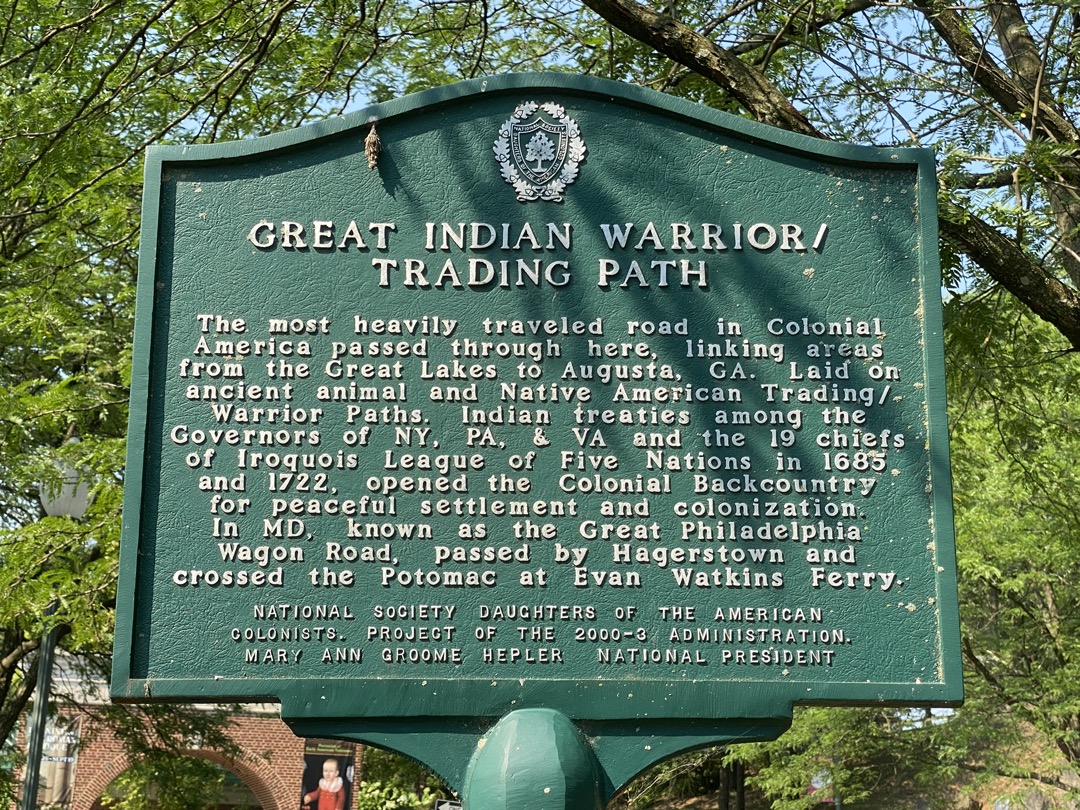
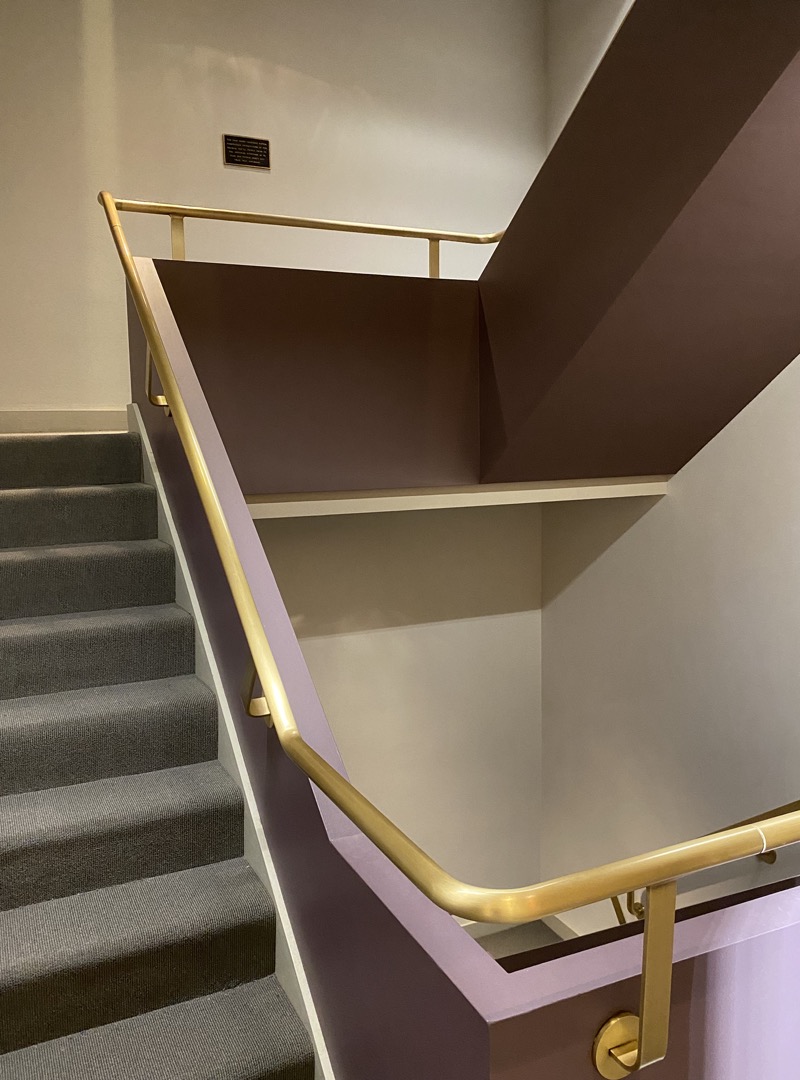
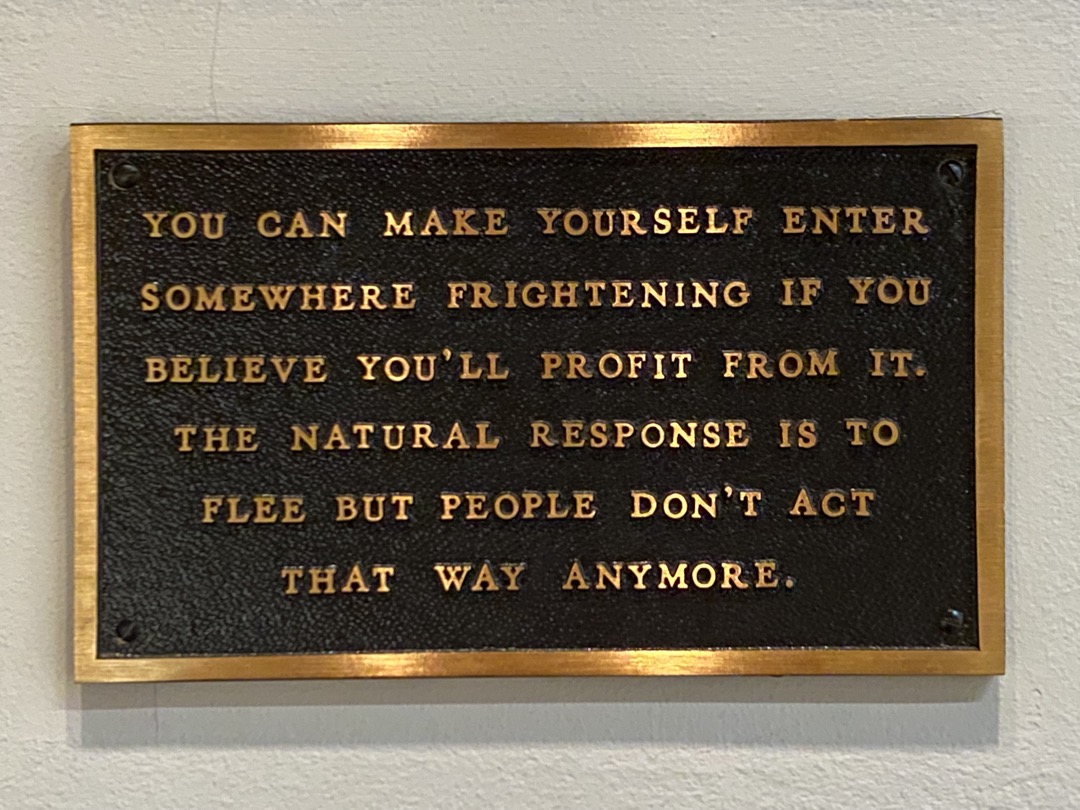
At my first stop at the Washington County Museum of Fine Arts, I was faced with a historical marker at the entrance to the parking lot. A unexpected location but far more accessible than on the side of a busy highway. All of the recent conversations about decolonization has me always take a closer look at these markers but more interestingly, I’ve encountered several different types of markers so far on my road trip that have me thinking more about their value, veracity, authenticity, and permanence by being “cast in bronze”.

As you’ll see, location matters as much as the text. Some are intentional efforts to deceive, some are not. Some are historical, some artistic, some a bit of both. They are all designed to be inspirational, some more deeply than others. Do any of them matter? Do they have any impact? What do you think?

“Great Indian Warrior/Trading Path,” Washington County Museum of Fine Arts, Hagerstown, Maryland.
“Eddie Taylor, Mayor of 7th and Wabash,” Terre Haute, Indiana.

“History of Springfield Public Square,” Springfield, Missouri.

Fort Vancouver Has a Great Visitor Map (and a Lousy One, Too)

The simplest things impress me when I visit historic sites, like a good visitor map.  They’re hard to find so when I spot one, I’m thrilled.

I recently visited Fort Vancouver National Site in Vancouver, Washington, across the Columbia River from Portland, Oregon. In the Visitor Center, they provide a visitor map printed on 11 x 17″ paper that’s gathered in pads of 50 sheets. I’ve always loved these tear-off maps because they’re always neat and generously sized, and in this particular case, also well designed. Even though it’s simply printed with black ink on white paper, the designer carefully used tinting, serif and sans serif faces in different sizes, varied line weights, and symbols to help visitors easily find their way around this very large site. Most important, information that is not important to visitors is omitted. On the back side are Continue reading

Is Your Historic Site Ready for Mobile Devices?

As we know, smartphones and other mobile devices are becoming a routine part of our visitors’ lives.  But did you know that more people search for travel information on their mobile devices than on their desktops?  It allows them to make immediate decisions while they’re on the go, including when they’re on vacation and at your site (if visitors are looking at their smartphones while walking in the door, they may be checking your admission fees and hours, not their email). Mobile users want information fast and they’re not discriminating: they’ll look for the information about your historic site from whomever gets it to them the fastest, even if it’s not your website. That’s the latest research from Think with Google on “Travel Planning and Purchasing has Evolved on Mobile.”  For historic sites and house museums, this means that you should: Continue reading