From Julia Child to Lowriders: Interpreting History at the Smithsonian on the Eve of a Shutdown

Although the federal government shutdown has started, the Smithsonian museums will remain open at least through Monday, October 6. Despite the media’s attention on 12:01 am on October 1, shutdowns don’t happen immediately because stopping a huge bureaucracy takes time, plus each agency has to determine who will be furloughed and who is essential—that’s why air traffic controllers keep working at airports but not educators at museums. Secondly, agencies can use private funds to continue operating, which is why the Smithsonian can keep the doors open a few more days.

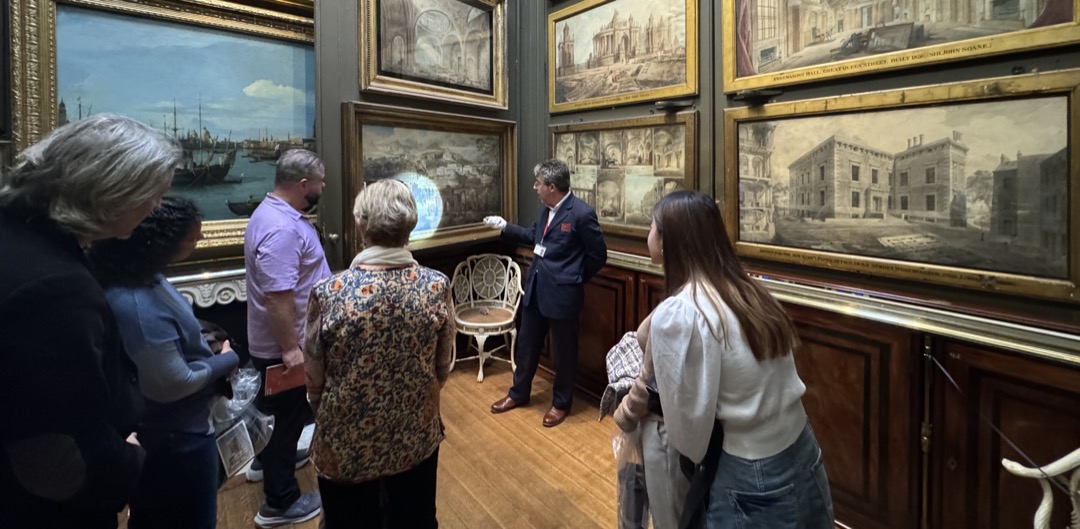
I was fortunate to visit the National Museum of American History on September 30 with my “Interpreting Historic Sites and House Museums” course at George Washington University. For a couple of hours, my students analyzed the interpretation in two exhibitions that included historic buildings: Food (featuring Julia Child’s kitchen) and Within These Walls (featuring the 1750s Ipswich House, the largest object in the collection). They did a terrific job uncovering topics and themes, discussing how women are represented, and the assessing the use of objects.

Continue reading

Carrying the American Revolution in a Name

“My name is my identity and must not be lost,” declared abolitionist and suffragist Lucy Stone. Her words remind us that names are more than just labels. They tell stories, carry history, and hold cultural significance. They shape how we see ourselves and how others see us. The act of naming—whether giving, changing, or choosing a name—can express individuality, family ties, culture, faith, or resistance. Moreover, it is a deeply personal act, yet also public. A name declares: this is who I am.

As the United States marks the 250th anniversary of its Revolution, historic house museums have a unique opportunity to reflect on the women of their sites—especially those interpreting the nineteenth century. How were their names connected to individuals of the founding era? How important was it for women to assert ties to that legacy?

For women in the nineteenth century, marriage customarily submerged female identity under a husband’s surname. Often, that is where the trail seems to end. Yet some women found ways to hold onto their maiden or ancestral names—an intentional act of memory-keeping that linked them to Revolutionary roots and preserved family history across generations.

Doing History Through Names

Continue reading

Navigating Community Engagement in Museums in a Charged Political Climate

I attended a timely and thought-provoking session at this year’s AASLH Annual Meeting called Bridging Divides: Navigating Challenging Histories Through Community Engagement on September 13. It gathered five panelists—Angela O’Neal, Columbus Metropolitan Library, Columbus, OH; Rebecca Asmo, Ohio Humanities, Columbus, OH; Jason Crabill, Decorative Arts Center of Ohio, Lancaster, OH; Kaitlyn Donaldson, Lorain Historical Society, Lorain, OH; Doreen Uhas-Sauer, Rickenbacker Woods Foundation, Columbus, OH—who shared practical advice for how museums and historic sites can continue doing meaningful work in an era of heightened scrutiny, political pressure, and declining trust. I want to share my notes here, not as a verbatim report, but as highlights of ideas that struck me as especially useful for our field.

Protecting Institutions While Advancing Mission

The panel emphasized that today’s environment did not emerge overnight, so institutions can look to history and the humanities for guidance. Two watchwords were don’t obey in advance and don’t over-comply. When regulations restrict action—such as a requirement to remove feminine hygiene products from restrooms—organizations can comply while still serving their audiences by relocating them to staffed areas. Institutions should avoid inviting unnecessary trouble, ensuring content is evidence-based, factual, and defensible. Even the naming of grants matters: choose descriptive, straightforward titles rather than attention-grabbing language that might provoke critics.

Building Credibility Through Storytelling and Relationships

Telling concrete, factual stories is essential. Because American history is often taught as headlines rather than complex narratives, museums must provide depth while remaining accessible. Community review of working drafts helps ensure relevance and reduces backlash. Listening for common ground creates ownership and fosters support. In some cases, reframing exhibits as art rather than history opens doors to difficult conversations. Festivals, events, and everyday relationship-building are as important as the exhibits themselves.

Continue reading

Who Does What? Clarifying Roles for Nonprofit Boards and Staff

One of the most common challenges for nonprofit organizations—whether museums, historic sites, or community groups—is understanding who does what when it comes to decision-making, planning, and day-to-day operations.

Board members sometimes worry they are getting too involved in management or don’t know enough about what’s going on. Staff members, on the other hand, can feel their authority is being questioned when board members step into operational details. Yet when everyone understands their distinct responsibilities, organizations thrive.

We would never expect a new volunteer to suddenly step into a historic house and deliver a flawless tour. They need orientation, resources, and time to develop their skills before they feel confident leading visitors.

Continue reading

Peel-and-Replace Signage: A Durable and Flexible Alternative for Outdoor Interpretation

A large interpretive sign at Kinderdjik in the Netherlands.

On a recent trip to Europe, I encountered one of the most durable yet inexpensive approaches to outdoor signage I’ve seen: printed sheet vinyl applied to thin aluminum laminate panels, typically 1/8 to 1/4 inch thick. These signs can be cut into custom shapes, mounted to walls or posts, and grouped together to present text in digestible sections. When panels need revision or repair, the vinyl surface is simply peeled away and replaced.

The advantages are striking. Because the medium is printed vinyl, designers can easily incorporate full-color photographs, maps, diagrams, and QR codes alongside text. Unlike banners, these signs don’t wrinkle or sag, giving them a crisp, professional appearance. Compared with porcelain enamel or glass-based panels—beautiful but costly and still prone to damage—the peel-and-replace model offers museums and nonprofits a flexible, affordable option.

There are cautions. Outdoor durability must be tested over time to ensure resistance to fading or peeling, and they may need to be framed if the sharp corners pose a safety hazard in high-traffic areas. If you’re in the Southwest, these metal signs could become hot enough to shorten the life-span of vinyl. Still, the opportunity is clear: this approach lowers barriers to producing high-quality interpretative signs. Next steps for museums include piloting small-scale installations to measure longevity, visitor response, and cost savings before broader adoption.

Continue reading

Heading to Cincinnati for AASLH—Will You Be There?

This week I’m heading to Cincinnati for the American Association for State and Local History’s Annual Meeting—and I couldn’t be more excited. After a couple of years of scheduling conflicts that kept me away, I’m very much looking forward to reconnecting with colleagues and friends from across the country.

If you’ll be there, I hope to see you at the History Leadership Institute reception on Wednesday afternoon. If we miss each other then, perhaps we’ll cross paths in the exhibit hall or between sessions. Please do say hello—I always enjoy hearing what others are working on.

I’ve been fortunate to visit many of Cincinnati’s museums over the years, but there’s always more to discover. I’m especially looking forward to Friday morning’s walking tour of the Over-the-Rhine District (which includes a special preview of the new OTR Museum) and Friday night’s reception at the American Sign Museum. There are so many museums to see and I can easily recommend the Cincinnati Art Museum, Taft Museum of Art (in a historic house), Harriet Beecher Stowe House, National Underground Railroad Freedom Center, and the Cincinnati Museum Center (a multi-museum complex in a splendid Art Deco train station). In addition, I’ll make a return visit to two places within walking distance: the 21c Museum Hotel (a surprising blend of luxury hotel and contemporary art museum—what are they doing now?) and the Contemporary Arts Center (by Zaha Hadid, the first woman to design an art museum in the US—how it is holding up?).

It promises to be a week full of learning, inspiration, and connection. I hope to see many of you in Cincinnati!

Job Fairs: A New Public Program for Museums?

This fall, the Museum Studies Program at George Washington University is joining forces again with the History and Art History Departments to offer a Museums+ Internship Fair. Now in its second year, the fair connects undergraduate and graduate students with a wide range of museum and history internship opportunities in the DC area. For a couple of hours on a Friday afternoon, students will gather in the atrium of the Corcoran School of the Arts and Design to meet representatives from dozens of institutions—including the National Gallery of Art, Hillwood Estate, the National Museum of Women in the Arts, Supreme Court of the United States, White House Historical Association, and many more. The goal is simple: to help students discover just how much they can do with their degrees and to broaden their horizons by meeting professionals working across the museum and history fields.

As we’ve been preparing for the fair, I began to wonder—what if museums and historic sites flipped the concept and hosted a similar program for their own communities? Instead of being a service for students alone, imagine it as a public program, designed to connect local residents, businesses, and organizations with the museum itself.

Benefits to the Community

For many people working in business, technology, or traditional jobs, the idea of contributing their skills to a nonprofit or museum has never crossed their minds. They may not recognize that their expertise—whether in marketing, finance, customer service, or carpentry—has enormous value to cultural organizations. By connecting residents with organizations and ideas outside their usual circles, museums can help expand horizons and build confidence.

Benefits for the Museum

Continue reading

Reimagining Historic House Museums: Two Workshops Coming Up!

House museums across the country are confronting difficult questions about relevance, sustainability, and meaning in the 21st century. What worked twenty years ago—traditional tours, decorative arts displays, and carefully preserved interiors—often isn’t enough today to engage visitors or generate financial stability. Communities are changing, audiences have new expectations, and historic sites are under increasing pressure to demonstrate their value.

That’s why Ken Turino (formerly at Historic New England) and I developed Reimagining the Historic House Museum, an intensive one-day workshop that helps professionals and volunteers tackle these challenges head-on. Over the past decade, we’ve led this program at sites across the United States, working with hundreds of staff, board members, and volunteers to think creatively about interpretation, audience engagement, and business models. Each workshop is highly interactive, blending case studies, small-group activities, and practical exercises. Participants leave not only with new ideas, but with concrete tools to implement change at their own sites.

This fall and next spring, we’ll be offering two opportunities to join us in person:

Continue reading

What Happens When a Museum Asks Questions Instead of Giving Answers?

Köln City Museum

In March 2024, the Cologne City Museum (Kölnisches Stadt Museum) in Germany reopened in an unexpected setting: a former luxury department store in the heart of the city’s shopping district. The museum has been around since 1888, but a 2017 water leak forced it out of its former location. Its latest incarnation takes a bold new approach to presenting the city’s history, promoting itself with “Cologne: A New Narrative.”

Rather than organizing its permanent exhibition chronologically or thematically, the museum focuses on emotions using eight big questions to explore both the past and present of Cologne for residents and tourists. Throughout they incorporated responses and personal objects from their “Cologne Experts,” fifteen diverse residents who represented different perspectives.

From the moment you enter, the museum signals something different. The large black-and-white lobby features a central stairway leading both a half-story up and a half-story down, offering a tantalizing glimpse of what’s to come. The introductory label in the lobby reads:

Continue reading

Mapping Slavery in Amsterdam: Reflections on a Heritage Guidebook

During a recent trip to the Netherlands, I picked up a copy of Amsterdam Slavery Heritage Guide (Gids Slavernijverleden Amsterdam) , the second extended edition published in 2018. Although it’s been around for nearly a decade, this was my first encounter with it—and I’m glad I made the discovery. As someone interested in the interpretation of African American history and culture, as well as city guides, I found it to be a compelling model for documenting and acknowledging slavery’s legacy in public spaces.

The full-color Guide identifies over 100 locations throughout the city connected to slavery, from major institutions to architectural details that would be easy to overlook. Each site is presented with a bilingual (Dutch and English) description that varies in length, sometimes accompanied by historical context. The locations are not limited to traditional sites such as mansions and churches—many are ordinary houses or warehouses, gablestones, offices, or former homes of prominent individuals. A map at the beginning allows you to design your own exploration of the city’s slavery heritage.

The content is categorized among four topics:

  • Trade and Profit
  • Africans and Asians in Amsterdam
  • Resistance and Abolition
  • Museums and Archives
Continue reading