
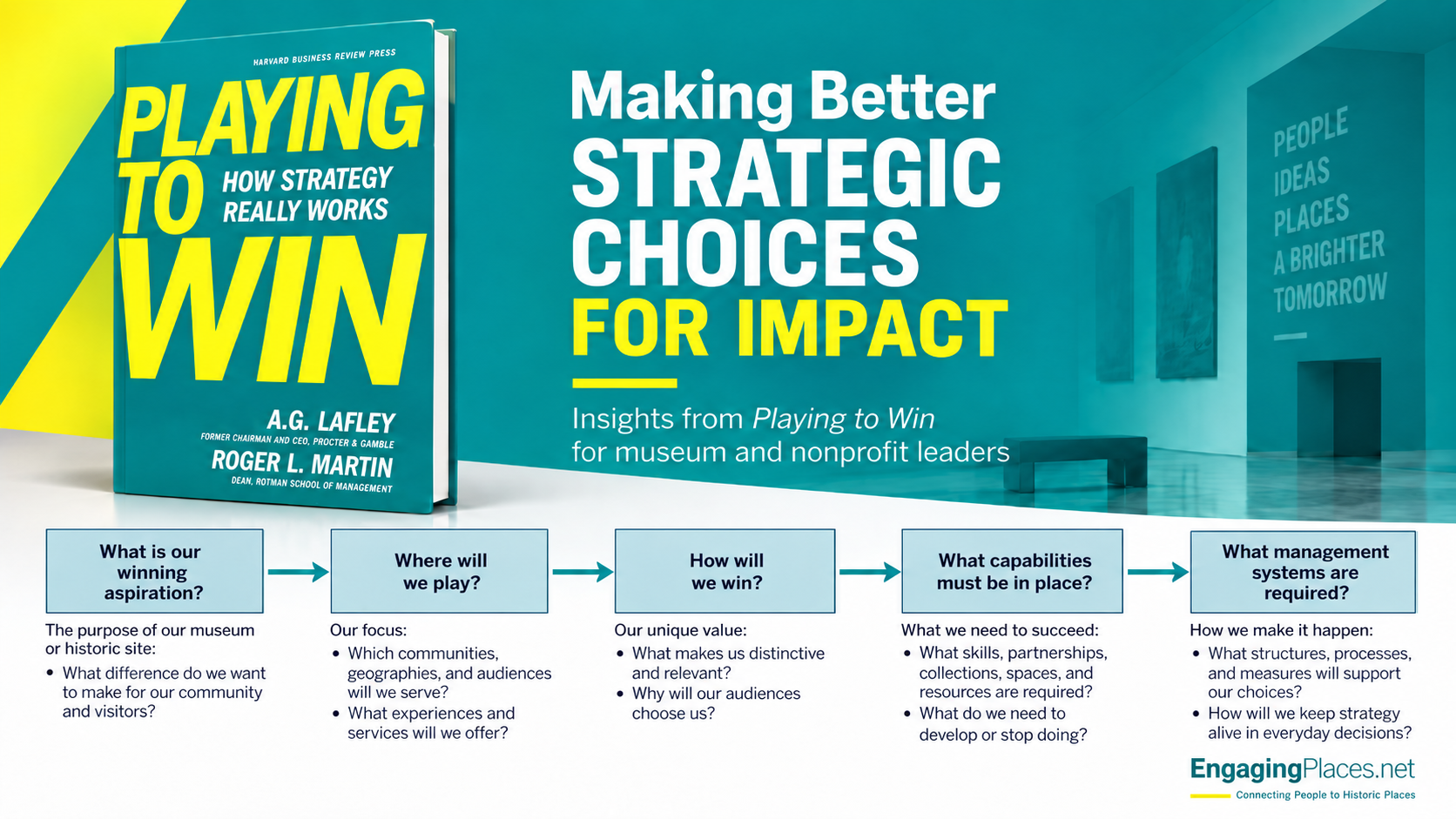
I’ve spent a lot of time over the years thinking and writing about mission statements, strategic plans, and how museums decide what matters most. One persistent problem is that cultural organizations are very good at identifying worthwhile things to do—and much less comfortable deciding what they won’t do. Reading A.G. Lafley and Roger Martin’s Playing to Win gave me another way to think about this problem. Their basic argument is deceptively simple: strategy is not a plan; it is an integrated set of choices.
That connects closely with something I’ve argued before on EngagingPlaces.net: a mission statement should do more than describe the work of an organization. Ultimately, we need to ask, “To what end?” Lafley and Martin push that question further with what they call a “winning aspiration.” For museums, I don’t think “winning” needs to mean beating another museum. It means being clear about the difference we intend to make—and for whom. A museum can have an admirable mission to preserve, educate, inspire, and serve the public, but those aspirations still don’t tell staff and board members what they should actually do Monday morning.
That’s where the book’s two most useful questions come in: Where will we play? and How will we win? Museums are especially susceptible to what Lafley and Martin call the “do-it-all strategy.” We want to serve schoolchildren, tourists, neighbors, scholars, families, donors, underserved communities, and everyone who walks through the door. We add programs because they sound worthwhile or because someone is willing to fund them. Over time, everything becomes a priority—which means, of course, that nothing really is.
This reminded me of my June 2025 revision to the Impact–Sustainability Matrix, which asks organizations to consider what should stay, grow, change, or go. Making those decisions requires more than asking whether a program is good. We have to ask whether it advances the particular impact we are trying to achieve and whether we have the capacity to sustain it. Playing to Win adds another dimension: does this activity reinforce the particular position we want our organization to occupy in the lives of our audiences and community?
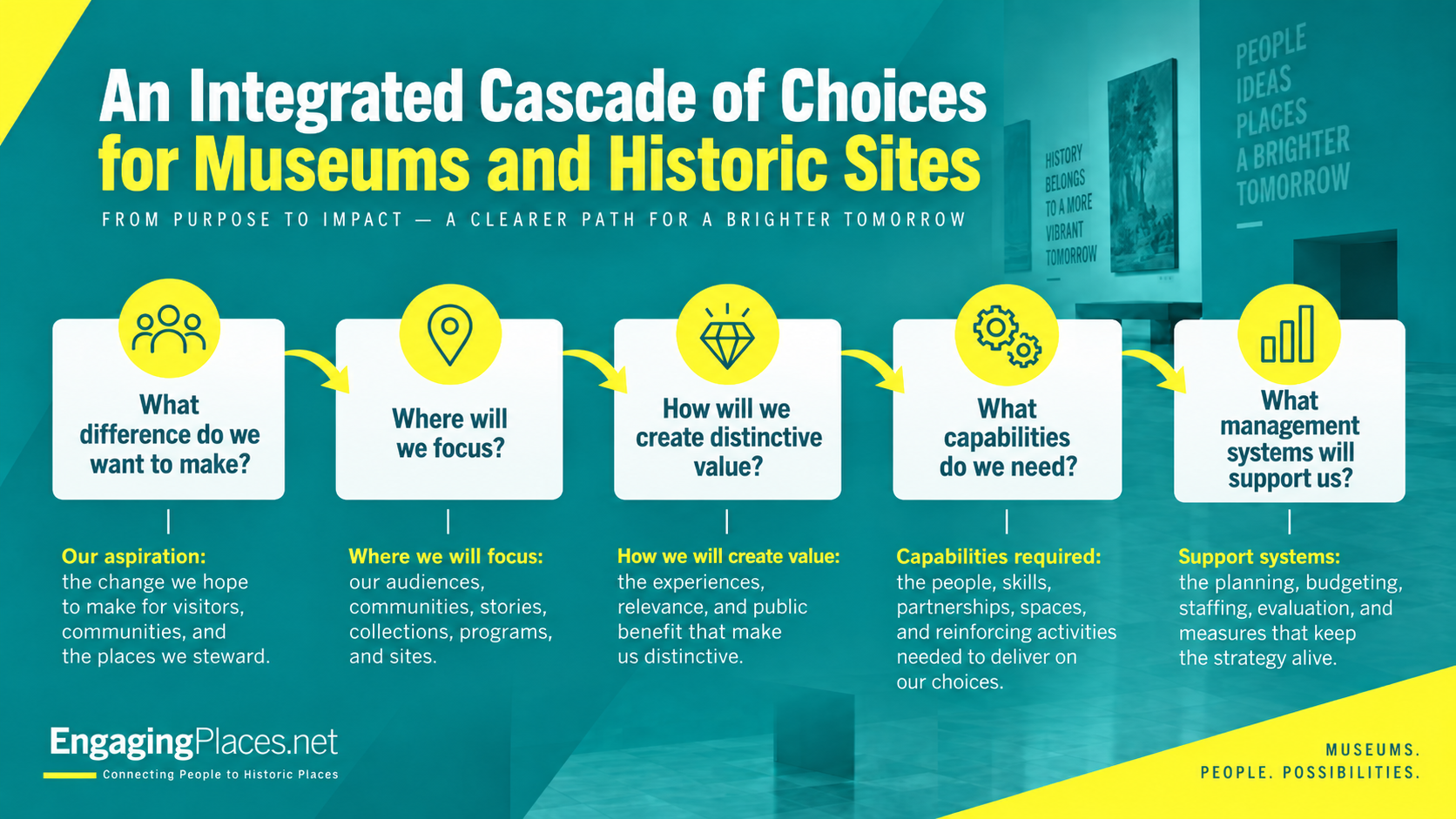
There is an uncomfortable tension here for nonprofits. Museums rightly resist language that sounds excessively competitive or corporate. Communities aren’t markets, visitors aren’t simply customers, and public value cannot always be measured by market share. But avoiding competitive language shouldn’t become an excuse for avoiding choices. Every museum operates with limited money, staff time, space, attention, and goodwill. Choosing to do one thing inevitably means having less capacity to do something else.
Perhaps that is the most useful lesson from Playing to Win. Strategy isn’t about producing a longer strategic plan. It is about deciding what matters most, aligning our capabilities behind those choices, and then using management systems to keep them alive. For museum leaders, the test may be surprisingly straightforward: Can we explain whom we most want to serve, the distinctive value we provide them, and what we have decided not to do as a result? If we can’t, we may have a mission and a plan—but we probably don’t yet have a strategy.

