
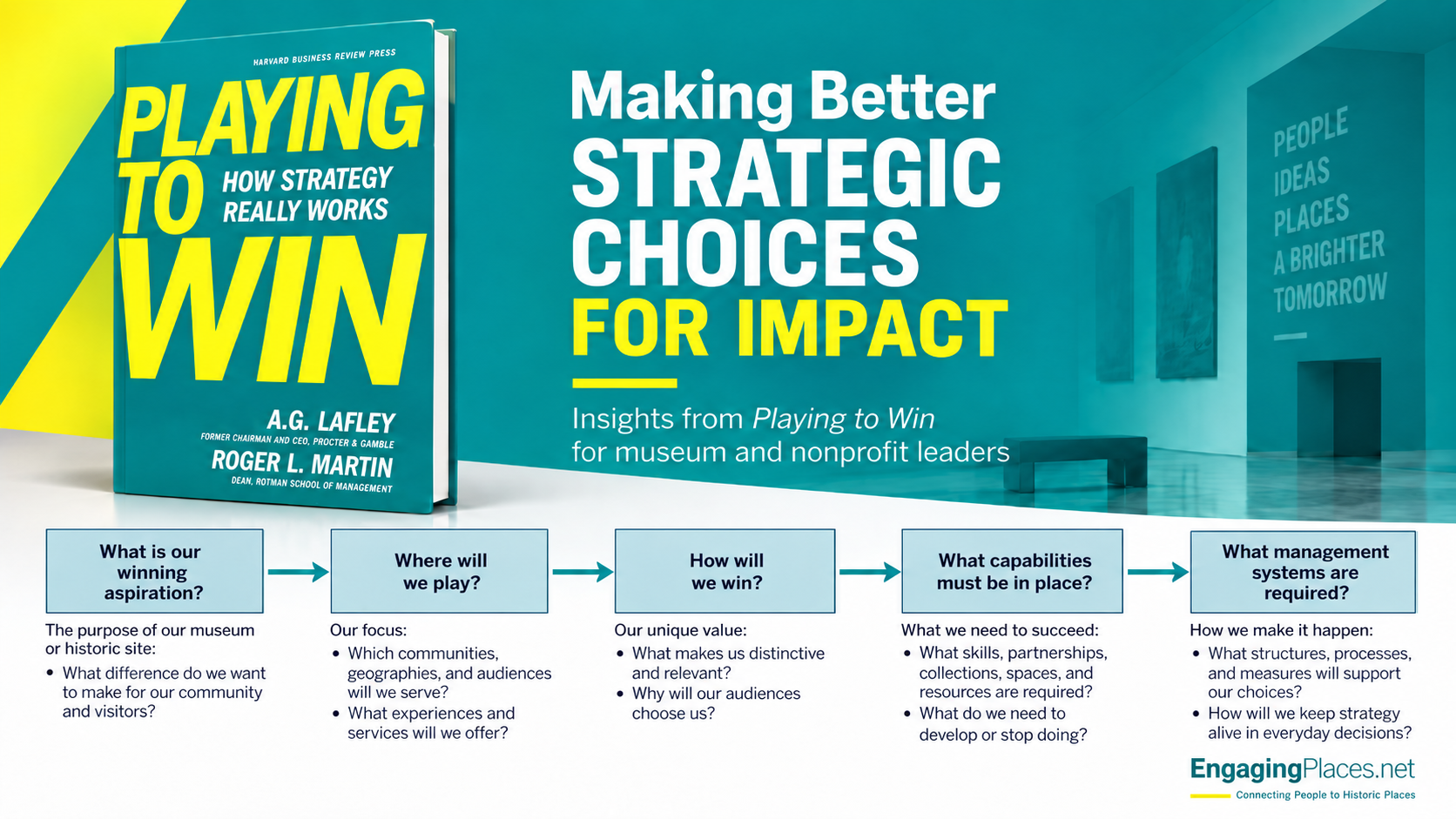
I’ve spent a lot of time over the years thinking and writing about mission statements, strategic plans, and how museums decide what matters most. One persistent problem is that cultural organizations are very good at identifying worthwhile things to do—and much less comfortable deciding what they won’t do. Reading A.G. Lafley and Roger Martin’s Playing to Win gave me another way to think about this problem. Their basic argument is deceptively simple: strategy is not a plan; it is an integrated set of choices.
That connects closely with something I’ve argued before on EngagingPlaces.net: a mission statement should do more than describe the work of an organization. Ultimately, we need to ask, “To what end?” Lafley and Martin push that question further with what they call a “winning aspiration.” For museums, I don’t think “winning” needs to mean beating another museum. It means being clear about the difference we intend to make—and for whom. A museum can have an admirable mission to preserve, educate, inspire, and serve the public, but those aspirations still don’t tell staff and board members what they should actually do Monday morning.
Continue reading
