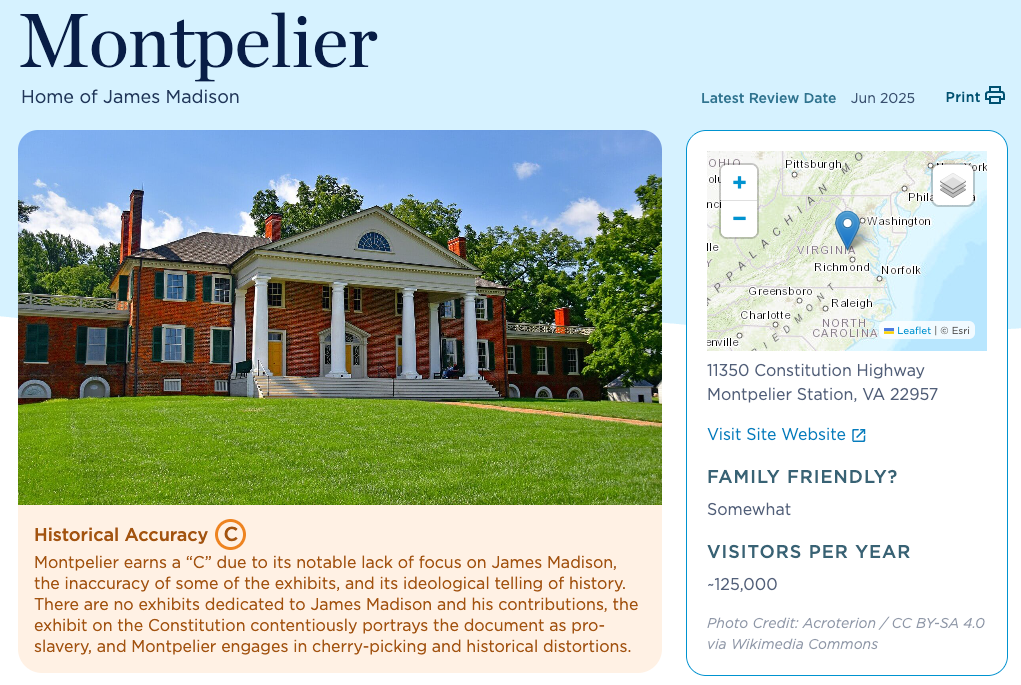
The Heritage Foundation’s new The Heritage Guide to Historic Sites: Rediscovering America’s Heritage promises to help Americans find “accurate” and “unbiased” history at presidential homes and national landmarks. Presented as a travel and education tool for the nation’s 250th anniversary, the site grades historic places from A to C for “accuracy” and “ideological bias.”
At first glance, it looks like a public service. But a closer look reveals that even when Heritage cites “evidence,” its historical reasoning exposes deep methodological and ideological flaws.
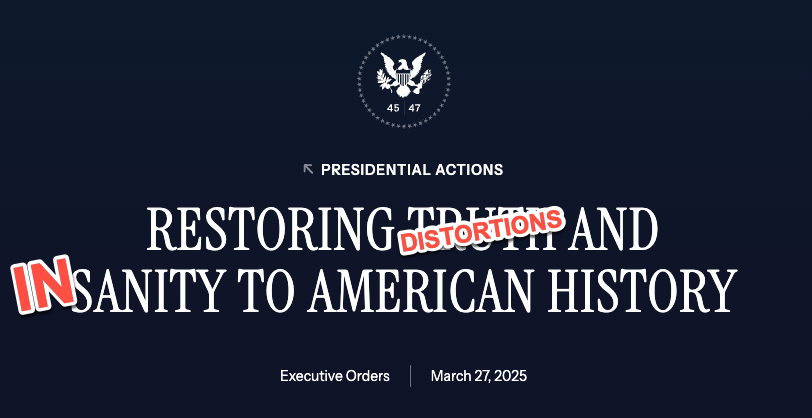
Today, the White House issued an executive order titled “Restoring Truth and Sanity to American History”, which aims to reshape the presentation of history within federal institutions—particularly the Smithsonian. The directive calls for the removal of “divisive or anti-American ideology,” restoration of monuments that have been “improperly removed,” and new restrictions on federally funded exhibits that “degrade shared American values.” While some may see this as a return to patriotic education, as a historian and museum professional, I see troubling implications for our field.
The Illusion of a Single Truth
At the heart of the order is the assertion that a “true” version of American history must be restored. But history is not a static set of facts—it is a discipline grounded in evidence, interpretation, and debate. Historical understanding evolves as new sources emerge, as questions shift, and as voices long excluded are brought into the conversation. There is no single, timeless narrative to return to—only a continuing effort to make sense of the past as honestly and inclusively as possible.
Independence Under Threat
The Smithsonian Institution, like many of our most trusted public history institutions, relies on scholarly rigor and curatorial independence. By assigning Vice President JD Vance a role in overseeing content and linking congressional appropriations to ideological compliance, this executive order politicizes museum interpretation and undercuts professional standards. When history is shaped by political power instead of evidence, public trust erodes.
Upholding Academic Freedom and Public Access to History
In their joint statement, the American Historical Association (AHA) and the Organization of American Historians (OAH) raise alarm over federal directives aimed at censoring public-facing historical content. Specifically, they object to restrictions on the use of terms like “diversity,” “equity,” and “inclusion,” as well as efforts to remove access to resources about gender, race, and immigration history across government platforms. These actions, the associations argue, “deny the American public access to the complex, nuanced, and evidence-based historical knowledge that is essential to democratic society.”
For museum professionals, this serves as a reminder that we are not only stewards of collections but also of public understanding and trust. AHA and OAH call on historians–including those in museums and historic sites–to resist these pressures by reaffirming their commitment to historical accuracy, critical inquiry, and public service. The practical takeaway? Review interpretive plans, online content, and programs to ensure they are grounded in evidence-based scholarship, even–and especially–when the topics are politically charged.
Standing with the National Park Service: A Sector-Wide Response
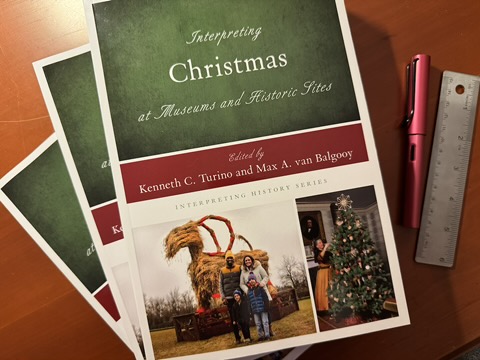
If you missed out on purchasing a copy at the annual meeting or were unable to attend, you can order it online at Rowman.com or mail this order form. Use code RLFANDF30 at checkout to save 30%. This discount is available through September 2025. The book officially releases on September 20, so it should ship immediately when you order.
If you’ve had a chance to read Interpreting Christmas, we’d greatly appreciate a review on Amazon.com. Since history museums and historic sites are such a specialized field, your feedback can help others make more informed purchasing decisions.
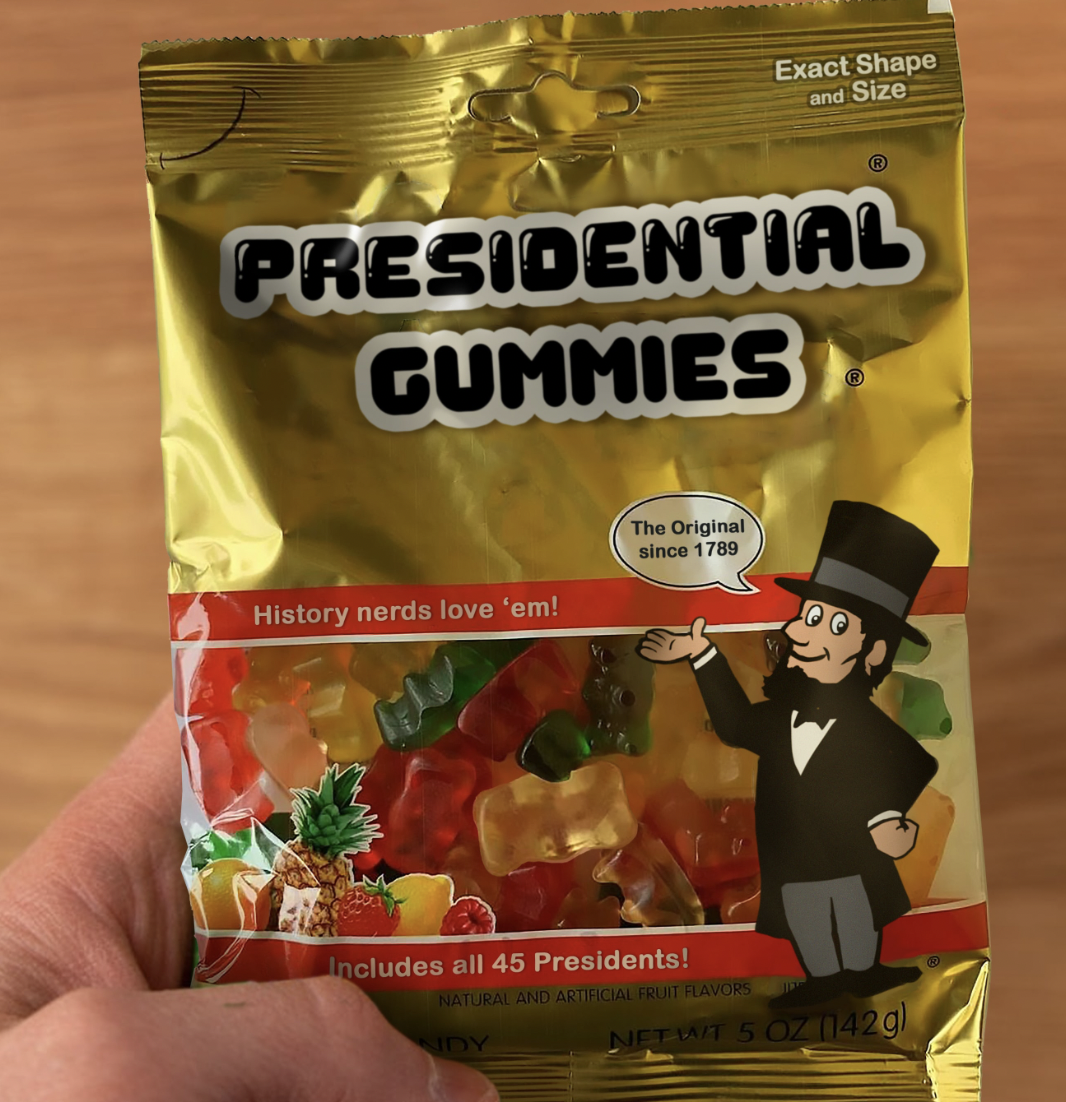
Limited edition of Presidential Gummies available from The History List.
The History List, creators of the annual History Camp, continues to launch a series of fun and engaging products to inspire Americans to explore and share their history. Today they’re releasing a limited supply of Presidential Gummies that are sure to turn children into history nerds. They also align with the “Doing History” theme for the 250th Commemoration by encouraging open conversations about what history is, the many ways it is done, and why it matters.
Made by Haribo, the German manufacturer of Goldbears® since 1922, these colorful gummies in flavors from pineapple to strawberry representing all the presidents are sure to delight (and become a collector’s item among history buffs). These Presidential Gummies and other cool history stuff are available online in The History List store.
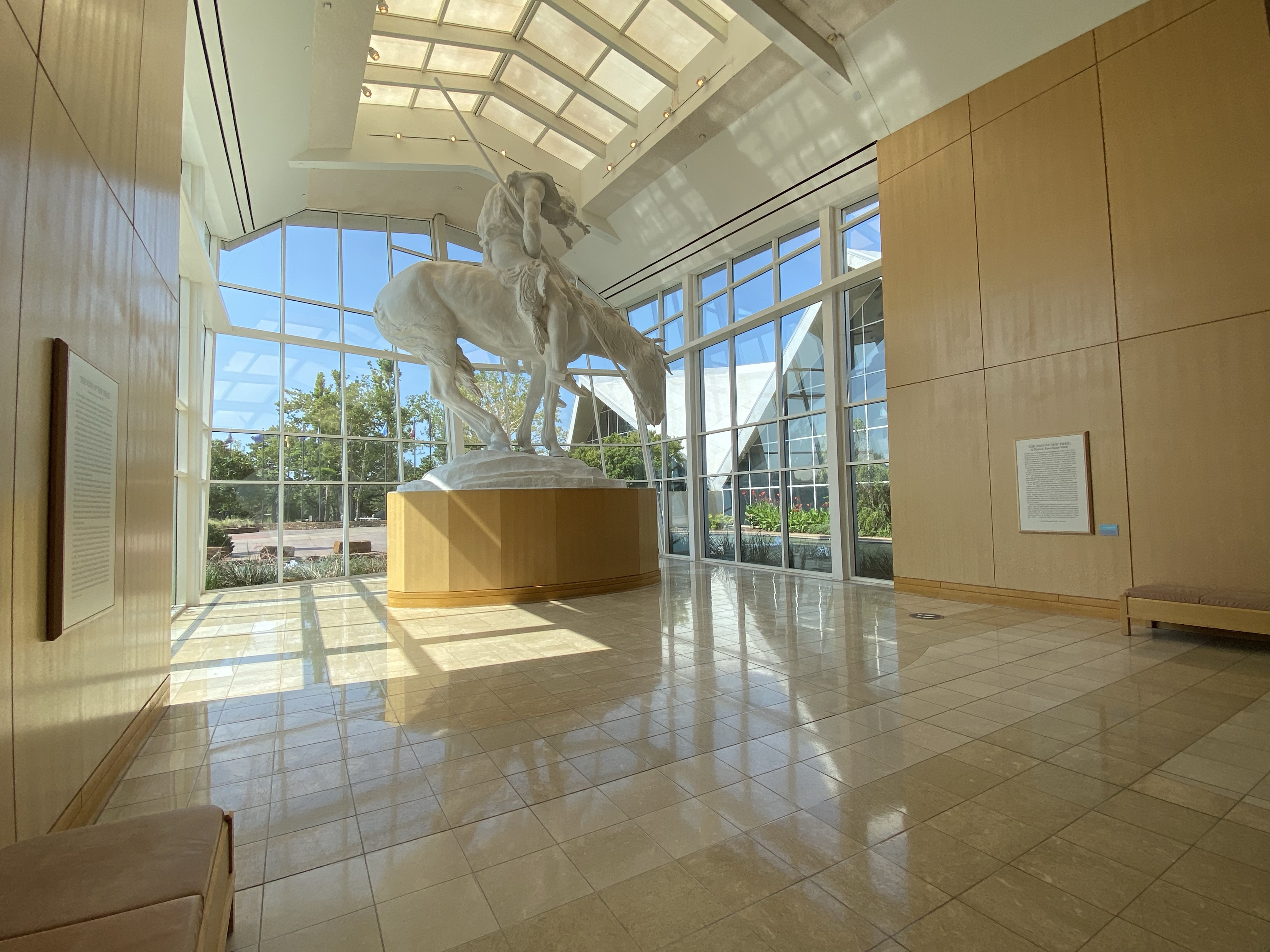
Entrance hall, National Cowboy and Western Heritage Museum, Oklahoma City.
At the National Cowboy and Western Heritage Museum in Oklahoma City, a monumental bright white sculpture of an Indian slouched on a horse fills the end of the entrance hall. James Earle Fraser created “The End of the Trail” for the 1915 Panama-Pacific International Exposition in San Francisco, earning him a Gold Medal. It also became a popular image that signaled the end of a free people.
The Museum acquired the plaster statue from Tulare County (California) Historical Society, where it sat outside in a city park deteriorating for nearly 50 years. Now the restored statue is the centerpiece of this large museum and they’ve used this one object to hit a triple with visitors, to borrow a phrase from baseball.
Along with a typical label describing the sculpture’s creation, acquisition, and significance, it includes a Native American View in a second label of equal length by Dr. R. David Edmunds, a Cherokee. He states that the sculpture represents the popular view of “a nineteenth century Indian warrior defeated and bound for oblivion—frozen in time. By the 1890s, Native Americans knew their trail had become steep and rocky, but they believed it would continue.” The label continues to discuss the challenges and opportunities faced by Native Americans in the 20th century and that “being Indian has never been cast in stone. Today, Native Americans proudly ride forward on a trail into the future.”
Labels for “The End of The Trail” by James Earle Fraser, National Cowboy and Western Heritage Museum, Oklahoma City.
The use of labels to provide multiple perspectives is not uncommon in art museums, but I haven’t seen it used enough in history museums. They are ideal places to show that events, places, and eras are experienced differently by different people. It’s an easy way to enrich interpretation without the need to create entirely new exhibitions or special events on women, African Americans, or Native Americans.
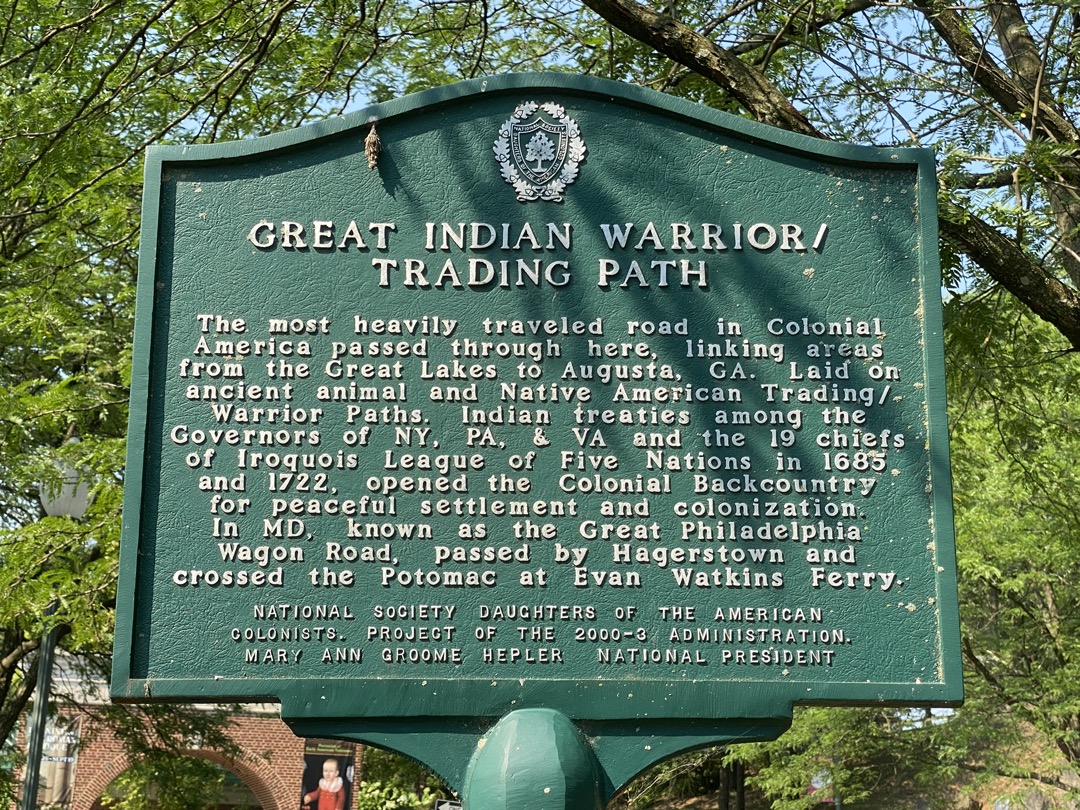
At my first stop at the Washington County Museum of Fine Arts, I was faced with a historical marker at the entrance to the parking lot. A unexpected location but far more accessible than on the side of a busy highway. All of the recent conversations about decolonization has me always take a closer look at these markers but more interestingly, I’ve encountered several different types of markers so far on my road trip that have me thinking more about their value, veracity, authenticity, and permanence by being “cast in bronze”.
As you’ll see, location matters as much as the text. Some are intentional efforts to deceive, some are not. Some are historical, some artistic, some a bit of both. They are all designed to be inspirational, some more deeply than others. Do any of them matter? Do they have any impact? What do you think?
“Great Indian Warrior/Trading Path,” Washington County Museum of Fine Arts, Hagerstown, Maryland. “Eddie Taylor, Mayor of 7th and Wabash,” Terre Haute, Indiana.
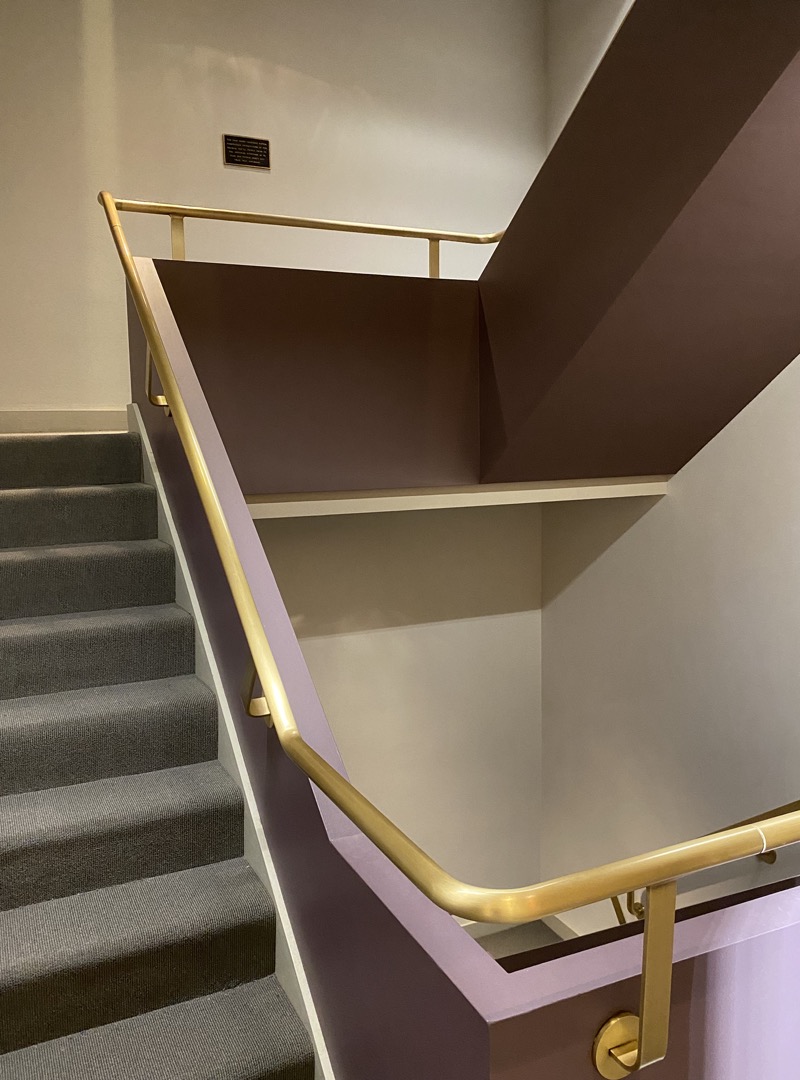
Stairway, St. Louis Art Museum, St. Louis, Missouri.
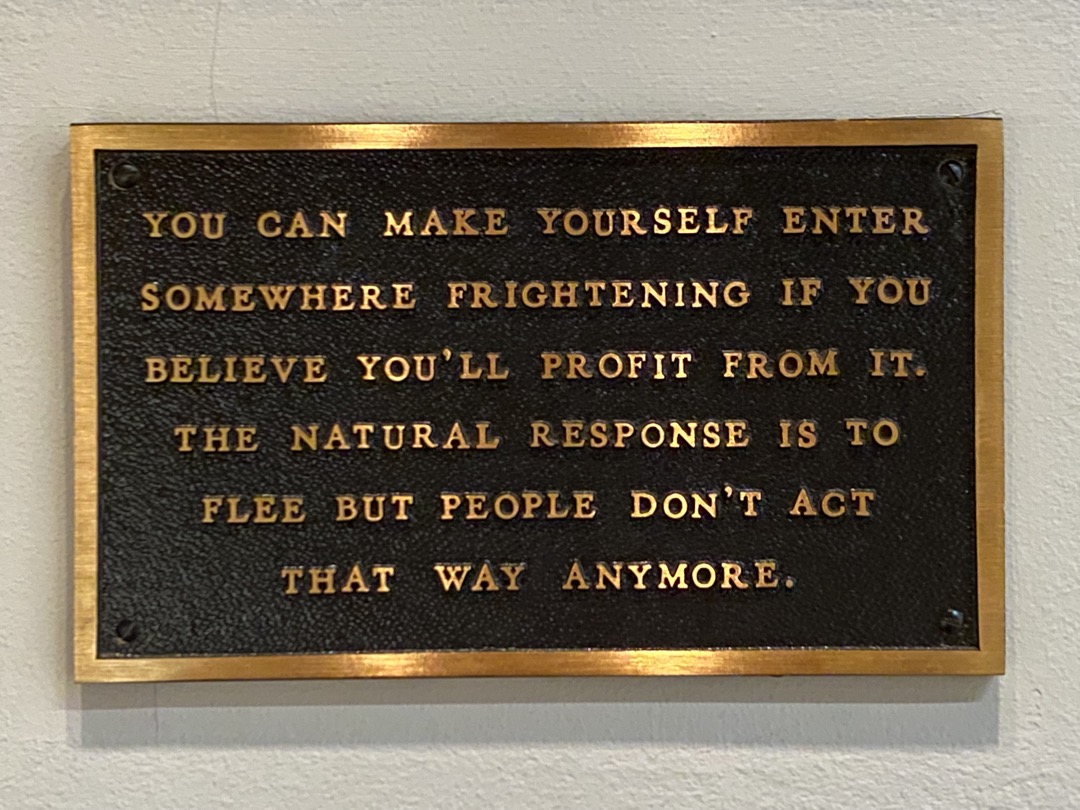
Jenny Holtzer, “You Can Make Yourself Enter,” St. Louis Art Museum.
Marker above utility boxes, alley in Terre Haute, Indiana.
“Crossroads of Kymaerica,” alley in Terre Haute, Indiana.
“History of Springfield Public Square,” Springfield, Missouri.
The January 2017 issue of Washingtonian, the magazine for the Washington DC region, named Lonnie Bunch as one of its “eleven locals whose commitment to helping others makes Washington a better place to live.” Usually the list is made up of wealthy philanthropists, sports figures, political leaders, and education reformers, so it was a nice surprise to see an historian who works at a museum named among its most benevolent in a city full of history and museums .
Lonnie Bunch is the founding director of the National Museum of African American History and Culture, which opened last fall and whose continuing popularity makes admission one of the hottest tickets in town. Bunch was previously the president of the Chicago Historical Society and curator at the National Air and Space Museum, National Museum of American History, and the California African American Museum, where I first met him twenty years ago when I was conducting research on jazz bands in 1920s Los Angeles. I’ve always enjoyed my encounters with him, which often happen as happy accidents through a last-minute invitation to dinner in Chicago, running into him during the Folklife Festival, or sharing a car ride with him to the airport in Charleston. So I was delighted when he agreed to write the foreword for my first book, Interpreting African American History and Culture at Museums and Historic Sites.
Washingtonian recognizes Bunch for his effort to find a spot on the Mall for the museum, raising much of the $270 million to match Congress’ contribution, and attracting donations from people across America. I also know him as a Continue reading →
Curated nutrition bars are turning out to be an effective way to interpret collections and earn income for museums and historic sites across the country. First introduced by the Friends of Gettysburg National Battlefield for the July 2015 re-enactment, the “Blue & Gray Battle Bar” drew inspiration from the historic Civil War battle. “We knew the kinds of foods soldiers were eating so it was just a matter of coming up with a combination that tasted good and was good for you,” said curator John Rupp, “Hard tack, peas, and coffee had to be in there, of course, but we had to work with food scientists to figure out how to include salt pork. Quinoa wasn’t my idea, but someone said we had to include it for marketing purposes.” Fortunately, the curators were also able to have some fun and included minie balls, which also resolves a major deaccessioning challenge because of the thousands that fill their collection.
Other museums and historic sites heard about the success of this venture, especially after it was featured in the fall issue of Museum Business. Currently under development are:
Big Met Bar: It’s so big, you’ll be full before you’re even halfway through.
Smithsonian Behring Bar: a sprinkling of stars from a spangled banner, dinosaurs, pandas, air, space, and some wonder. So many flavors you can’t tell what you’re eating.
Colonial Williamsburg’s Christiana Campbell Bar: crab, salet, and corn pudding dipped in heritage chocolate (with zombies!). It’ll be about 4 inches high and equally thick.
If you know of a museum or historic site that’s developing a Curated bar, please share it in the comments below!
No photography allowed in the exhibits at the National Archives?
Last weekend I went to see “Spirited Republic,” a temporary exhibit at the National Archives about the history of alcohol in the United States. I’m interested in the history of food and knew the Archives would dig up some interesting materials. It was a worthwhile visit but ugh, right at the entrance is a sign declaring “no photography.” This isn’t unusual for temporary exhibits because they may contain materials that are protected by copyright or have objects on loan. In this exhibit, however, everything was drawn from the collections of the Archives or had fallen out of copyright. If I went around the building to the Research Room, I could retrieve any of the items on display and make photographs without question. Secondly, most of the items are historic governmental or administrative documents, which don’t encourage selfies or other distractions. Photographs would most likely be taken by people who were really interested in the subject and wanted an image for reference. If they’re worried about light damage, people can be warned not to take flash photos (and studies by conservators show that flash photography has to reach excessive levels to cause significant damage, so this is usually an unfounded concern). If they’re worried about security, everyone has already been screened in the usual DC way and guards are posted throughout the exhibit. Finally, photography is one of the only areas of creative activity that’s growing in the US (bucking the declines in sewing, painting, pottery, or music according to studies by the National Endowment for the Arts) and the Archives has a rich trove of content for inspiration (and it helps publicize their exhibits and collections). The “no photography” makes absolutely no sense at the National Archives. Instead, the National Archives should assume that photography will be allowed unless there are specific and legitimate reasons not to do so. Just follow the same rules as in your Research Rooms.
Prohibitions on photography isn’t the only stumbling block to public access and historical interpretation at the National Archives–I’m sensing a growing use of Continue reading →










 Engaging Places