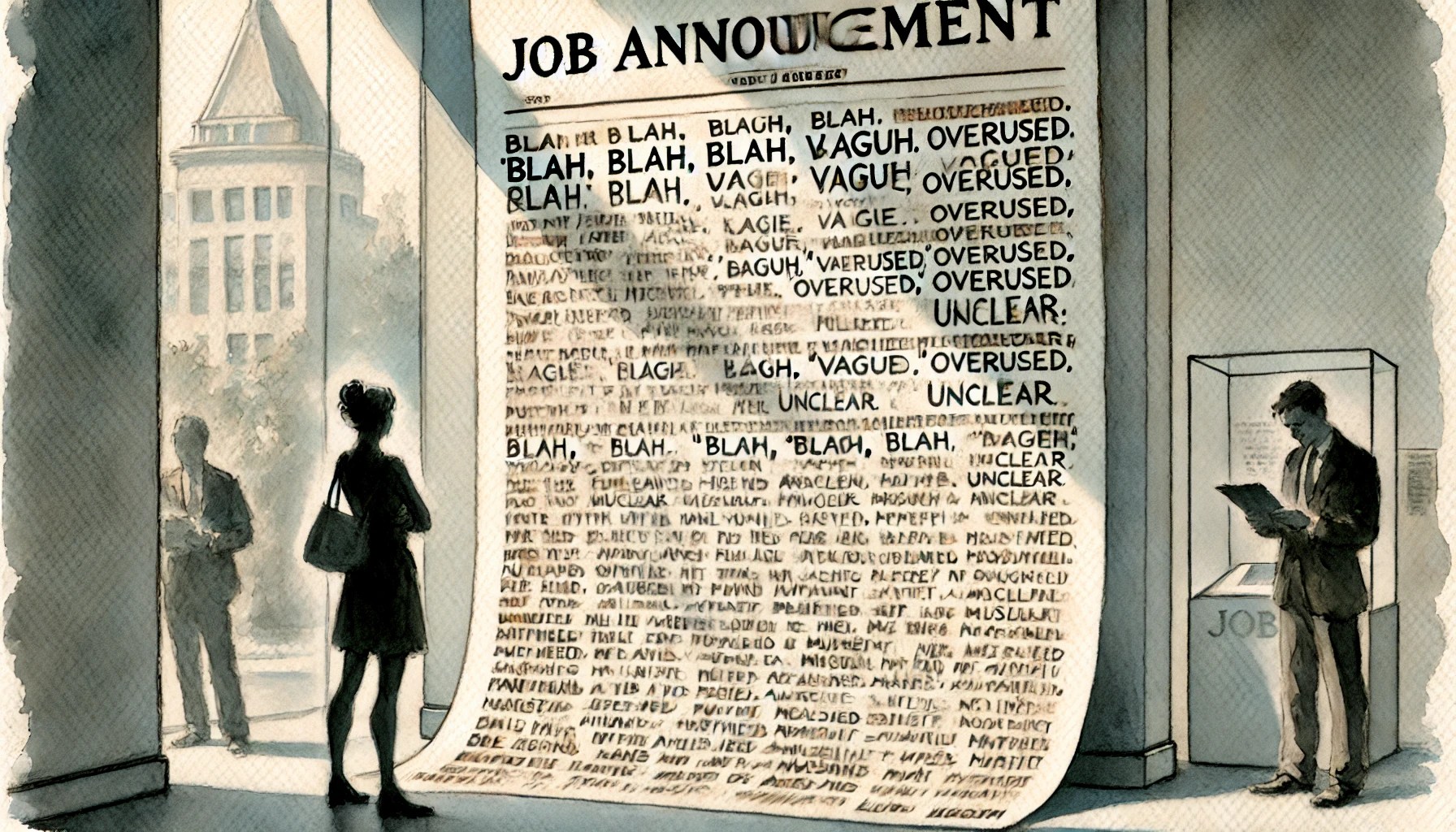
Recently, I came across a job announcement for a senior position at a museum that left me more frustrated than inspired. Despite the important role it advertised, the description was riddled with vague language, overused phrases, and an overwhelming list of responsibilities. If it weren’t for the letterhead, this could have been a job at nearly any museum in the country. Here’s what went wrong—and how we can do better:
1. Clear, Specific Language Beats Buzzwords
Phrases like “championing change management,” “leveraging opportunities,” or “fostering growth” sound impressive, but what do they actually mean? Without clarity, these terms are open to interpretation, leading to confusion or disagreements down the line. A good job description uses concrete language to convey expectations. For example, instead of “fostering growth,” specify what kind of growth: increasing visitor numbers? Expanding programming? Generating revenue?
2. Prioritize, Don’t Overwhelm
This particular job description listed a dozen “essential” duties and responsibilities, each with multiple sub-points. While comprehensive, such an exhaustive list signals a lack of prioritization. No one can excel at everything, and candidates may be deterred by the sheer scope of the expectations. Instead, focus on the top three to five priorities that are most critical to success in the role.
At Engaging Places, we are committed to helping museums and historic sites engage audiences and preserve our shared heritage. We are excited to announce the expansion of our services to include collections stewardship documents that align with the ethics and professional standards set by the American Alliance of Museums, as well as governance materials—essential tools that equip their board members with the necessary knowledge and resources to govern effectively and advance the organization’s mission.
These new services are led by Mary van Balgooy, Vice President of Engaging Places. Mary brings extensive experience as an executive director of both local and national nonprofit organizations and as a collections manager for history museums and historical societies of all sizes. Her expertise allows us to offer customized solutions tailored to each organization’s unique needs. Whether you are a newly established nonprofit or a long-standing institution, we will provide the necessary documentation and best practices to support your collections management and equip your leadership team with effective governance tools. Learn more about Mary’s impressive background here.
Museums are no strangers to navigating shifting policy landscapes, but recent executive orders issued by the White House signal significant changes that will affect funding, interpretation, and educational outreach. Whether you work in a history museum, a historic preservation organization, or a community-based historical society, understanding these policies is crucial for adapting to new challenges and opportunities.
Key Themes Across the Executive Orders
1. A Shift Toward Patriotic and Nationalist Narratives
Executive Orders 14190 (Ending Radical Indoctrination in K–12 Schooling) and 14189 (Celebrating America’s 250th Birthday) prioritize “patriotic education” and reinforce a government-endorsed interpretation of American history. This shift is exemplified by the reestablishment of the 1776 Commission and the creation of Task Force 250, which will oversee programming related to the 250th anniversary of American independence. “Patriotic education” is defined as “the history of America grounded in:
(i) an accurate, honest, unifying, inspiring, and ennobling characterization of America’s founding and foundational principles;
(ii) a clear examination of how the United States has admirably grown closer to its noble principles throughout its history;
(iii) the concept that commitment to America’s aspirations is beneficial and justified; and
(iv) the concept that celebration of America’s greatness and history is proper.”
2. The Elimination of Federal DEI and Environmental Justice Programs
Executive Order 14151 (Ending Radical and Wasteful DEI Programs and Preferencing) eliminates all federal support for diversity, equity, and inclusion (DEI) initiatives. This includes the termination of DEI-related grants, plans, contracts, programs, initiatives, training programs, offices, positions, and employment policies within federal agencies, “under whatever name they appear.” Museums that have benefited from federal DEI funding or programs may need to reassess their funding strategies and institutional policies.
3. Renaming and Monument Preservation
Executive Order 14172 (Restoring Names That Honor American Greatness) renames Denali back to Mount McKinley and designates the Gulf of Mexico as the Gulf of America. Additionally, the reinstatement of the National Garden of American Heroes and the protection of existing monuments signal a renewed emphasis on traditional historical figures. Museums may face increased scrutiny when interpreting contested histories, particularly around geographic names and public commemorations.
Museums are feeling the pinch as public funding declines and operational costs grow. But don’t worry—there are creative ways to boost your financial health without losing sight of your mission. Two recent studies offer fresh ideas to help museums thrive while connecting more deeply with their audiences.
Make the Most of What You Offer The first study, “Value Capture for Nonprofits: The Case of Museums’ New Business Models” (Thomas & Tobelem, 2024), urges museums to think more like entrepreneurs. Museums create tremendous value through exhibitions, programs, and digital content—but often struggle to turn that value into income. The solution? Find ways to align financial opportunities with what you already do best.
For instance, you could:
Introduce tiered pricing for digital experiences, like charging for premium virtual tours.
Partner with local businesses to create themed events that support your mission.
Offer exclusive experiences, like behind-the-scenes access, for a fee.
These strategies not only bring in revenue but also allow museums to stay true to their values. The takeaway: look at what you already offer and think creatively about how to monetize it in a way that feels authentic.
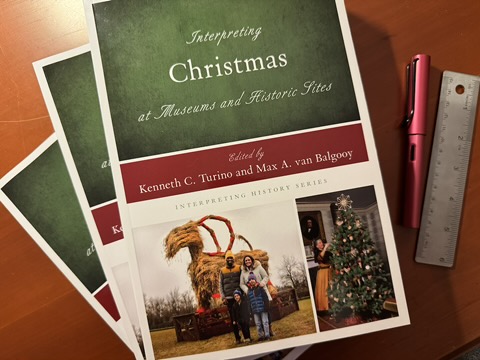
As 2024 comes to a close, it’s time to reflect on what turned out to be a busy and productive year. The highlight was completing Interpreting Christmas at History Museums and Historic Sites, co-edited with Ken Turino, which released in September. This project was a labor of love for the two dozen contributors, and it’s been gratifying to see it resonate with so many museum professionals.
Another major milestone was taking a sabbatical from George Washington University in the fall. During this time, I attended two intense and inspiring programs: the Newport Summer School, which focused on Victorian architecture and decorative arts, and the Royal Collection Studies course, which explored the management and interpretation of royal palaces and their collections. These experiences gave me fresh insights into interpretive strategies and leadership in historic sites that I look forward to integrating into my work and teaching. I can easily recommend these two professional development programs (and a sabbatical)!
The Burwell-Morgan Mill in Berryville, Virginia, which hosts the Art in the Mill shows in fall and spring.
On a recent road trip through the Shenandoah Valley, we passed through the small but charming village of Millwood (south of Berryville, Virginia). With its historic church, a corner gas station turned into a post office, a hip country store, and an 18th-century stone grist mill, it feels like you’ve stepped back into mid-century America. The mill, dating back to the 1780s, ceased operations in 1943, but thankfully the Clarke County Historical Association (CCHA) stepped in to preserve this important piece of local history. They restored and reopened the mill as a museum, offering milling demonstrations that continue to connect the community with its past—a business that, while no longer economically viable, resonates deeply with those of us who value local landmarks.
Fast forward 80 years, and the CCHA not only continues to produce flour at the mill but has expanded its offerings in creative and impactful ways for a county with 15,000 residents. Today, their mission—”to help preserve the historic resources and records of Clarke County and to foster their use, understanding, and enjoyment through stewardship and education”—may sound familiar, but their approach is anything but ordinary. Their programming stands out as a model for how historical societies can evolve, attract diverse audiences, and ensure long-term sustainability. Here’s a preview of some of the exciting events and initiatives they have planned for this fall:
I’m excited to announce that I’ll be co-teaching two Reimagining the Historic House Museum workshops in Texas this November with Ken Turino, hosted by the American Association for State and Local History in collaboration with the Texas Historical Commission. It’s a big state, so we’re offering it twice! If you’re a museum professional, volunteer, or student interested in exploring fresh strategies for engaging visitors and revitalizing historic house museums, these workshops are a great opportunity to explore new ideas and connect with colleagues.
Why Attend?
Historic house museums are at a pivotal moment, navigating changes in visitor expectations, community needs, and funding models. These workshops are designed to help you tackle these challenges, offering practical solutions for making your house museum more accessible, sustainable, and relevant. By focusing on innovative interpretation, strategic planning, and community engagement, you’ll be empowered to breathe new life into your historic house museum.
What You’ll Learn
This one-day, hands-on workshop explores the most pressing challenges and rewarding opportunities facing historic sites in America today. We’ll delve into the latest social and economic research to help you identify how these trends impact your own house museum, sparking new ideas for growth and engagement.
Throughout the day, we’ll introduce a variety of field-tested tools and techniques drawn from diverse areas like non-profit management, business strategy, and even software development. You’ll hear about innovative historic sites that are successfully adopting new models to engage their communities, offering fresh interpretation and programming, and generating income to boost financial sustainability.
A key highlight of the workshop is our facilitated brainstorming session based on Michael Porter’s Five Forces framework, where you’ll work with fellow participants to reinvent an event or program for an actual house museum. This practical exercise not only puts theory into action but also showcases the power of collaborative thinking to drive change.
Details and Registration
Mesquite Workshop (near Dallas): November 12, 2024 – Heritage Plaza Visitor Center
Houston Workshop: November 14, 2024 – Bayou Bend Collection and Gardens
Cost: $350 for non-members, $225 for AASLH members
Registration: Visit AASLH’s website for more information and to sign up. Participation is limited.
I hope to see you there as we explore how to bring new life and relevance to historic house museums. Together, let’s make these vital cultural spaces vibrant, engaging, and sustainable for generations to come!
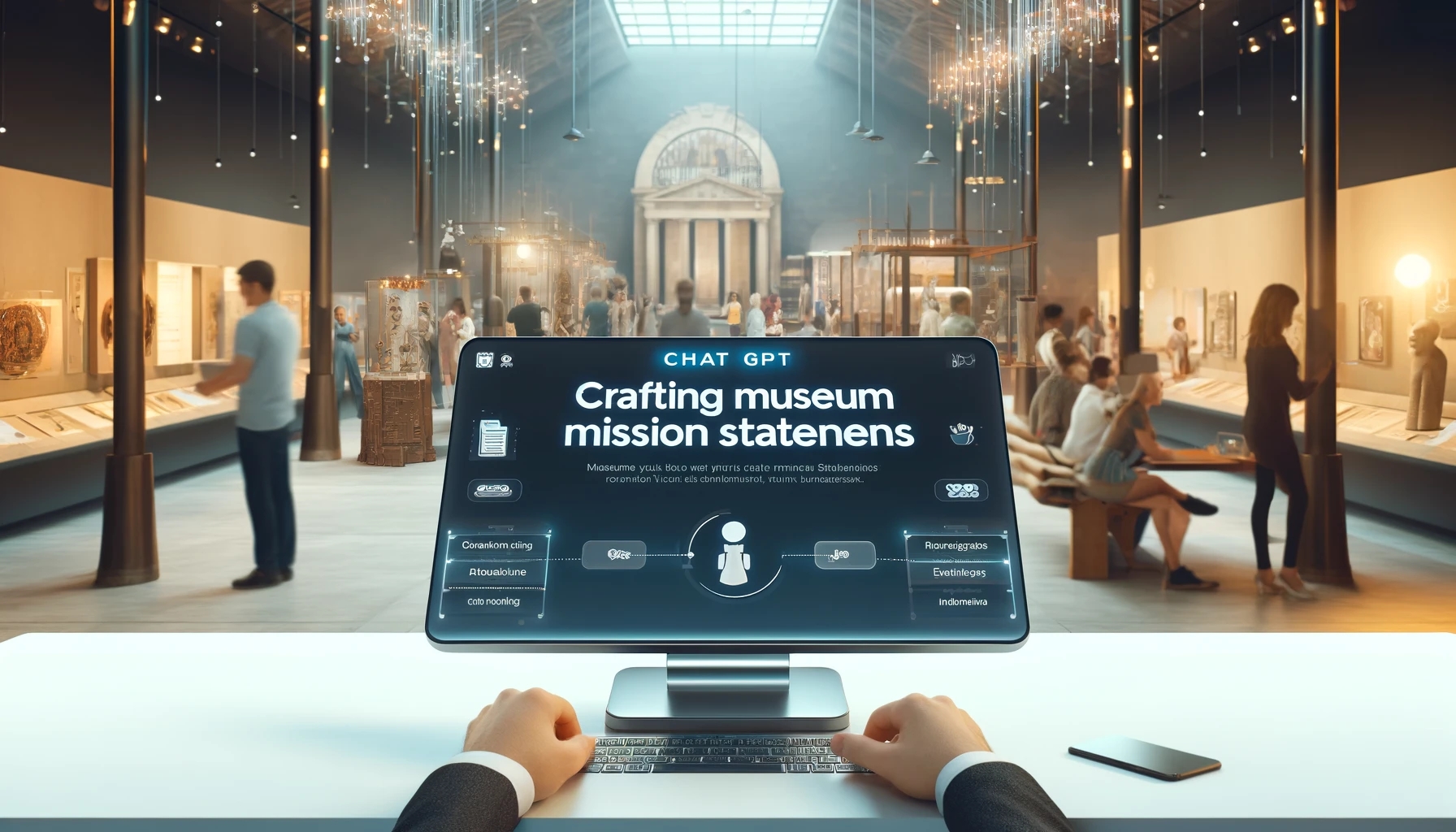
ChatGPT-4o created this image in less than a minute.
The highly anticipated release of ChatGPT-4o has once again thrust artificial intelligence (AI) into the spotlight. So how can historic sites and house museums harness the power of ChatGPT to craft thought-provoking mission statements, an essential element of effective management?
The American Alliance of Museums states that excellence requires that, “all aspects of the museum’s operations are integrated and focused on meeting its mission.” And yet, crafting mission statements is among the most difficult tasks for an organization. Writing and revising as a board or staff committee can result in circular arguments, the infinite parsing of words, or resignation to a milk-toast statement that offends no one. So how can you take a mission statement that’s weak or mild and turn it into something stronger and more meaningful?
My typical response is that a small committee of diverse leaders within the organization discuss the purpose and role of the museum in the community, and then appoint one person to draft a mission statement for approval. Although that’s much more effective than writing-by-committee, it can also result in a tremendous commitment of time and frustrations during the review as members defend their ideas. Instead, I’ve found ChatGPT to be much more efficient and less frustrating. You can revise frequently and quickly, try out variants and new ideas easily, and even better, criticize the “robot” and it won’t care.
The mission of The Gamble House is to inspire the public’s appreciation and understanding of architecture as a fine art through the example of The Gamble House, the most complete and best-preserved work of American Arts and Crafts architects Charles and Henry Greene.
Using a simple prompt, “Create a mission statement for the Gamble House in Pasadena, California,” ChatGPT-3’s version was:
Our mission at the Gamble House is to preserve and celebrate the legacy of this iconic American Arts and Crafts masterpiece. As a cultural destination and community resource, we aim to inspire and educate visitors about the significance of the Gamble House’s architecture and design, and its enduring influence on American culture.
The first sentence is the usual celebratory mission statement but notice that the next sentence goes further to explain why it matters today (“its enduring influence on American culture”). That’s a significant improvement that can improve the mission statement’s ability to guide decisions and establish priorities—which is the core function of a mission statement.
Going further, you can use ChatGPT to create mission statements inspired by the ideas of influential thinkers. English designer and writer William Morris inspired the Arts and Crafts Movement, so he’s an ideal choice for the Gamble House. By changing the prompt to, “Create a mission statement for the Gamble House in Pasadena, California in style of William Morris,” the result is:
“Our mission at the Gamble House is to preserve the beauty and integrity of this magnificent home, which is a masterpiece of American craftsmanship and design. Through our efforts to maintain the house and its surroundings in a state of harmony and balance, we seek to embody the principles of the Arts and Crafts movement, which holds that art and beauty should be an integral part of everyday life. By promoting the values of craftsmanship, simplicity, and authenticity, we aim to create a more just and equitable society, one in which the arts and culture are accessible to all, and the beauty of the natural world is cherished and protected.”
Far too long to be a modern mission statement for a museum, it does offer some intriguing ideas, particularly in the last sentence. By mentioning “craftsmanship,” “equitable society,” and “accessible to all,” it addresses values that could be meaningful to modern visitors and supporters of the Gamble House and inspire innovative programming.
In the year that followed, I’ve continued to explore how ChatGPT can help historic sites and house museum improve their mission statements, as well as create a vision and values. Lest anyone think that ChatGPT is a simple mindless hack to the usual hard work of crafting a mission statement, the use of AI requires a thoughtful human hand on the computer keyboard. ChatGPT can be biased, inaccurate, and hallucinate, so you need to know the organization and theories of management strategy. A weak or poor mission statement can harm a nonprofit organization, whether created by humans or AI.
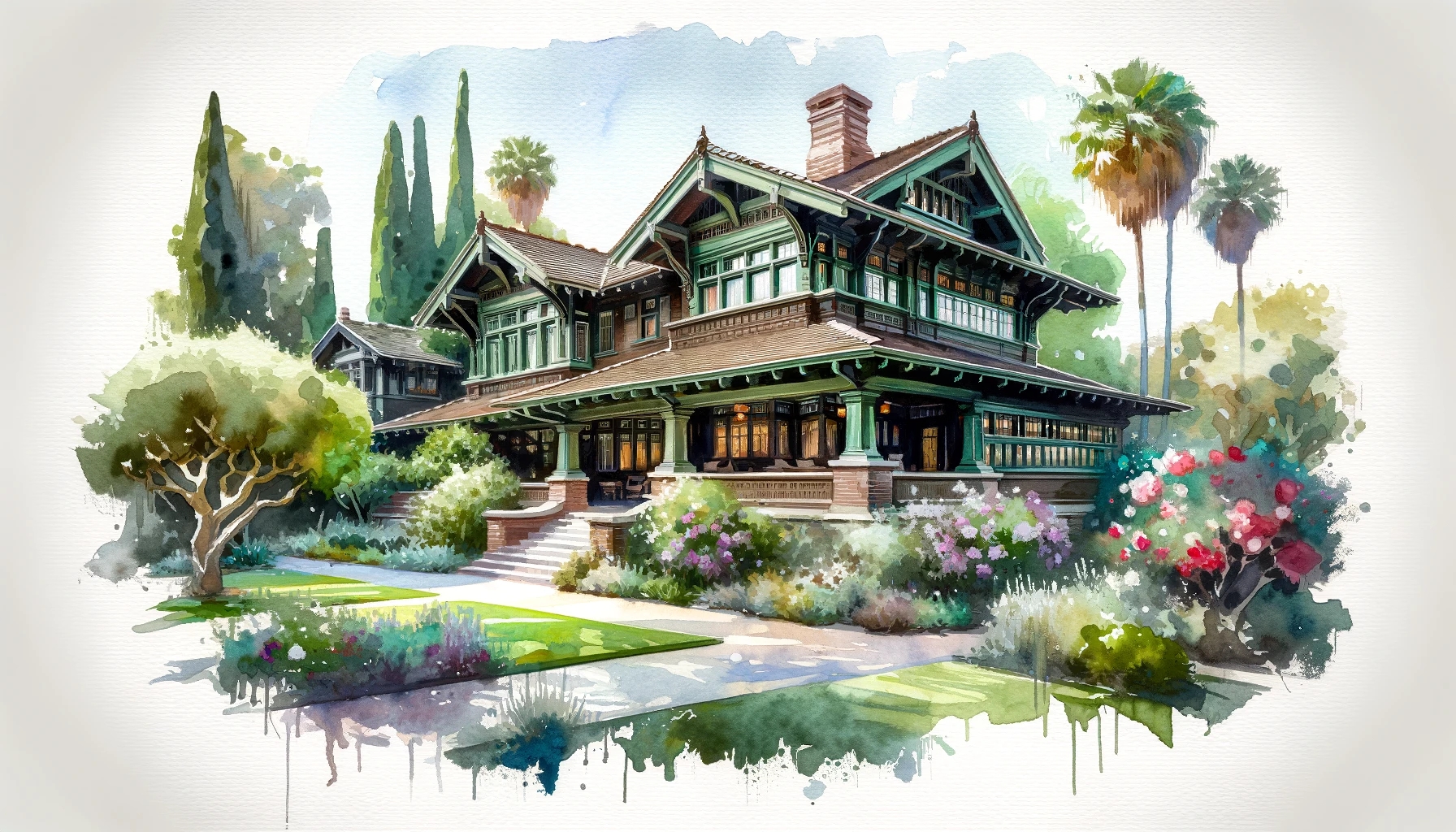
ChatGPT-4o created this image of the Gamble House, demonstrating the need for the human expert—there’s very little that is correct in this image.
Getting Started
If you’re interested in the best explanation and practices of AI and ChatCPT, read Ethan Mollick’s Co-Intelligence: Living and Working with AI (2024) or listen to an interview with him on the HBR IdeaCast, “Tech at Work: What GenAI Means for Companies Right Now.” If you’re interested in practical applications with lots of examples, read AI and the Future of Education (2023) by Priten Shah. AI is being incorporated into an increasing number of applications, including Microsoft Word, Evernote, Notion, and WordPress, but if you want to explore ChatGPT, it is available free with registration at OpenAI.
If you want to use ChatGPT to craft a mission statement, be aware that it relies on the information that is available to it. If your organization has a very small presence on the Internet or in publications (unlike the Gamble House), a simple prompt will be ineffective. You’ll need to take an additional step to provide it with information, such as the museum’s goals, primary audiences, collection strengths, historical background, and what makes it unique or distinctive. If you’re unsure how to do this in ChatGPT, start with the prompt, “I need help writing a mission statement for [your museum name]. Here are the details: [insert information].” You can follow up with additional instructions, such as “”Give me three different mission statement options,” “Can you make this mission statement more engaging for a younger audience?”, or “I like the direction of this mission statement, but can you make it shorter?”
If ChatGPT has helped your organization improve or rethink its mission statement, please share your experiences in the comments.
The Newport Summer School visiting one of the many historic houses in Newport, Rhode Island. Source: Victorian Society of America.
George Washington University recently awarded me a semester-long sabbatical for fall 2024, which will give me a break from teaching in the museum studies program and allow me to more actively pursue my interests in:
the early history of house museums to better understand their formation and evolution of interpretive practices;
the interpretation of house museums; and
the management of historic sites, especially in strategy and leadership to move performance up to the next level or respond to an ever-changing environment.
For a deep dive into these topics, I’m delighted that I’ve been selected for two prestigious programs:
In June, I will be in Newport, Rhode Island attending the Victorian Society’s Summer School. Over ten days, our class will explore four centuries of American architecture, art, culture, and landscape guided by renowned architectural historian Dr. Richard Guy Wilson. The program will delve into Newport’s rich history, often referred to as the “Queen” of American resorts, and includes exclusive tours of private homes, behind-the-scenes access to America’s grandest mansions, and insightful presentations by leading scholars.
In September, I will be in England for Royal Collection Studies, organized by The Attingham Trust for the Study of Historic Houses and Collections. This ten-day residential course in Windsor provides extraordinary access to one of the world’s leading collections of fine and decorative art, all housed within the grand architecture of the royal palaces. The course combines lectures and tutorials, visits to both occupied and unoccupied palaces in and around London, and close-up object study, aiming to give heritage sector professionals a deeper understanding of this remarkable collection.
If you’re working in a house museum or historic site, these specialized residential mid-career courses are both incredibly educational and refreshing. Participating in the Attingham Summer School in 2008 significantly enriched my scholarship, and fifteen years later I continue to draw upon the principles and practices learned during our site visits and insightful discussions. You’ll find a professional development experience for nearly any interest or length of time, and many offer scholarships. For example, if you’re seeking a course more focused on management, consider the History Leadership Seminar or the SEMC Leadership Institute (it appears that the [Getty] Museum Leadership Institute is no longer operating).
And alas, this schedule also means that my plans for attending the AASLH Annual Meeting in September will be postponed to 2025 in Cincinnati, Ohio. And if I don’t see you there, I hope it’s because you’ll be participating in an incredible professional development opportunity (remember to apply 6-8 months in advance!).
The Reimagining the Historic House Museum workshop at the Decorative Arts Center of Ohio in June 2023.
“Reimagining the Historic House Museum,” the one-day workshop co-led by me and Ken Turino (Historic New England) will be held on Friday, April 19, 2024, from 8:30 am to 5:00 pm at Montpelier, a 1780s house museum in Laurel, Maryland (between DC and Baltimore). This workshop is part of the professional development series produced by AASLH. Registration is $325 but it’s $200 for AASLH members (and you receive an additional $50 discount if you register by March 22!). Participation is limited to 35 people.
Our workshop, while inspired by the book Reimagining Historic House Museums (2019), provides a more comprehensive hands-on exploration of house museums’ challenges. We assess current programs using a “double-bottom” line for a holistic view, analyze influencing forces to pinpoint opportunities and hurdles, and spotlight how house museums have successfully reinvented themselves. While the day is rich with information and activities, we ensure a well-deserved lunch break and networking time. You’ll leave with new tools and ideas to enhance your historic site and have an enjoyable experience.







 Engaging Places