Category Archives: Leaders in the field

Heading to Cincinnati for AASLH—Will You Be There?

This week I’m heading to Cincinnati for the American Association for State and Local History’s Annual Meeting—and I couldn’t be more excited. After a couple of years of scheduling conflicts that kept me away, I’m very much looking forward to reconnecting with colleagues and friends from across the country.

If you’ll be there, I hope to see you at the History Leadership Institute reception on Wednesday afternoon. If we miss each other then, perhaps we’ll cross paths in the exhibit hall or between sessions. Please do say hello—I always enjoy hearing what others are working on.

I’ve been fortunate to visit many of Cincinnati’s museums over the years, but there’s always more to discover. I’m especially looking forward to Friday morning’s walking tour of the Over-the-Rhine District (which includes a special preview of the new OTR Museum) and Friday night’s reception at the American Sign Museum. There are so many museums to see and I can easily recommend the Cincinnati Art Museum, Taft Museum of Art (in a historic house), Harriet Beecher Stowe House, National Underground Railroad Freedom Center, and the Cincinnati Museum Center (a multi-museum complex in a splendid Art Deco train station). In addition, I’ll make a return visit to two places within walking distance: the 21c Museum Hotel (a surprising blend of luxury hotel and contemporary art museum—what are they doing now?) and the Contemporary Arts Center (by Zaha Hadid, the first woman to design an art museum in the US—how it is holding up?).

It promises to be a week full of learning, inspiration, and connection. I hope to see many of you in Cincinnati!

New Vision, Old Masterpieces: Transformation Ahead at the National Gallery of Art

The National Gallery of Art in Washington, DC has quietly launched an ambitious reimagining of its original West Building, a structure completed in the early 1940s and long known for its grand architecture and displays of masterpieces. For generations, galleries have been organized by geography and time period, with paintings neatly arranged on walls in a format familiar—and comforting—to many visitors. But as expectations change and audiences diversify, the NGA is reconsidering what a national art museum can and should be in the 21st century.

Project Goals: From Comfort to Connection

The West Building Reimagining Project is driven by a compelling vision: to make visible the profound links between art and our shared humanity. The project seeks to move beyond static displays and conventional categorizations to create exhibitions that are more resonant, inviting, and engaging—especially for multi-generational families and first-time visitors. The team aims to evoke a broader range of responses, from curiosity to awe, while incorporating a wider variety of objects and histories than traditionally seen in the West Building.

Listening, Learning, and Prototyping

The project began in earnest in 2023 with a series of listening sessions involving both staff and visitors. One key insight quickly emerged: diversity—of objects, perspectives, and people—matters. Since then, the Gallery has taken a human-centered design approach, engaging more than 100 participants across departments and partnering with faculty from the Corcoran School of Art at George Washington University (including me!).

Subcommittees were formed in 2024 to tackle specific challenges, and in 2025 the focus has shifted to testing experimental display strategies. These prototypes will be refined throughout the year, with recommendations to the NGA’s president and CEO slated for 2026. The process is intentionally iterative, emphasizing learning and responsiveness over rigid outcomes.

A Workshop on the Social Role of Art

Continue reading

What is the Future of Interpretation at Historic House Museums?

The world of historic house museums has been grappling with fundamental questions about purpose and sustainability for many years. Two significant gatherings, the Kykuit II Summit in 2007 and the recent 2025 Historic House Summit, highlight key moments in this ongoing discussion. Bridging these two events is the American Association for State and Local History’s (AASLH) STEPS program, particularly its standards for interpretation, which emerged directly from the needs identified in that earlier period. Looking at these three points in time reveals not only evolving ideas but also the increasing urgency and specific challenges facing interpretation today. 

The Kykuit II Summit: The Call for Sustainability and Standards

The Kykuit II Summit, held in April 2007 at the John D. Rockefeller estate, brought together leaders to discuss “the sustainability of historic sites.” This was a follow-up to a similar meeting five years prior. The discussions focused on finding ways for historic sites, the largest segment of the museum community, to thrive. Key questions included the challenging, “unmentionable” ones: “Does America need another house museum?” or “Can America support the existing historic sites it now has?”

Continue reading

Beyond the Mill: Clarke County Historical Association’s Model for Modern Historical Programming

The Burwell-Morgan Mill in Berryville, Virginia, which hosts the Art in the Mill shows in fall and spring.

On a recent road trip through the Shenandoah Valley, we passed through the small but charming village of Millwood (south of Berryville, Virginia). With its historic church, a corner gas station turned into a post office, a hip country store, and an 18th-century stone grist mill, it feels like you’ve stepped back into mid-century America. The mill, dating back to the 1780s, ceased operations in 1943, but thankfully the Clarke County Historical Association (CCHA) stepped in to preserve this important piece of local history. They restored and reopened the mill as a museum, offering milling demonstrations that continue to connect the community with its past—a business that, while no longer economically viable, resonates deeply with those of us who value local landmarks.

Fast forward 80 years, and the CCHA not only continues to produce flour at the mill but has expanded its offerings in creative and impactful ways for a county with 15,000 residents. Today, their mission—”to help preserve the historic resources and records of Clarke County and to foster their use, understanding, and enjoyment through stewardship and education”—may sound familiar, but their approach is anything but ordinary. Their programming stands out as a model for how historical societies can evolve, attract diverse audiences, and ensure long-term sustainability. Here’s a preview of some of the exciting events and initiatives they have planned for this fall:

Continue reading

Historic House Museum Summit This Week

This small selection of historic sites operated by The National Society of The Colonial Dames reveals the enormous diversity of house museums and historic sites in the United States.

In 2007, I helped organize the Forum on Historic Site Stewardship in the 21st Century, which resulted in an influential issue of Forum Journal that laid out the major challenges and opportunities, including the need for financial sustainability, a willingness to change in response to the needs of the community, and a balance between the needs of buildings, landscapes, collections, and the visiting public. It also recognized that museum standards may not be the best practices for historic sites and that the profession “must develop new measures, beyond attendance, that document the quality of visitor engagement at sites and the extent of community outreach beyond the bounds of historic sites.”

So what has happened in the 16 years that followed? We’ll find out this week as the American Association for State and Local History hosts a virtual summit on the Sustainability, Relevance, and the Future of Historic House Museums on July 11-12. Sessions will address measuring the impact of house museums, broadening interpretation, care of buildings and landscapes, and the evolution of mission statements.

Continue reading

How can History-Focused Organizations Invest in Stability?

Figure 1. History-Focused Organizations command large portions of the museum field’s revenue and institutions. Source: Internal Revenue Services and National Center for Charitable Statistics.

Over the past year, Engaging Places has been looking over individual segments of the museum field. While these segments are unique in specific ways, as demonstrated by the data, several of them do share a common theme and mission: an overall goal to promote history. These four segments are History Museums (A54), History Organizations (A80), Historical Societies & Historic Preservation (A82), as well as the broad Museums (A50) category. By combining these segments we can focus on the history-centric portion of the museum field that makes up close to half of its revenue and consists of a whopping 89% of its institutions (see Figure 1). This block of museums is incredibly dominant within the field and a major focus of Engaging Places’ work. For ease of reference, we will be referring to them as History-Focused Organizations.

It is important to remember that as an aggregate these History-Focused Organizations still trend small. Over 90% operate on less than $1 million in revenue annually, with contributions and grants bringing in over half of that vital revenue. For these smaller museums, financial security is a constant and essential priority. While many of these History-Focused Organizations are unable to achieve large pools of investment to stabilize operations, unlike some of their larger counterparts, they can develop practices to move them in this direction. 

Continue reading

Should Local History and Historic Preservation Dominate the Museum Field?

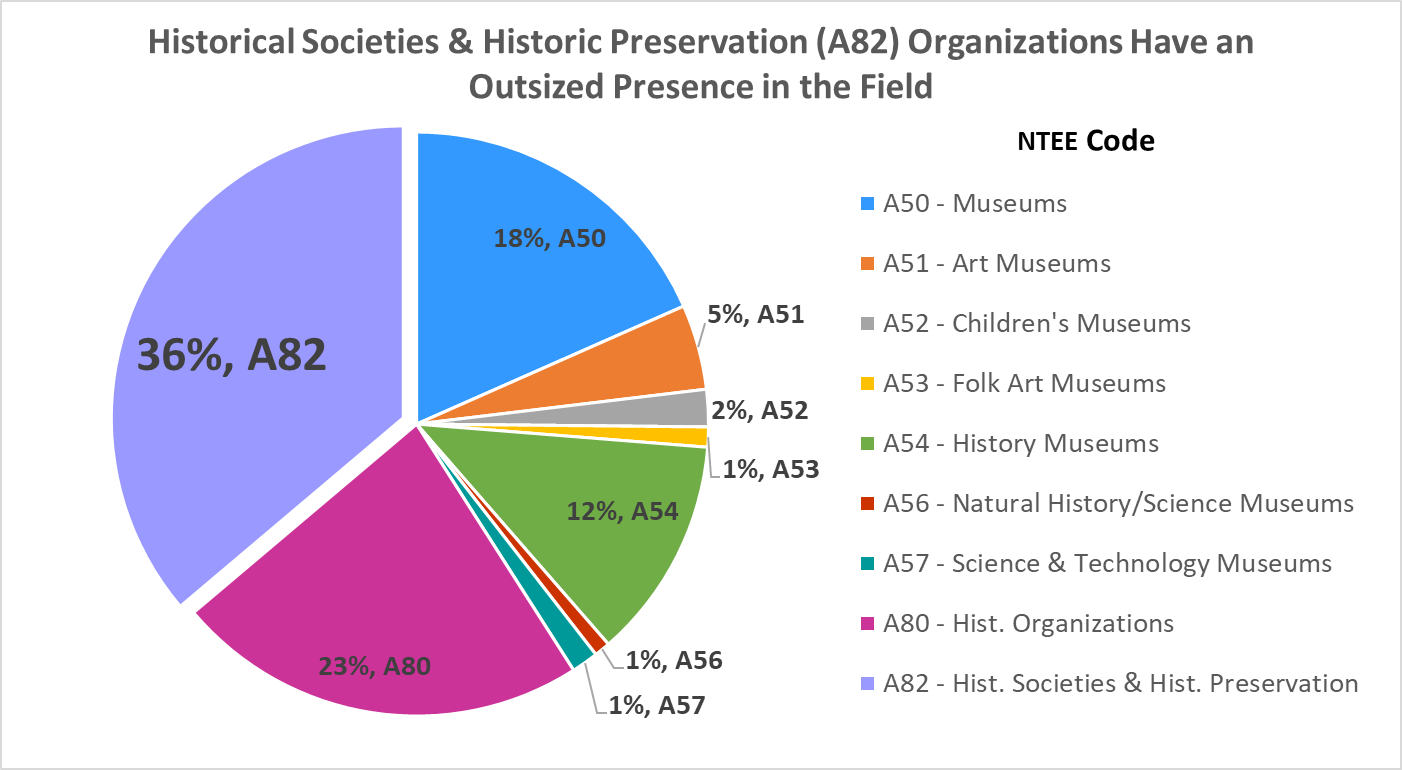
Figure 1. Historical Societies & Historic Preservation (A82) organizations have an outsized presence in the field. Source: Internal Revenue Service and National Center for Charitable Statistics.

Of all the organizations in the United States devoted to arts, culture, and humanities, Historical Societies & Historic Preservation (NTEE A82) organizations have an outsized presence.   More than a third of all organizations “sponsor activities which celebrate, memorialize and sometimes recreate important events in history such as battles, treaties, speeches, centennials, independence days, catastrophes that had an important impact or other similar occasions.” “Historical society,” “historical association,” “heritage society,” “preservation,” and “restoration” are in the name of nearly 80 percent of institutions in this category.  They are also focused on local history—only one in twenty institutions appear to have a geographic scope larger than the county level.

While preserving and interpreting local history is their primary interest, these organizations are the smallest by revenue.  More than 90 percent operate with less than $1 million in revenue annually and have a median revenue near $64,000 (yes, the median is $64,000 annually for all A82 organizations for 2011-2017—half of these organizations operate with less than this amount).  Only Historical Organizations (A80) produce similar financials, albeit with slightly higher figures.

Continue reading

HLI Seminar Returned in New Format, New Season

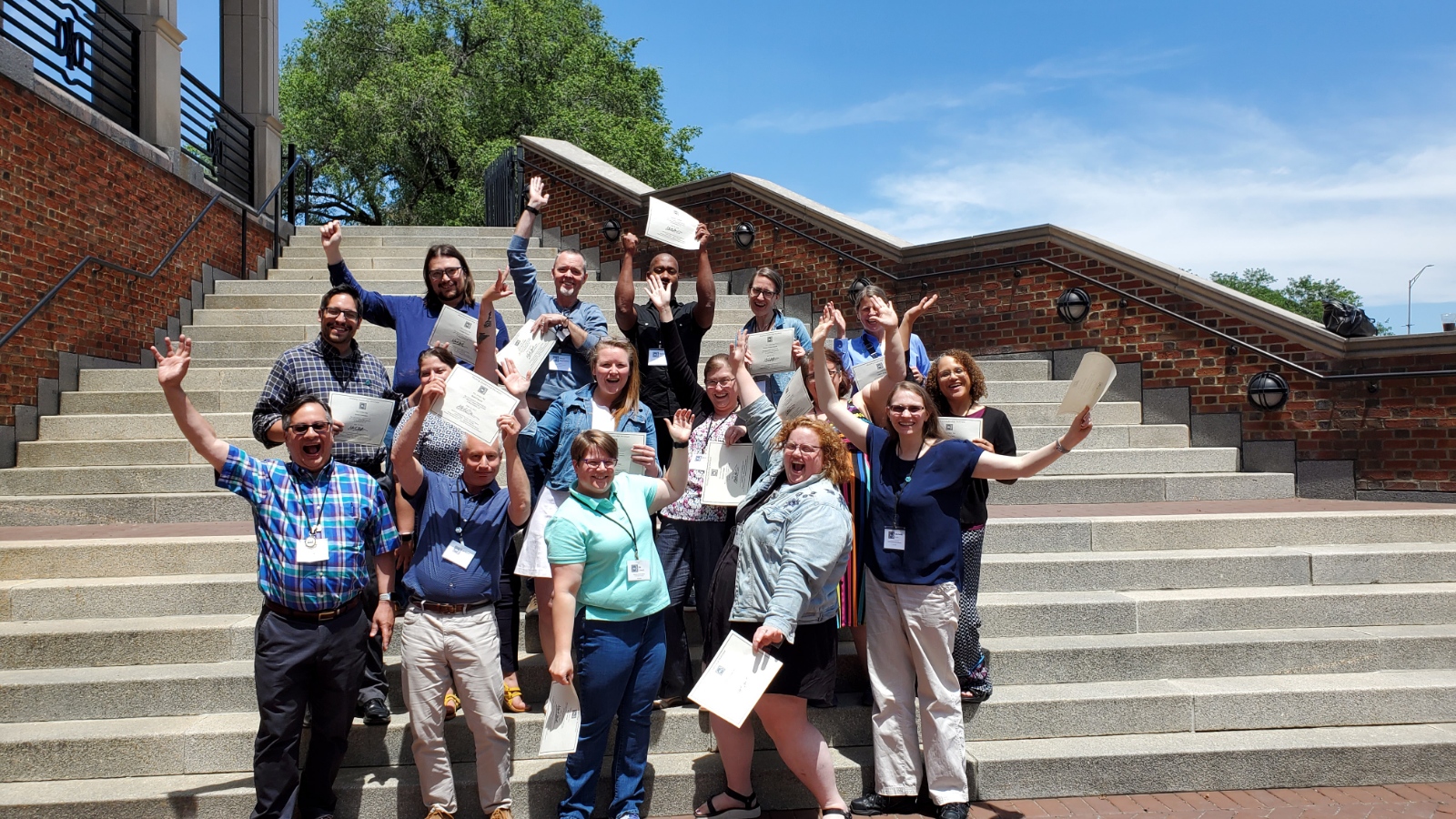
The Class of 2022 celebrating their graduation from the HLI Seminar.

The History Leadership Institute, AASLH’s professional development program for mid-career history professionals, introduced its long-running Seminar in a new format in June.

In 1959, the Seminar began as an effort to train newly graduated history students and directors of history museums in the unique skills of managing museums, historic sites, and archives in a six-week program held at Colonial Williamsburg, During the decades that followed, the Seminar has continually changed to meet the needs of the field and explore new and emerging practices.

Continue reading

Are Historical Organizations Choosing the Right Heroes?

When your history organization is modeling itself on other museums or historical societies, are you choosing the right ones?  Are they doing things that are well within your capacity or are you following an impossible dream?  There’s nothing wrong with observing the extraordinary leaders in the field, but if you’re modeling your life on a superhero, you may be destined for an avoidable series of crashes and burns.  You would have been much more successful had you devoted your time and energy on more achievable efforts.    

For example, Historical Organizations (NTEE Code A80) are “organizations that promote awareness of and appreciation for history and historical artifacts,” which is mostly composed of local historic sites, house museums, and memorials that are not solely history museums or historical societies.  A sample of Historical Organizations shows that many focus on local history, support museums, or memorialize people, places, or events (see Table 1). Of the 2,500 Historical Organizations providing IRS Forms 990 in 2017, nearly 40 percent include the words “memorial,” “foundation,” “friends,” or “association” in their names.

Continue reading

Rethinking Your Mission? Be Transformative

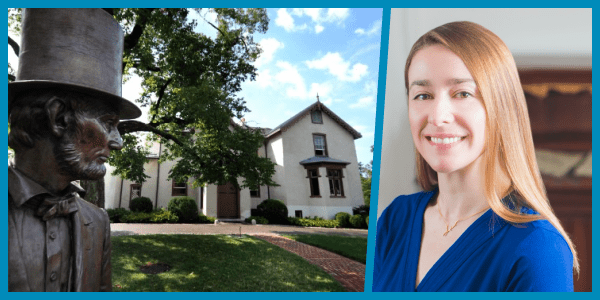
Erin Carlson Mast, director of President Lincoln’s Cottage in Washington, DC, will discuss how mission and vision impact their daily operations.

House museums are complex organizations but one of the most effective tools for navigating this complexity is the humble mission statement. In this 30-minute webinar, Erin Carlson Mast, president and CEO of President Lincoln’s Cottage in Washington, DC, discusses how she’s leveraged the values embedded in their mission statement to transform their community programs and daily operations to affect the lives of their visitors. She’ll be interviewed by Max A. van Balgooy (me!), co-editor of the recently published Reimagining Historic House Museums and president of Engaging Places.

The webinar is today (Thursday, April 23, 2020) at 3:00 – 3:30 pm Eastern (that’s 12 noon Pacific) and registration is free to AASLH Members and $30 Nonmembers. This webinar will be recorded and will be available in the AASLH Resource Center after the event has passed. Registrants of this event receive complimentary access to the recording in their Dashboard. 

This webinar is part of the Historic House Call webinar series. Organized by the committee of the AASLH Historic House Affinity Community, Historic House Call webinars provide staff and volunteers working in historic house museums the chance to hear from a leading expert on a topic related to historic sites and ask questions about that topic. Historic House Calls are presented quarterly at no charge for AASLH members.