Tag Archives: Conner Prairie

Why Are Visitor Codes of Conduct Suddenly Everywhere?

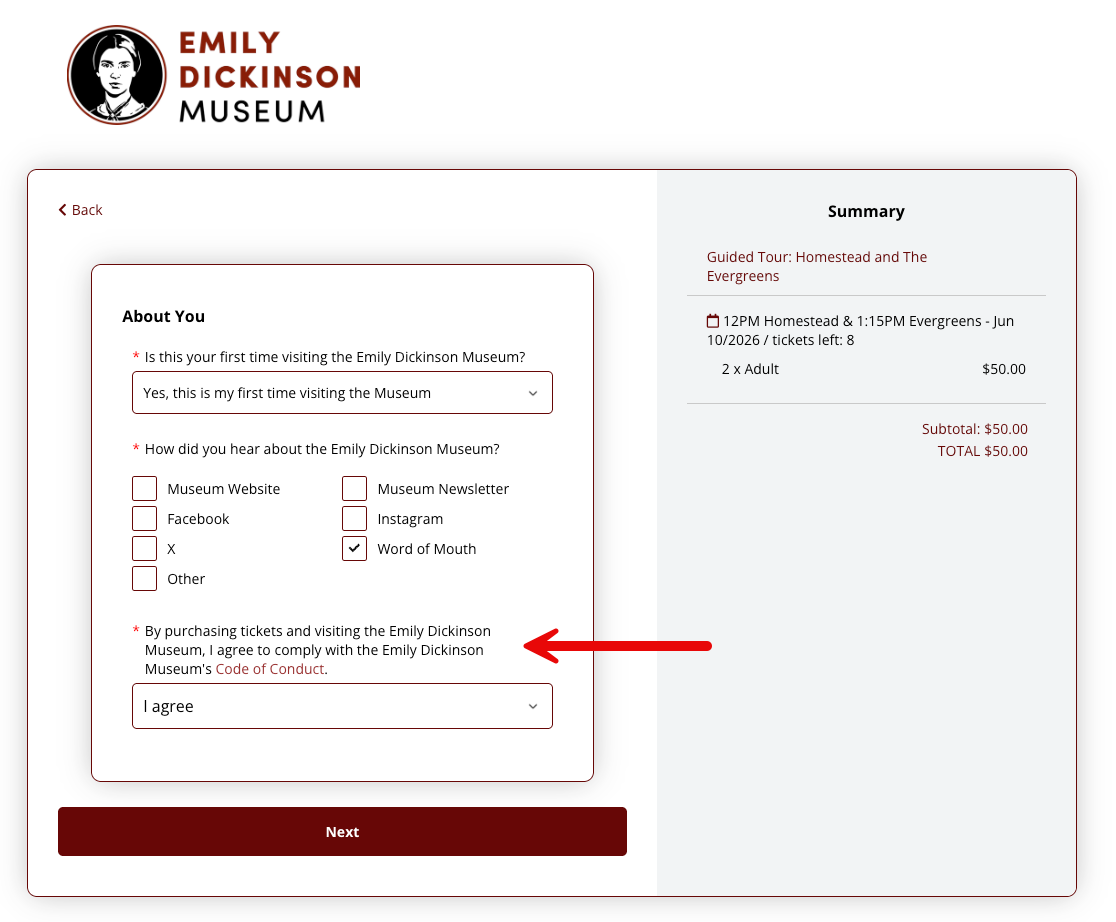
To purchase tickets online for the Emily Dickinson Museum requires compliance with their Code of Conduct.

I’m encountering codes of conduct more frequently as I visit museums and historic sites. They’re not only posted near entrances, but increasingly appear on websites as I buy tickets or plan a visit. Museums and historic sites have always had expectations for visitors—don’t touch, no food—but they’ve never seemed so prominent.

That made me wonder: are our efforts to be more inclusive and welcoming attracting visitors who are unfamiliar with our expectations? Has the current political climate encouraged more conflict and confrontation in public spaces? Are front-line staff experiencing more difficult visitor behavior? Or are museums simply becoming more explicit about rules that were once assumed?

To find out, I examined dozens of visitor codes of conduct from museums and historic sites in the United States that were available online using Google’s search feature. This was not a scientific or comprehensive study. It was more of an initial exploration of what seems to be happening in the field.

What I found is that visitor codes of conduct are no longer just about protecting collections. They are becoming management tools.

Continue reading
HLI Seminar Returned in New Format, New Season

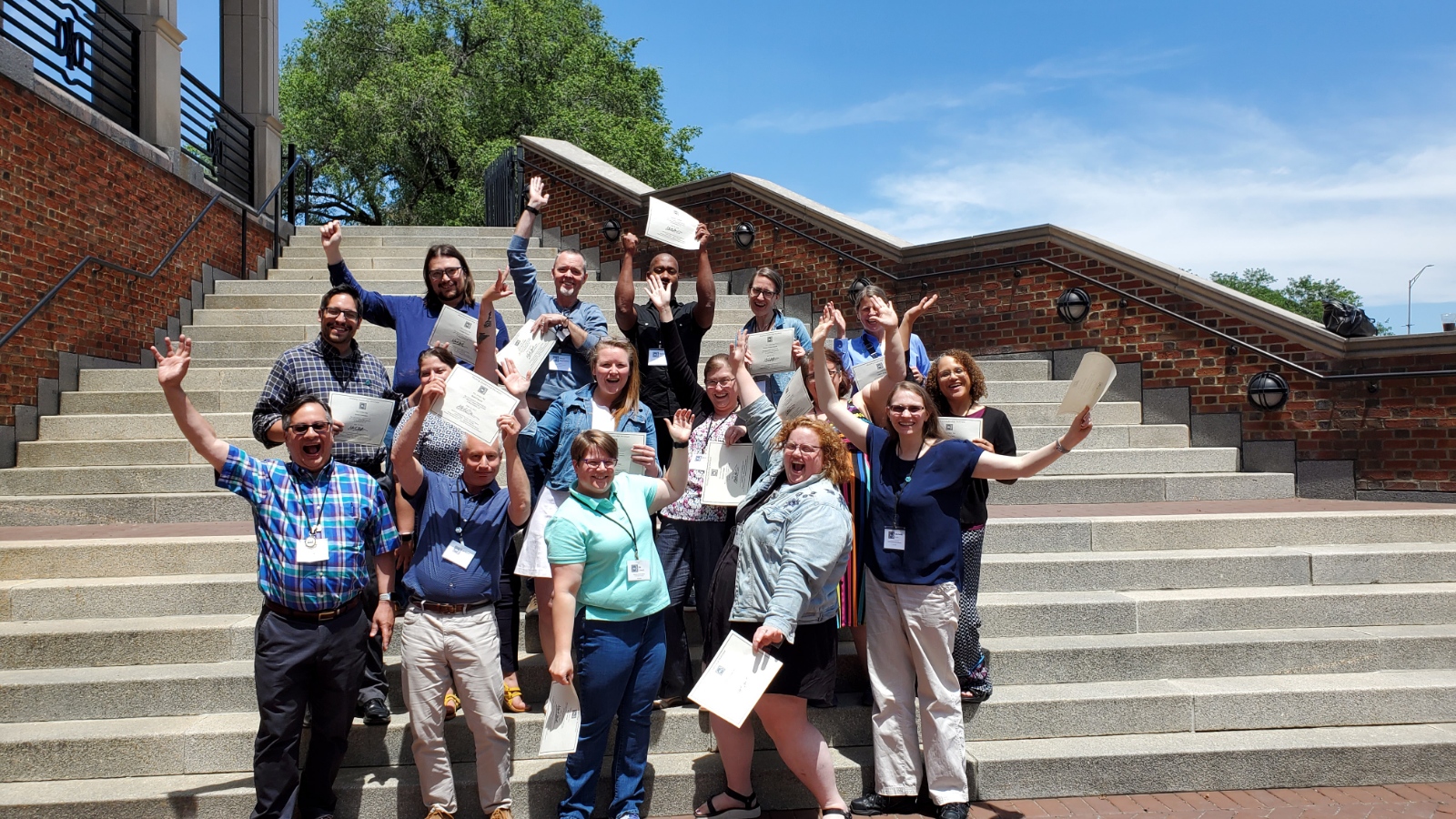
The Class of 2022 celebrating their graduation from the HLI Seminar.

The History Leadership Institute, AASLH’s professional development program for mid-career history professionals, introduced its long-running Seminar in a new format in June.

In 1959, the Seminar began as an effort to train newly graduated history students and directors of history museums in the unique skills of managing museums, historic sites, and archives in a six-week program held at Colonial Williamsburg, During the decades that followed, the Seminar has continually changed to meet the needs of the field and explore new and emerging practices.

Continue reading

What are “Museums”?

Like art, efforts to define “museum” are challenging and controversial.  The American Alliance of Museums takes the “big tent” approach to defining museums—“if an organization considers itself to be a museum, it’s in the tent” (AAM 2008, 3). The Internal Revenue Service, however, takes a different approach, which can be puzzling to the field.  It assigns the type of charitable organization (e.g. history museums, elementary schools, forest conservation) with no guidance or approval from the organization.  Among the categories is  “Museums” (NTEE code A50), which is described as, “Organizations that acquire, preserve, research, exhibit and provide for the educational use of works of art, objects or artifacts that are related to the study of zoology, biology, botany, mineralogy, geology and other natural sciences; history; archeology; or science and technology.”

An analysis of IRS Forms 990 of museums identified as NTEE code A50 reveals the incredible diversity of the field as well as challenges our notions of “museum” (see list of examples in Table 1; a complete list is available as a pdf).  Consisting of roughly 18 percent of the entire museum field, Museums (A50) are the third-largest type behind Historical Organizations (A80) and Historical Societies & Historic Preservation (A82) (see Figure 1). While large in number, Museums (A50) have fewer resources than the average player in the field, but are growing faster.  They hold average net assets of $3,501,000, which is 28 percent lower than the museum field as a whole, but their average net assets increased 11 percent year over year compared to the 4 percent average of the entire museum field.  They are also united by their smaller scale and resources rather than subject matter with more than 85 percent of institutions receiving less than $1 million in revenue each year (see Figure 2), confirming the value of providing targeted services to small museums, such as the Small Museum Association, or funds, such as NEH’s Preservation Assistance Grants.

Continue reading